
Reviewed · WALKING TOURS
Málaga: Cathedral, Alcazaba, Roman Theater Walking Tour
Málaga reveals its best stories on foot. I like the way this three-hour tour links the Cathedral, Alcazaba, Roman Theater, and Picasso’s neighborhood instead of treating them as isolated sights. I also like the included skip-the-line tickets, especially when you want to make good use of a short stay. The main drawback is that the pace and route may be difficult for anyone with mobility limitations.
You begin at Plaza de La Marina, a handy central meeting place, then move through Málaga’s historic center with a live guide in English or Spanish. Guides such as Carmen, Eduardo, Daniel, Rachel, and Antonio have been praised for clear explanations, good humor, and useful suggestions for food and sightseeing after the tour.
In This Review
- Key points at a glance
- Starting at Plaza de La Marina
- The Cathedral and the reality of mass days
- Reaching the Alcazaba on Gibralfaro Mountain
- The Roman Theater below the fortress
- Picasso’s streets and Plaza de la Merced
- What the guides add
- Is $53 a good value?
- Who should choose this walking tour?
- Practical advice before you go
- Should you book it?
- FAQ
- Where does the Málaga walking tour meet?
- How long does the tour last?
- Which languages are available?
- Are entrance tickets included?
- Does the tour offer skip-the-line access?
- What happens if mass is taking place at the Cathedral?
- Is the tour suitable for people with mobility impairments?
Key points at a glance

- Four major Málaga sights in three hours: The route covers the Cathedral, Alcazaba, Roman Theater, and Picasso-related streets.
- Skip the ticket line: Admission is included for the Cathedral, Alcazaba, and Roman Theater.
- Views from the Alcazaba: An elevator takes the group to the highest point reached on the tour for broad views over Málaga.
- More than monument facts: Guides connect the sights with stories about the port, Picasso, local life, and the city’s changing shape.
- Strong guide-led experience: Carmen, Eduardo, Daniel, Rachel, Luis, and others have earned praise for their history knowledge, humor, patience, and English.
- A walking tour with limits: Comfortable clothes are important, and the experience is not suitable for people with mobility impairments.
Starting at Plaza de La Marina
The meeting point is by the door of the Tourist Information Office at Plaza de La Marina. This puts you near Málaga’s port and the old center, so the tour starts in a useful place for getting your bearings.
From here, you walk rather than ride between the sights. That matters in Málaga, where the distance between the Cathedral, Alcazaba, Roman Theater, and Picasso’s old neighborhood is manageable on foot, but the streets and slopes can still make a three-hour outing tiring in hot weather.
The tour is most useful early in your stay. A few guides have also offered ideas for places to eat, drink, and visit afterward, giving you more than a set of monument explanations. You can use the route as a first look at Málaga, then return later to the places that deserve more time.
More Walking Tours in Malaga:
- Málaga: 3-Hour Complete Walking Tour with Tickets
★ 4.5 · 976 reviews - El Chorro: Caminito del Rey Gorge Route Guided Walking Tour
★ 4.4 · 753 reviews - Ardales: Caminito del Rey & El Gaitanejo Guided Walking Tour
★ 4.8 · 552 reviews
The Cathedral and the reality of mass days
The Renaissance Cathedral of Málaga is the first major interior stop. Your guide points out details in the building and explains the religious and artistic setting, which helps you look beyond the famous exterior.
The visit is guided rather than a silent walk through the nave. That is valuable if you want someone to explain what you are seeing as you go, especially when architectural details would otherwise blend together.
There is one important qualification. On days when mass is taking place, the guide gives the explanation outside the Cathedral instead of inside. The tour still includes the Cathedral, but you should not assume that every departure provides the same interior experience.
One previous participant found the Cathedral closed and still considered the Málaga history portion worthwhile. That is a fair way to view this stop: the building is a key part of the route, but access can depend on religious services.
If the Cathedral interior is especially important to you, check the departure details and be prepared for the possibility of an exterior explanation. The guide can still provide context, but it is not the same as standing inside the building.
Reaching the Alcazaba on Gibralfaro Mountain

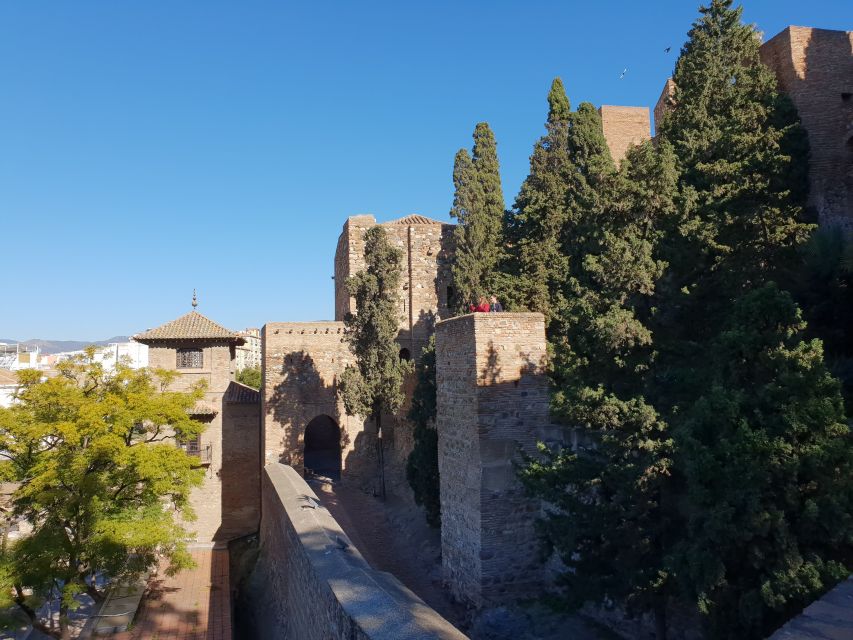
The Alcazaba is the tour’s most scenic and physically demanding section. This old fortress-palace is built into the side of Gibralfaro Mountain, and the route leads upward through its historic spaces.
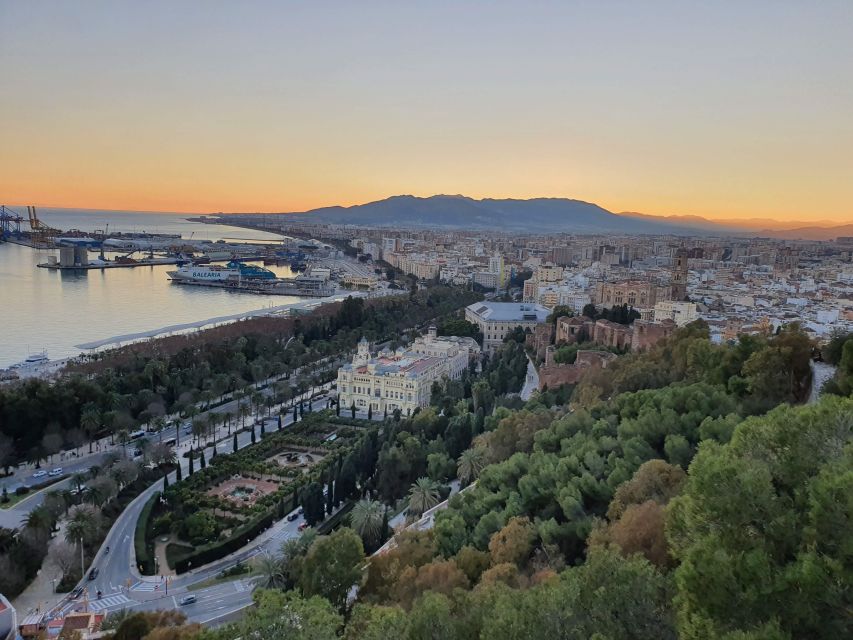
The included elevator ride takes the group to the highest point reached on this visit. From there, you get panoramic views of Málaga, including the city and port area. Several guides have made the Alcazaba’s history a main feature of the walk, and that focus makes sense: the site is easier to appreciate when you understand how its position shaped its role.
I like this part of the tour because the setting does much of the work. You get architecture, elevated views, and a sense of how Málaga developed around the mountain and waterfront.
Still, do not expect an exhaustive visit to every corner of the Alcazaba. One person felt the tour did not allow enough time to see the entire complex and returned the next day with an audio guide. That is the clearest limitation of the itinerary.
At $53 per person, the tour gives you a guided introduction, admission, and the elevator access included in the route. If you want a slow, detailed study of the Alcazaba, you may prefer to return on your own afterward. If you want the major sights explained in one morning or afternoon, the shorter visit is a reasonable tradeoff.
Wear comfortable clothes and sensible walking shoes. The experience is specifically described as unsuitable for people with mobility impairments, and the uphill setting explains why.
The Roman Theater below the fortress

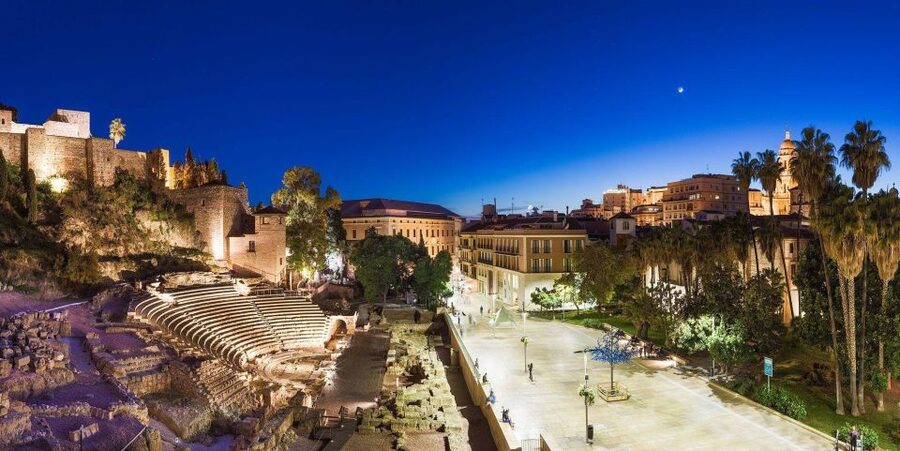
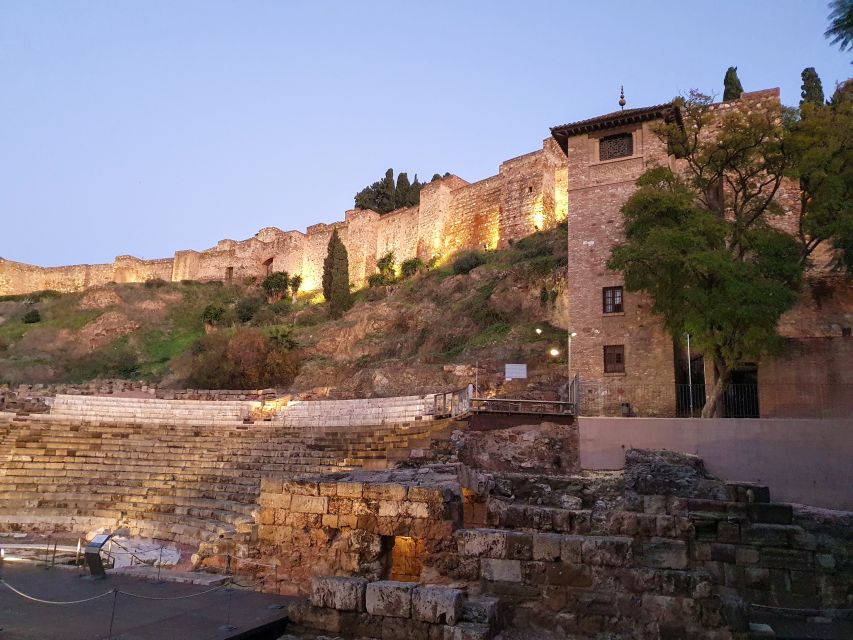
After the Alcazaba, the route continues to Málaga’s ancient Roman Theater. Its position below the fortress creates a useful visual link between different periods of the city’s past.
The Roman Theater is not treated as a stand-alone photo stop. Your guide explains it as part of Málaga’s long development, moving from Roman remains to the later fortress above. That sequence gives the walk a clear sense of time without requiring you to visit a separate museum.
The stop is also practical for anyone with limited time in Málaga. You can see one of the city’s central ancient sites without arranging another ticket or crossing town.
Because this is a group walking tour, your time at the theater depends on the guide’s pace and the needs of the group. It is designed to explain the site and place it in context, not to provide a lengthy archaeological study.
A few more Malaga ideas to compare
- Málaga: Caminito del Rey Guided Tour with Transportation
★ 4.8 · 12,183 reviews - Caminito del Rey: Guided Tour and Entry Ticket
★ 4.6 · 11,286 reviews - Málaga: Museo Picasso Málaga Entry Ticket
★ 4.4 · 11,138 reviews - El Chorro: Caminito del Rey Guided Tour with Shuttle Bus
★ 4.7 · 7,091 reviews
Picasso’s streets and Plaza de la Merced
The final part of the route shifts from ancient and religious monuments to Málaga’s connection with Pablo Picasso. You walk through streets linked with his early life and see his statue before exploring Plaza de la Merced.
This change of subject keeps the three hours from becoming a parade of dates and stones. The guide can show you how Picasso fits into Málaga’s identity, while also pointing out the everyday streets and squares around his birthplace area.
The walk includes Plaza de la Merced, Plaza del Obispo, and Calle Larios. Each adds a different feel to the city center, and the sequence helps you connect the famous sights with the places between them.
I particularly like the street-level part of the itinerary because it gives the tour a local frame. Several guides have added practical suggestions about eating and sightseeing, and that can be as useful as another historical detail when you have only a short stay.
One guide also explained how Málaga’s port area was changed by infilling, creating more public space around the waterfront. Details like this show the city as something that has continued to change, rather than a preserved monument set behind glass.
What the guides add
The quality of this experience depends heavily on the guide, and the feedback is unusually consistent about the human side of the tour. Carmen has been praised for her excellent English, patience, humor, and ability to answer questions. Eduardo has been described as engaging, good-humored, and strong in history and art.
Daniel is noted for storytelling and attention to detail. Rachel has been praised for covering the history in depth while keeping the tour enjoyable. Antonio has received strong comments for his passion, local recommendations, and command of Málaga’s past.
Other named guides include Anna, Raquel, Luis, Maria, Camilla, and Danny. The common thread is a guide-led experience that aims to explain the city rather than simply move you from entrance to entrance.
A small group can make a real difference. One participant specifically appreciated the small size, while another had a nearly private experience with only two people. Group size can vary by departure, so you should not count on a private tour, but a smaller group allows more questions and makes it easier to hear the guide.
There has been at least one organizational problem: a participant had to catch up with the group at the first destination after the guide did not realize they were part of the booking. That appears to be an exception, but it is still wise to arrive early and confirm the guide and group before leaving the meeting point.
Is $53 a good value?
At $53 per person, the price is not the cheapest way to walk around Málaga. The value comes from combining three included admissions with a live explanation and a planned route.
You receive tickets for the Cathedral, Alcazaba, and Roman Theater. You also avoid the ticket line at those attractions, which saves effort and may save useful time during a busy visit.
The tour works best if you value context. You could visit the sights independently, but you would need to organize the route, obtain the tickets, and research the background yourself. The guide also connects the monuments with Picasso’s streets, the port, local food, and the wider story of Málaga.
The price is less compelling if you prefer to set your own pace. The Alcazaba, in particular, may deserve a longer visit than the group schedule allows. You might choose this tour for orientation, then return to the fortress or Cathedral independently if you want more time.
The overall rating is 4.7 from 315 reviews, with repeated praise for guide quality and value. That matches the tour’s strongest point: it is a useful first introduction, not a specialist archaeological or art-history visit.
Who should choose this walking tour?
I would suggest it to first-time visitors who want to see Málaga’s main historic sights in one organized outing. It also suits cruise passengers and people with only a day or two in the city, since the route covers several major stops without requiring local transport.
It is a good match for anyone who enjoys asking questions. Guides have been praised for explaining details clearly and responding to questions instead of rushing from one location to the next.
Families with older children may also find the variety helpful. The route moves from a cathedral to a fortress, then to Roman remains and Picasso’s neighborhood, so the subject changes before the history starts to feel repetitive.
I would be more cautious if you have mobility problems or dislike hills, stairs, and extended walking. The activity itself says it is not suitable for people with mobility impairments, and the Alcazaba’s position on Gibralfaro Mountain is an important consideration.
You should also think carefully about your interest in the Cathedral. If you want a guaranteed interior visit, mass days can be a problem, since explanations may take place outside.
Practical advice before you go
Arrive at the Tourist Information Office in Plaza de La Marina with enough time to identify the group. The meeting point is by the office door, and confirming your guide before the walk begins can prevent the kind of confusion one participant experienced.
Wear comfortable clothes, as requested for the activity. Comfortable footwear is a sensible choice for the walking route and the uphill Alcazaba section.
Choose English or Spanish when checking availability. The tour has a live guide in both languages, but starting times vary, so you need to check the date that suits your schedule.
There is no hotel pickup or drop-off, and food and drinks are not included. Plan to eat before or after the tour, or use the guide’s local suggestions once the walk ends.
The cancellation policy is useful if your plans may change: you can cancel up to 24 hours in advance for a full refund. You can also reserve now and pay later, which keeps some flexibility in your schedule.
Should you book it?
Book this tour if you want a well-organized introduction to Málaga, prefer expert explanation to independent sightseeing, and value included admission and skip-the-line access. The strongest reason to choose it is the guide: Carmen, Eduardo, Daniel, Rachel, Antonio, and others have made the history lively, clear, and easy to follow.
Skip it if you want to explore the Alcazaba slowly, need a fully accessible route, or want to guarantee a Cathedral interior visit on a mass day. For most first visits, though, $53 buys a sensible three-hour overview with Málaga’s major sights, strong city context, and excellent views from the fortress.
FAQ
Where does the Málaga walking tour meet?
Meet by the door of the Tourist Information Office at Plaza de La Marina.
How long does the tour last?
The tour lasts three hours.
Which languages are available?
The live guide speaks English or Spanish, depending on the selected tour option.
Are entrance tickets included?
Yes. Tickets for the Alcazaba, Roman Theater, and Cathedral are included.
Does the tour offer skip-the-line access?
Yes. Skip-the-line access is provided for the Alcazaba, Roman Theater, and Cathedral.
What happens if mass is taking place at the Cathedral?
On days when mass is taking place, the guide gives the Cathedral explanations outside the building.
Is the tour suitable for people with mobility impairments?
No. The activity is not suitable for people with mobility impairments. Comfortable clothes are recommended.
Recently listed in Malaga
- Tour to Gibralfaro★ 4.7 · 182 reviews
- Málaga: Picasso Birthplace Museum Ticket & City Audio Guide★ 4.1 · 158 reviews
- From Costa del Sol: Mijas, Marbella and Puerto Banús Tour★ 4.3 · 234 reviews
- Malaga: Tuk tuk tour★ 4.8 · 402 reviews
- Malaga: Wine and Tapas Tour with Tastings and Drinks★ 4.8 · 217 reviews
- Málaga: Traditional Andalusian Tapas and Wine Tour★ 4.7 · 167 reviews
- Malaga: The Ultimate Tapas Workshop with Market Visit★ 4.9 · 108 reviews
- Malaga: Organic Vineyard Tour with 6 Wines, Tapas & Transfer★ 4.8 · 334 reviews
Walking Tours, compared.
Barcelona Tapas and Wine Experience Small-Group Walking Tour
Read our review →
Tapas Walking Tour with Food, Wine, and History
Read our review →
Albaicín and Sacromonte Guided Sunset Walking Tour
Read our review →
Toledo Tour & Vineyard Walk with Wine Tasting from Madrid
Read our review →
Madrid Walking Tour from Puerta del Sol to Retiro Park
Read our review →
Barcelona Tapas Walking Tour: Food, Wine & History
Read our review →
Madrid Old Town & Royal Palace Walking Tour Skip the Line Ticket
Read our review →
Browse the lists this tour appears in