
Reviewed · MUSEUMS
MNAC Barcelona: National Art Museum of Catalonia Admission Ticket
Barcelona saves one of its best museum days for the hilltop. The National Museum of Art of Catalonia brings together 1,000 years of Catalan, Spanish, and European art inside the grand National Palace on Montjuïc. I especially like the reconstructed church interiors holding Romanesque frescoes, and the museum’s broad sweep from medieval paintings to Gaudí furniture. The main caution is simple: this is a large, mostly self-guided museum, and the religious art can feel repetitive if your taste runs mainly toward famous Spanish painters.
I also like the setting. You get grand city views, gardens, and the chance to pair the museum with Montjuïc rather than spending the whole day indoors. Three hours is a sensible visit, though art lovers can easily stay four hours or more. Check the opening hours carefully before booking, especially on Sunday, when an early closing time has caused missed visits.
In This Review
- Key points to know before you go
- Why MNAC deserves time on Montjuïc
- Entering the National Palace and finding your route
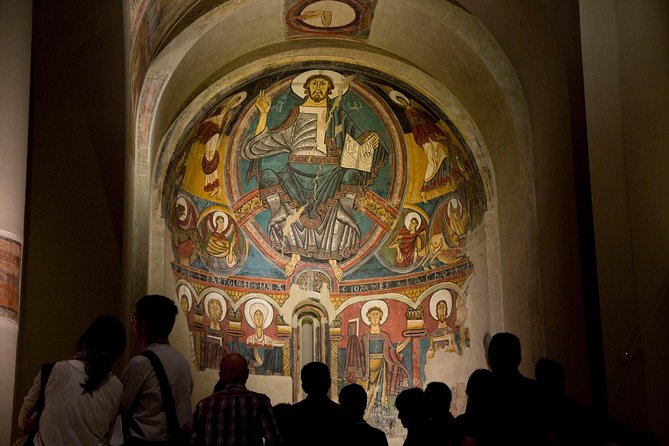
- Romanesque frescoes in reconstructed churches
- Gothic, Renaissance, and Baroque art across Europe
- Catalan Modernism and Gaudí’s furniture
- Montjuïc views, gardens, and the one-hour add-on
- Is $14.48 a fair price?
- Timing, opening hours, and practical planning
- Who will enjoy MNAC most?
- Should you book the MNAC admission ticket?
- FAQ
- How long should I allow for the MNAC visit?
- What does the admission ticket include?
- Is the visit guided?
- Do I need to exchange the mobile voucher?
- What are the museum’s main highlights?
- Is the museum suitable for a short visit?
- Is admission ever free?
- Can I cancel the ticket for a refund?
Key points to know before you go
- Romanesque frescoes are the museum’s great prize: Many are shown in reconstructed church interiors, which gives them far more presence than a painting on a standard gallery wall.
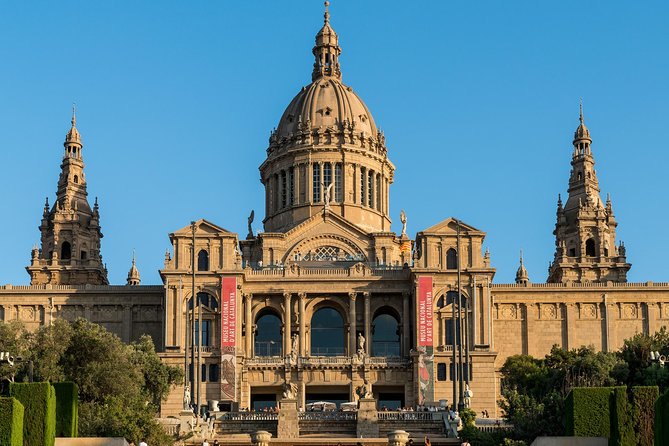
- The National Palace is part of the attraction: Its architecture, gardens, terraces, and city views make the visit worthwhile even if you are selective about art.
- The collection moves across many periods: Expect Romanesque, Gothic, Renaissance, Baroque, Romantic, and Modern Art sections.
- Gaudí appears through furniture and decorative art: Look for sinuous wooden chairs, doors, and other early twentieth-century Catalan design.
- This is independent sightseeing: Your admission includes the museum, but not a guided tour or audioguide.
- Plan around hours and free-entry times: Sunday hours may be shorter, and some dates or times may offer free admission, so compare before paying $14.48.
Why MNAC deserves time on Montjuïc
The Museu Nacional d’Art de Catalunya occupies the National Palace, a building that can feel almost as important as the collection inside. It sits high on Montjuïc, giving you a broad view over Barcelona and making the museum easy to combine with a walk through the surrounding park.
I would not treat this as a quick stop between major sights. The museum covers roughly a thousand years, and its galleries ask you to move through changing styles, religious traditions, courtly art, and Catalan modernism. You can rush through in an hour, but you will miss the reason this museum matters.
The ticket allows you to enter the permanent collection at your own pace. You exchange the mobile voucher at the ticket office, then explore independently. There is no group schedule to follow, no guide setting the pace, and no need to stay for a particular departure.
That freedom works well here. You can spend serious time with the Romanesque rooms, skip sections that do not appeal to you, and pause for the views without worrying about a tour group waiting at the next painting.
The main limitation is the same freedom that makes the visit pleasant. You need to provide your own structure. The museum is large, and the ticket does not include an audioguide or guided tour. A map helps, and one visitor found a free museum app useful for background information, but you should not assume that a full audio tour is part of admission.
More Museum Tours in Barcelona
- Barcelona: FC Barcelona Museum “Barça Immersive Tour” Ticket
★ 4.4 · 10,944 reviews - Barcelona: Park Güell and Gaudí House Museum Entry Ticket
★ 4.5 · 6,326 reviews - Barcelona: Picasso Museum Skip-the-Line Guided Tour
★ 4.5 · 3,355 reviews
Entering the National Palace and finding your route
The practical routine is straightforward, but allow a little patience at the entrance. Take your mobile ticket to the ticket office and redeem the voucher before going inside. One booking caused confusion because staff did not immediately recognize the online voucher, though the issue was resolved after the ticket was explained.
This is a useful reason to keep the voucher easy to display on your phone. If the ticket office sends you to another desk, do not panic. The process may take longer than simply buying at the window, particularly if staff need to issue or identify the electronic ticket.
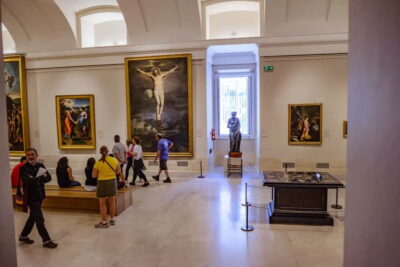
Once inside, use the museum map to get your bearings. The galleries are arranged by period, so the basic route is logical: early medieval art first, followed by Gothic and later European works, then the nineteenth and twentieth centuries. You can follow that sequence or head straight to the sections that interest you.
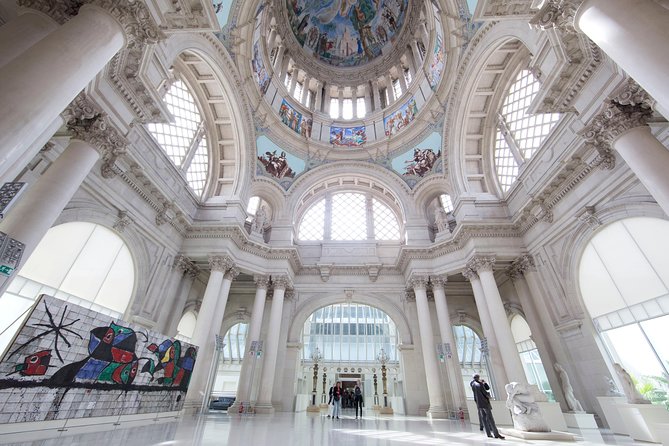
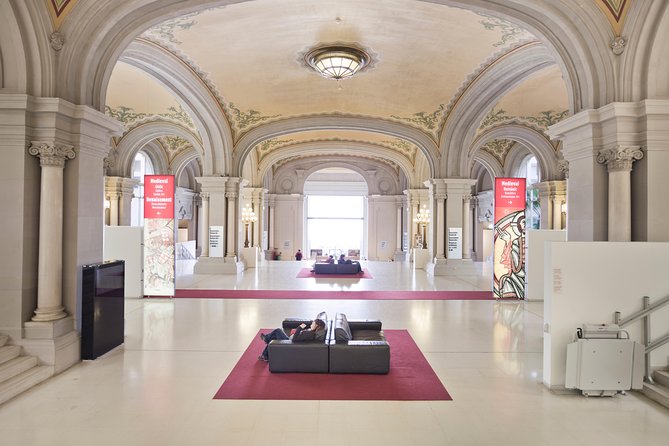
The building itself creates a dramatic first impression. Large rooms, formal interiors, and the scale of the palace make the museum feel more like a civic monument than a modest gallery. The surrounding gardens are also worth seeing, and several people found the exterior and grounds as memorable as the art.
Romanesque frescoes in reconstructed churches
Start with the Romanesque collection. This is the museum’s signature material and the section I would protect time for, even if you are not usually drawn to medieval art.
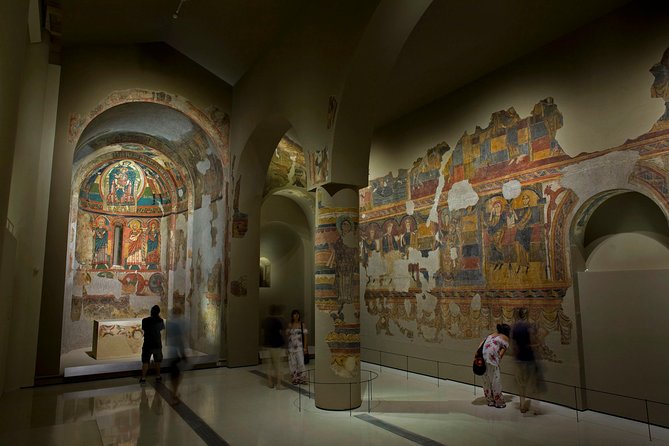
The frescoes were created for churches, where they covered walls and ceilings. At MNAC, many are displayed in reconstructed church interiors, allowing you to see how the paintings worked as part of a complete sacred space. That setting changes your response. Instead of viewing a fragment as an isolated object, you get a better sense of its scale, color, and original purpose.
The famous Christ in Majesty is a natural first stop. This twelfth-century image shows a luminous Christ seated on a rainbow. Its direct, powerful design makes it easy to understand why the work is one of the museum’s best-known treasures.
You will see strong outlines, symbolic poses, and intense color rather than the naturalistic painting associated with later European art. The pictures were made to teach and inspire church congregations, not simply to decorate a room. That purpose gives the collection an unusual force.
This section can also be the museum’s most divisive. If you prefer portraits, landscapes, or modern sculpture, the repeated religious subjects may begin to feel similar. I recommend looking for differences in gesture, color, facial expression, and composition rather than trying to inspect every work equally.
Give the Romanesque galleries at least 45 minutes if you want to appreciate them. If you have only a short visit, do not skip them in favor of a quick sweep through the later rooms. They are the material that gives MNAC its strongest identity.
Gothic, Renaissance, and Baroque art across Europe
The later galleries widen the story. You move from medieval religious painting into Gothic work, Renaissance art, Baroque painting, and European pieces from the 1400s through the 1900s.
This part is useful for seeing how artistic priorities change. Figures become more natural, space becomes more convincing, and artists pay greater attention to portraits, architecture, fabrics, and everyday detail. The collection includes work by Titian, Canaletto, Goya, and Gainsborough, giving you recognizable names alongside artists you may not know.
Titian brings the color and drama associated with Venetian painting. Canaletto offers carefully arranged urban views. Goya brings a sharper and more complicated look at Spanish society. Gainsborough adds an important British presence to a collection that otherwise keeps returning to Catalonia, Spain, and continental Europe.
Do not expect a museum built around a single famous artist. MNAC is stronger as a broad survey than as a checklist of headline masterpieces. You come here to understand the changing art of Catalonia and its connections with Europe.
The religious focus continues into some of these rooms, so your enjoyment may depend on your interest in church commissions and devotional art. The displays can also feel extensive. I would choose a handful of works in each period and read the labels rather than trying to absorb everything.
The chronological layout makes the museum easy to follow. You do not need a specialist background to understand the basic movement from medieval symbolism to Renaissance naturalism and later artistic experimentation.
Same base, a different kind of afternoon:
- Barcelona: Sagrada Familia Entry Ticket with Audio Guide
★ 4.6 · 105,312 reviews - Barcelona: Park Güell Admission Ticket
★ 4.4 · 76,534 reviews - Barcelona: Casa Batlló Entry with Self-Audioguide Tour
★ 4.7 · 25,359 reviews - Barcelona: 24 or 48-Hour Hop-On Hop-Off Bus Tour
★ 4.4 · 20,872 reviews
Catalan Modernism and Gaudí’s furniture
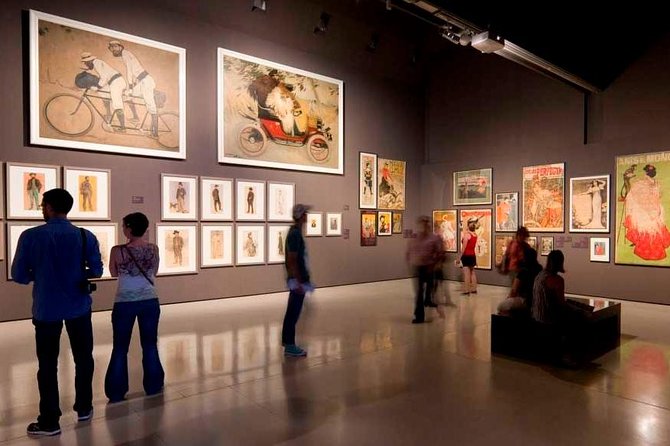
The Modern Art section changes the mood. Here you find paintings, sculptures, posters, furniture, and other decorative works by nineteenth- and twentieth-century Catalan artists.
This is where the museum feels most connected to Barcelona’s identity. The focus is not only on painting. Design, advertising, interiors, and objects show how Catalan Modernism entered everyday life. Gaudí’s furniture is a particular draw, with curving wooden chairs and doors that appear shaped by movement rather than strict geometry.
If your Barcelona plans already include Gaudí buildings, this section gives you another way to understand his work. Architecture can overwhelm you with scale, but a chair or door brings the ideas down to hand level. You can see the care given to line, wood, comfort, and structure.
The modern galleries also include works you may not encounter outside Spain. That makes them especially valuable for visitors who have already seen the city’s better-known architectural sights and want a broader view of Catalan culture.
One account also praised a temporary exhibition about war propaganda. Temporary displays change, so do not plan your visit around that subject unless you confirm it is running. Still, check the exhibition rooms when you arrive. A strong temporary show can add a timely focus to a permanent collection that spans many centuries.
Montjuïc views, gardens, and the one-hour add-on
The museum visit naturally continues outdoors. Parc de Montjuïc is listed as a one-hour stop, but you can make this as brief or generous as your schedule allows.
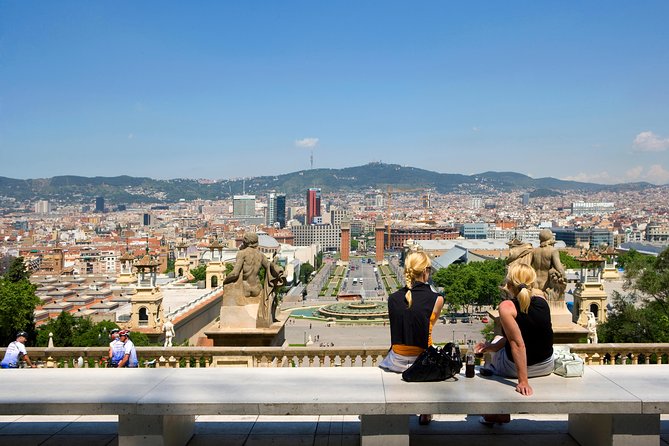
The hilltop position gives you scenic views across Barcelona. You can pause outside, walk through the gardens, and enjoy the National Palace from different angles. Several visitors felt the grounds were the strongest part of the visit, while others considered the building and views reason enough to come.
I would reserve at least an hour for the outdoor side, particularly if the weather is pleasant. The palace facade, towers, terraces, and gardens provide excellent photo opportunities, and the setting gives your eyes a break after several hours of gallery rooms.
Some accounts also describe a fountain show with music later in the evening. That is separate from the museum visit and depends on the schedule, so check current local information rather than assuming it will happen on your date.
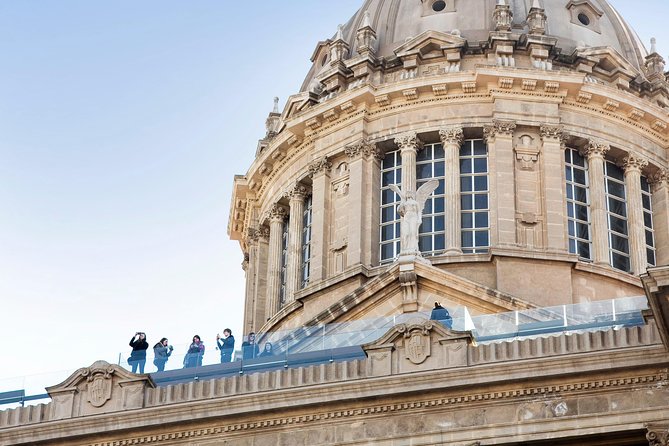
If you want a quiet museum morning, arrive early and visit the roof terrace before lines build for the small elevator. One useful tip is to complete the full rooftop route rather than taking the first exit down. The higher viewpoints offer some of the best city scenes connected with the visit.
Is $14.48 a fair price?
At $14.48 per person, the ticket is reasonably priced for the amount of art and time available. You are paying for access to a large permanent collection, a major palace, gardens, and city views. If you spend three hours inside and another hour around Montjuïc, the cost compares well with many central Barcelona attractions.
The value depends on your date. MNAC offers free admission on certain occasions, including the first Sunday of some months according to booking information and visitor accounts. Seniors may also qualify for free entry. Rules and hours can change, so check the museum’s own current terms before purchasing a third-party ticket.
That point matters because an advance voucher is not automatically the cheapest option. If your visit falls during a free period, paying $14.48 adds no benefit. The online ticket may still help if a line is long, but it does not turn a free admission day into a better deal.
The paid ticket can be useful at busy times. One visitor found a long walk-in line on a hot day while the advance-ticket line was empty. That kind of time saving can be worthwhile, especially if you have only a few days in Barcelona.
Still, do not assume skip-the-line access removes every step. You may need to exchange the voucher at the ticket office, and the ticket is not a guided entry. The best value comes when you choose a busy day, want a fixed plan, or prefer having admission arranged before reaching Montjuïc.
Timing, opening hours, and practical planning
Three hours is the suggested average, and I think it is a sound target. It gives you time for the Romanesque frescoes, a measured look at the later galleries, and at least a quick visit to Modern Art.
Art lovers may want four hours. One person spent that long and still found the museum rewarding. If you have only one hour, go directly to the Romanesque section, then see Gaudí furniture and the views.
Pay close attention to the day and time printed on your booking. A Sunday closing time of 3 p.m. was not clearly shown to one ticket holder, resulting in a missed visit. Even if your voucher is valid for another day, a shortened schedule can disrupt a tight Barcelona plan.
The museum is near public transportation, and most people can participate. The ticket is mobile, and English is the offered language for the booking information. Do not confuse that with a live English guide. Guided tours and audioguides are not included.
Food is available on site, and the museum shop makes a convenient stop for gifts. Restaurant prices were considered high by one visitor, while another praised the food selection and reasonable value. I would treat the restaurant as a convenience rather than a guaranteed bargain.
Free cancellation is available if you cancel at least 24 hours before the local start time. Changes or cancellations inside that window are not accepted for a refund.
Who will enjoy MNAC most?
I recommend MNAC if you want more than Barcelona’s familiar modernist landmarks. The museum gives you Catalan art in context, from medieval church painting to furniture, posters, and twentieth-century design.
It suits you especially well if you enjoy:
- Medieval and religious art
- Catalan Modernism and Gaudí
- Large museums with several historical periods
- Architecture, gardens, and city views
- Independent visits without a fixed guide
- A slower half-day on Montjuïc
You may want to shorten the visit if your main goal is famous Spanish painting. There are important names, including Goya and Titian, but this is not a museum focused only on Velázquez, Picasso, or one national school.
Families and mixed-interest groups can also make it work because the building, outdoor spaces, and changing sections offer variety. The lack of an included guide means each person can move at a comfortable pace, though you should prepare a simple route before entering.
Should you book the MNAC admission ticket?
Book it if you want a flexible three-hour museum visit, especially on a busy date when avoiding a long entrance line matters. The Romanesque frescoes, Gaudí furniture, National Palace, and Montjuïc views give the ticket several worthwhile layers.
Before paying, compare your date with free-entry periods and confirm Sunday hours. If admission is free, buy only if the booking channel offers a clear advantage for entry. If you are visiting during a crowded period, the $14.48 price is fair for the time saved and the amount you can see.
My ideal plan is to arrive early, visit the rooftop before the elevator line grows, spend focused time with the Romanesque frescoes, then move through the Gothic, Renaissance, Baroque, and Modern Art galleries. Finish outside with the gardens and views. That makes MNAC feel like a full Montjuïc outing, not just another ticketed room in a busy Barcelona itinerary.
FAQ
How long should I allow for the MNAC visit?
About three hours is a reasonable average. You can stay longer if you want to examine the large collection in detail, and some people spend four hours inside.
What does the admission ticket include?
It includes admission to the National Museum of Art of Catalonia permanent collection. The Montjuïc Park stop is also part of the suggested visit, but the ticket does not include a guided tour or audioguide.
Is the visit guided?
No. You explore the museum independently at your own pace. English is offered for the booking information, but a live English-speaking guide is not included.
Do I need to exchange the mobile voucher?
Yes. The instructions say to redeem the voucher at the museum ticket office before entering. Keep the electronic voucher available on your phone.
What are the museum’s main highlights?
The Romanesque frescoes, including the twelfth-century Christ in Majesty, are major highlights. You can also see Renaissance and Baroque works, paintings by Titian, Canaletto, Goya, and Gainsborough, plus Gaudí furniture and other Catalan Modernist art.
Is the museum suitable for a short visit?
Yes, but choose your priorities. If you have limited time, focus on the Romanesque frescoes, Modern Art, Gaudí furniture, and the city views from the palace and grounds.
Is admission ever free?
The information provided notes free admission on the first Sunday of some months, and visitor accounts also mention free entry at certain times and for some seniors. Check the museum’s current rules before purchasing a ticket.
Can I cancel the ticket for a refund?
You can cancel for a full refund up to 24 hours before the experience start time. Cancellations or changes made less than 24 hours ahead are not accepted for a refund.
Recently listed in Barcelona
- Transfers From Cruise Port to Barcelona Airport★ 4.5 · 155 reviews
- Bohemian Barcelona Neighborhood Evening Tapas & Wine Tour★ 5.0 · 419 reviews
- Park Guell Guided Tour with Skip the Line Tickets★ 4.0 · 739 reviews
- Montserrat very early : Hiking, Abbey, very small group★ 5.0 · 127 reviews
- Barcelona Sunset Cruise with Light Snacks and Open Bar★ 5.0 · 476 reviews
- Barcelona: Sagrada Familia, Park Guell & Tapas Private Tour★ 5.0 · 903 reviews
- Authentic Flamenco Show Barcelona : Intimate Casa Sors Experience★ 5.0 · 809 reviews
- Barcelona Expert Tour with Local Guide in Eco Tuk Tuk Private★ 5.0 · 216 reviews
Museums, compared.

FC Barcelona Museum “Barça Immersive Tour” Ticket
Read our review →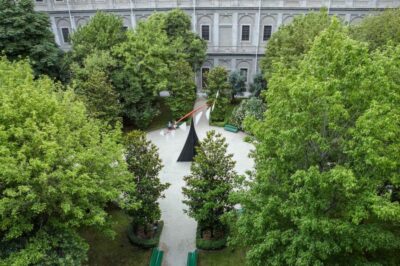
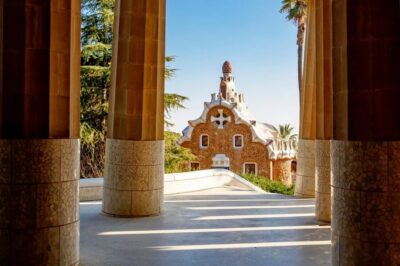
Park Güell and Gaudí House Museum Entry Ticket
Read our review →
Puro Flamenco Show with Optional Museum Ticket
Read our review →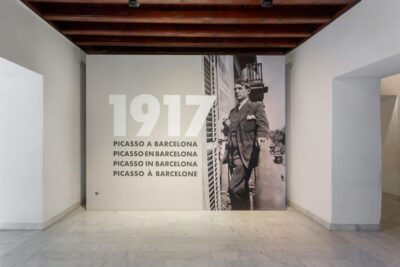
Girona & Dali Museum Small Group Tour with Pick-up from Barcelona
Read our review →
Oceanogràfic, Hemisfèric & Science Museum Combo
Read our review →Browse the lists this tour appears in