
Reviewed · TAPAS TOURS
Old Madrid Tapas and Fine Wine Small Group Tour
Come hungry, leave happily full. This evening walk through La Latina combines old Madrid streets, family-run bars, carefully chosen tapas, and wines that go well beyond the usual tourist pour. I especially like the group limit of eight and the guide’s personal touch, including wines from his own cellar. The main point to consider is that this is more wine-led than food-led, and the 21-and-over age rule makes it unsuitable for younger visitors.
At $101.63 per person, the price is fair if you value quality wine, several food stops, and a guide who manages the evening closely. You are not simply paying for a plate of tapas and a few samples. You are paying for access to small venues, planned pairings, and a social evening that can last three to four hours. Some walking on narrow cobblestone streets is involved, so comfortable shoes matter.
In This Review
- Key details that shape the evening
- Starting in La Latina, Madrid’s oldest neighborhood
- Vermouth on tap and seasoned Chupadedos olives
- Nineteenth-century wine with Madrid cod fritters
- Albariño and tostas in one of Madrid’s prettiest wine bars
- Narrow streets and Iberico tenderloin
- Red wines from the guide’s personal cellar
- Pedro Ximénez and the ice cream finale
- Why the group size matters in old Madrid
- Is $101.63 a fair price?
- Who should book this La Latina evening?
- Practical timing and cancellation advice
- Should you book it?
- FAQ
- Where does the tour begin?
- Where does the tour end?
- How long does the tour last?
- How many people can join?
- Is the tour offered in English?
- What is the minimum age?
- Is hotel pickup included?
- What food is included?
- What drinks are included?
- Can I cancel for a full refund?
Key details that shape the evening
- Only eight people at most: The small group fits into compact old-town bars and makes conversation with the guide easy.
- A wine-first tasting: Vermouth, Albariño, Spanish reds, and Pedro Ximénez lead the program, with tapas chosen to match.
- Seven tasting stages: You move through olives, cod fritters, tostas, Iberico tenderloin, red wine, and dessert.
- A certified wine guide: The guide is certified by the Spanish Wine Tasting Association and explains the drinks in practical terms.
- A taste of local Madrid: La Latina is Madrid’s oldest neighborhood, with traces of its 12th-century defensive wall.
- A useful first-night activity: The guide can help you understand local food customs and point you toward bars or shops for later in your stay.
Starting in La Latina, Madrid’s oldest neighborhood
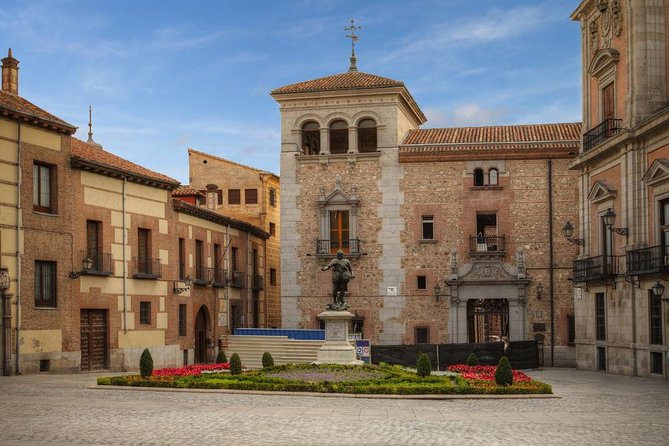
The meeting point is Plaza de la Villa, in central Madrid. From there, the experience moves into La Latina, an area of narrow streets, old buildings, and small drinking spots. You will see bits of the wall that protected Madrid in the 12th century, a modest reminder that this is not just a backdrop for eating.
The neighborhood setting matters. A food tour in a modern dining district can feel interchangeable with one in any major city. La Latina gives the evening a sense of place. You walk between stops, hear a little about Madrid’s past, and enter bars chosen for their character and specialties.
The walking is not the main event, but it helps connect the food to the city. The route is concentrated in the old town rather than spread across Madrid. That keeps the pace manageable, though cobblestones and narrow streets can be difficult for anyone with mobility limitations. The tour is specifically not recommended for travelers with mobility issues.
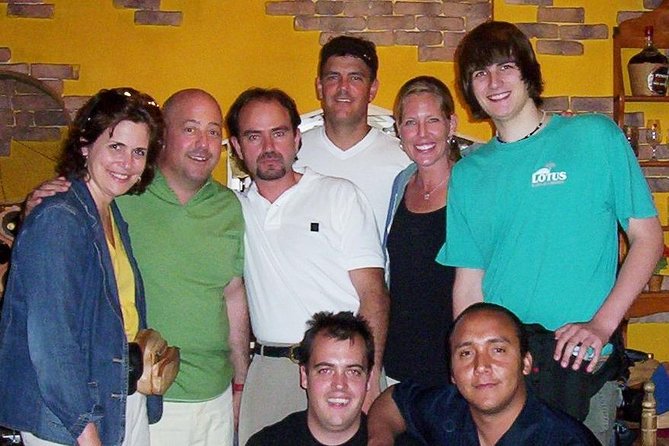
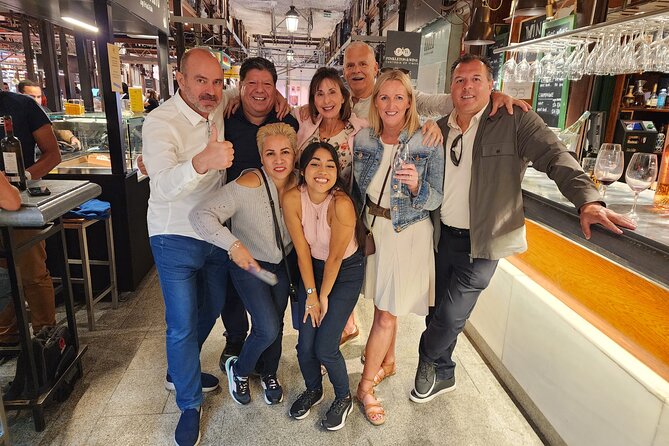
The atmosphere also depends on the group. With six or seven people, you have enough company for lively conversation without the crowding that can make a larger food tour feel like a field trip. The maximum is eight, and that limit is one of the experience’s strongest practical advantages.
More Tapas Tours in Madrid
- Madrid: Small Group of Prado Museum Tour & Optional Tapas
★ 4.6 · 2,437 reviews - Madrid: Tapas & Wine Tasting Tour with Local Guide
★ 4.8 · 2,171 reviews - Madrid Tapas & Wine Tour with Rooftop Views and Local Guide
★ 5.0 · 2,047 reviews
Vermouth on tap and seasoned Chupadedos olives
The first tasting begins with vermouth on tap, a classic Madrid aperitif. It is paired with Chupadedos olives, made from the verdial variety and seasoned with pepper, garlic, oregano, and olive oil.
This is a smart opening. Vermouth is not treated as a minor pre-dinner drink, but as part of Madrid’s food culture. The olives give you something salty and savory to eat while the guide sets the tone for the night.
I like that the pairing is specific. You are not handed a generic bowl of olives and told to enjoy. The seasoning gives the first bite a clear Spanish identity, and the vermouth introduces you to a drink that many people overlook when planning a Madrid visit.
The opening stop is also a good test of the guide’s style. Andrés, who is praised repeatedly for leading this experience, is known for explaining enough to keep the evening interesting without taking over every conversation. He also watches what people are eating and drinking, which is useful in a group with different preferences.
Nineteenth-century wine with Madrid cod fritters
The second bar shifts from vermouth to wine and cod fritters. The guide presents the wine in the style associated with Madrid in the 19th century, adding a small lesson in drinking customs as you taste one of the city’s favored fried seafood bites.
Cod fritters are a familiar Spanish food, but preparation makes all the difference. This stop works because the food is not treated as filler between wine samples. The pairing gives you a way to compare texture, salt, and the wine’s character.
One practical benefit of a guided tasting is that you do not need to guess what to order. You can spend several nights in Madrid walking into bars and trying to identify the house specialties, but a well-planned route gets you to selected dishes quickly. The guide handles the choices, timing, and restaurant relationships.
The food portions add up. You will not be eating a full restaurant meal at every stop, but the tastings are substantial enough that you should arrive ready for dinner rather than having a large meal beforehand.
Albariño and tostas in one of Madrid’s prettiest wine bars
The third stop features Altos de Torona Albariño from 2022, a wine recognized as an International Wine Challenge winner. It is paired with tostas, small pieces of bread topped with savory ingredients.
The account of the pairing mentions chipirón, or baby squid, with mushrooms on toast. That combination gives this stop a different feel from the olives and cod. You move from salty snacks and fried food to a more composed bite with seafood, bread, and earthy flavors.
This is where the tour’s wine focus becomes clear. You are tasting styles rather than simply drinking whatever is cheapest or easiest to serve. Albariño is often associated with freshness and seafood, so the match with a seafood tosta makes sense even if you know little about wine.
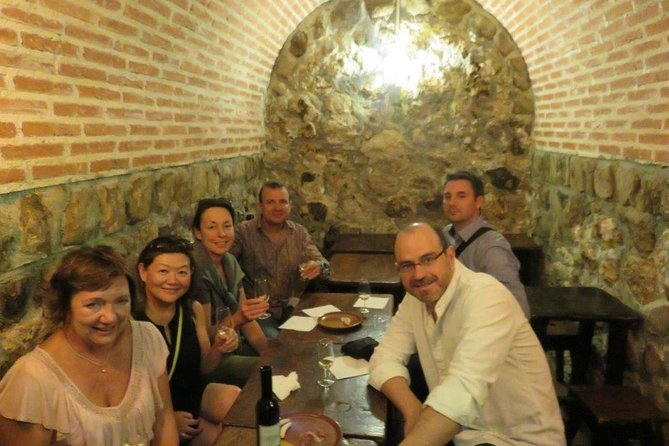
The bar itself is described as one of Madrid’s most beautiful wine bars. Since the group is limited to eight, you have a better chance of fitting comfortably into small venues like this. A larger group would risk turning an intimate bar into a staging area.
If you mainly want to sample as many foods as possible, this stop may feel lighter than the meat course later on. If you enjoy seeing how wine changes with food, it is one of the more useful parts of the evening.
Same base, a different kind of afternoon:
- Madrid: Tour Bernabéu Entry Ticket
★ 4.5 · 21,573 reviews - Madrid: Prado Museum Entry Ticket
★ 4.6 · 17,509 reviews - Madrid: Royal Palace Fast-Access Admission Ticket
★ 4.6 · 13,856 reviews - Madrid: “Emociones” Live Flamenco Performance
★ 4.8 · 12,866 reviews
Narrow streets and Iberico tenderloin
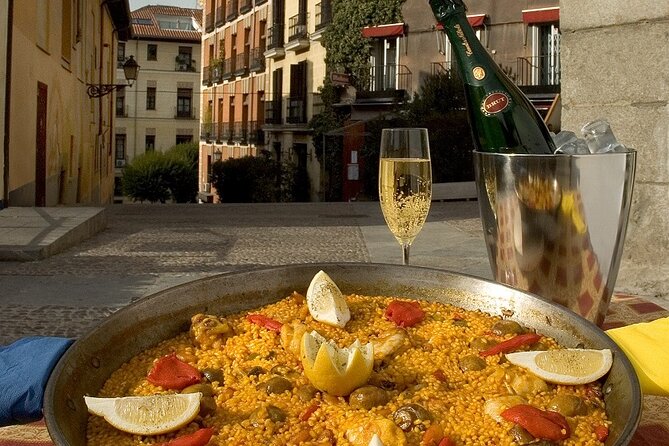
After the first three bars, the route takes you farther into Old Madrid along narrow cobblestone streets. The next stop is a highly rated restaurant in La Latina, where you sit down for Iberico tenderloin from a three-Michelin-star butcher in Madrid.
This is the evening’s biggest food moment. Iberico pork is prized for its flavor and texture, and tenderloin gives you a chance to taste the meat without a heavy sauce covering it. The important detail here is sourcing. The tour is not presenting Iberico as a vague Spanish label. It connects the dish with a specific high-end butcher.
The guide pairs the meat with red wine, moving the evening into fuller, more serious flavors. You may taste wines such as Matas Altas, Platón, or Viña Arana Gran Reserva 2015, depending on the selections made that night.
The restaurant stop also gives the group a chance to sit down. That break is welcome after several short bar visits, especially since the tour runs for three to four hours. It is a good example of the route’s pacing: standing tastings early, then a more relaxed meal segment once the wine and food become richer.
One note on expectations: the phrase three Michelin star butcher refers to the butcher’s distinction, not a promise that the restaurant itself holds three Michelin stars. The supplied details describe the meat as coming from the only three-Michelin-star butcher in Madrid. That is an unusual sourcing detail, but it should not be confused with a three-star restaurant meal.
Red wines from the guide’s personal cellar
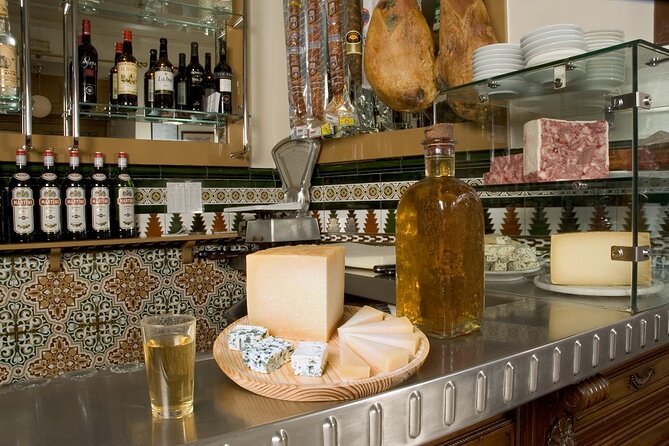
The later tasting turns to Spanish reds. The guide uncorks bottles from his own cellar, with examples including Matas Altas, Platón, and Viña Arana Gran Reserva 2015.
This personal cellar is one of the tour’s most praised touches. It suggests preparation and enthusiasm rather than a standard package poured from a restaurant’s open bottle. It also lets you taste wines that may not appear on a basic tapas crawl.
You do not need advanced wine knowledge to enjoy this part. The guide is there to explain the grapes, styles, and food matches in plain language. The best approach is to taste first, then ask questions about what you notice.
The wine emphasis does create a limitation. If you rarely drink wine, you may find the evening long. One participant who did not drink wine was able to have beer instead, and the guide adjusted for personal preferences. That does not mean every substitution is guaranteed, but it shows that the experience can be handled with some flexibility.
The guide’s care is important here. Andrés is praised for learning names quickly, noticing who is not eating or drinking, and making sure nobody is left out. That kind of attention matters more in a small group than a rehearsed speech about wine.
Pedro Ximénez and the ice cream finale
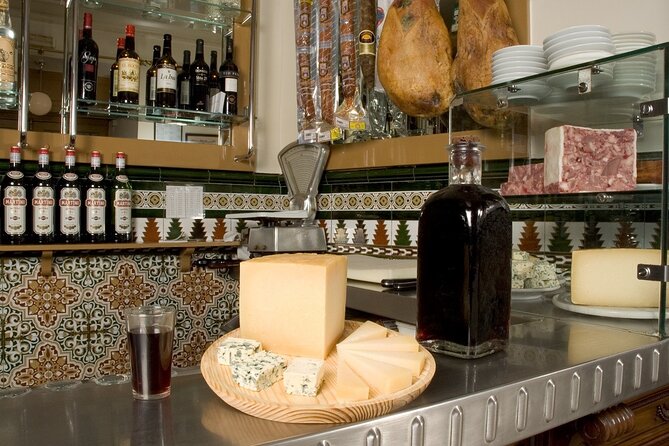
The final tasting is Pedro Ximénez, often called PX. This sweet Spanish dessert wine is poured over vanilla ice cream, creating a combination that tastes like rum and raisins.
It is a playful ending after the serious reds and Iberico. PX is intensely sweet and raisiny, so vanilla ice cream gives it a creamy partner and softens its strength. If you have never tried Spanish dessert wine, this is an easy and memorable introduction.
The final stop may also include several red wines and additional food, depending on the night’s plan. One account describes four wines from the guide’s collection at the last stop, along with carefully selected restaurant food. The exact pours can vary, so think of the structure as a guided progression rather than a fixed restaurant menu.
By this stage, you should be comfortably full. The evening begins with small salty bites, adds fried cod and seafood tostas, then moves to Iberico and dessert. It is not a dinner in the traditional sense, but you will not go hungry.
Why the group size matters in old Madrid
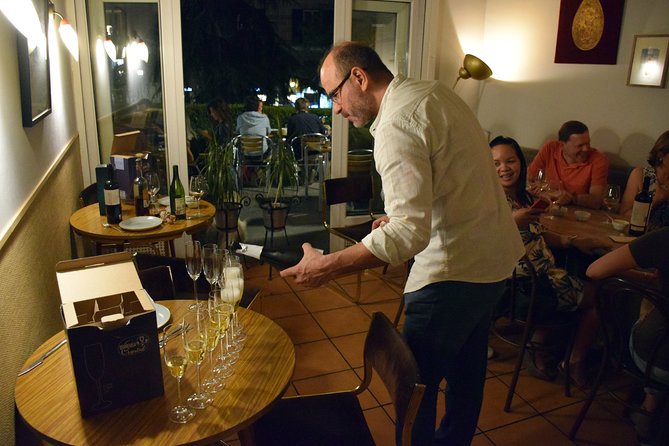
Eight people is a sensible ceiling for this route. Many old Madrid bars are small, family-run places with limited seating. A large group would make reservations harder, slow down service, and reduce the feeling that you are stepping into ordinary local places.
A smaller group also gives you access to the guide. You can ask about a wine, request a food adjustment, or get advice for another night in Madrid. Andrés has been praised for recommending wine shops and restaurants, and for helping people get a ride safely at the end of the evening.
There is also a social advantage. You spend several hours with the same small group, moving from bar to bar. That can lead to a friendly evening, but it is worth being honest about the format. If you prefer eating privately with your own companion, a group tour may feel too social.
The guide’s role is more than narration. He coordinates the stops, gets the group seated without long waits, and keeps the pace moving. A poorly managed food walk can waste half the evening outside busy bars. This one is built around compact stops and advance planning.
Is $101.63 a fair price?
At $101.63, this is not the cheapest way to eat tapas in Madrid. You can order olives, vermouth, and small plates for less if you choose bars yourself. The price makes more sense when you count the wine range, the Iberico tenderloin, the dessert wine, the guide, and the coordination of multiple venues.
The value is strongest for someone who wants to learn while eating. You are getting an introduction to Madrid’s drinking customs, regional wines, local foods, and old-town geography in one evening. You also avoid the guesswork of choosing places from a long list.
The wine from the guide’s own cellar adds another layer of value, though the precise bottles may vary. If you are passionate about Spanish wine, this is likely to feel more worthwhile than a basic tapas crawl. If your priority is simply a large quantity of food, you may find the price harder to justify.
Hotel pickup and drop-off are not included. You meet at Plaza de la Villa, and the activity ends back at that meeting point. Since the route stays in central Madrid and is near public transportation, getting to and from the start should be straightforward, but you need to arrange it yourself.
Who should book this La Latina evening?
I would recommend it to adults who enjoy wine, small plates, old neighborhoods, and conversation. It suits couples, solo visitors, and small groups who want a social first taste of Madrid’s food culture.
It is especially useful early in your stay. You can learn which foods to seek out, discover bars worth revisiting, and ask the guide for local suggestions. Several stops may become places you return to later.
This is less suitable for anyone under 21, anyone avoiding alcohol, or anyone who has difficulty walking on cobblestones. The experience is also not designed for a quiet, private dinner. You move between bars and restaurants, and the group atmosphere is part of the appeal.
Food preferences can be discussed with the guide, and the route has been adjusted for picky eaters. Still, the stated program centers on wine, olives, cod, seafood tostas, Iberico, and dairy-based dessert. You should check directly before booking if you have allergies or major dietary restrictions.
Practical timing and cancellation advice
Plan on three to four hours, though the evening can run longer when the group is enjoying itself. The tour is offered in English and includes a mobile ticket. Confirmation is provided when you book.
Free cancellation is available up to 24 hours before the start time. Changes or cancellations inside that 24-hour window are not accepted for a refund. The local-time cutoff applies.
The tour needs good weather and a minimum number of people. If poor weather or low numbers force cancellation, you are offered another date or experience, or a full refund.
Because the tour is often booked well ahead, with an average booking lead time of 52 days, popular dates may fill early. That is useful to know if your Madrid schedule is fixed.
Should you book it?
Book this tour if you want serious Spanish wine, carefully matched tapas, and a small group in old Madrid. The strongest reasons are the eight-person limit, the guide’s personal wine selections, the Iberico course, and the progression from vermouth to PX.
Skip it if you want a cheap, food-heavy crawl, avoid alcohol, or cannot manage uneven old-town streets. For most adults who enjoy wine and want a friendly introduction to La Latina, $101.63 is a reasonable price for a well-planned evening with more personality than a standard bar-hopping tour.
FAQ
Where does the tour begin?
It begins at Plaza de la Villa, Pl. de la Villa, Centro, Madrid, Spain.
Where does the tour end?
The activity ends back at the meeting point.
How long does the tour last?
It lasts approximately three to four hours.
How many people can join?
The group is limited to a maximum of eight people.
Is the tour offered in English?
Yes, the experience is offered in English.
What is the minimum age?
The minimum age is 21.
Is hotel pickup included?
No. Hotel pickup and drop-off are not included.
What food is included?
The tastings include Chupadedos olives, cod fritters, tostas, Iberico tenderloin, and vanilla ice cream with Pedro Ximénez wine.
What drinks are included?
The experience includes vermouth on tap, white wine including Albariño, Spanish red wines, and Pedro Ximénez dessert wine.
Can I cancel for a full refund?
Yes. You must cancel at least 24 hours before the experience begins to receive a full refund.
Recently listed in Madrid
- From Madrid: Ribera del Duero Tour of 3 Wineries w/ Tastings★ 4.9 · 150 reviews
- Madrid: Royal Palace VIP Tour with Skip-the-Line Ticket★ 4.3 · 645 reviews
- Madrid: Las Ventas Bullring VIP Private Guided Tour★ 5.0 · 151 reviews
- Photographic tour of Madrid with a professional photographer★ 5.0 · 104 reviews
- Zarzuela Opera and Dinner at La Castafiore Restaurant in Madrid★ 5.0 · 143 reviews
- Madrid Local’s Wine and Tapas Lunch Tour with a side of History★ 5.0 · 101 reviews
- Tapas and history tour ending with churros with chocolate★ 5.0 · 119 reviews
- Atletico de Madrid Stadium & Interactive Museum Admission Ticket★ 4.5 · 183 reviews
Tapas Tours, compared.
Montserrat Half-Day Tour with Tapas and Gourmet Wines
Read our review →
Montserrat & Cogwheel Train, Gourmet Wine Tasting & Tapas/Lunch
Read our review →
Barcelona Tapas and Wine Experience Small-Group Walking Tour
Read our review →
Montserrat with Black Madonna & Medieval Winery with Tapas/Lunch
Read our review →
Montserrat and Winery Tour with Tapas or Lunch
Read our review →
Tapas Walking Tour with Food, Wine, and History
Read our review →
Sevilla Food Tour: Tapas, Wine, History & Traditions
Read our review →
Valencia Old Town Tour with Wine & Tapas in 11th Century Historic Monument
Read our review →Browse the lists this tour appears in