
Reviewed · WORKSHOPS
Playa del Inglés Maspalomas: High Quality Surf Classes
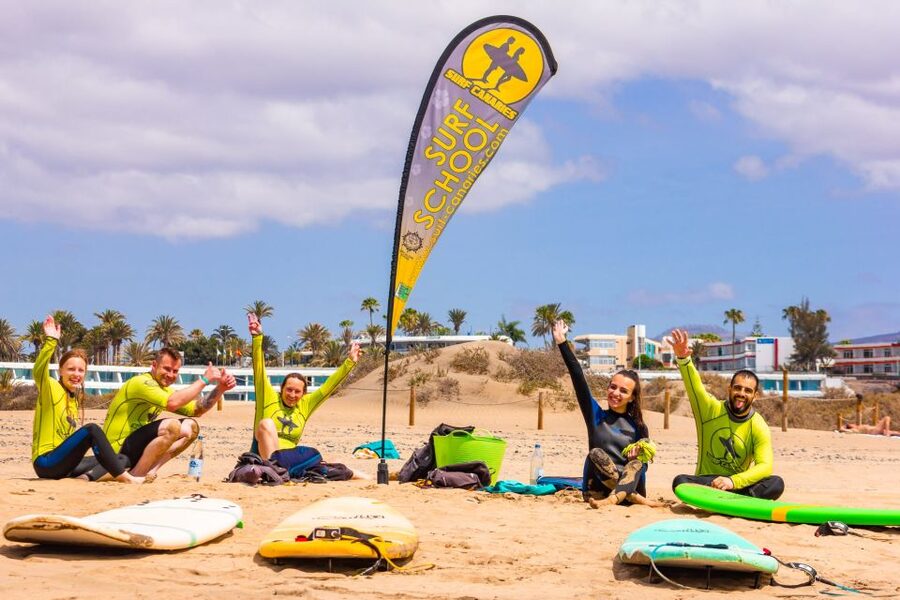
Catch your first wave in Gran Canaria. This four-hour lesson from Surf Canaries combines a clear theory session, video tips, and patient instruction in the water, making it a friendly way to try surfing without prior experience. I especially like the small-group coaching and the fact that the school chooses the beach with the best conditions each day. Free photos, water, fruit, and included equipment add real value. The main catch is that surfing is physical, and the lesson may involve a 10 to 20 minute walk over sand while carrying your board.
The setting helps. You begin near the Maspalomas dunes, then head to a beach selected for that day’s waves. I also like the school’s practical approach: instructors stay involved in the water, and the lesson is built around getting you safely onto a wave rather than simply handing you a board and wishing you luck. Conditions and start times can change, so keep your schedule flexible.
In This Review
- Key points at a glance
- Starting beside the Maspalomas dunes
- Choosing the right beach for the day
- Getting from the board to your first wave
- Four hours, including the parts people forget
- What the $68 price really covers
- Who will enjoy this most
- What to bring and how to prepare
- Photos, encouragement, and the overall mood
- Weather, waves, and cancellation flexibility
- Should you book the Surf Canaries class?
- FAQ
- Do I need previous surfing experience?
- How long does the surf class last?
- Where does the class meet?
- Is transport to the beach included?
- What equipment is provided?
- What should I bring?
- Who cannot take part?
Key points at a glance
- Begin with theory and video: You learn basic technique before entering the water, which makes the first attempts less confusing.
- Beach choice depends on conditions: Surf Canaries can take you to another beach by included transport when the waves are better elsewhere.
- Small groups mean more coaching: A smaller class can give you useful corrections instead of a quick demonstration followed by guesswork.
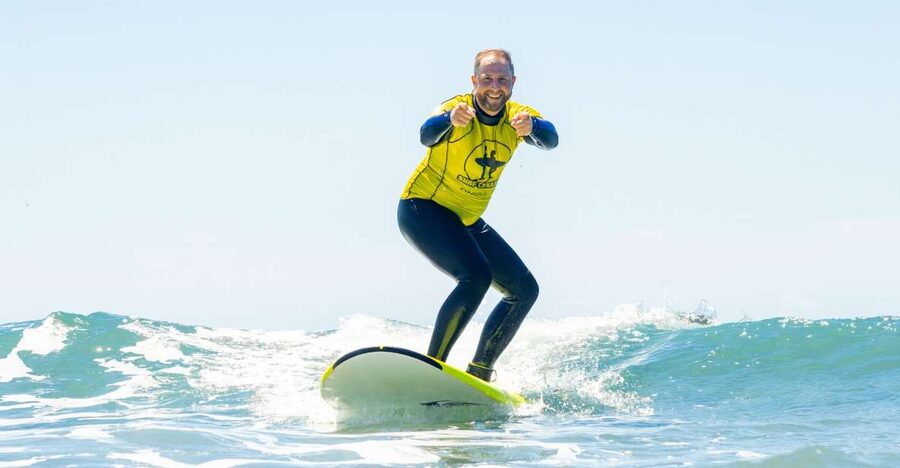
- Designed for first-day success: Many complete beginners manage to stand on the board during the first lesson, though nobody can promise a perfect ride.
- Four hours is a real workout: The session is long enough to practice properly, but it can be tiring, especially in the water.
- Photos are included: You receive pictures of your surfing, along with water and fruit after the first session.
Starting beside the Maspalomas dunes
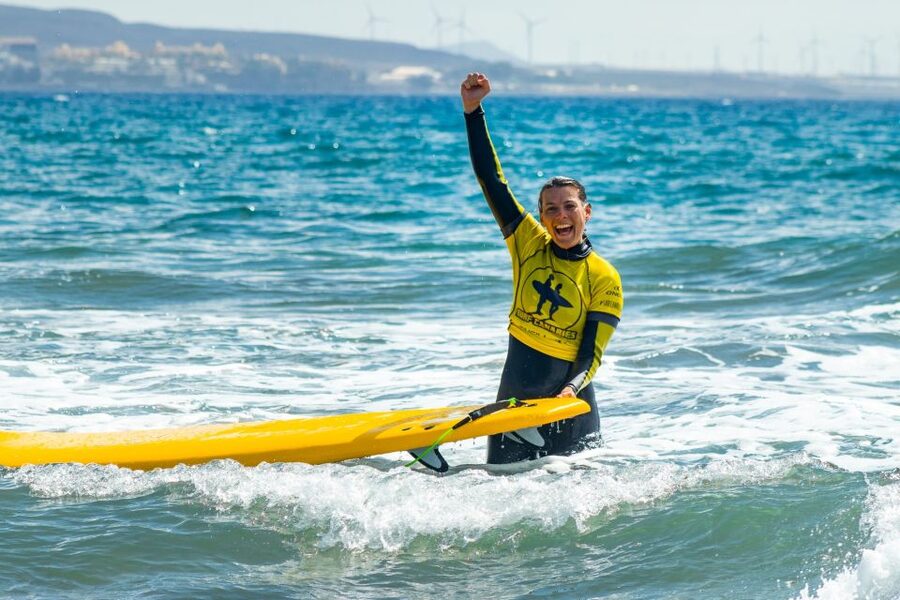
You meet at Surf Canaries Surf School on Alf. Provisionales, Anexo 2, in Playa del Inglés. The location puts you close to the Maspalomas dunes, a memorable starting point for an activity that feels much more connected to the coast than a standard indoor class.
The first part is a relaxed introduction at the school. You cover the basics of surfing and watch video tips before going to the beach. That order matters. Beginners often struggle because they are trying to remember foot position, balance, paddling, and wave timing all at once. A short explanation on land gives you a simple plan before the board starts moving beneath you.
The theory class is described as easy and entertaining rather than heavy or technical. You should still pay close attention. The most useful information is likely to be the practical material: how to lie on the board, how to stand, what to do when a wave approaches, and how to stay safe around other people in the water.
The school supplies the main equipment, including a surfboard, leash, rash vest, and either a long or short wetsuit. You need to bring swimwear, a towel, sunscreen, and a hat. Bring identification as well, since a passport or ID card is required, and a copy is accepted.
A few more Gran Canaria ideas to compare
- Poema del Mar Skip-the-Line Ticket
★ 4.8 · 3,856 reviews - Puerto de Mogán: Submarine Tour
★ 4.4 · 3,792 reviews - Maspalomas: Guided Camel Ride in the Maspalomas Sand Dunes
★ 4.4 · 3,690 reviews
Choosing the right beach for the day
Surf Canaries operates as a mobile surf school. That is one of the strongest features of the class because beginners need forgiving waves more than they need a fixed postcard beach. The instructor team checks the conditions and chooses the best available spot.
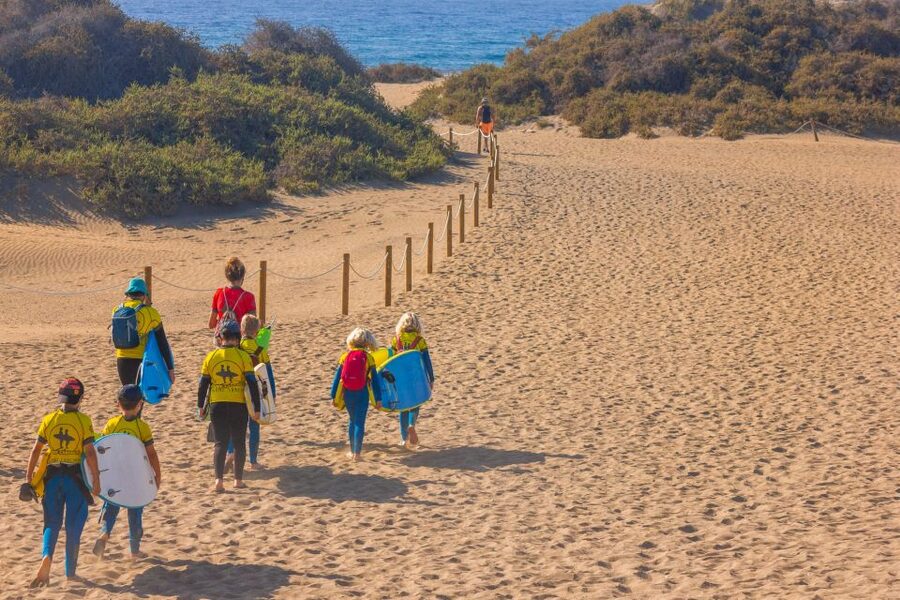
If the preferred waves are at a different beach, transport is included. If Playa del Inglés offers the right conditions, you walk there with the boards. The walk takes about 10 to 20 minutes along the sand, depending on where the waves are breaking.
This is not a major hardship for someone in reasonable shape, but carrying a board over sand is harder than walking on pavement. You may want to treat this as the first part of the workout. Wear sunscreen before leaving the school, and do not expect the transfer to feel like a short stroll in flip-flops if the beach is distant or the sun is strong.
The beach itself is sandy, and beginners benefit from not having to paddle far before reaching breaking waves. One detailed account describes a sandy beach where the waves were already available after a short walk into the water, with no long paddle out. That can save energy for the part that matters most: trying to stand and ride.
The area around the dunes can also include sections used by nude sunbathers. It is not a concern for most people, but families or visitors who prefer a more private setting should know in advance.
Getting from the board to your first wave
Once you reach the water, the instructors stay close and help you catch waves. This hands-on support is central to the experience. A beginner lesson works best when the coach can correct your stance, tell you when to paddle, and encourage you through the awkward first attempts.
The aim is to stand up on your first day. That goal is realistic in suitable conditions, especially with a large beginner board and direct coaching, but you should not measure the lesson only by the number of waves you ride. Surfing has a steep first-hour learning curve. Even getting into the correct position and feeling the board glide is progress.
The coaching style appears to be patient and clear. Instructors explain basic technique in simple terms and give individual help in the water. One named instructor, Danny, is especially associated with enthusiastic, personal teaching. If he is part of your session, his energy may be a bonus, but the broader value comes from the school’s focus on individual attention.
Small groups are available, and this is worth considering when you book. A class with only a few people gives the instructor more chances to watch your attempts and offer a useful correction. It also reduces the time you spend waiting for your turn. Larger groups can still be fun, but the amount of personal coaching may vary.
Several beginners have described feeling safe even without prior surfing experience. That comes from more than friendly encouragement. You receive equipment suited to the lesson, a leash, a wetsuit, instruction before entering the water, and active assistance during the session. You are not expected to work out the basics alone.
Four hours, including the parts people forget
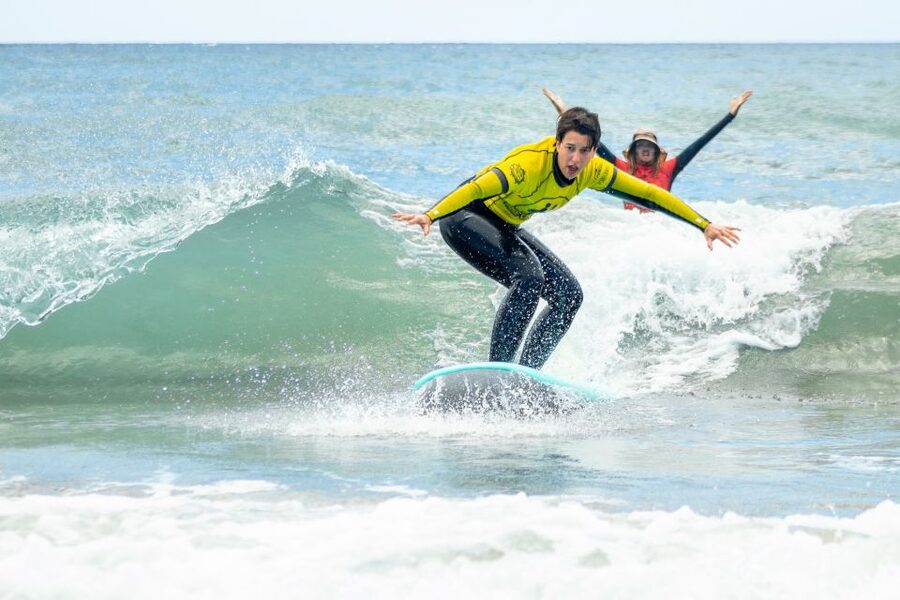
The advertised duration is four hours, and this is a full lesson from start to finish. It is not simply an hour in the water with equipment pickup added around it. The session includes check-in, theory, video instruction, changing, the trip to the beach, time in the water, and the return to the meeting point.
That length gives you room to improve. Your first attempts may be clumsy, and you may need several rounds before the instructions begin to make sense. A shorter activity can leave you just as you start to understand the timing. Four hours offers a better chance to repeat the movement and gain confidence.
The trade-off is tiredness. Surfing uses your arms, legs, stomach, and back, and repeatedly getting onto a board takes effort. One practical warning from the experience is worth taking seriously: this can be a hard workout if you give it your all. You may leave happy, wet, and ready for a meal.
The school provides water and a piece of fruit after the first session. That is a small but useful touch. You should still eat sensibly before the lesson and bring only what you need, since the activity involves sand, water, and changing clothes.
The class is not suitable for non-swimmers, people with back problems, pregnant women, wheelchair users, children under seven, or people with a low level of fitness. The stated weight limit is 243 pounds, or 110 kilograms. Those restrictions are practical rather than fussy. Surfing requires you to manage a board in moving water and repeatedly lift your body onto it.
Same base, a different kind of afternoon:
- Guided tour of the Banana World
★ 5.0 · 3,431 reviews - From Puerto Rico de Gran Canaria: Dolphin Watching Cruise
★ 4.3 · 2,520 reviews - Gran Canaria: Dolphin and Whale Watching Cruise
★ 4.3 · 1,855 reviews - Gran Canaria Guided Buggy Tour
★ 4.7 · 1,743 reviews
What the $68 price really covers
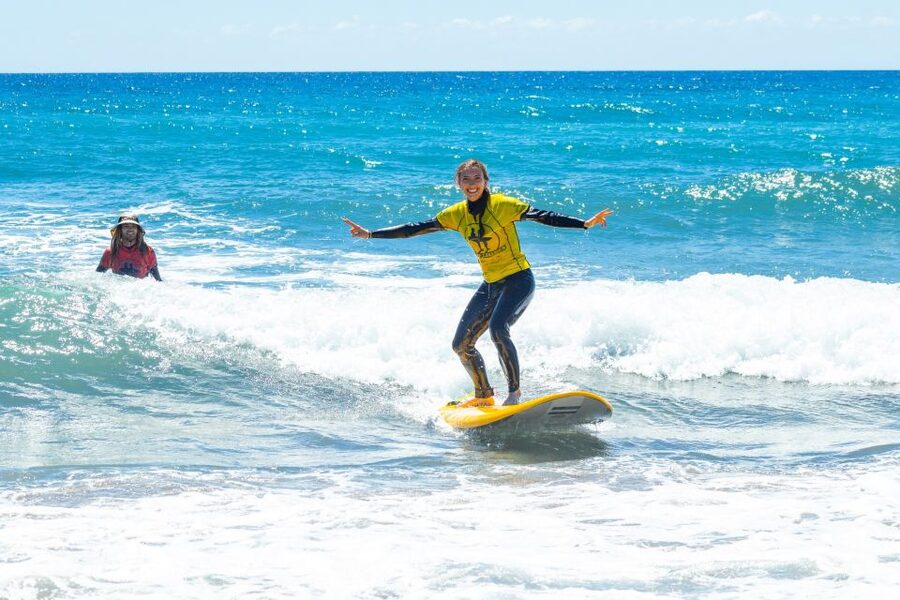
At $68 per person, this is good value if you want a proper introduction rather than a brief beach taster. The fee includes the surfboard, leash, rash vest, wetsuit, instruction, transport when another beach has better conditions, water, fruit, surfing photos, third-party and accident insurance, and a 10 percent shop discount.
Equipment rental alone can quickly make a self-guided first attempt less appealing. You would also lack the safety briefing, beach selection, and timing help that make the first session productive. The included photos are a welcome extra because you can focus on learning instead of asking someone on shore to document the experience.
The strongest value comes from the teaching time. Four hours allows for theory and repeated practice, while small-group availability can make the instruction more personal. If you only want to stand on a board once for a quick holiday picture, this may feel longer than necessary. If you genuinely want to learn the basics, the length is a plus.
The 10 percent shop discount is useful only if you plan to buy something, so I would not count it as a major reason to book. The photos, equipment, insurance, and transport have more practical value.
The school has an overall rating of 4.9 from 304 ratings, which supports the impression of consistently strong service. The most praised points are the friendly instructors, patient explanations, close help in the water, beginner-friendly conditions, and the quality of the photos.
Who will enjoy this most
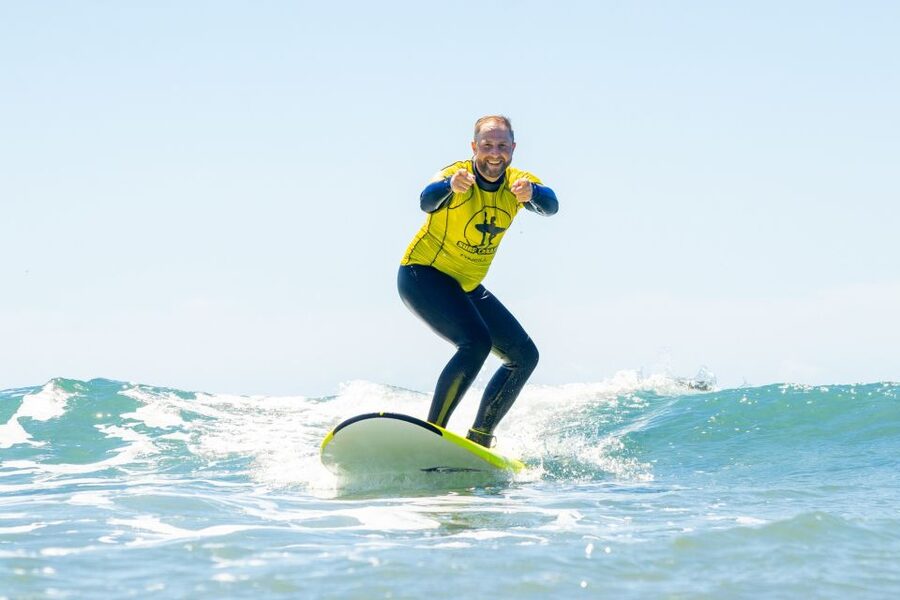
This class suits you if you want an active break from sunbathing and sightseeing. You do not need surfing experience, and the theory session gives first-timers a useful starting point. It can also work well for families with older children. The minimum age is seven, and a lesson has been enjoyed by a parent with children aged 10 and 13.
Fitness matters more than age. A reasonably fit 61-year-old completed the experience, although bruises and serious tiredness were part of the story. That does not mean you need athletic training. It does mean you should be comfortable swimming, getting repeatedly onto a board, walking on sand, and spending several hours being wet.
The class may suit couples, friends, and solo visitors because the group setting creates a shared activity without requiring anyone to arrive with surfing partners. Spanish and English instruction is available.
You may want to skip it if you have a back condition, low fitness, poor swimming ability, or an injury that makes lifting and balancing difficult. You should also think twice if you dislike uncertainty. The start time may vary slightly, and the beach depends on the surf forecast. A fixed schedule is not ideal for an activity ruled by waves.
What to bring and how to prepare
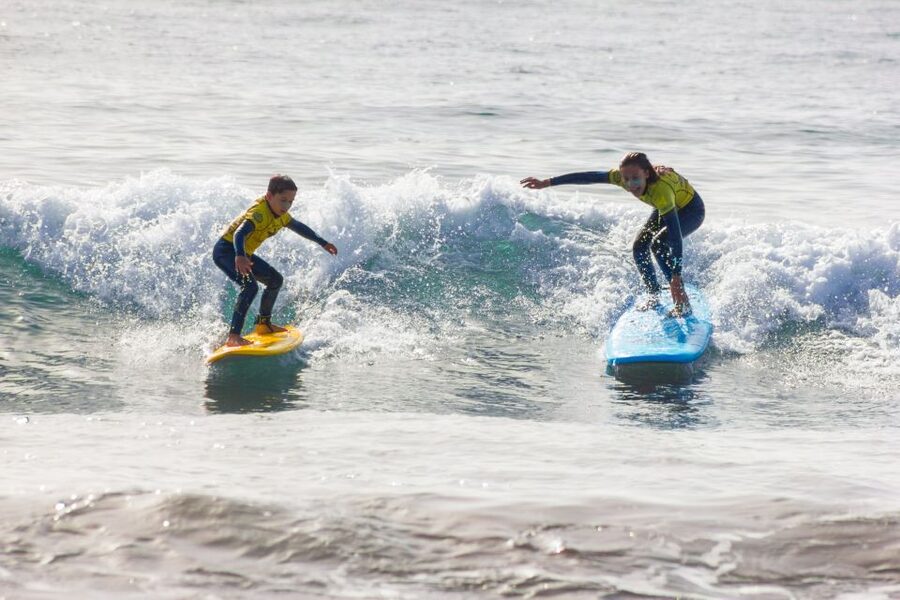
Arrive ready for water, sun, and exercise. Wear swimwear under clothes that are easy to change, and bring a towel. Sunscreen is essential in Gran Canaria, even when the breeze makes the temperature feel comfortable.
A hat is useful before and after the water, though you will not wear it while surfing. Bring your passport or ID card, or a copy, as requested by the school.
Do not plan a tightly timed afternoon immediately after the lesson. The activity ends back at the meeting point, but the exact start time can shift slightly, and conditions guide the day. You will also want time to dry off and recover.
If you are new to surfing, try to remember three things from the theory session rather than chasing every detail. Listen for the correct position on the board, the signal for catching a wave, and the safe way to stand. Clear basics are more useful than trying to look stylish on your first attempt.
Photos, encouragement, and the overall mood
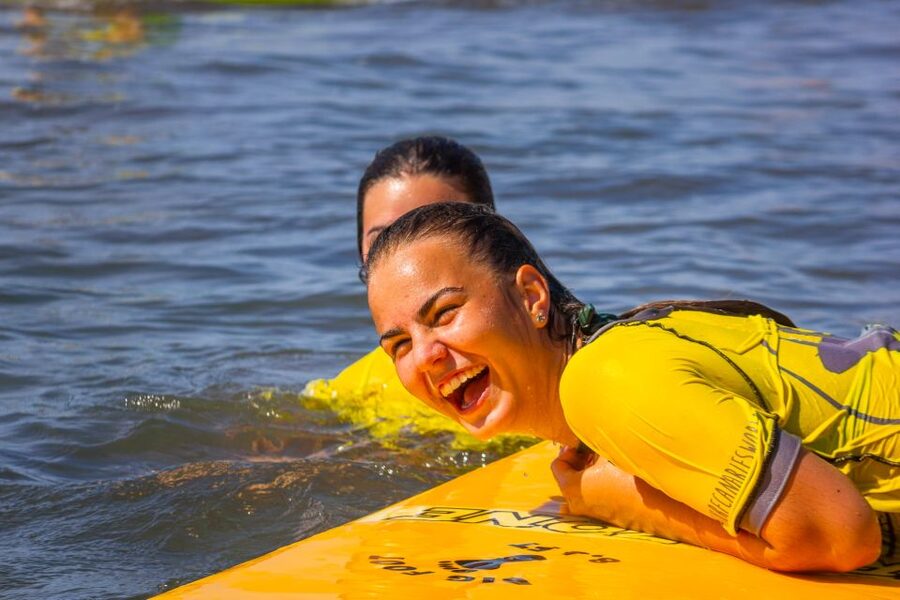
The mood is friendly and upbeat, but not careless. That balance matters in a sport where a little fear is normal. You may fall often, and an instructor who keeps the lesson light can help you try again instead of freezing after one bad attempt.
The personal encouragement is one of the class’s strongest features. Instructors are described as patient, professional, and willing to help each participant. They explain the technique simply, demonstrate it clearly, and continue supporting the group through the full session.
The free photos are more than a marketing extra. Surfing is difficult to observe while you are doing it, and most people cannot take pictures of themselves in the water. The photos give you a record of the attempt, even if your first ride looks less graceful than it felt.
The school also has an environmental touch: water is supplied in glass bottles. That is a modest detail, but it suggests attention to how a beach activity affects its setting. The shop’s caps and other items may appeal if you want a useful souvenir, though purchases are optional.
Weather, waves, and cancellation flexibility
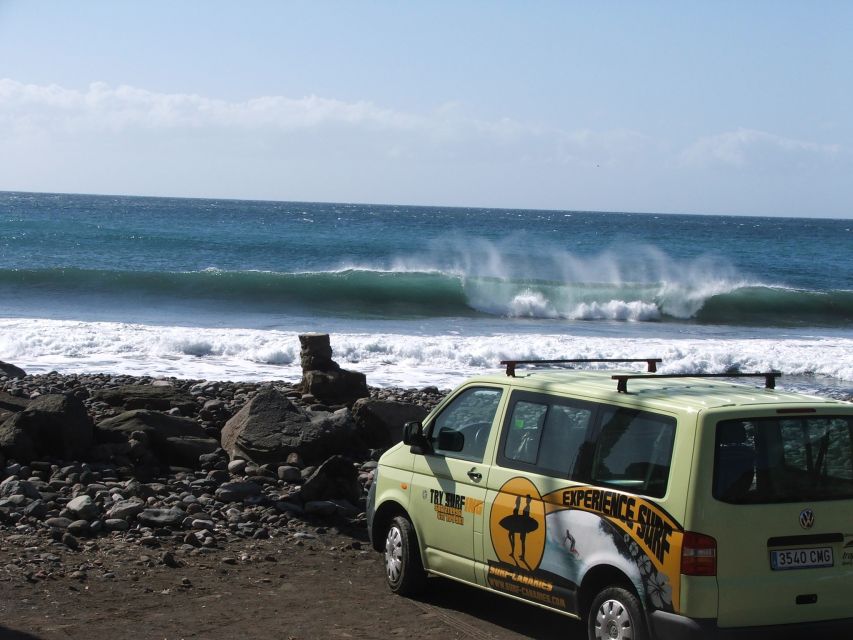
Surfing cannot be treated like a museum visit. The school depends heavily on surf conditions, and the beach or starting time may change. That flexibility is necessary if the goal is to place beginners in suitable waves, but it can frustrate you if you have built a rigid holiday plan.
You can cancel up to 24 hours in advance for a full refund. You can also reserve now and pay later, which helps if you are still arranging your Gran Canaria plans. Even so, check the final meeting instructions and timing before setting out.
The experience provider is Surf Canaries, and the class ends where it begins, at the Playa del Inglés meeting point. Transport is included only when the best surf is at another beach, while a local beach means walking with the boards.
Should you book the Surf Canaries class?
Book this if you want a properly taught first surfing session, not just a quick ride on a board. The four-hour format, small-group option, included equipment, close water coaching, and free photos make $68 a fair price.
I would be especially comfortable recommending it to a reasonably fit beginner who can swim and who has room in the day for changing conditions. Families with children seven and older can consider it, provided everyone meets the fitness and swimming requirements.
Think carefully before booking if you have back trouble, limited fitness, or dislike carrying equipment over sand. Also keep expectations sensible: standing up on the first day is possible, but falling is part of the deal. If you are ready to get very wet, work hard, laugh at a few wobbly attempts, and learn from friendly instructors, Surf Canaries offers a strong introduction to surfing in Maspalomas.
FAQ
Do I need previous surfing experience?
No. The class is designed for beginners and includes a theory session and video introduction before you enter the water.
How long does the surf class last?
The activity lasts four hours, including the introduction, preparation, beach travel, and surfing session.
Where does the class meet?
You check in at Surf Canaries Surf School, Alf. Provisionales, Anexo 2, Playa del Inglés. The activity ends back at the same meeting point.
Is transport to the beach included?
Yes, transport is included if the best waves are at another beach. If the waves are suitable at Playa del Inglés, you walk there with your board. The walk can take 10 to 20 minutes over sand.
What equipment is provided?
The school provides a surfboard, leash, rash vest, and either a long or short wetsuit. Surf instruction, accident and third-party insurance, water, fruit, and photos are also included.
What should I bring?
Bring a hat, swimwear, towel, sunscreen, and a passport or ID card. A copy of the identification document is accepted.
Who cannot take part?
The activity is not suitable for children under seven, pregnant women, people with back problems, wheelchair users, non-swimmers, people with a low level of fitness, or anyone over 243 pounds, or 110 kilograms.
Recently listed in Gran Canaria
- Puerto Rico de Gran Canaria: Jetski Tour★ 4.6 · 949 reviews
- Puerto Rico de Gran Canaria : Parasailing★ 4.6 · 588 reviews
- Puerto Rico, Gran Canaria: Boat Tour with Tapas and Drinks★ 4.6 · 275 reviews
- Puerto Rico : 2 hour Dolphin Catamaran Excursion★ 4.2 · 129 reviews
- Mogan: Dolphin Watching Boat Trip with Swim Stop★ 4.6 · 112 reviews
- Gran Canaria: Puerto de Mogán Local Market Day Trip★ 4.2 · 137 reviews
- Playa del Inglés surf lessons★ 4.8 · 121 reviews
- Gran Canaria: Discover Scuba Diving – Free Transfers★ 4.9 · 115 reviews
Workshops, compared.

Barcelona Paella Cooking Class with Market Visit, Tapas & Sangria
Read our review →
Spanish Cooking Class Paella Tapas and Sangria in Madrid
Read our review →
Paella and Sangria Workshop in the City Center
Read our review →
Paella Cooking Class, Wine Tasting & Central Market in Valencia
Read our review →
Group Surfing Lesson at Playa de las Américas, Tenerife
Read our review →

Paella Cooking Class in Madrid with Bottomless Wine Pairing
Read our review →
Playa de las Américas: Private or Small-Group Surf Lesson
Read our review →Browse the lists this tour appears in