
Reviewed · WINE TOURS
Ribera del Duero Wineries Guided Tour & Wine Tasting from Madrid
Wine country is worth the long road. This full-day trip takes you from Madrid into Ribera del Duero, one of Spain’s best-known red-wine regions, for three very different winery visits and at least nine wine tastings. I like the mix of production, architecture, old villages, and underground cellars. Guides such as Ismael, Cosmin, Antonio, Muna, and Alfonso have earned warm praise for their wine knowledge, safe driving, and easygoing manner.
I also like that food is served with the tastings, so you are not sipping strong reds on an empty stomach. The main drawback is the length: expect roughly 10 to 11 hours, including about two hours each way by road. This is a serious day trip, not a quick outing between Madrid museums.
In This Review
- Key points to know before booking
- Why Ribera del Duero makes a good Madrid day trip
- Meeting at Hotel Claridge in Conde de Casal
- The two-hour ride into wine country
- First winery: learn Tempranillo from grape to bottle
- Second winery: modern design beside the vines
- Roa lunch: choose your own Castilian meal
- Curiel de Duero and the old underground wine tunnels
- What the wine tasting is really like
- Timing, group size, and comfort
- Is the $223.82 price good value?
- Who should book this Ribera del Duero tour?
- Should you book it?
- FAQ
- Where does the tour start?
- How do I reach the meeting point?
- How long does the tour last?
- How many wineries will I visit?
- How many wines are included?
- Is lunch included?
- Can children join the tour?
- What should I bring for the cellar visit?
Key points to know before booking
- Three wineries, three different styles: The route may pair a small young producer with a modern facility and an old underground cellar.
- At least nine wines: Each winery includes a minimum of three tastings, often with generous pours and snacks.
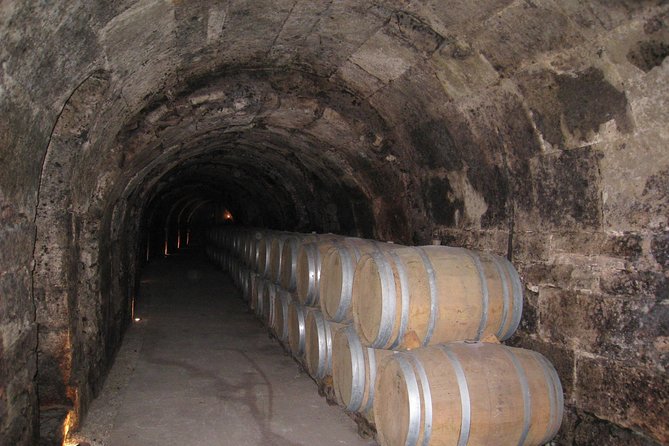
- The underground cellars are a highlight: Some traditional wine tunnels run for miles beneath the town and reach about 40 feet below ground.
- Lunch is separate: You get free time to choose tapas, a light meal, or a three-course Castilian lunch.
- Small groups can feel personal: The maximum is 20 people, though some departures use a smaller van and may feel cramped.
- Plan the Madrid meeting point carefully: Pickup is at 9:15 a.m. outside the cafeteria at Hotel Claridge near Conde de Casal Metro.
Why Ribera del Duero makes a good Madrid day trip
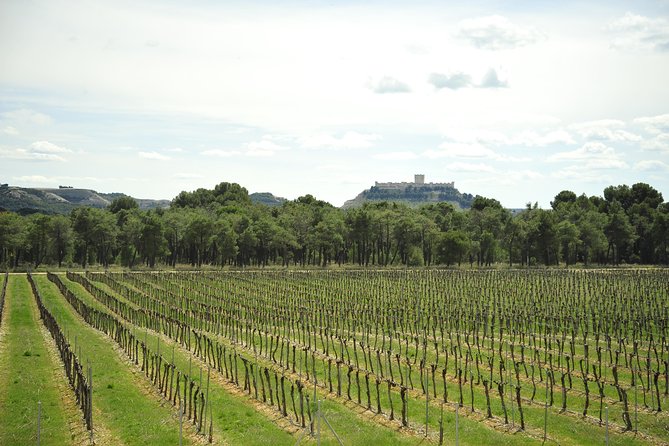
Ribera del Duero follows the Duero River, about two hours from Madrid by road. The area is especially known for Tempranillo, the grape behind full-bodied Spanish reds with plenty of fruit and the ability to age well.
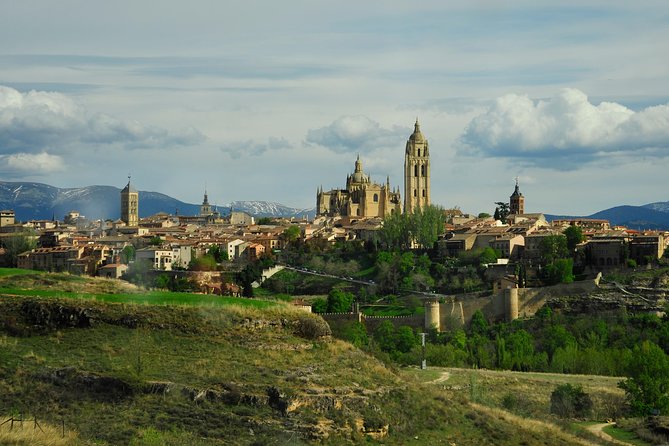
The appeal is not only the wine in your glass. You also see how the region works: vineyards shaped by demanding weather, family-run bodegas, modern buildings opened toward the vines, and old storage tunnels dug into the earth. The trip gives you a useful contrast between old and new Spain without requiring you to rent a car or arrange several winery appointments.
I would not choose this outing if you want a relaxed morning with plenty of time in Madrid. I would choose it if you want to understand Spanish wine through place, production, food, and local tradition.
More Food Tours in Madrid
- Madrid: Live Flamenco Show with Food and Drinks Options
★ 4.5 · 9,901 reviews - Toledo Tour & Vineyard Walk with Wine Tasting from Madrid
★ 5.0 · 2,546 reviews - Madrid: Tapas & Wine Tasting Tour with Local Guide
★ 4.8 · 2,171 reviews
Meeting at Hotel Claridge in Conde de Casal
The day begins at 9:15 a.m. at the front door of the hotel cafeteria, next to the main entrance of Hotel Claridge at Plaza del Conde de Casal, 6. Conde de Casal Metro station, on Line 6, is the closest public transport stop.
Take the departure time seriously. The vehicle leaves on time, and arriving late can mean making your own way to the first stop at your own expense. The practical advice is simple: check the route the night before and allow an extra 10 to 20 minutes beyond the time shown on a map.
The tour provider recommends a regular taxi rather than Uber for this meeting point. Also note that the cafeteria facilities are only for hotel cafeteria customers, so do not count on arriving early and settling in there.
Transport is by air-conditioned van or coach. The exact vehicle matters. A larger coach should feel easier for a long day, while a Mercedes Sprinter can make the group feel more social but somewhat tight. One small group had seating for nine and found it cramped, even though the limited numbers made the day feel more personal.
The two-hour ride into wine country
Once you leave Madrid, the city gives way to open Castilian scenery. The guide uses the drive to explain Spain’s wine traditions, Ribera del Duero, and the role of Tempranillo. Guides have included Ismael, Cosmin, Antonio, Muna, and Alfonso, with Ismael receiving especially strong praise for his clear English, regional knowledge, humor, and care with the schedule.
The drive is long enough that a good guide makes a real difference. Some departures include a useful talk during part of the journey, followed by quiet time to look out the window or rest. You should expect roughly 1 hour 45 minutes to two hours each way, with traffic affecting the final arrival time in Madrid.
This is also where the tour’s value begins. Reaching the wineries without driving after a full day of tastings is useful, and the guide provides context that would be hard to pick up by simply following a map from one bodega to another.
First winery: learn Tempranillo from grape to bottle
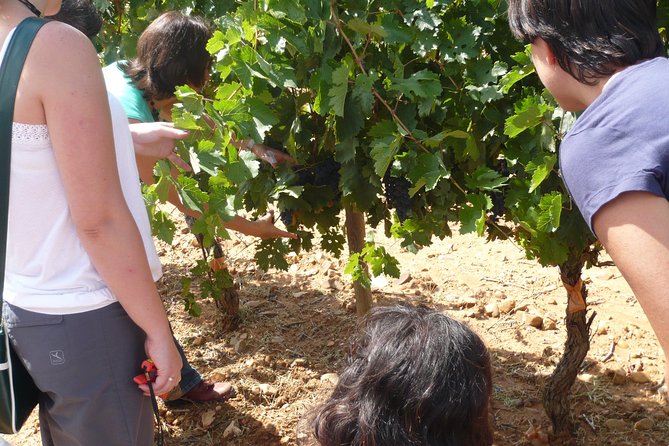
The first bodega usually provides the most direct introduction to winemaking in Ribera del Duero. You learn about the region, the grape, production methods, and how wine changes from harvest through aging and bottling.
A sample route has included Territorio Luthier, a newer boutique producer with wines still developing their identity. Another example described a representative regional winery focused on the freshness, elegance, and complexity of aged wines. Since the wineries can change, you should treat these names as examples rather than guarantees.
This stop is a good place to ask basic questions. How does Ribera Tempranillo differ from other Spanish reds? What does aging do to the wine? How do extreme growing conditions affect the grapes? The winery staff normally lead the technical portion, while your tour guide connects it to the wider region.
At least three wines are tasted here, usually with snacks such as crackers, cheese, or cured meat. That small detail matters. By the second and third winery, the amount of alcohol adds up, and having food at every bodega makes the tasting more comfortable.
More Wine Tastings in Madrid
- Madrid Tapas & Wine Tour with Rooftop Views and Local Guide
★ 5.0 · 2,047 reviews - Madrid Countryside Wineries Guided Tour with Wine Tasting
★ 5.0 · 740 reviews - Madrid: Guided Tapas and Wine Tour with Terrace Visit
★ 4.8 · 566 reviews - Madrid: Not Just Another Tapas & Wine Tour by Eating Europe
★ 5.0 · 244 reviews
Second winery: modern design beside the vines
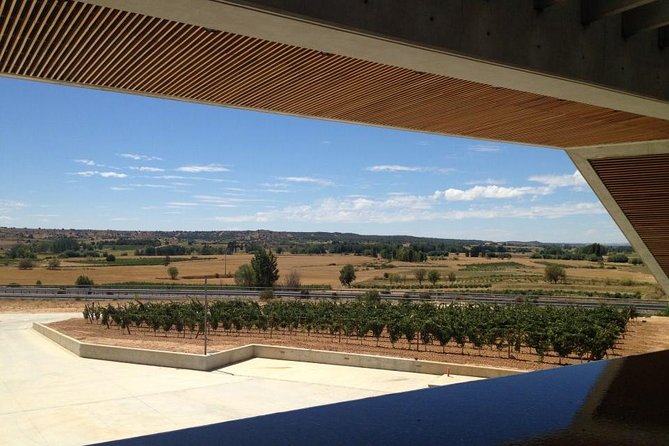
The second stop shifts the focus to architecture and newer ideas. The building is described as open to its surroundings, linking the interior spaces with the vineyards and the natural setting. It is a useful counterpoint to traditional cellars and family bodegas.
One example route has included Bela, a large modern producer. Another has featured a rising small winery. That range is part of the point: Ribera del Duero is not one single wine experience. You may see a larger operation with a polished production setup, or a smaller producer where the focus is on limited quantities and a personal approach.
The tastings continue with at least three wines. The winery host explains the wines and the methods used to make them, while your guide fills in regional details. In some small groups, this stop has become the longest of the day because the group chose to remain for extra wine rather than hurry on to lunch. That flexibility may not be available every time, but it shows why the pace can feel more personal than a large coach excursion.
The main caution is that not every winery will impress you equally. One account found the first bodega less exciting than the final two. Wine preferences and expectations vary, so book this as a regional study in contrast, not as a promise that every tasting will be your favorite.
Roa lunch: choose your own Castilian meal
Lunch takes place during free time in or near Roa, and it is not included in the tour price. This is a good arrangement for people who dislike fixed tourist menus. You can choose tapas, a lighter meal, or a full three-course meal with Castilian regional food.
The suggested budget is about 12 to 15 euros for tapas or around 30 euros for a three-course lunch. In practice, your guide may recommend a traditional tavern or a local restaurant away from the busiest tourist paths. Several groups have particularly enjoyed sharing plates in a simple local setting.
Do not skip lunch simply because snacks were served at the wineries. The tastings are generous, and a proper meal helps you stay comfortable through the final cellar visit and long ride back. If you prefer to spend more time at a winery, some departures may adapt the schedule, but lunch remains your responsibility.
Roa also adds a village element to the day. The route includes medieval villages and historic sites as part of the broader Ribera del Duero experience, though the exact stops and order can change from one date to another.
Curiel de Duero and the old underground wine tunnels
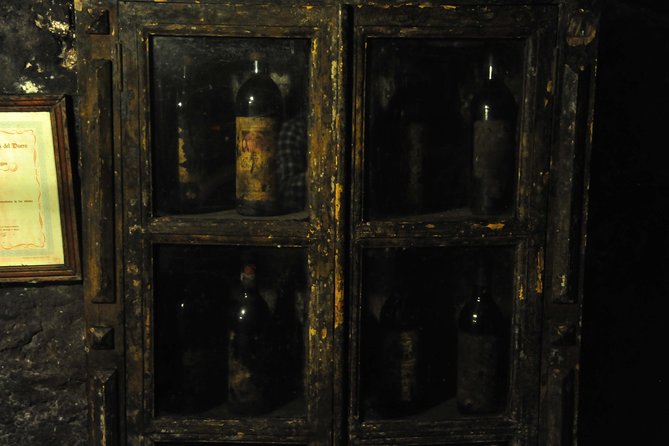
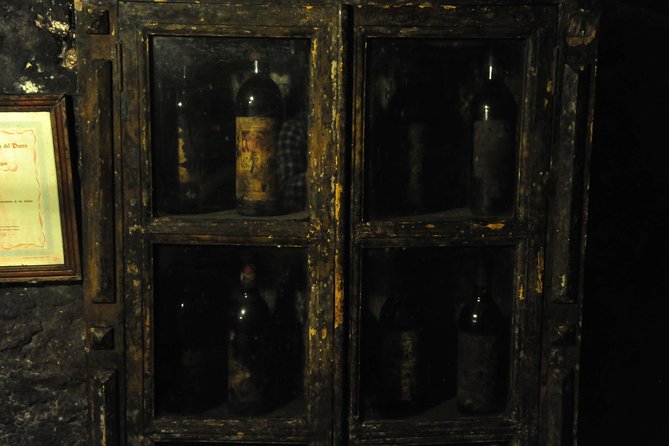
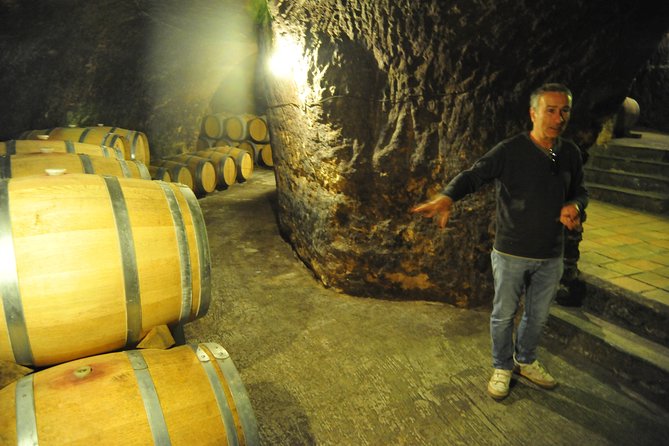
The final bodega is often the most memorable stop. In Curiel de Duero, you may enter a medieval underground cellar, part of a network of tunnels cut beneath the town for storing wine.
The tunnels are described as reaching about four miles in total length and about 40 feet underground. They were made for preservation, taking advantage of stable conditions below the surface. Parts of the cellar tradition date back centuries, with some accounts placing sections in the 16th century or earlier.
This is more than a cellar tour. It shows how wine production was tied to the daily life and construction of the town long before modern temperature control and stainless-steel equipment. You are walking through the practical solution older winemakers used to protect their wine.
Bring a warm layer. It is cold inside the cellars, even when the day outside is mild. Wear shoes suitable for uneven or underground surfaces, though the supplied information does not specify a required type of footwear.
You taste at least three more wines here, usually alongside small bites. For many people, this blend of wine, archaeology, and local history is the strongest reason to choose this particular day trip instead of a standard winery transfer.
What the wine tasting is really like
The minimum is three wines at each of three wineries, giving you at least nine samples during the day. The pours may be more generous than the tiny sips served at some formal tasting rooms. One account described each sample as roughly half a glass, although pours can vary by winery.
That amount is enough to compare producers, vintages, aging styles, and winemaking choices. It is not a casual stop where you taste one wine and move on. You should pace yourself, eat the snacks, drink water when offered, and remember that you still have a long ride back.
The tasting is suitable for adults who want to learn, not only for wine experts. You can enjoy the wines without knowing technical terms, and the guides explain the process from vineyard to bottle. At the same time, people with serious wine experience should find useful variety in the three approaches.
The atmosphere also changes from place to place. You might meet a sommelier at one bodega, an owner at another, or staff explaining a larger production facility. That human contact gives the day more character than a single polished tasting room.
Timing, group size, and comfort
The advertised duration is about 11 hours, with departure at 9:15 a.m. and an expected return around 8 p.m. Traffic in Madrid can push the day toward the longer end of that range.
The group maximum is 20 people. Actual departures can be much smaller. Groups of six or a few couples have found the size comfortable, and smaller groups make it easier to ask questions and talk with the winery hosts.
The tradeoff is transport space. A small van may feel close-knit but cramped, particularly after a full day. If you need lots of legroom, ask about the vehicle when booking, although the provided details do not guarantee a particular van or coach.
The tour is operated by a bilingual guide in English and Spanish. English-language departures are offered, but the guide may explain some points in both languages if needed. Confirmation arrives at booking, though the tour requires at least four participants. If that minimum is not reached, cancellation is possible up to one week before departure, with an alternative or full refund offered.
Children under 12 cannot join unless you arrange a private tour. The minimum age for wine tasting is 18, and children must be accompanied by an adult.
Is the $223.82 price good value?
At $223.82 per person, this is not a budget outing. You are paying for a full day of transport from Madrid, a bilingual local guide, three winery visits, a minimum of nine tastings, and snacks at the bodegas.
Lunch is extra, and there is no hotel pickup or drop-off. You must reach Conde de Casal on your own and return there at the end. Those limits are worth noting before you compare prices.
Still, the cost is reasonable if you value convenience and variety. Arranging three winery appointments in a distant wine region would take time, a designated driver, and careful planning. The tour also gives you access to different types of producers, local food, villages, and old cellars in one day.
I would call it good value for wine lovers and curious beginners who would otherwise stay in Madrid. I would call it less attractive if you only want a short tasting, dislike long road journeys, or plan to rent a car and spend several nights in the region.
Free cancellation is available up to 24 hours before the start time for a full refund. Changes or cancellations made inside that period are not accepted for a refund.
Who should book this Ribera del Duero tour?
You should book if you want a broad introduction to one of Spain’s leading red-wine areas without changing hotels. It suits couples, small groups, solo visitors comfortable meeting others, and anyone who likes mixing food, wine, buildings, and local stories.
It is also a good fit if you prefer a guide who can explain what you are seeing. Ismael has been praised for his wine and regional knowledge, while Cosmin has been praised for careful driving and good lunch choices. Antonio, Muna, and Alfonso have also led well-received departures, but the guide on your date is not guaranteed.
Think twice if you need a slow schedule. Three wineries, lunch, village stops, and the return drive make this a packed day. The long journey is the price of reaching Ribera del Duero from Madrid, but the reward is a far more complete picture than a single nearby tasting.
Should you book it?
Book this tour if the underground cellar, nine or more wines, and three contrasting bodegas sound worth a full day on the road. The combination of old tunnels, modern production, regional food, and expert guiding gives you more than a standard tasting.
Skip it if your Madrid plans are already crowded or if long van rides wear you down. If you do book, arrive early, bring a warm layer for the cellars, budget separately for lunch, and expect the wineries and order of stops to change.
FAQ
Where does the tour start?
It starts at 9:15 a.m. at the front door of the cafeteria at Hotel Claridge, next to the hotel’s main entrance, at Plaza del Conde de Casal, 6, Madrid.
How do I reach the meeting point?
The closest Metro station is Conde de Casal on Line 6. The provider recommends allowing an extra 10 to 20 minutes beyond the travel time shown on a map.
How long does the tour last?
The tour lasts about 10 to 11 hours. Departure is at 9:15 a.m., and arrival back in Madrid is expected around 8 p.m., depending on traffic.
How many wineries will I visit?
You will visit three wineries. The order and exact wineries can change depending on the day.
How many wines are included?
Each winery includes a minimum of three wine tastings, so you should receive at least nine tastings during the tour.
Is lunch included?
No. You have free time to choose and pay for lunch yourself. Options may include tapas, a light meal, or a three-course Castilian meal.
Can children join the tour?
Children under 12 cannot participate unless you arrange a private tour. The minimum age for wine tasting is 18, and children must be accompanied by an adult.
What should I bring for the cellar visit?
Bring warm clothing because the underground cellars can be cold. The tour is offered in English, with a bilingual guide operating in English and Spanish.
Recently listed in Madrid
- From Madrid: Ribera del Duero Tour of 3 Wineries w/ Tastings★ 4.9 · 150 reviews
- Madrid: Royal Palace VIP Tour with Skip-the-Line Ticket★ 4.3 · 645 reviews
- Madrid: Las Ventas Bullring VIP Private Guided Tour★ 5.0 · 151 reviews
- Photographic tour of Madrid with a professional photographer★ 5.0 · 104 reviews
- Zarzuela Opera and Dinner at La Castafiore Restaurant in Madrid★ 5.0 · 143 reviews
- Madrid Local’s Wine and Tapas Lunch Tour with a side of History★ 5.0 · 101 reviews
- Tapas and history tour ending with churros with chocolate★ 5.0 · 119 reviews
- Atletico de Madrid Stadium & Interactive Museum Admission Ticket★ 4.5 · 183 reviews
Wine Tours, compared.
Montserrat & Cogwheel Train, Gourmet Wine Tasting & Tapas/Lunch
Read our review →
Montserrat with Black Madonna & Medieval Winery with Tapas/Lunch
Read our review →
Montserrat and Winery Tour with Tapas or Lunch
Read our review →
Ronda+Setenil de las Bodegas with Little Train
Read our review →

Toledo Tour & Vineyard Walk with Wine Tasting from Madrid
Read our review →
Málaga & Costa del Sol: Ronda and Setenil de las Bodegas
Read our review →
Browse the lists this tour appears in