
Reviewed · MADRID TOURS
Royal Site of San Lorenzo de El Escorial Entrance Ticket
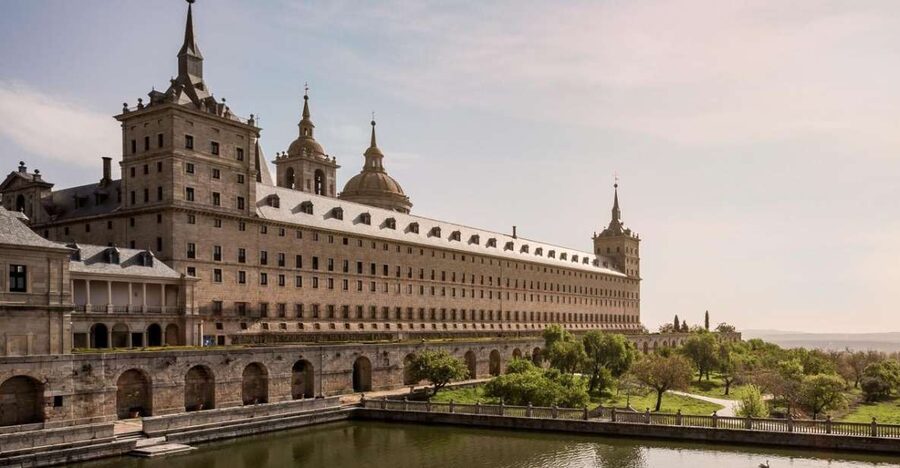
The plainest palace can hide the richest surprises. I like El Escorial’s remarkable interior, where a stern Renaissance exterior gives way to royal rooms, frescos, chapels, and a grand basilica. I also like the well-kept gardens and mountain views, though the self-guided format means you must supply the historical context yourself.
At $21, this ticket is a reasonable way to enter one of Spain’s most important royal sites without joining a fixed tour. The main drawbacks are practical: some buyers have struggled to find the correct entrance or had to queue again, and the ticket does not include a guide.
In This Review
- Key points to know before you go
- Why El Escorial feels more like a world than a monument
- The exterior gives little away
- Inside the monastery, the surprise is the contrast
- The basilica and crypt connect faith with monarchy
- The library and chapels reveal the site’s intellectual side
- Juan de Villanueva and the artistic story
- The gardens are worth more than a quick photo stop
- Getting there from Madrid takes some planning
- Is the $21 ticket good value?
- Who should book this experience?
- Should you book the El Escorial entrance ticket?
- FAQ
- Where is the Royal Site of San Lorenzo de El Escorial?
- How long is the ticket valid?
- What does the $21 ticket include?
- Is a guide included?
- Can I see the Sierra de Guadarrama from El Escorial?
- Is the experience suitable for people with mobility impairments?
Key points to know before you go
- Philip II’s enormous royal-monastery complex: See the building created for the monks of St. Jerome while also housing royal apartments, a basilica, library, chapels, and burial spaces.
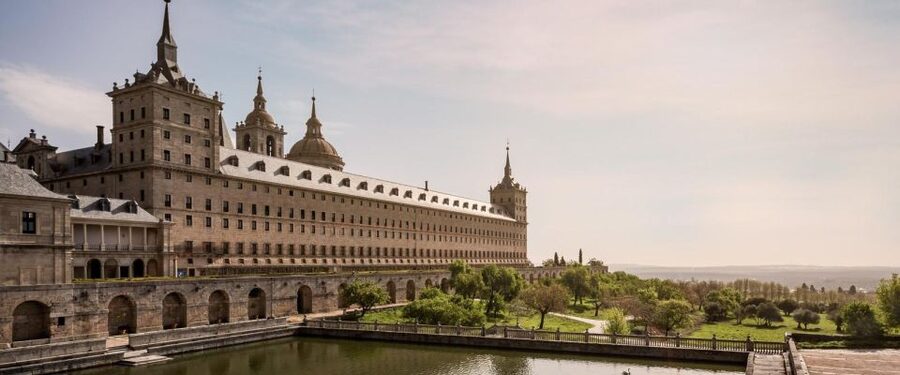
- Austere outside, ornate inside: The plain stone exterior can look almost fortress-like, while the interior contains frescos, royal decoration, and major religious art.
- A self-guided visit: Your ticket covers admission only. There is no guide, so bring your own background reading if you want to understand the site fully.
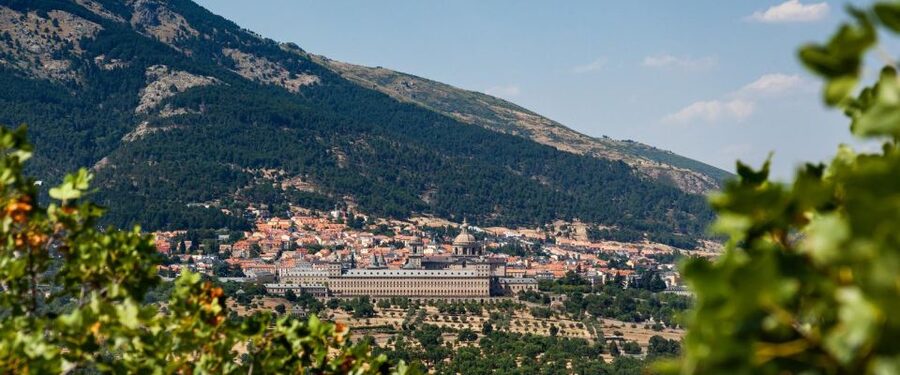
- Gardens with Sierra de Guadarrama views: On a clear day, the grounds offer broad views toward the mountain range and the Valley of the Fallen’s basilica.
- Easy enough from Madrid, but uphill: The train journey takes under an hour, followed by a pleasant uphill walk of about 25 to 30 minutes from the station.
- A generally well-rated cultural stop: The experience has a 4.4 rating from 239 ratings, with the strongest praise focused on the building’s beauty and historical importance.
Why El Escorial feels more like a world than a monument
San Lorenzo de El Escorial was built to serve several purposes at once. It was a monastery for the monks of St. Jerome, a royal residence, a burial place, a center of study, and a carefully planned expression of Philip II’s Spain.
That mixture is what makes the visit worthwhile. You are not simply walking through a palace or a church. You are moving through a carefully arranged complex that reflects the religious and political goals of the Spanish Golden Age.
The original layout remains largely unchanged. That matters because the building still gives you a strong sense of how its spaces worked together. A royal residence leads toward religious rooms. The basilica connects the political life of the monarchy with the spiritual life of the monastery. The library represents learning and control of knowledge, while the crypt connects the site to generations of Spanish rulers.
I find that this kind of place rewards patience. The first impression may be severe, even dull. The exterior is broad, gray, and highly ordered. One visitor compared its appearance to a prison, which is a fair reaction if you see only the outer walls. Inside, though, the mood changes quickly.
A few more Madrid ideas to compare
- Madrid: Tour Bernabéu Entry Ticket
★ 4.5 · 21,573 reviews - Madrid: Prado Museum Entry Ticket
★ 4.6 · 17,509 reviews - Madrid: Royal Palace Fast-Access Admission Ticket
★ 4.6 · 13,856 reviews
The exterior gives little away
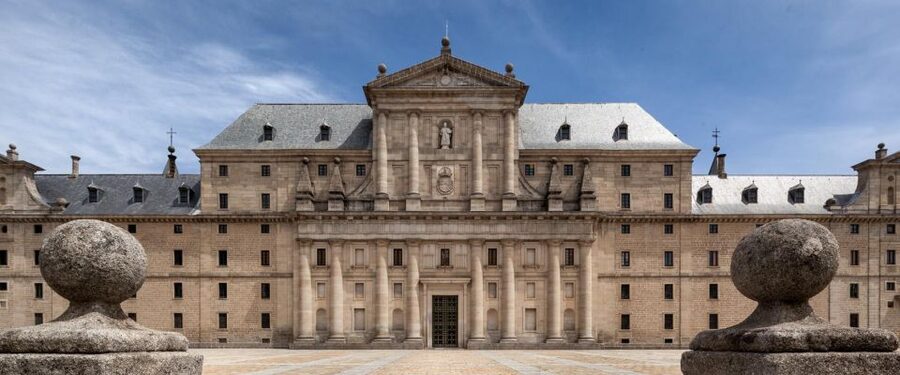
Set in the Community of Madrid, El Escorial is not designed to charm you from the street in the way a colorful Spanish palace might. Its scale and geometric form can feel imposing rather than welcoming.
That is part of the appeal. The restrained exterior reflects the serious image Philip II wanted to project. The building was not planned as a playful royal retreat. It was meant to express discipline, faith, learning, and royal authority.
As you approach, take a moment to look at the overall plan rather than rushing straight to the entrance. The size of the complex helps explain why the visit takes time. You are entering a working religious and royal institution on a monumental scale, not a single decorated room.
The entrance process deserves a little care. The ticket includes an express security check, but that does not necessarily mean every part of the arrival will be quick. Some ticket holders have reported confusion about the correct address or entrance and, in one case, having to queue again and pay at the site.
For that reason, I would keep the confirmation accessible on your phone and check the exact entrance details before setting out. The ticket is non-refundable, so a small amount of preparation matters.
Inside the monastery, the surprise is the contrast
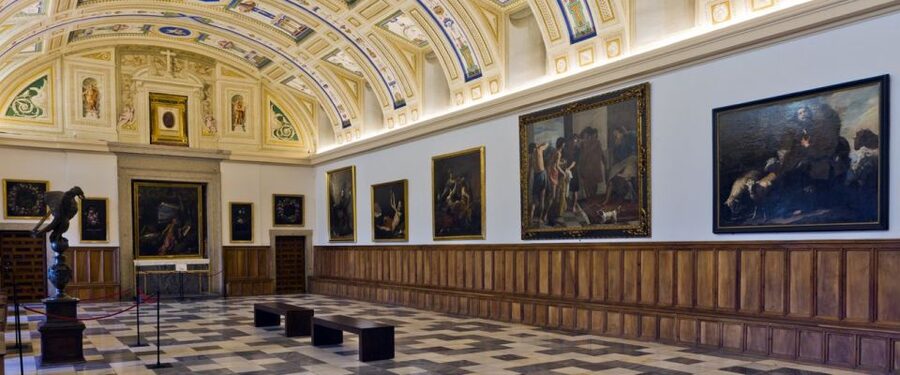
The interior is where El Escorial earns its place on a Madrid day trip. The severe exterior gives way to a sequence of spaces filled with religious art, royal decoration, and Renaissance design.
You can expect to see the monastery’s formal areas, chapels, the royal palace, the library, the basilica, and burial spaces. The precise route can depend on how the site is operating when you arrive, but the ticket is intended for a full day of access rather than a short timed stop.
The Italian and Flemish artistic influences are especially important. Philip II’s court drew on artistic traditions from across Europe, and El Escorial brings those styles together within one building. You may notice differences in mood and treatment from room to room, but the overall effect remains tightly controlled.
The basilica, erected in 1574, is one of the main reasons to visit. Its construction and decoration took years, and the building carries the weight of both royal ambition and religious devotion. Even if you are not an art specialist, you can appreciate the scale of the project and the care given to its visual program.
The royal areas add another layer. Emperor Charles V and his wife once lived at the site, and the complex continued to serve Spain’s monarchy. It is worth remembering that these rooms were not separate from the monastery’s religious role. Royal power and religious life were designed to function side by side.
The basilica and crypt connect faith with monarchy
The basilica is not merely a grand church placed inside a palace complex. It is central to El Escorial’s purpose.
As you stand inside, consider the message Philip II wanted the building to deliver. The monarchy was presented as a defender of Catholic faith, and the basilica gave that idea a physical center. The surrounding monastery and royal rooms made the connection impossible to miss.
The crypt provides a more personal reminder of the monarchy. It houses the remains of royals who once lived within or were connected to the complex. This can be a solemn part of the visit, especially after seeing the formal rooms and grand public spaces above.
I would not rush through the crypt simply because it is less decorative than the palace rooms. It helps explain the site’s long-term role. El Escorial was built not only for Philip II’s lifetime, but also for the memory of the royal family and the continuation of the Spanish crown.
Same base, a different kind of afternoon:
- Madrid: “Emociones” Live Flamenco Performance
★ 4.8 · 12,866 reviews - Madrid: Panoramic Route City Tour
★ 4.1 · 12,259 reviews - Madrid: Live Flamenco Show with Food and Drinks Options
★ 4.5 · 9,901 reviews - Avila & Segovia Tour with Tickets to Monuments from Madrid
★ 5.0 · 9,762 reviews
The library and chapels reveal the site’s intellectual side
It is easy to think of El Escorial only as a palace and monastery. The library shows that it was also meant to be a center of study and learning.
The library belongs to the building’s larger message: religious authority, royal power, and scholarship were all linked. Its presence makes the complex feel more complete. The king was not only displaying wealth or commissioning a church. He was shaping a place where knowledge had an important role.
The chapels add a more intimate scale. After the size of the basilica and the broad corridors, these smaller religious spaces help you notice the daily devotional life that supported the monastery.
A guide would make these rooms easier to understand, especially if you want to know which works belong to which period or how each space functioned. Since this ticket does not include a guide, I suggest reading a short introduction before arrival. Even a basic outline of Philip II, Charles V, the St. Jerome monks, and the Spanish Golden Age will make the visit much more rewarding.
Juan de Villanueva and the artistic story
The experience also highlights work connected with architect and artist Juan de Villanueva. His name adds an important later chapter to the site’s story and helps show that El Escorial was not frozen in one moment of Spanish history.
You should not expect a single gallery devoted only to Villanueva. Instead, look for the broader architectural and artistic conversation within the complex. El Escorial brings together Renaissance planning, royal building traditions, religious design, and later artistic contributions.
This is another reason a self-guided ticket suits some people more than others. If you enjoy setting your own pace, you can stop where the architecture catches your eye. If you want a clear explanation of authorship, dates, and artistic influences, you will need outside material or a separate guided visit.
The gardens are worth more than a quick photo stop
The gardens provide a welcome change after the dark interiors and formal rooms. They are maintained with care and give you space to step back from the building.
On a clear day, you may see across the surrounding country toward the Sierra de Guadarrama mountain range and the basilica at the Valley of the Fallen. The view adds geographic context. El Escorial is not an isolated royal box. Its setting was part of the experience, and the mountains help explain the site’s sense of distance from Madrid.
Weather can change the visit. One January visit took place in fog and cold, yet the monastery remained impressive. Fog will limit the views, but it can also make the stone complex feel even more solemn. In brighter weather, the gardens are likely to become one of the most enjoyable parts of your day.
I would allow time outdoors rather than treating the gardens as an afterthought. They are especially useful if you need a quiet pause between the basilica, palace rooms, and crypt.
Getting there from Madrid takes some planning
The train journey from Madrid takes under an hour, according to the practical experience provided for this visit. From the station, the walk to the monastery takes about 25 to 30 minutes and runs uphill.
That walk is manageable for many people, but it is not a minor detail. If you have mobility limitations, this activity is not suitable. The ticket information specifically excludes people with mobility impairments, and the uphill route adds to the physical demand.
You should also plan for a full day rather than squeezing El Escorial into a rushed morning. The ticket is valid for one day, and the complex contains enough different sections to reward a slower visit. A rushed circuit may show you the main rooms, but it will leave little time for the gardens, library, chapels, and crypt.
Starting times depend on availability. Check before booking, then allow enough time for the train, the uphill walk, security, and any uncertainty at the entrance.
Is the $21 ticket good value?
At $21 per person, the ticket offers fair value if you want flexibility and already know enough about the site to explore independently. You are paying for admission to a major royal and religious complex, not for transportation, a guide, or a full historical tour.
The value improves if you intend to stay for several hours. A quick visit may make the price feel less attractive, especially if you encounter an entrance delay. A longer visit lets you see the basilica, royal areas, library, chapels, crypt, and gardens without treating the building like a checklist.
There is one important comparison to make. A standard admission ticket may cost less at the site in some situations, while this booking provides the convenience of arranging entry in advance and an express security check. One ticket holder felt the online price was higher than the local admission price, so I would compare prices before buying.
Advance booking can still be useful on a busy day. One Spanish buyer specifically valued having the ticket ready and being able to arrive without difficulty. The tradeoff is that the booking is non-refundable, and confirmation may take up to 48 hours.
Who should book this experience?
I would recommend it to you if you enjoy architecture, Spanish royal history, religious art, or quiet cultural sites outside central Madrid. It also suits independent visitors who prefer to move at their own pace and choose how long to spend in each room.
You will get the most from it if you prepare a little. Read about Philip II and the Spanish Golden Age, note the role of Charles V, and learn why the monastery, palace, basilica, library, and royal crypt occupy the same complex.
I would hesitate if you want a fully explained tour, door-to-door transport, or help with every part of the arrival. The ticket includes no guide, and the route from the station involves an uphill walk. If you have mobility concerns, choose another Madrid attraction.
The rating of 4.4 from 239 ratings suggests a generally strong experience, but the mixed practical feedback is worth taking seriously. The building itself receives the warmest praise. The ticketing process needs more attention.
Should you book the El Escorial entrance ticket?
Book it if you want a flexible, self-guided day at one of Spain’s most significant royal sites and value arranging admission before you leave Madrid. The interior, basilica, crypt, library, gardens, and mountain views give you plenty to see for the $21 price.
Before paying, compare the cost with direct admission and confirm the entrance instructions. If you want the full story rather than simply access, look for a guided option instead. El Escorial is too large and historically layered to explain itself in every room, but even without a guide, it offers a memorable look at Philip II’s Spain.
FAQ
Where is the Royal Site of San Lorenzo de El Escorial?
It is in the Community of Madrid, Spain, in the town of San Lorenzo de El Escorial.
How long is the ticket valid?
The ticket provides access for one day. Available starting times depend on the date you choose.
What does the $21 ticket include?
It includes admission to the Monastery of San Lorenzo de El Escorial and an express security check.
Is a guide included?
No. The ticket does not include a guide, so the visit is self-guided.
Can I see the Sierra de Guadarrama from El Escorial?
The gardens offer views toward the Sierra de Guadarrama mountain range and the basilica at the Valley of the Fallen, particularly when the weather is clear.
Is the experience suitable for people with mobility impairments?
No. The activity is listed as unsuitable for people with mobility impairments, and the walk from the train station to the monastery takes about 25 to 30 minutes uphill.
Recently listed in Madrid
- Madrid: Don Quixote de la Mancha Windmills & Toledo Tour★ 4.9 · 254 reviews
- Tour Madrid: Secrets in a Electric Tuk Tuk★ 4.6 · 155 reviews
- Madrid: Toledo Day Trip with Winery Visit and Wine Tasting★ 4.4 · 177 reviews
- Madrid: Guided Tour of Toledo with Cathedral Visit★ 4.3 · 399 reviews
- Madrid: 6-Hour Day Trip to Toledo with Guided Walking Tour★ 4.0 · 865 reviews
- Madrid: Tasty Tapas Tour & Visit to a Terrace with Views★ 4.5 · 118 reviews
- Madrid: Flamenco Show&Drink at Tablao 1911 (World’s Oldest)★ 4.7 · 253 reviews
- Madrid: Street Art Tour with Local Graffiti Hunter★ 4.8 · 270 reviews
Madrid Tours, compared.


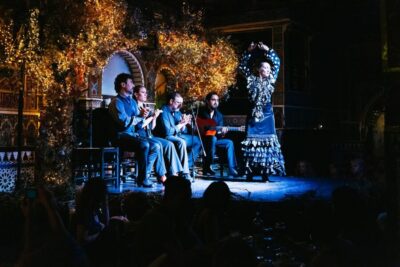
Live Flamenco Show with Food and Drinks Options
Read our review →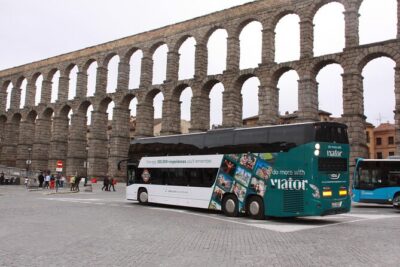
Avila & Segovia Tour with Tickets to Monuments from Madrid
Read our review →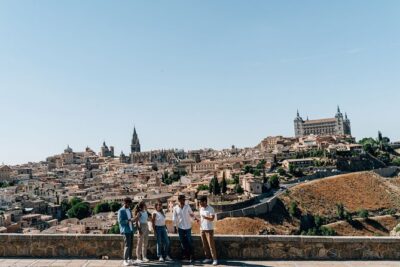
Three Cities in One Day: Segovia, Avila and Toledo from Madrid
Read our review →Browse the lists this tour appears in