
Reviewed · MADRID TOURS
San Lorenzo de El Escorial: Monastery and Site Guided Tour
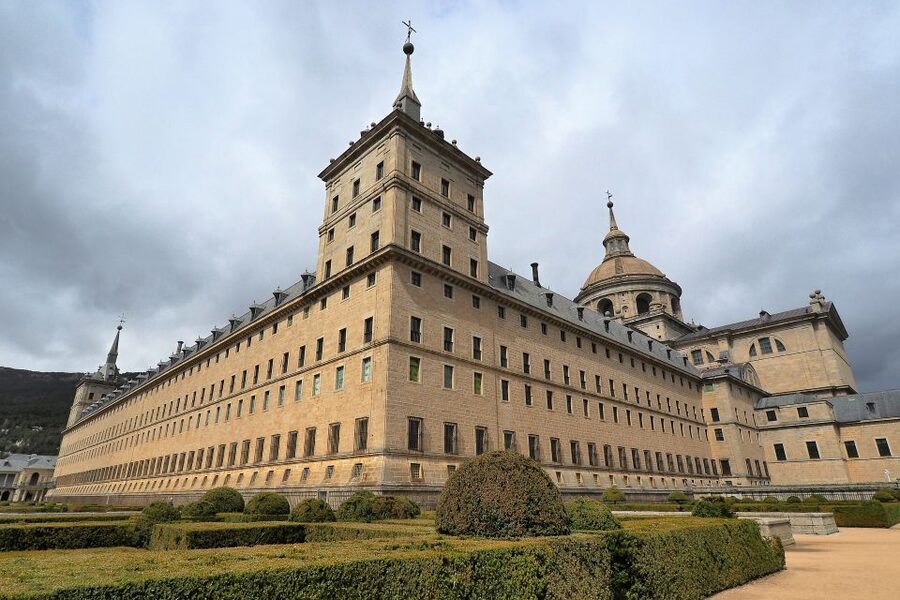
The palace is shaped like a giant iron grill. San Lorenzo de El Escorial gives you far more than a quick royal stop near Madrid: this 16th-century monastery brings Philip II, the Spanish Golden Age, religion, war, scholarship, and royal burial customs into one imposing complex. I especially like the chance to see the Royal Library and the royal Pantheon in one efficient visit. I also like that a guide leads you through the maze instead of leaving you to guess what each room means.
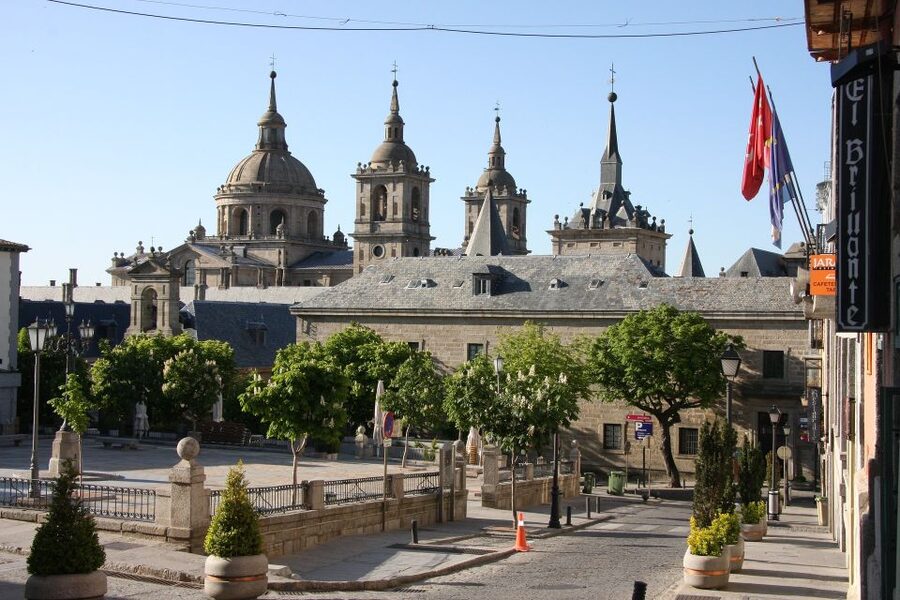
The main point to consider is language. The tour is advertised with a live Spanish-speaking guide, so you should confirm that this suits you before booking. The meeting point also needs care: look for the blue Todo Tour umbrella at the monastery’s main entrance, beneath the Spanish flag, and arrive 15 minutes early to exchange your voucher.
In This Review
- Key points to know before booking
- Why El Escorial matters near Madrid
- Meeting the guide at the main entrance
- The basilica and Philip II’s religious vision
- The Battle Hall and Spain’s military story
- The royal Pantheon and Spain’s buried monarchs
- Palatial rooms and the royal side of the building
- The Royal Library and a Renaissance display of power
- What the two-hour format gives you
- Is $47 a fair price?
- Who should book this El Escorial tour?
- My call: book it if context matters
- FAQ
- Where does the tour meet?
- How early should I arrive?
- How long does the tour last?
- What language is the live tour in?
- What does the price include?
- Is the monastery wheelchair accessible?
- What identification should I bring?
- Can I cancel the booking?
Key points to know before booking
- The Royal Library is the star for many history fans: Philip II collected its books to support his humanistic studies, making it both a working collection and a display of royal power.
- You see the complex’s major rooms in two hours: The route includes the basilica, Battle Hall, Pantheon, palatial rooms, library, and other key spaces.
- The guide adds order to a maze-like monument: One independent party found an electronic guide confusing and tiring, while this guided route felt more direct.
- Philip II shapes the whole visit: The tour connects architecture to his rule, religious goals, cultural ambitions, and the Spanish Golden Age.
- The meeting point is specific but not heavily marked: Find the blue Todo Tour umbrella at the main monastery entrance, under the flag of Spain.
- The price is $47 per person: That includes the entry ticket and a two-hour guided visit, with free cancellation up to 24 hours before the start.
Why El Escorial matters near Madrid
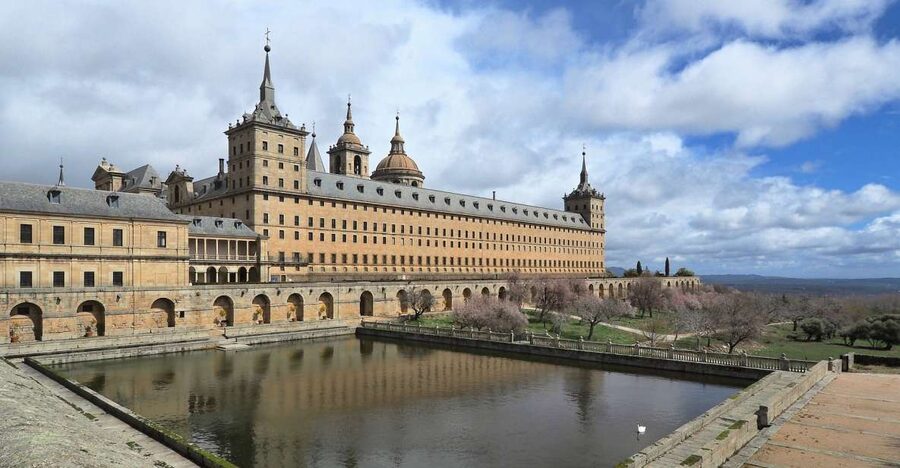
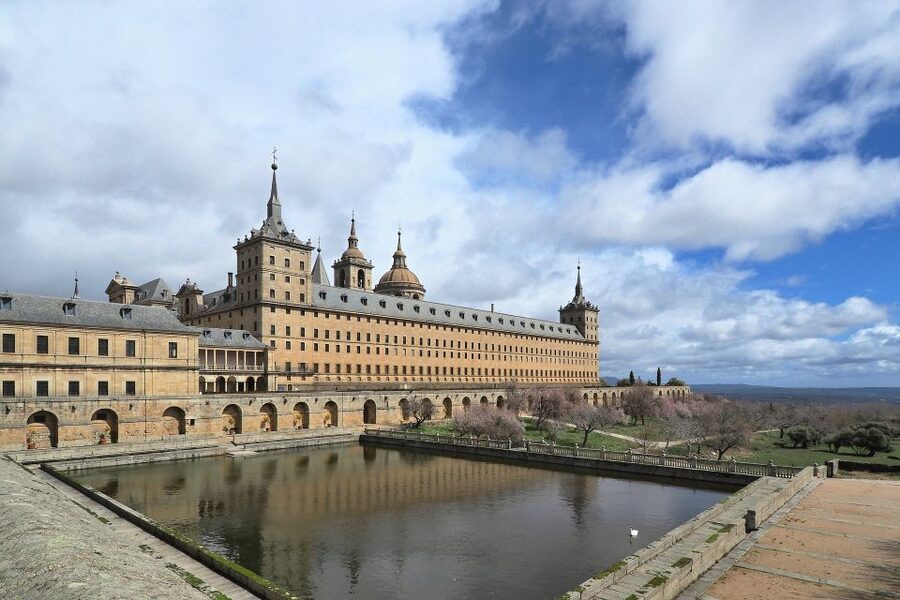
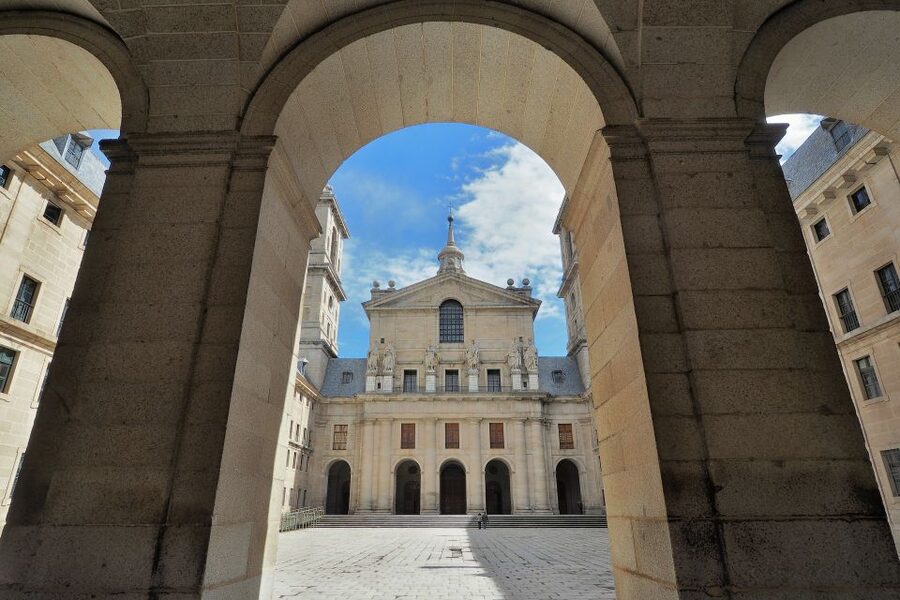
San Lorenzo de El Escorial is not simply a palace with a church attached. Philip II ordered this enormous complex in the 16th century, and its design reflects several roles at once: royal residence, monastery, basilica, burial place, library, and monument to Spanish power.
That mix is what makes the visit worth the trip from Madrid. You are not walking through a single royal apartment and moving on. You are seeing a carefully planned statement about how Philip II wanted Spain to be understood: devout, learned, militarily powerful, and closely tied to the Catholic monarchy.
The building’s famous grill shape is linked to Saint Lawrence, whose feast day coincided with a Spanish victory at the Battle of Saint Quentin. You do not need to be an architecture specialist to appreciate the basic idea. From the first look at the severe stone exterior, the place feels more like a disciplined plan than a soft, decorative palace.
I find that a guide is useful here because the scale can be hard to read on your own. The complex contains many major spaces, and their meaning depends on how they fit together. A good explanation turns a large stone building into a story about Philip II, royal ceremony, faith, art, books, and dynastic memory.
A few more Madrid ideas to compare
- Madrid: Tour Bernabéu Entry Ticket
★ 4.5 · 21,573 reviews - Madrid: Prado Museum Entry Ticket
★ 4.6 · 17,509 reviews - Madrid: Royal Palace Fast-Access Admission Ticket
★ 4.6 · 13,856 reviews
Meeting the guide at the main entrance
The practical beginning is simple, but you should not leave it to the last second. Arrive 15 minutes before your scheduled start, exchange your voucher, and go to the access door of the monastery. The meeting point is the main entrance with the Spanish flag at the top.
Your guide should be waiting with a blue Todo Tour umbrella. One otherwise happy participant wished the guide had a sign identifying the meeting point, so keep your eyes open and use the umbrella as your main marker. If you arrive expecting a large tour desk or a prominent branded booth, you may waste time.
The guide then takes you inside for a two-hour route. The tour finishes near the entrance, which is helpful if you have another plan afterward. You are not left to find your way through the complex at the end.
The advertised language is Spanish. That is an important booking detail, especially because several highly positive comments praise particular guides for clear explanations and, in one case, excellent English. Still, you should treat Spanish as the guaranteed language unless the operator confirms something else.
The basilica and Philip II’s religious vision
The basilica is one of the first major spaces that gives the monastery its force. Its size and formal design make clear that this was not only a private royal chapel. It was intended to express the religious purpose of the entire complex.
Here, the guide helps connect the building to Philip II’s political and religious aims. The Spanish Golden Age was not just a period of artistic success. It was also a time when the monarchy used architecture, ceremony, painting, books, and religious institutions to express authority.
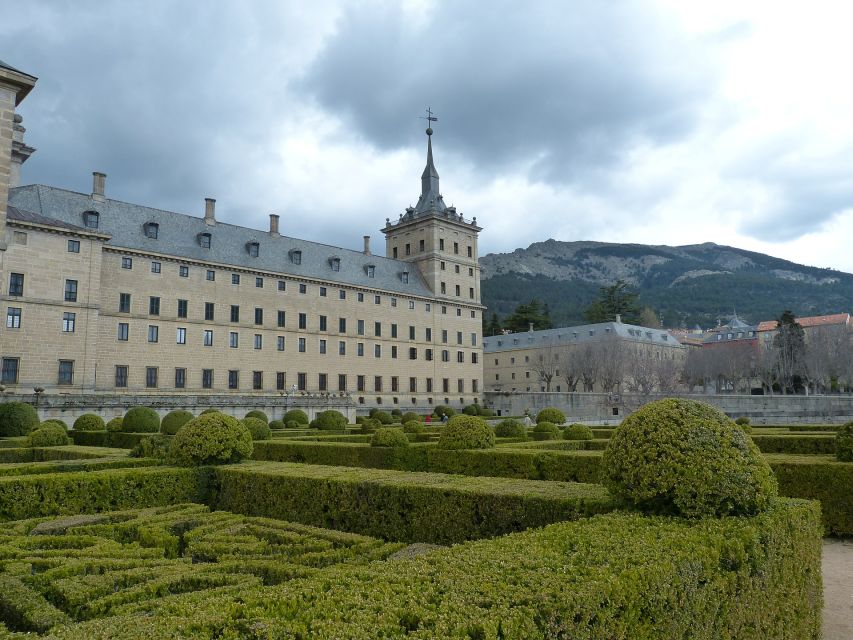
You will likely notice the contrast between the basilica’s grand scale and the plain, controlled exterior of the monastery. That contrast is part of the place’s character. El Escorial does not depend on playful decoration to impress you. Its effect comes from proportion, order, stone, and the knowledge that the building served several powerful purposes at once.
A guide can point out details you might otherwise pass without understanding. The value is not only in naming what you see, but in explaining why the basilica belongs in a monastery that also contains royal apartments, military paintings, tombs, and a major library.
The Battle Hall and Spain’s military story
The Battle Hall shifts the tone from worship to war. It is one of the essential stops on the route, and it helps show how the monarchy presented military success as part of its wider identity.
You should expect paintings and historical explanation rather than an interactive museum experience. The importance of the room lies in its place within Philip II’s project. The monastery was designed to preserve and display a version of Spanish power, and the Battle Hall makes that message especially direct.
This is also where a good guide can keep dates and names from becoming a blur. The guide’s job is to explain what the scenes represent and how they relate to the reign of Philip II and the Spanish Golden Age. Several people praised guides such as Alejandro, Isabella, and Marta for making complicated material easy to follow, with humor and energy instead of a dry recital of facts.
The route may feel brisk to you because two hours must cover a very large complex. One person who had visited before felt the second visit was more rushed. That is a fair caution. You get a well-planned overview, but you should not expect unlimited time in every room or a slow art-history seminar.
Same base, a different kind of afternoon:
- Madrid: “Emociones” Live Flamenco Performance
★ 4.8 · 12,866 reviews - Madrid: Panoramic Route City Tour
★ 4.1 · 12,259 reviews - Madrid: Live Flamenco Show with Food and Drinks Options
★ 4.5 · 9,901 reviews - Avila & Segovia Tour with Tickets to Monuments from Madrid
★ 5.0 · 9,762 reviews
The royal Pantheon and Spain’s buried monarchs
The Pantheon is one of the most memorable parts of El Escorial. It is the burial place of nearly all the kings of Spain, according to the information supplied for this experience, and it gives the monastery a strong sense of dynastic continuity.
This is not just another decorated room. The Pantheon shows how the monarchy connected the living court with its predecessors. After seeing royal apartments and ceremonial spaces, you reach a place designed for memory, succession, and death. It changes the emotional weight of the visit.
Your guide can help you understand why the burial place sits inside this larger royal and monastic complex. Without that context, you may notice the tombs but miss the reason they matter. With it, the Pantheon becomes part of the story Philip II was building around monarchy and Catholic rule.
You should also keep the formal nature of the site in mind. The rules ask you not to make noise, and this is one area where quiet behavior matters. Dress requirements apply throughout the monument, including no short skirts, sleeveless shirts, or swimwear.
Palatial rooms and the royal side of the building
The palatial rooms show the monarchy in a more personal setting. The tour includes these rooms along with other essential parts of the monument, giving you a chance to compare royal living spaces with the basilica, library, and burial areas.
Do not expect the relaxed, richly furnished mood of a later European palace. El Escorial is tied to Philip II, whose image is closely linked to restraint, administration, religion, and study. The rooms make more sense when you see them as part of an entire working complex rather than as isolated luxury apartments.
This part of the tour is useful for understanding how close royal life was to religious and institutional life. The same building housed places for worship, scholarship, political display, military memory, and royal residence. That unusual combination is one reason the site was recognized as a UNESCO World Heritage Site.
The guide’s explanation matters most here because individual rooms may not explain themselves. You might see a plain chamber or formal interior and wonder what makes it important. The answer often lies in who used it, how it connected to the rest of the complex, and what it says about Philip II’s priorities.
The Royal Library and a Renaissance display of power
The Royal Library is the strongest reason for many people to choose this tour. Philip II collected its volumes to expand his humanistic knowledge, so the room represents more than an old book collection. It shows a Renaissance ruler using scholarship as part of his authority.
I like this stop because it broadens the usual picture of a Spanish king. Philip II is often remembered for religion, empire, and politics, but the library shows his interest in learning and the intellectual world of his time. The books were collected not only for decoration, but to support study.
The library also works as a visual statement. A royal collection placed inside such a monumental complex tells you that books, learning, and access to knowledge belonged to the image of power. The guide can make that connection clear in a way that a quick look at shelves and volumes cannot.
Because the library is one of the highlights, you should pay close attention to the explanation here. If you have a particular interest in Renaissance culture or the history of books, this may be the portion that makes the $47 price feel most worthwhile.
What the two-hour format gives you
Two hours is a sensible length for a first visit. You get the main story without committing half a day to a single monument, and the route covers the rooms most people want to see.
The trade-off is pace. El Escorial is large, and the tour cannot give every hall equal attention. You should expect a structured overview, not long periods to sit, sketch, or study each artwork. If you already know the site well, you may want more time in selected rooms. If this is your first visit, the efficient route is likely an advantage.
One especially useful benefit is orientation. An independent visit with an electronic device can leave you feeling lost in a maze and walking farther than necessary. A live guide keeps the sequence clear and helps you spend your energy looking rather than navigating.
The route ends near the entrance, so you can leave with your bearings intact. That makes this a good choice if you are fitting El Escorial into a wider day near Madrid and do not want to work out the exit alone.
Is $47 a fair price?
At $47 per person, the cost includes both admission and the two-hour guided tour. The price is not bargain-basement, but it is reasonable if you want context and a direct route through a complicated monument.
The entry ticket has value on its own, but the guide is the part that changes the experience. The strongest praise goes to the guides: Alejandro was described as friendly, witty, professional, and exceptionally well prepared; Isabella received high marks for energy and clear explanations; Marta was praised for separating fact from fiction while adding humor.
Those comments point to the tour’s main strength. You are paying to understand what you are seeing, not merely to pass through the doors. If you prefer to read at your own speed and spend as long as you like in one room, admission alone may suit you better. If you want the building’s political, religious, and cultural ideas explained in sequence, the guided option earns its extra cost.
The tour also offers free cancellation up to 24 hours before the start, and you can reserve now and pay later. Those terms make it easier to fit into a changing Madrid schedule.
Who should book this El Escorial tour?
I would choose this experience if you have limited time, want a clear introduction to Philip II, or find large historic buildings hard to navigate without help. It is also a strong fit for anyone drawn to Renaissance architecture, royal burial customs, the Spanish Golden Age, or the history of books.
The tour suits adults and older children who can manage a formal monument and follow a two-hour explanation. The site is wheelchair accessible, though you should still consider your own comfort with the scale and pace of the route.
You should think twice if you need an English-language tour. The stated live language is Spanish, even though individual comments praise some guides for excellent English. Confirm before paying if language is central to your decision.
Bring your passport or ID card. Leave luggage and large bags behind, follow the clothing rules, and keep your voice low inside. Those simple preparations will make the entrance smoother.
My call: book it if context matters
Book this tour if you want El Escorial to make sense, not just to see it. The basilica, Battle Hall, Pantheon, royal rooms, and library cover a lot of ground, and the guide gives those spaces a shared purpose.
I would be especially happy to book it for a first visit, provided Spanish works for me. The meeting point requires attention, and the pace may feel quick in places, but the combination of entry, efficient routing, and strong guide performance makes $47 a fair price for a two-hour introduction to one of Spain’s major monuments.
FAQ
Where does the tour meet?
Meet at the access door of the monastery, at the main entrance with the Spanish flag above it. The guide is identified by a blue Todo Tour umbrella.
How early should I arrive?
Arrive 15 minutes before the activity begins. You must exchange your voucher at the meeting point.
How long does the tour last?
The guided tour lasts two hours. It finishes near the monastery entrance.
What language is the live tour in?
The stated live tour language is Spanish.
What does the price include?
The $47 price per person includes a tour guide and the entry ticket to the Monastery of San Lorenzo de El Escorial.
Is the monastery wheelchair accessible?
Yes, the activity is listed as wheelchair accessible.
What identification should I bring?
Bring your passport or ID card.
Can I cancel the booking?
Yes. You can cancel up to 24 hours in advance for a full refund. You can also reserve now and pay later.
Recently listed in Madrid
- Madrid: Don Quixote de la Mancha Windmills & Toledo Tour★ 4.9 · 254 reviews
- Tour Madrid: Secrets in a Electric Tuk Tuk★ 4.6 · 155 reviews
- Madrid: Toledo Day Trip with Winery Visit and Wine Tasting★ 4.4 · 177 reviews
- Madrid: Guided Tour of Toledo with Cathedral Visit★ 4.3 · 399 reviews
- Madrid: 6-Hour Day Trip to Toledo with Guided Walking Tour★ 4.0 · 865 reviews
- Madrid: Tasty Tapas Tour & Visit to a Terrace with Views★ 4.5 · 118 reviews
- Madrid: Flamenco Show&Drink at Tablao 1911 (World’s Oldest)★ 4.7 · 253 reviews
- Madrid: Street Art Tour with Local Graffiti Hunter★ 4.8 · 270 reviews
Madrid Tours, compared.
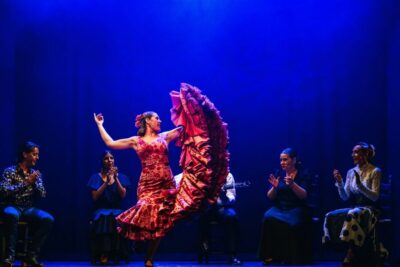

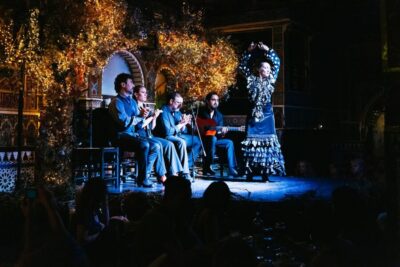
Live Flamenco Show with Food and Drinks Options
Read our review →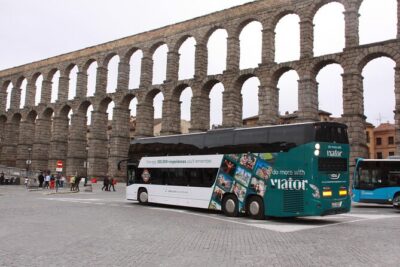
Avila & Segovia Tour with Tickets to Monuments from Madrid
Read our review →
Three Cities in One Day: Segovia, Avila and Toledo from Madrid
Read our review →Browse the lists this tour appears in