
Reviewed · SANTIAGO DE COMPOSTELA TOURS
Santiago de Compostela: Finisterre, Muxia & Costa da Morte
Galicia saves its wildest coast for the road. From Santiago de Compostela, this $58 full-day trip takes you through the Costa da Morte, combining fishing towns, pilgrimage landmarks, a sea waterfall, and the legendary end of the Camino at Finisterre. I like the way the day mixes big-name sights with smaller places such as Muros and Ponte Maceira, rather than rushing straight to the famous cape.
I also like the comfortable air-conditioned coach and the strong guiding. Guides including Andrea, Pablo, Cristian, Ruben, and Dani Lati Valinho have been praised for clear explanations, good humor, and careful attention to the group. The main drawback is simple: nine hours on the road can feel long, and the 45-minute Cape Finisterre stop may seem short if the lighthouse is your main reason for coming.
The route costs $58 per person, with transport and a guide included. Food and drinks are extra, so you will need to budget for lunch in Fisterra. With a 4.7 rating from 526 reviews, it is a well-liked way to see a remote part of Galicia without renting a car or arranging several separate bus connections.
In This Review
- Key points before you book
- Why this makes sense after Santiago or the Camino
- Muros and the road along the estuary
- Carnota Beach, Boca do Río, and Mount Pindo
- Ézaro Waterfall and the river Xallas
- Cape Finisterre and kilometer zero
- Lunch and free time in Fisterra
- Muxía, the sanctuary, and the sacred stones
- Ponte Maceira and its medieval bridge
- The guide and coach experience
- Is $58 good value?
- Who should book this day trip?
- Should you book it?
- FAQ
- How long does the Finisterre and Muxía tour last?
- What is included in the $58 price?
- Where does the tour depart from?
- What languages are available?
- How much time do you get at the main stops?
- Can you cancel the tour?
Key points before you book
- Cape Finisterre marks kilometer zero of the Camino de Santiago, giving pilgrims a meaningful final stop after reaching Santiago.
- Ézaro Waterfall drops directly toward the sea, a rare and dramatic sight on the Galician coast.
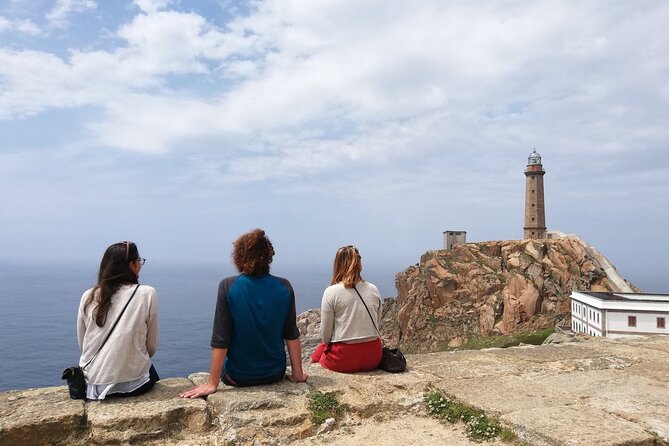
- Muxía combines Atlantic scenery with sacred stones and a seaside sanctuary, making it one of the most memorable stops.
- Muros and Carnota add variety, with fishing-town streets, beaches, estuary views, and coastal scenery along the drive.
- The schedule is full but generally well paced, though some people may prefer more time at Finisterre and less time in Muros or at lunch.
- Guides speak Spanish, English, and Galician, while audio support is listed in French, Korean, and German.
Why this makes sense after Santiago or the Camino
Santiago is a rewarding place to finish, but the pilgrimage story does not really end at the cathedral for many walkers. Finisterre, once imagined as the western edge of the known world, became the symbolic continuation of the Camino. Muxía adds another powerful Atlantic destination, tied to local religious traditions and stories about sacred stones.
You can reach both places independently, but the distances and rural roads make a guided day trip useful. This tour links several sites that would be awkward to combine by public transport in one day. You spend less time studying timetables and more time looking out at estuaries, beaches, cliffs, and small Galician towns.
The coach also matters after a long walk. Tim, who had walked from Lisbon, appreciated having a warm, dry seat on a misty day. Melinda made the same point after a rainy outing: the clean vehicle and capable driver allowed her to enjoy the countryside without being soaked between stops.
The day begins and ends at the TOXO TRAVEL office at Rúa dos Bautizados, 12. The stated duration is nine hours. One recent booking described a 9 a.m. departure and 6 p.m. return, although you should check the current start time when booking.
A few more Santiago De Compostela ideas to compare
- Santiago: Cathedral & Museum Tour + Pórtico of Glory Option
★ 4.7 · 2,116 reviews - From Santiago: Finisterre, Muxia & Costa da Morte Excursion
★ 4.7 · 1,481 reviews - Excursion to Finisterre + Muxia + Costa da Morte (7 stops)
★ 5.0 · 1,367 reviews
Muros and the road along the estuary
Muros is your first major stop, with about 30 minutes for a visit and free time. The drive toward it follows the Muros e Noia estuary, one of the pleasant parts of the day because the scenery starts changing well before the headline sights.
Muros is a historic coastal town with views, narrow streets, and a strong connection to the sea. The stop is short, so I would treat it as a chance to get your bearings, stretch your legs, and enjoy the setting rather than expect a full town tour. Coffee tasting is also listed during this part of the day.
This is one place where the schedule may divide opinion. Some people enjoy having several brief stops to break up the drive. Others feel Muros does not deserve as much time as Finisterre or Muxía. If you care most about the lighthouse, the Camino marker, and the sacred stones, keep that in mind. You are seeing a broad slice of the coast, not spending a whole morning in one town.
The journey itself is part of the experience. The route passes the coastal areas around Lira and Carnota, with views toward Carnota Beach, Boca do Río, Mount Pindo, and Cape Fisterra. Much of this is viewed from the coach, but the sequence gives you a useful sense of how varied the coast can be.
Carnota Beach, Boca do Río, and Mount Pindo
The Carnota section is less about a formal stop and more about the views from the road. Carnota Beach is one of the major coastal sights along the route, while Boca do Río adds another look at the meeting of river and sea. Mount Pindo provides a striking natural reference point as you move toward Finisterre.
If you enjoy scenery, sit where you can see out of the windows and keep your camera ready. The views can shift quickly, especially in Galician weather. On a clear day, the coast should be the star. On a gray or rainy day, the mist gives the region a more mysterious feel, though visibility may limit what you see.
The tour does not promise a long beach walk here, so you should not book it as a beach day. Instead, think of these sights as a moving introduction to the Costa da Morte. The variety is valuable because the day is not only about two famous pilgrimage destinations.
Ézaro Waterfall and the river Xallas
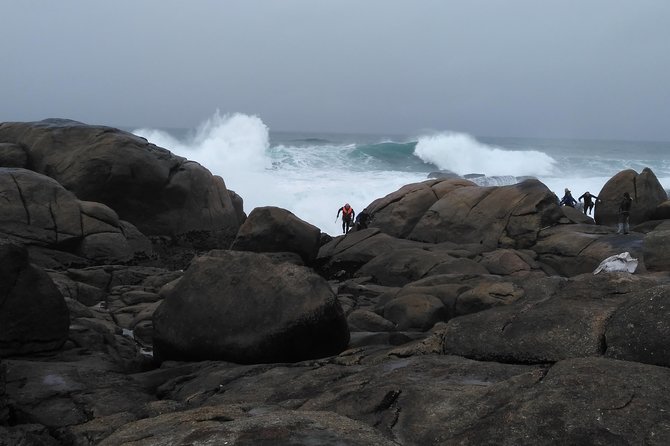
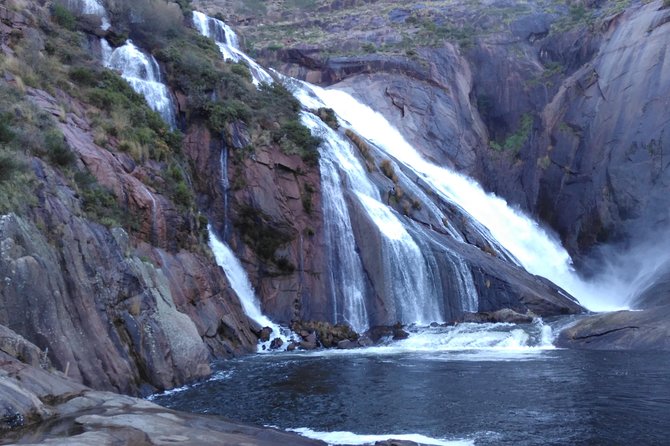
The stop at Fervenza do Xallas lasts about 35 minutes. Here, the Xallas River reaches the sea in a waterfall, creating one of Galicia’s most unusual natural sights. The combination of fresh water, rock, and Atlantic coast gives Ézaro a strong visual punch.
You have time for sightseeing and photographs, though not an extended hike. The stop is well placed in the schedule because it breaks up the drive before the main Finisterre section. I would wear shoes with a good grip and expect some walking, even though the available information does not describe a demanding trail.
The waterfall is not guaranteed to be the highlight on every departure. One person missed it because of road problems, a reminder that rural touring depends on traffic and local conditions. Still, when access works normally, Ézaro gives the day something that the beach and cape cannot: a waterfall falling toward the Atlantic.
Same base, a different kind of afternoon:
- Finisterre and Costa da Morte: The Most Complete Tour of Santiago
★ 5.0 · 733 reviews - From Santiago: Finisterre, Muxia, Ézaro – 7 stops day tour
★ 4.6 · 553 reviews - Santiago de Compostela Cathedral and Museum Guided Tour
★ 4.6 · 511 reviews - From Santiago: Tour to Rias Baixas with Boat Trip and Winery
★ 4.7 · 400 reviews
Cape Finisterre and kilometer zero
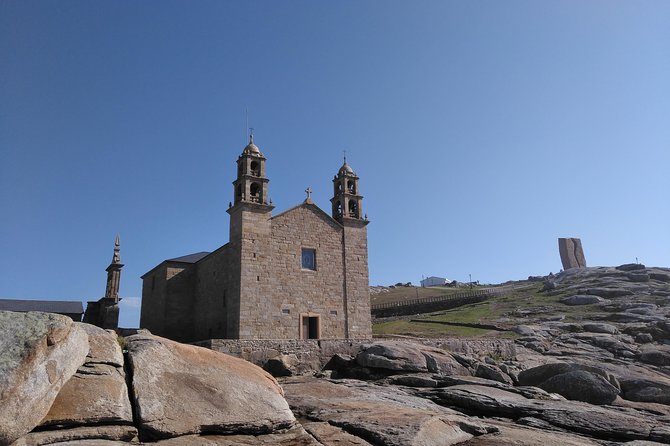
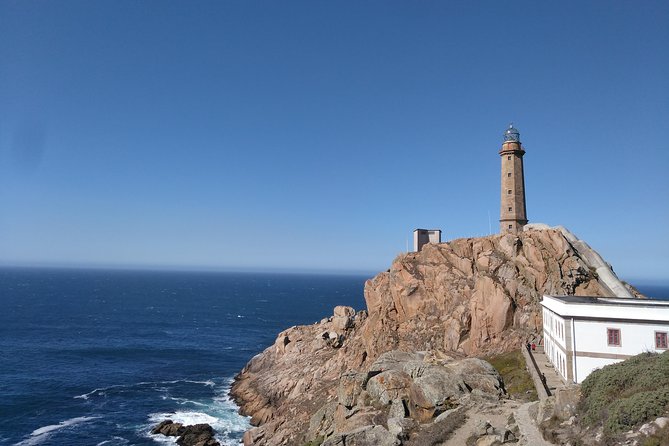
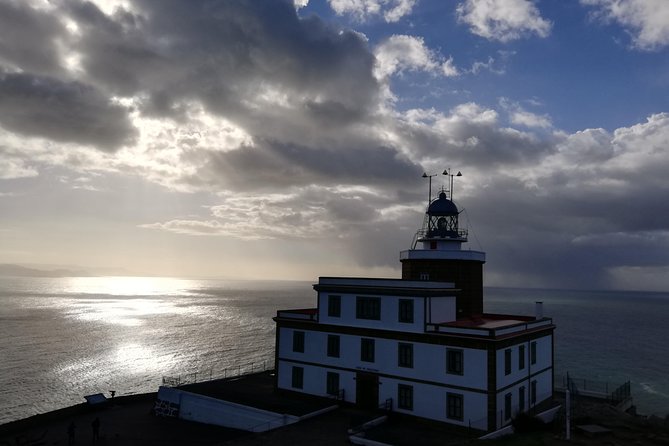
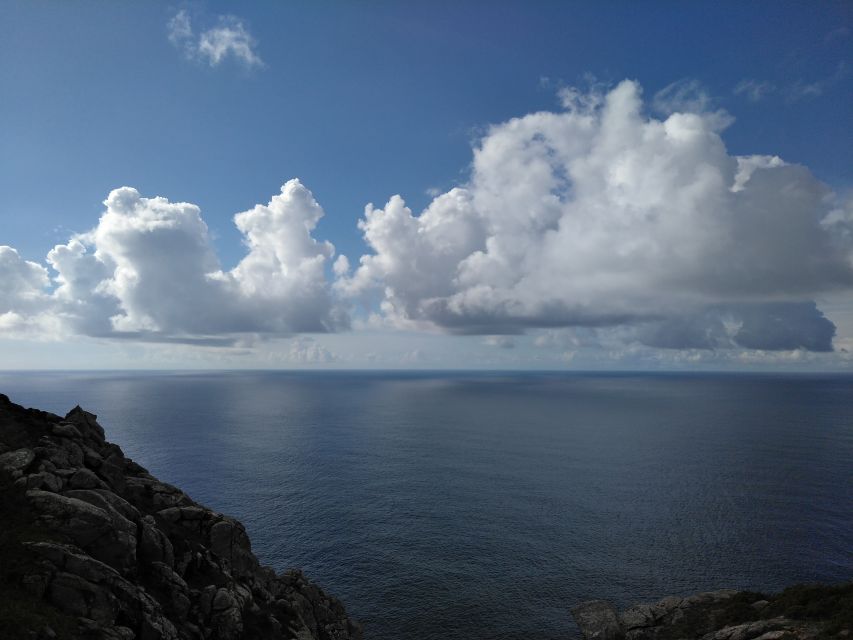
Cape Finisterre receives about 45 minutes. This is the dramatic headland associated with the end of the world, though it was not literally the westernmost point in Europe. The lighthouse is the main landmark, and the kilometer zero marker connects the cape directly to the Camino de Santiago.
For someone who has just completed a pilgrimage, this stop can carry real emotional weight. It gives you a physical place to reflect on the journey, with the ocean replacing the cathedral as the main backdrop. Even if you have not walked the Camino, the combination of myth, geography, and pilgrimage tradition makes Finisterre easy to appreciate.
The limitation is time. Forty-five minutes is enough to visit the principal viewpoint and lighthouse area, but it may not satisfy you if you want a slow walk along the cape or a long period by the water. Marcus specifically wished this stop had been longer and suggested taking time from Muros and lunch instead.
That criticism is fair. The tour tries to cover a lot of ground in one day, so each stop comes with a clock. I recommend deciding before you arrive what matters most: the lighthouse, the kilometer zero marker, photographs, or simply standing at the edge of the Atlantic. A little planning will help you use the short stop well.
Lunch and free time in Fisterra
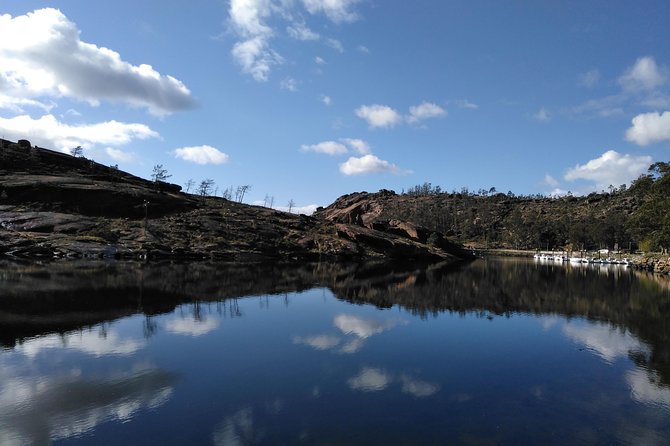
After the cape, the coach continues to Fisterra, the town and fishing port associated with Finisterre. You get about an hour and a half for lunch, sightseeing, and free time.
This is the most relaxed pause of the day. You can eat at your own expense, walk around the port, and take a break from the coach. Lunch recommendations from the guide have been appreciated, and the long pause gives you room to choose a meal without turning the whole day into a hurried snack stop.
Food is not included, so plan for that extra cost. The $58 tour price covers transportation and guiding, but not lunch or drinks. That still makes the excursion good value for many people, especially when you consider the amount of ground covered and the difficulty of reaching all these points independently.
The tradeoff is obvious. Ninety minutes is generous for lunch, but it reduces the time available elsewhere. If you prefer a slow meal and a look around a fishing port, you will appreciate it. If you would rather spend every spare minute at the cape or Muxía, it may feel too long.
Muxía, the sanctuary, and the sacred stones
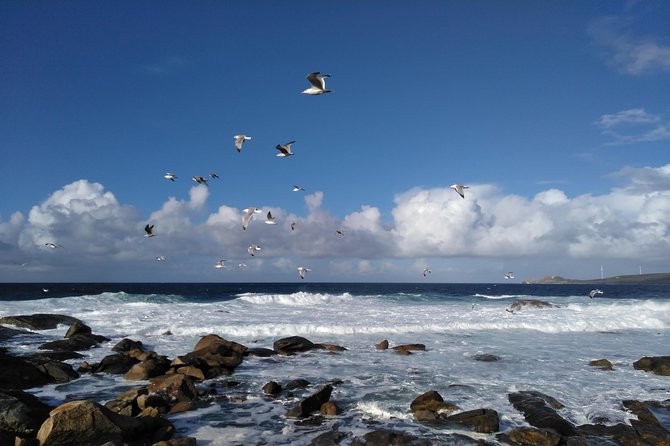
Muxía gets around 40 minutes and includes a guided visit plus free time. For many people, this is the emotional high point of the trip. The town sits beside the Atlantic, and the sanctuary at the foot of the sea gives the stop a strong sense of place.
The sacred stones are the unusual feature. Three stones are considered sacred by Galicians, and the guide explains the traditions connected with them. This is where good commentary adds real value. You are not just looking at rocks by the water. You are learning how local belief, pilgrimage, and the Atlantic setting come together.
I would pay close attention during the guide’s explanation, then use the remaining time to look around independently. Muxía can feel more powerful than a standard sightseeing stop because the setting is open, exposed, and closely tied to local stories.
Forty minutes is enough for the sanctuary and stones, but again, it is not a long visit. If Muxía is your priority, move promptly when the coach arrives. Some people have wished for more time here, especially because it is one of the most distinctive places on the route.
Ponte Maceira and its medieval bridge
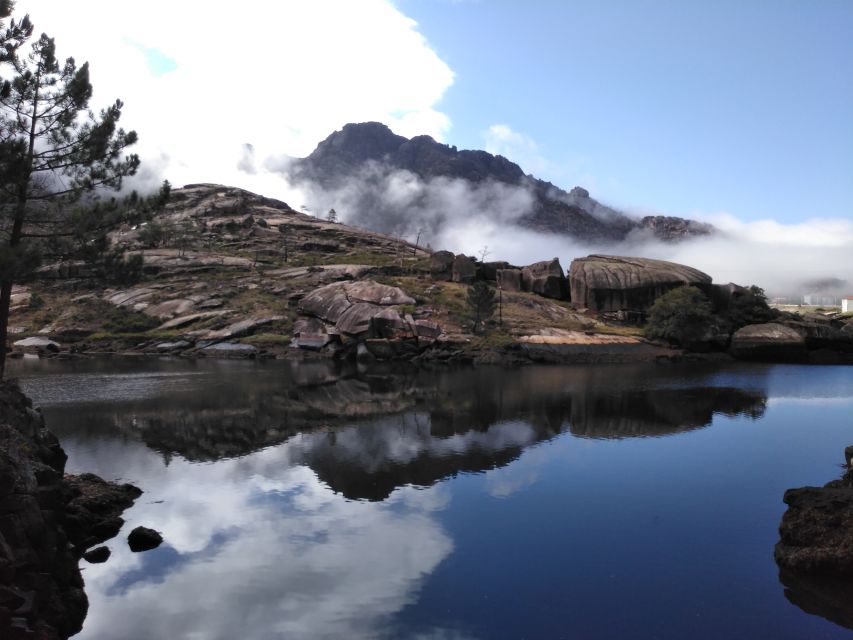
Ponte Maceira is listed as the final sightseeing stop, with about 25 minutes. The small town is linked to pilgrims continuing toward the end of the world, and its 14th-century bridge crosses the Tambre River.
The bridge and the nearby medieval mills make this a charming change of mood after the open Atlantic coast. Instead of cliffs and sea spray, you get water, stonework, and a compact historic setting. It is a good final stop because you can stretch your legs and see a quieter side of Galicia before returning to Santiago.
The material describing the tour also presents Ponte Maceira as an early stop, so the precise order may vary by departure or operating conditions. Either way, the stop is brief. You will have time to admire the bridge and mills, but not to linger for a long village walk.
The guide and coach experience
The strongest part of this tour is the human side. Andrea has been praised for explaining culture, traditions, history, and geography in a clear way. Pablo received similar praise for his humor and detailed commentary, while Cristian was remembered for his friendly, well-informed approach. Ruben was described as personable and attentive, and Dani Lati Valinho was singled out for professionalism and genuine engagement.
Guides generally explain the stops in Spanish and English, with Galician also available. The tour lists audio support in French, Korean, and German. On a multilingual departure, the commentary may take longer because information is repeated, but the language access is a real advantage.
The group care also seems practical. One guide checked that everyone was back on the bus before departure and called to check on a person delayed by an extended bathroom break. That sort of attention matters on a long day with several stops.
The coach is air-conditioned, clean, and comfortable according to the supplied feedback. The driver has also earned repeated praise for smooth driving and punctual departures. One useful warning: audio quality at the back of the bus was occasionally poor, so sit closer to the front if hearing every explanation matters to you.
Is $58 good value?
At $58, I consider this a strong value for a nine-hour excursion. You receive round-trip transport, a professional guide, several coastal stops, a waterfall, two major pilgrimage destinations, and a medieval bridge. A rental car would add fuel, insurance, parking, and the work of navigating unfamiliar roads. Public transport would be harder to coordinate across this route.
The price does not include food or drinks, and you should remember that this is a shared coach experience rather than a private tour. You trade flexibility for convenience. The tour cannot pause every time you see a perfect viewpoint, and the schedule will not suit someone who wants to explore one town slowly.
Still, the value is especially good if you have only one free day in Santiago. You get a broad introduction to the western Galician coast and can decide which places deserve a return visit by car, bicycle, or on foot.
Who should book this day trip?
I would recommend it most strongly to:
- People who have finished the Camino and want to continue to Finisterre and Muxía.
- Anyone staying in Santiago without a car.
- First-time visitors who want scenery, local stories, and pilgrimage history in one day.
- People who prefer an organized schedule and comfortable transport.
- Anyone happy to see several places briefly rather than spend a full day in one town.
I would think twice if you dislike long coach rides, need a very relaxed pace, or want extensive time at Cape Finisterre. You may also prefer a private outing if you want to control lunch, walking time, and photo stops.
Wear comfortable shoes, bring a camera, and carry a light rain layer. The coast can be misty and wet, but the coach makes the day workable even in poor weather. If you want the best chance of enjoying Finisterre and Muxía, keep an eye on the time at every earlier stop.
Should you book it?
Yes, if you want an efficient and fairly priced introduction to the Costa da Morte. I like the mix of Atlantic scenery, Camino meaning, local traditions, and small historic places. The guides are a major asset, and the coach removes the stress of reaching scattered coastal sights.
Book it with realistic expectations. This is a full day with a long ride and several short visits, not a slow coastal retreat. If you accept that rhythm, Toxo Travel’s Finisterre, Muxía, and Costa da Morte tour is one of the most practical ways to see this corner of Galicia from Santiago.
FAQ
How long does the Finisterre and Muxía tour last?
The tour lasts nine hours. One recent departure was described as leaving at 9 a.m. and returning at 6 p.m., but you should check the available starting time for your date.
What is included in the $58 price?
The price includes transportation in an air-conditioned vehicle and a guide. Food and drinks are not included.
Where does the tour depart from?
The meeting point is the TOXO TRAVEL office at Rúa dos Bautizados, 12, in Santiago de Compostela.
What languages are available?
The live guide speaks Spanish, English, and Galician. Audio guide support is listed for French, Korean, and German.
How much time do you get at the main stops?
The listed times are about 30 minutes in Muros, 35 minutes at Ézaro Waterfall, 45 minutes at Cape Finisterre, 1.5 hours in Fisterra, 40 minutes in Muxía, and 25 minutes at Ponte Maceira.
Can you cancel the tour?
You can cancel up to 24 hours in advance for a full refund. The tour also offers reserve now and pay later booking.
Recently listed in Santiago De Compostela
- Santiago de Compostela: Cathedral, Museum, and Old Town Tour★ 4.8 · 382 reviews
- Santiago de Compostela: Massage Treatment★ 4.8 · 170 reviews
- Santiago: Guided Foodie Tour with Drinks, Tapas & Live Music★ 4.7 · 153 reviews
- Santiago de Compostela Cathedral and Museum Guided Tour★ 4.6 · 511 reviews
- Santiago Complete Tour: City, Portico and Cathedral Tickets★ 4.7 · 108 reviews
- From Santiago: Rías Baixas Galicia Seafood & Wine Day Tour★ 4.6 · 209 reviews
- Old town walking tour in a small group★ 4.8 · 149 reviews
- From Santiago: Finisterre, Muxia, Ézaro – 7 stops day tour★ 4.6 · 553 reviews
Santiago de Compostela Tours, compared.
Santiago: Cathedral & Museum Tour + Pórtico of Glory Option
Read our review →
From Santiago: Finisterre, Muxia & Costa da Morte Excursion
Read our review →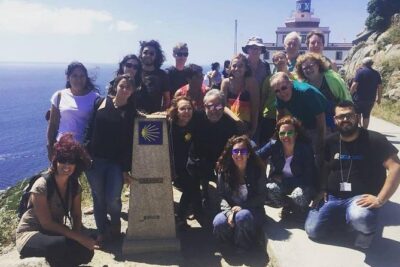
Excursion to Finisterre + Muxia + Costa da Morte (7 stops)
Read our review →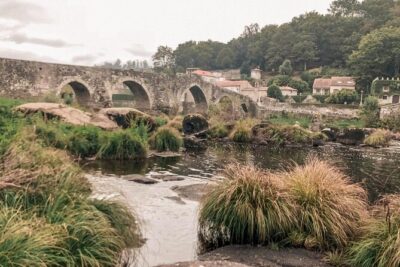
Finisterre and Costa da Morte: The Most Complete Tour of Santiago
Read our review →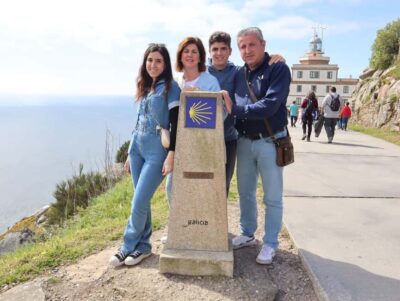
From Santiago: Finisterre, Muxia, Ézaro – 7 stops day tour
Read our review →
Santiago de Compostela Cathedral and Museum Guided Tour
Read our review →
From Santiago: Tour to Rias Baixas with Boat Trip and Winery
Read our review →
Santiago de Compostela: Cathedral, Museum, and Old Town Tour
Read our review →Browse the lists this tour appears in