
Reviewed · TAPAS TOURS
Seafood paella cooking class, tapas and visit to Ruzafa market.
Paella tastes better when you help make it. This Valencia cooking class pairs a visit to Ruzafa Market with hands-on seafood paella, sangria, tapas, and a full meal at the end. I like the market stop because it connects the dish to real Valencian ingredients, and I like that everyone gets a job at the paella pan rather than simply watching a chef work. The main caution is practical: the group can reach 20 people, the kitchen is an eight-minute walk from the meeting point, and some people have found the church meeting spot unclear.
For $78.64, the food and drink make this a solid value, especially if you count the tapas, paella, salad, wine, sangria, dessert, and coffee. I would book it early, since it is often reserved about a month ahead. Sunday is not a good choice because Ruzafa Market is closed, so the market portion does not operate that day.
In This Review
- Key points at a glance
- Why this paella class works so well
- Meeting at San Valero Parish at 11:00 a.m.
- Inside Mercado de Ruzafa
- The eight-minute walk to the kitchen
- Making seafood paella, step by step
- Sitting down to eat your work
- The social side of the kitchen
- What the price and schedule really mean
- Who should book this class
- Should you book My First Paella?
- FAQ
- Where does the paella cooking class begin?
- How long does the experience last?
- Is the visit to Ruzafa Market included?
- What food and drinks are included?
- Is the cooking class taught in English?
- What is the cancellation policy?
Key points at a glance
- Shop for paella ingredients at Ruzafa Market: See the fish, shellfish, vegetables, fruit, ham, cheese, and other foods before they reach your plate.
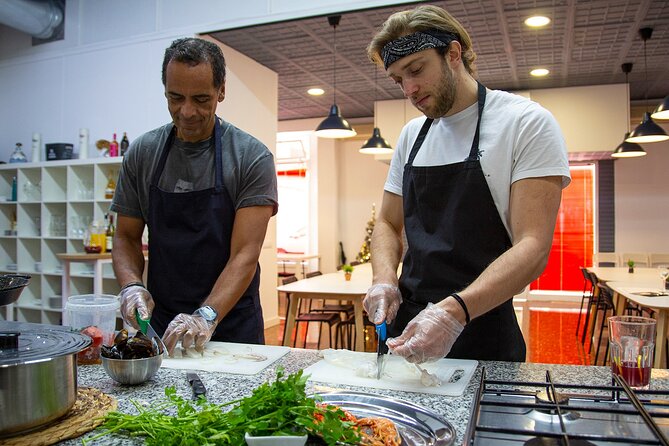
- Cook seafood paella as a group: You help prepare and cook the dish, with the chef guiding each stage.
- Sangria and tapas begin the kitchen session: Patatas bravas, jamón serrano, Manchego, mussels, and olives set the tone.
- A full Valencian meal is included: Paella comes with tomato salad, local wine, fruit, Valencian cake, sweet wine, and coffee.
- The class is social and hands-on: The small-group format usually gives you a chance to ask questions and meet people from several countries.
- Plan around the walking and timing: Meet at 11:00 a.m. outside San Valero Parish, and expect roughly three and a half hours from start to finish.
Why this paella class works so well
Many cooking classes give you a recipe and a seat at a counter. This one gives you a little more context first. You begin at Mercado de Ruzafa, one of Valencia’s neighborhood food markets, then carry that market knowledge into the kitchen.
That order matters. You see the ingredients before you cook them. You learn that paella is not just rice with seafood added on top. It depends on the quality of the stock, the timing of each ingredient, the way the rice is spread, and the patience required while it cooks.
I also like the social setup. The kitchen session is built around eating and talking, not simply taking notes. Sangria and tapas arrive early, then the class moves into preparation. By the time the paella is ready, you have already shared food with the people at your station.
The class can include more than one style of paella at the same time. Seafood paella is the focus here, but other groups may prepare traditional Valencian or vegetable versions. That gives you a useful comparison without requiring you to book separate classes.
More Cooking Classes in Valencia
- Paella Cooking Class, Wine Tasting & Central Market in Valencia
★ 5.0 · 1,150 reviews - Valencian paella cooking class, tapas and visit to Ruzafa market.
★ 5.0 · 828 reviews - Valencia: Paella Cooking Class with Central Market Tour
★ 5.0 · 721 reviews
Meeting at San Valero Parish at 11:00 a.m.
The meeting point is outside Parroquia de San Valero at Carrer del Pare Perera, 6, in Valencia’s L’Eixample district. The class begins at 11:00 a.m. and ends back at the same meeting point.
Give yourself extra time to locate the church. One person had trouble because the address did not make the exact meeting spot clear, eventually asking a nearby shopkeeper for help. The steps of the parish are meant to be an easy, visible place to gather, but checking the location before you leave your hotel is sensible.
The activity may use a multilingual guide in English, Russian, and Spanish. English is offered, but the staff roster can vary. Names associated with the class include Ana, José, Cristina, Christine, Valentin, and Cris. The cooking team changes, yet the repeated praise is aimed at the instructors’ warmth, humor, clear explanations, and ability to involve everyone.
The group limit is 20 people. That is not a tiny private lesson, but it is still manageable for a hands-on class. In the most successful sessions, the class is divided among several paella pans, with chefs moving between stations. If your group is large, you may share tasks with several other people rather than having constant one-to-one instruction.
Inside Mercado de Ruzafa
The first stop is the market. You walk through the stalls with the guide and collect the fresh products needed for the meal. The exact shopping sequence can vary, but the market visit covers the sorts of ingredients that help explain Valencian cooking: seafood, vegetables, rice components, and foods for the shared table.
This is the part that gives the class a sense of place. Instead of beginning in a kitchen stocked with anonymous ingredients, you see where the food comes from. The guide also explains the origins of paella and customs connected with Valencian life.
The market is not treated as a stage set for a food tour. One especially thoughtful feature is the effort to keep the group from blocking aisles or getting in the way of stallholders and local shoppers. Larger groups may be split up as they move through the market. That is good practice, and it makes the visit more respectful.
You might get small tastes along the way, and the staff can explain products such as seafood, ham, and vegetables. The market also gives you a chance to ask questions before the cooking begins. If you have always wondered which seafood works best in paella or why certain vegetables are used, ask here.
There is a limit to what this stop offers. It is a brief ingredient-shopping visit, not a long guided tour of every market stall. If you want an extended market history lesson, you may find it short. Its value is in connecting the shopping to the meal that follows.
The eight-minute walk to the kitchen
After the market, you walk about eight minutes to the cooking kitchen. That distance is easy for many people, but it may be tiring for anyone with limited mobility. The class also lasts about three and a half hours, with standing and participation during the preparation stages.
You do not need to arrange transport between the market and kitchen. The group walks together, and the activity returns to the original meeting point at the end. Wear comfortable shoes and avoid arriving hungry enough to become impatient, because the meal builds in stages rather than arriving all at once.
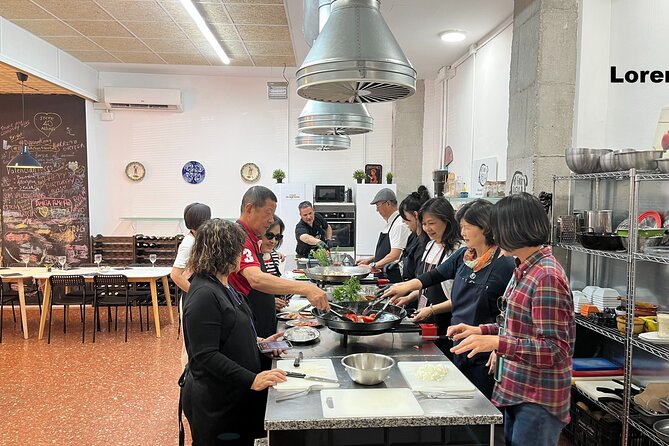
At the kitchen, the chef welcomes you with sangria and tapas. This is a smart start. You can settle in, meet the people at your cooking station, and enjoy a little food before handling ingredients.
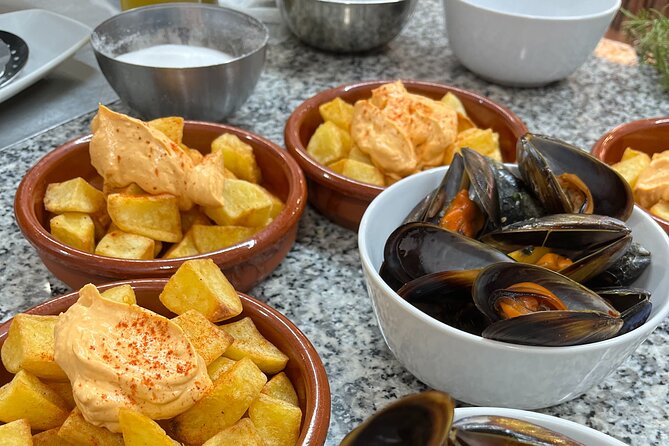
The sample spread includes patatas bravas with sojanesa, jamón serrano, Manchego cheese, steamed mussels, and olives. The patatas bravas receive especially warm praise, and the tapas are more than a token snack. Beer, soft drinks, water, and sangria are included, so you have choices even if you do not want much alcohol.
Same base, a different kind of afternoon:
- Valencia: Oceanogràfic Entry Ticket
★ 4.7 · 9,893 reviews - Valencia: 24 or 48-Hour Hop-on Hop-off Bus Ticket
★ 3.9 · 5,611 reviews - Valencia: Palosanto Flamenco Show Ticket
★ 4.8 · 3,876 reviews - Valencia: Catamaran Cruise with Sunset Option
★ 4.0 · 3,566 reviews
Making seafood paella, step by step
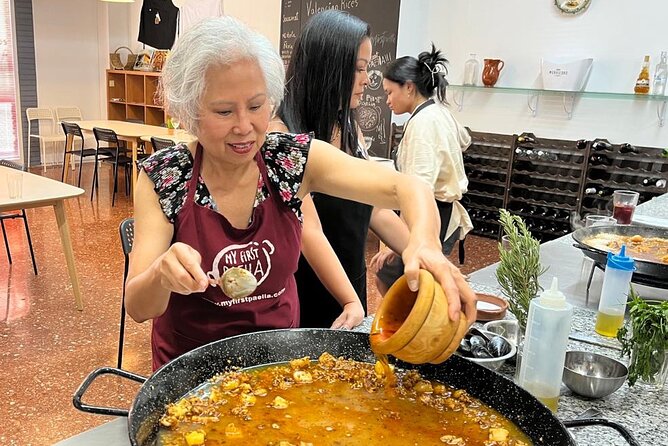
The chef explains the seafood paella process in stages. You help prepare ingredients and take part in the cooking rather than watching from the edge of the room. The exact duties depend on your station and group size, but the basic lesson covers preparation, cooking technique, timing, and how the paella comes together.
That hands-on approach is useful for home cooks. Paella is not presented as a mysterious dish that only a restaurant chef can manage. The instructors break the work into clear steps and show how each part affects the final result.
You also learn why the dish matters in Valencia. Paella is tied to family meals, shared time, and regional identity. The class treats it as both a recipe and a social tradition. That cultural explanation gives more meaning to the rice pan in front of you.
The seafood option is prepared alongside other styles in some sessions. You may see a traditional Valencian paella with meat or a vegetable version cooking at another station. Watching the different pans can help you understand how the same basic method changes with the ingredients.
Two chefs may supervise several pans. That arrangement usually works, but it means the amount of direct attention can depend on where you are standing and how many people are assigned to your station. The class is best for someone who enjoys shared work and conversation, not for a person expecting a private chef lesson.
The instructors receive strong praise for keeping the pace relaxed and making sure everyone has a role. Cris is described as entertaining and clear, while Ana, José, Cristina, Christine, and Valentin have each been praised for humor, patience, and practical tips. The exact chef is not guaranteed, but the teaching style appears to be a major strength of the program.
Sitting down to eat your work
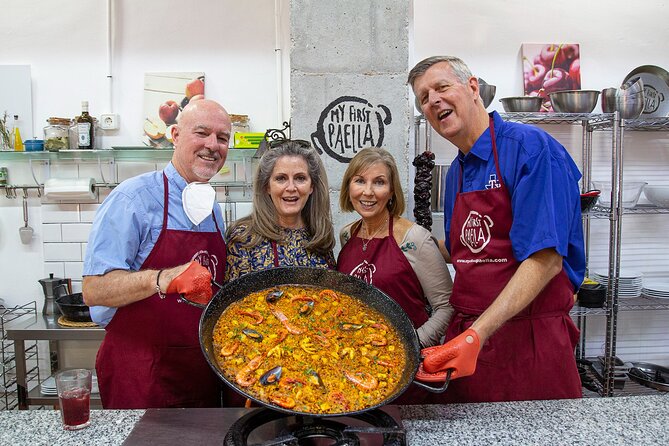
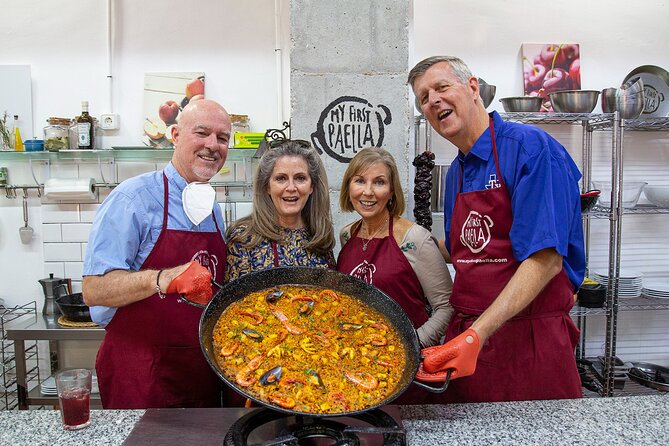
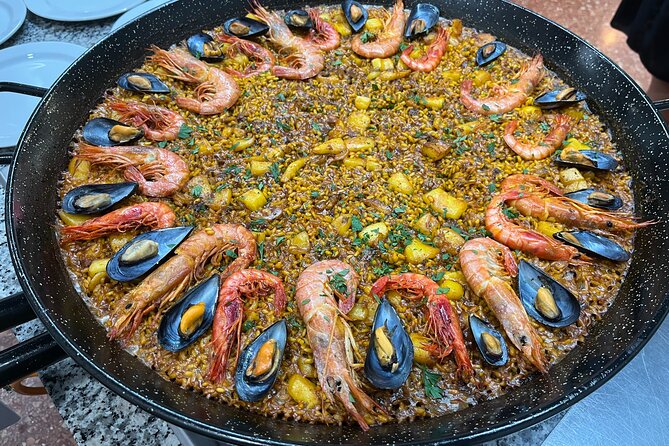
Once the paella is ready, everyone sits down for the main meal. The seafood paella is served with a Valencian tomato salad, and local wines are poured alongside it.
The menu continues with seasonal fruit, a typical Valencian sponge cake, sweet wine, and coffee. Mistela, a sweet Valencian wine, is included as part of the closing course. This is a substantial meal, not just a tasting portion.
The food value helps explain the price. At $78.64 per person, you are paying for the market visit, instruction, ingredients, kitchen use, tapas, drinks, the paella meal, dessert, and coffee. A separate restaurant paella might cost less if you only count the plate, but it would not include the cooking lesson, market context, or the long shared meal.
The drinks are also worth noting. Sangria is served during the welcome and workshop, with wine, beer, soft drinks, and water available. The experience includes plenty of opportunities to raise a glass, so you should plan accordingly if you prefer to drink lightly.
The best part is that you eat something you helped prepare. Even if your first homemade paella is not perfect, you will understand more about the dish when you order it elsewhere in Valencia. Several people leave with enough confidence to try the recipe at home.
The social side of the kitchen
This class suits people who like food with conversation. You may be placed with couples, families, solo participants, or groups celebrating a special occasion. The shared stations create an easy reason to talk, and the meal gives everyone time to compare techniques and travel plans.
The atmosphere can be playful. Sangria, jokes, and occasional toasts are part of the tone. The instructors work to make the group feel welcome, and many sessions end with people feeling like they have shared a family meal rather than attended a formal lesson.
That warmth is a major reason to choose this class over a demonstration. You are not just collecting a recipe. You are spending an afternoon with other people, doing a practical task together, then eating the result.
Still, the social quality depends partly on your own comfort. If you prefer quiet instruction or a highly structured culinary school setting, the joking and shared work may feel less focused. The class leans toward friendly and informal rather than technical and rigorous.
What the price and schedule really mean
The class costs $78.64 per person and lasts about three hours and 30 minutes. It begins at 11:00 a.m., making it a substantial late-morning and lunch activity.
I consider the price fair because nearly everything tied to the meal is included. You do not need to buy ingredients, rent equipment, or pay separately for the market walk, tapas, drinks, dessert, or coffee.
The timing also works well for a day in Valencia. You can spend the morning getting to Ruzafa, cook through the early afternoon, and finish at the original meeting point. You may want to keep the rest of the day flexible, since the meal is filling and the class is social rather than rushed.
Book ahead if your dates are fixed. The experience is often reserved around 31 days in advance. Free cancellation is available up to 24 hours before the start time, but cancellations or changes made inside that window are not accepted for a refund.
Do not schedule it for Sunday if the market visit matters to you. Mercado de Ruzafa is closed that day, so the normal shopping portion is not available.
Who should book this class
I would recommend it to anyone who wants more than a restaurant meal in Valencia. It works especially well for:
- First-time paella cooks who want a clear introduction
- Couples and friends looking for a shared food activity
- Solo visitors who enjoy meeting people over a meal
- Families with children old enough to take part, provided an adult accompanies each child
- Home cooks who want practical advice on improving their own paella
- Anyone interested in the connection between Valencian food and daily life
It may be less suitable for anyone with difficulty walking or standing. The eight-minute walk is modest, but the full session involves moving around the market and kitchen. A group of up to 20 also means you should not expect a private lesson.
Should you book My First Paella?
Yes, if you want a friendly, food-filled introduction to Valencia. The strongest reasons are the market shopping, the chance to cook the seafood paella yourself, the generous meal, and the instructors’ warm teaching style.
I would book it early and choose a day other than Sunday. Confirm the San Valero Parish meeting point before setting out, and allow time to find the steps. If you want a quiet, highly technical cooking course, this may feel too social. If you want to learn, eat well, and spend a few hours sharing a table with people from around the world, it is a very good choice.
FAQ
Where does the paella cooking class begin?
It begins at 11:00 a.m. outside Parroquia de San Valero, at Carrer del Pare Perera, 6, in Valencia’s L’Eixample district.
How long does the experience last?
The activity lasts approximately three hours and 30 minutes.
Is the visit to Ruzafa Market included?
Yes. The group visits Mercado de Ruzafa to purchase the fresh ingredients needed for the paella. The market portion is not available on Sunday because the market is closed.
What food and drinks are included?
The included menu features tapas, seafood paella, Valencian tomato salad, seasonal fruit, Valencian cake, sweet wine, coffee, and mistela. Drinks include sangria, wine, beer, soft drinks, and water.
Is the cooking class taught in English?
English is offered. The activity may also be operated by a multilingual guide speaking English, Russian, and Spanish.
What is the cancellation policy?
You can cancel up to 24 hours before the start time for a full refund. Cancellations or changes made less than 24 hours before the experience are not accepted for a refund.
More Paella Classes in Valencia
- Barcelona: Paella Cooking Experience & Boqueria Market Tour
★ 4.8 · 3,661 reviews - Barcelona Paella Cooking Class with Market Visit, Tapas & Sangria
★ 5.0 · 2,531 reviews - Menorca: Natural Coves and Beaches Boat Trip & Paella Lunch
★ 4.4 · 1,753 reviews - Spanish Cooking Class Paella Tapas and Sangria in Madrid
★ 5.0 · 1,340 reviews
More Tapas Tours in Valencia
- Valencia Old Town Tour with Wine & Tapas in 11th Century Historic Monument
★ 5.0 · 3,234 reviews - Valencia: Old Town Tour, Wine & Tapas in an 11th c. Monument
★ 4.9 · 1,797 reviews
Recently listed in Valencia
- Gandía: Sea Cruise from Gandia with Sunset Option★ 4.4 · 110 reviews
- Valencia: Waterfalls and Thermal Springs Tour with Swimming★ 4.8 · 643 reviews
- Valencia: Jetski experience with Guide★ 4.7 · 131 reviews
- Valencia: Historical Walking Tour★ 4.6 · 390 reviews
- From Valencia: Cala del Moraig Hiking & Beach Trip★ 4.8 · 107 reviews
- From Valencia: Chulilla, Turia Canyon, Hanging bridges…★ 4.9 · 139 reviews
- From Valencia: Caves of San José Guided Tour & Boat Ride★ 4.5 · 179 reviews
- From Valencia: Peniscola Day tour, Game of Thrones★ 4.8 · 233 reviews
Tapas Tours, compared.
Montserrat Half-Day Tour with Tapas and Gourmet Wines
Read our review →
Montserrat & Cogwheel Train, Gourmet Wine Tasting & Tapas/Lunch
Read our review →
Barcelona Tapas and Wine Experience Small-Group Walking Tour
Read our review →
Montserrat with Black Madonna & Medieval Winery with Tapas/Lunch
Read our review →
Montserrat and Winery Tour with Tapas or Lunch
Read our review →
Tapas Walking Tour with Food, Wine, and History
Read our review →
Sevilla Food Tour: Tapas, Wine, History & Traditions
Read our review →
Valencia Old Town Tour with Wine & Tapas in 11th Century Historic Monument
Read our review →Browse the lists this tour appears in