
Reviewed · SKIP THE LINE
Seville: Bullring Guided Tour with a Skip-the-Line Ticket
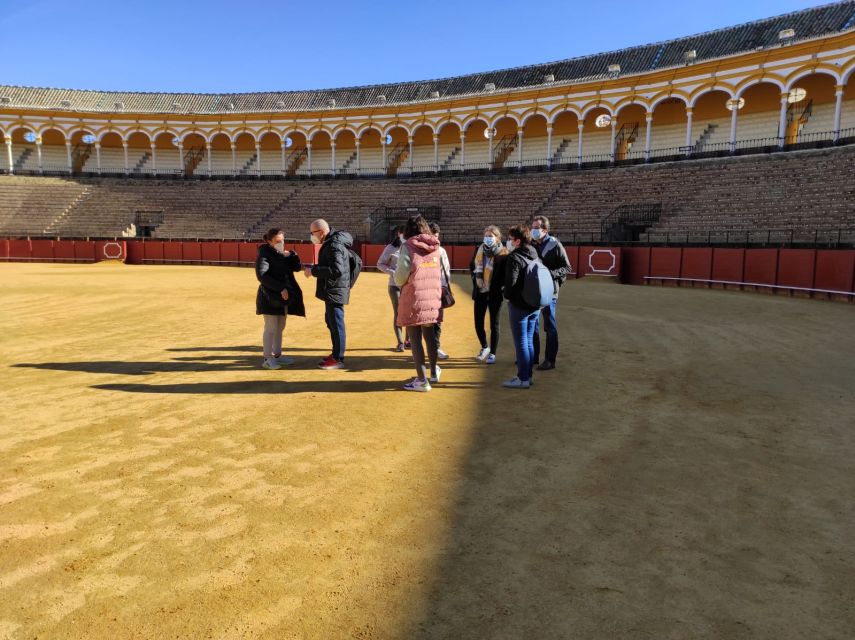
Bullfighting is easier to understand from inside the ring. This 60 to 75-minute visit to Seville’s Plaza de Toros de la Real Maestranza combines the bullfight museum with the working spaces behind the spectacle. I like the clear route through the costumes and traditions, and I like the moment when you pass through the main gate into the arena. The main caution is that arena access can change during bullfighting season, when you may view the ring from the seats instead of walking onto the sand.
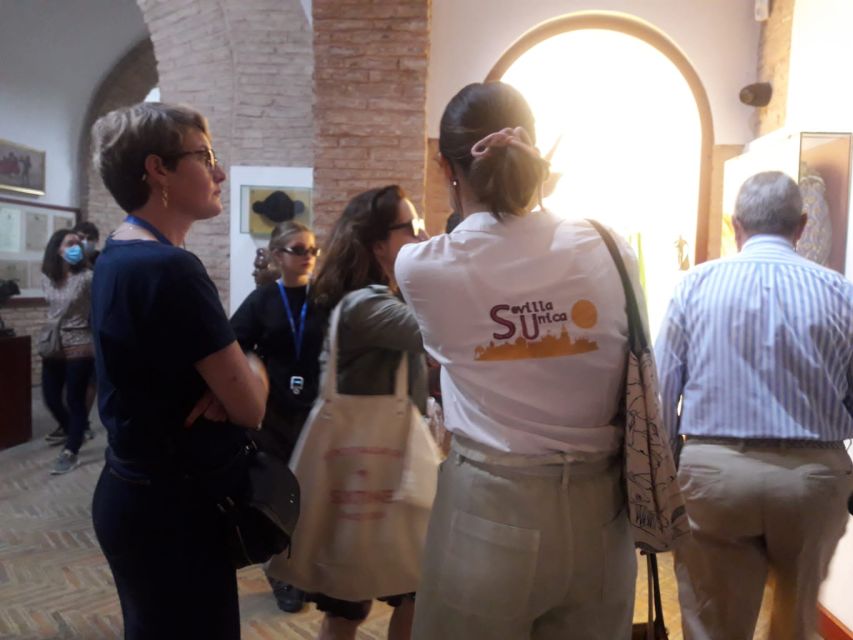
The skip-the-line entry saves useful time, especially when Seville is hot and the plaza is busy. I also appreciate the headsets, since they let you hear the guide while looking around instead of crowding close to one person. Some guides, including Margarita, are praised for their warmth, humor, and detailed answers. English can be harder to follow with certain guides, so the language of the tour is worth considering carefully.
In This Review
- Key points at a glance
- Why Seville’s bullring deserves a closer look
- Starting at the museum’s four sections
- The horses’ courtyard and the chapel
- Walking through the main gate
- Important limits on arena access
- What the guides add to the visit
- Is the $32 price fair?
- Practical planning for your visit
- Who will enjoy this tour most?
- Should you book the Seville bullring tour?
- FAQ
- How long does the Seville bullring tour last?
- What does the tour include?
- Is the tour offered in English?
- Can I enter the bullring arena?
- What identification should I bring?
- Is the tour wheelchair accessible?
Key points at a glance
- Four-part museum visit: See costumes, capes, and displays that explain the people and stages involved in a bullfight.
- A quiet chapel: Visit the small chapel where bullfighters pray before entering the arena.
- Enter through the main gate: The tour recreates the matador’s entrance, including the sound of the wooden door opening.
- See the arena from its center: Look toward the tendidos, toriles, and the Prince’s Gate from the bullring floor when access is permitted.
- Strong guide-led experience: Guides such as Margarita have been praised for detailed explanations, humor, and time for questions.
- Good short visit for $32: The price is reasonable if you want context rather than a quick look at an empty stadium.
Why Seville’s bullring deserves a closer look
The Plaza de Toros de la Real Maestranza is not simply a round stadium. It is a place where architecture, ritual, clothing, animals, religion, social status, and performance meet. You do not need to approve of bullfighting to find the site worth seeing. In fact, this tour suits you especially well if you feel uncertain or uncomfortable about the sport but still want to understand its place in Spanish culture.
A guide can explain details that are easy to miss on your own. You learn who takes part in a bullfight, how the different stages fit together, what the costumes signify, and why certain gates and spaces matter. The visit gives you background without requiring you to attend an actual fight.
That distinction matters. Several people who would not want to watch a bullfight still found the cultural and historical explanation worthwhile. The tour does not ask you to adopt a particular view. It gives you the framework to make your own judgment.
The short duration also works well in a Seville sightseeing day. At about an hour to 75 minutes, it is easy to fit between the cathedral, the riverside, and lunch. You receive a focused visit rather than a long lecture, though the amount of detail depends on the guide and the size of your group.
A few more Seville ideas to compare
- Seville: Royal Alcázar Entry Ticket
★ 4.6 · 28,378 reviews - Seville: Cathedral and La Giralda Entry Ticket
★ 4.5 · 24,592 reviews - Seville: Live Flamenco Dancing Show Ticket at the Theater
★ 4.7 · 16,396 reviews
Starting at the museum’s four sections
The tour begins inside the bullring with the Bullfight Museum, arranged in four parts. This is the place where the guide explains the purpose of bullfighting and traces how it developed over the centuries.
You will see original bullfighter clothing, capes, and other objects connected with the arena. These displays make the subject more concrete. A bullfight can seem like a blur of color and movement if you have only seen photographs. Seeing the clothing up close helps you understand the skill, danger, ceremony, and visual language involved.
The guide also explains the roles of the people who share in a bullfight. The matador is the most famous figure, but the event involves a wider team. Knowing who does what gives you a better sense of the structure and discipline behind the performance.
I find this museum section particularly useful for first-time visitors. You get enough information to recognize the main terms and rituals later in the tour. Guides often add stories about individual matadors and bulls, which can make the displays feel less like a collection of objects and more like part of a living tradition.
Do not rush through this area. The guided part is limited, but you may have a chance to remain in the arena and look around the museum afterward. If you enjoy small details, use that extra time to inspect the costumes and capes more closely.
The horses’ courtyard and the chapel
From the museum, the route continues to the horses’ courtyard. This less glamorous space helps you picture the practical side of the bullring. Before the fight, animals, equipment, and people all needed organized places away from the main arena.
The courtyard also provides a change of mood before you enter the ring. The museum explains the public ceremony. The courtyard shows the backstage setting. Together, they help you see the bullring as a working building rather than just a grand circle of seats.
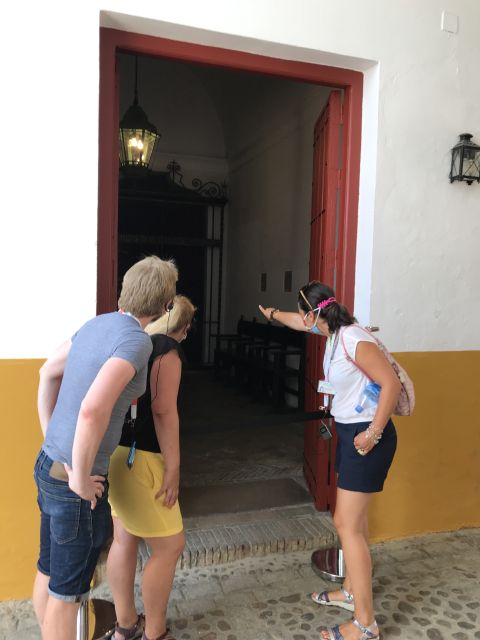
You will also visit the chapel where bullfighters pray before a fight. It is a modest stop, but an important one. The chapel shows how religious practice and bullfighting ritual have long existed side by side in the event’s culture.
Your guide can explain why the chapel matters and how the moments before a fight are shaped by custom. Even if you are not interested in the sport itself, this is a revealing look at the emotional and spiritual side of the tradition.
Walking through the main gate
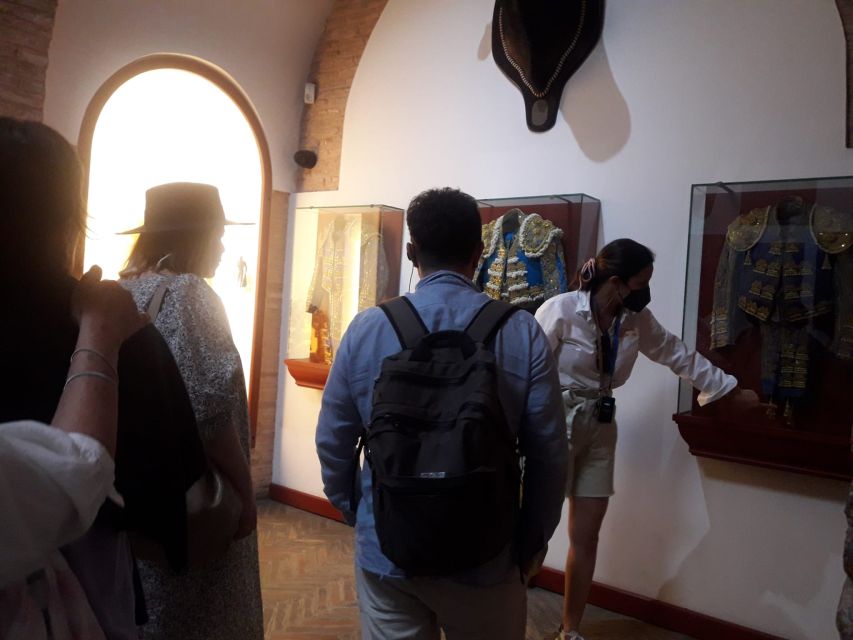
The most theatrical part of the tour comes when you pause at the main gate. The guide lets you hear the wooden door open before you enter the arena as a bullfighter would.
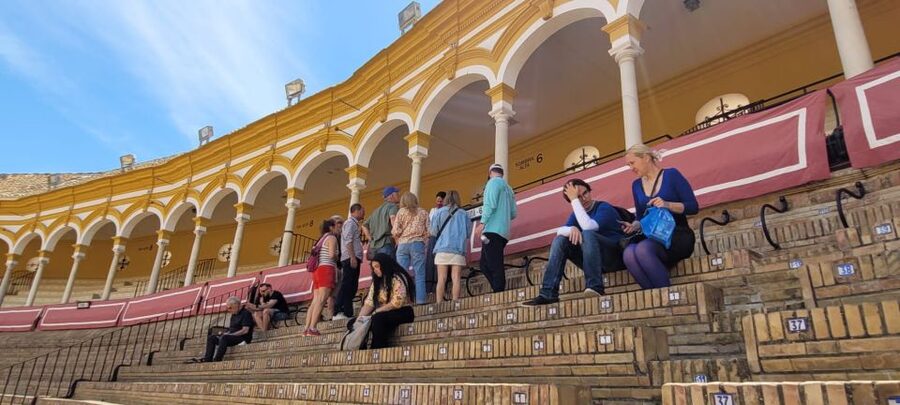
It is a simple effect, but it works. You move from the enclosed museum and courtyard into the open ring, with the circular seating rising around you. The change in scale gives the bullring its impact.
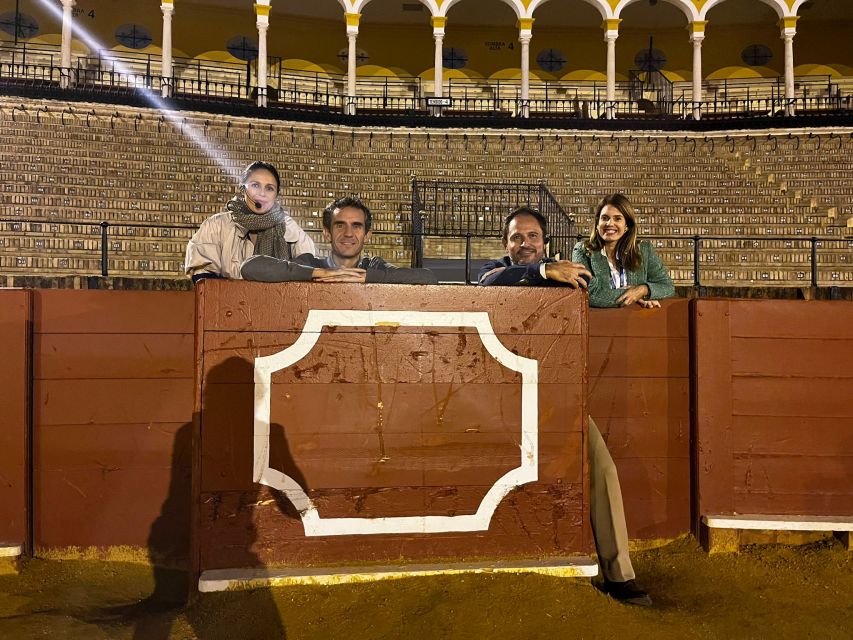
From the arena, you can study the tendidos, or the front rows, and look toward the toriles, the bull pens. These names are more than vocabulary. They help you understand how the building is arranged and how the event moves through its spaces.
The guide also points out the Prince’s Gate, the most honored exit in the bullring. A matador who crosses it receives a major reception. Knowing this before you see the gate gives the architecture a clearer role in the drama.
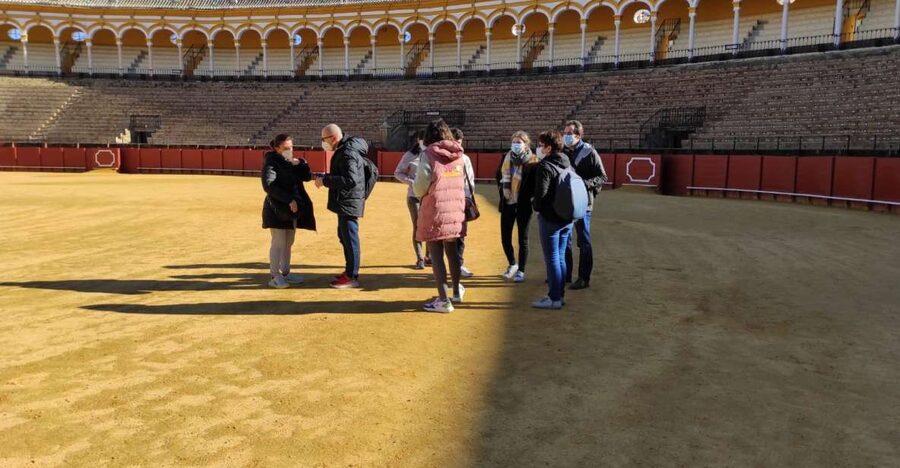
When you are allowed onto the sand, the center of the arena is the best place for photographs and for taking in the building’s shape. Look up at the rows rather than only toward the gate. From the middle, you see how exposed the arena would feel to anyone performing there.
Same base, a different kind of afternoon:
- Seville: Casa de la Memoria Flamenco Show
★ 4.8 · 12,964 reviews - Seville: 1-Hour Guadalquivir River Sightseeing Eco Cruise
★ 4.2 · 10,281 reviews - Seville: Cathedral, Giralda, and Royal Alcázar Guided Tour
★ 4.7 · 9,165 reviews - Seville: Setas de Sevilla Entry Ticket
★ 4.6 · 8,901 reviews
Important limits on arena access
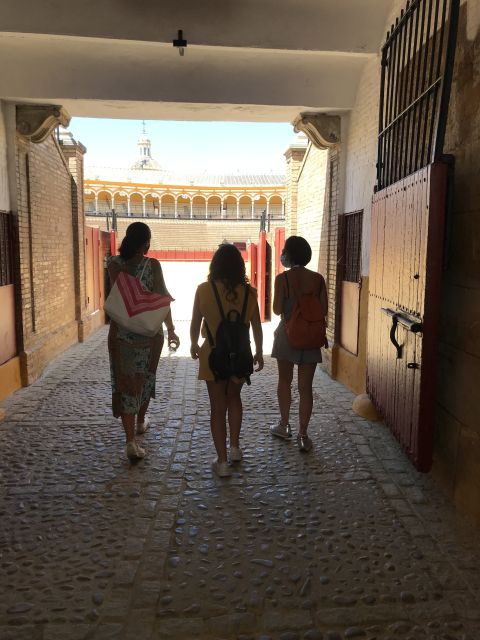
The main promotional appeal is entering the arena, but access is not guaranteed at every time of year. During bullfighting season, the ring may be admired from the seats instead.
This is an important point when deciding how much to pay. If walking on the arena floor is essential to you, check the current conditions before booking. The museum and guided explanation still provide value, but the experience feels different from standing in the center of the ring.
Some bookings have also not included a walk on the field, even though the arena itself was visited. Treat the floor access as a possibility rather than a promise. The operator and guide can also face changes caused by opening hours, restricted access, or security measures.
That does not make the tour poor value. The museum, chapel, courtyard, seating areas, and guide commentary remain part of the visit. It simply means you should book for the full cultural tour, not for one photograph on the sand.
What the guides add to the visit
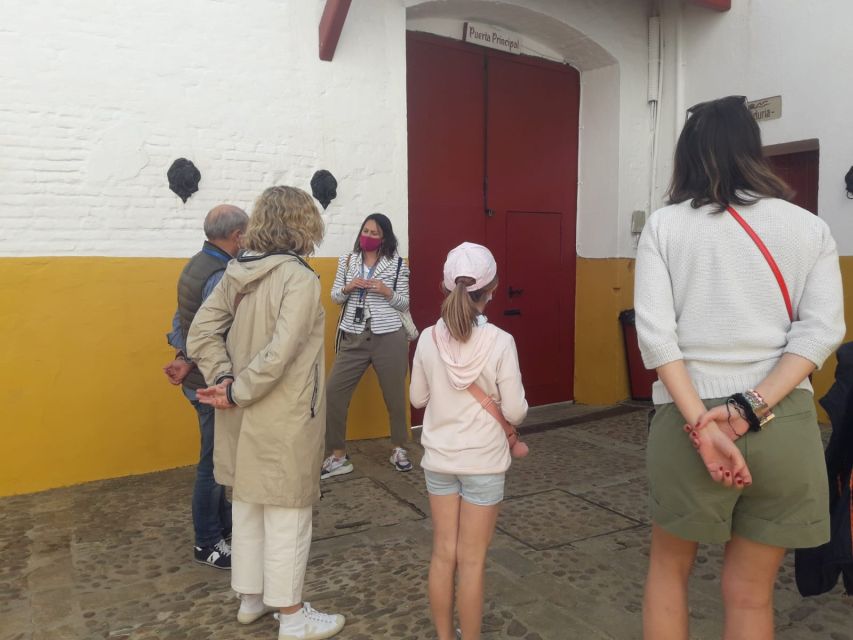
The guide is the biggest variable in this experience. The strongest guides turn a building visit into a clear story. Margarita receives especially warm praise for her passion, humor, detailed explanations, and willingness to answer questions. Another memorable visit included a bullfighter explaining the subject directly, and one group even met Victor Puerto.
The best guides connect the objects in the museum with the spaces you see later. They explain not just what a cape looks like, but how it functions. They do not simply point to the Prince’s Gate, but explain why crossing it matters.
You should also take advantage of the question time. Small groups can be especially rewarding because you can ask about training, the roles of participants, specific bulls, modern practice, or common misunderstandings. One group had only six people, which made it easy to pause and ask for more detail.
English-language delivery is generally strong, but it can vary. A few people found a Spanish guide’s English difficult to understand at first, while others praised guides for fluent, easy-to-follow commentary. The included headset helps with volume, but it cannot fully solve an accent or language issue. Select English or Spanish at booking and arrive ready to listen closely.
Is the $32 price fair?
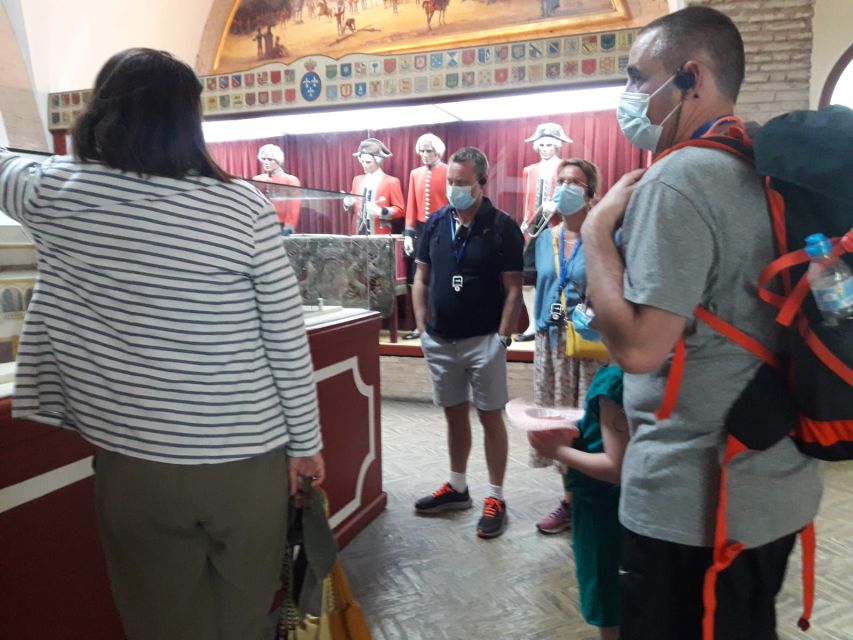
At $32 per person, this is not the cheapest way to see the bullring. You are paying more than simple admission, but you receive skip-the-line entry, a live guide, and a headset.
I think the price is fair if you want to understand what you are looking at. An independent visit may show you the architecture and museum displays, but it will not necessarily explain the sequence of a bullfight, the purpose of each space, or the meaning of the gates and rituals.
The value is strongest for first-time visitors and for anyone with only a basic understanding of bullfighting. If you already know the subject well, the tour may feel brief, though a strong guide can still add personal stories and local detail.
The 60 to 75-minute length keeps the cost easier to justify. You are not committing half a day, and the visit fits neatly into a larger plan. If you can stay a little longer after the guided portion, the museum becomes a better value because you can look at the displays at your own pace.
Practical planning for your visit
There are two listed starting points: Paseo de Cristóbal Colón, 12, and Calle Circo, 7. Your exact meeting point depends on the option you book, so check the confirmation rather than heading straight to the bullring entrance.
Arrive early. Once the tour has started, late access is not permitted. The skip-the-line ticket saves time at the entrance, but it does not protect you from missing the group.
Bring a passport or ID card. Children need identification as well, and anyone using a senior, student, or child fare must carry proof of eligibility. Students also need a valid student card.
A reusable water bottle is a sensible choice, particularly in Seville’s warmer months. Wear comfortable shoes, since you will move through several parts of the building and may stand during the explanations.
The site is listed as wheelchair accessible. The tour is offered in English and Spanish, and you choose the language when booking. You can cancel up to 24 hours before the activity for a full refund, and the reserve-now, pay-later option keeps your plans flexible.
Who will enjoy this tour most?
I would recommend it to you if you:
- Want cultural context without attending a bullfight
- Like architecture, museums, and historic buildings
- Prefer a live guide to an audio tour
- Have limited time in Seville
- Want to ask questions about a complicated tradition
- Are curious about the ceremony and human roles behind the event
Families can also find it worthwhile, since the visit is short and visual. The subject includes animals and violence, so parents should decide if the topic suits their children.
You may want to skip it if you have no interest in bullfighting, its cultural place, or the building itself. The tour is educational, not a general Seville sightseeing walk. It also may disappoint if your main goal is guaranteed access to the arena floor.
Should you book the Seville bullring tour?
Book it if you want a clear, respectful explanation of bullfighting and the chance to see the Real Maestranza from behind its public facade. The museum, chapel, courtyard, and arena create a well-paced visit, while the guide adds the details that make the building meaningful.
The strongest reason to choose this tour is the live commentary. Margarita and other highly praised guides bring humor, stories, and careful answers to the subject. The main reason to hesitate is the variable arena access and the fact that English clarity can depend on the guide.
For $32, I consider it good value for a first visit, especially with skip-the-line entry and headsets included. Go with an open mind, confirm the meeting point and arena conditions, and you will come away with a better grasp of one of Spain’s most debated traditions.
FAQ
How long does the Seville bullring tour last?
The tour lasts about 1 hour to 75 minutes. Starting times vary, so check availability when booking.
What does the tour include?
The price includes an official live guide, headsets, and skip-the-line tickets to the Plaza de Toros de la Real Maestranza.
Is the tour offered in English?
Yes. Tours are offered in English and Spanish. The tour is conducted in the language selected when booking.
Can I enter the bullring arena?
Arena access depends on conditions. During bullfighting season, the arena may be viewed from the seats rather than entered.
What identification should I bring?
Bring a passport or ID card for each participant, including children. Senior, student, and child fare holders need proof of eligibility, and students must also carry a valid student ID.
Is the tour wheelchair accessible?
Yes, the activity is listed as wheelchair accessible.
Recently listed in Seville
- Seville: Small Group Jewish Quarter Tour with Tapas & Drinks★ 5.0 · 119 reviews
- Seville: Alcázar Fast-Track Access with Guided Tour★ 4.2 · 432 reviews
- Seville: Small-Group Jewish Quarter Discovery Walking Tour★ 4.9 · 499 reviews
- Seville: Sunset Roof Top Walking Tour★ 4.5 · 122 reviews
- Seville: VIP Exclusive Early Access Tour of The Alcazar★ 4.8 · 276 reviews
- Seville: 3.5-Hour Spanish Cooking Class & Triana Market Tour★ 4.9 · 751 reviews
- Seville: Flamenco Show at Tablao Almoraima in Triana★ 4.6 · 483 reviews
- Seville: Authentic and Romantic Horse-Drawn Carriage Ride★ 4.5 · 341 reviews
Skip the Line, compared.
Park Guell Guided Tour with Skip The Line Entry
Read our review →
Cathedral of Mallorca Skip-the-Line Entry Ticket
Read our review →
Sagrada Familia Skip-the-Line Entry Ticket & Tour
Read our review →
Park Guell Guided Tour with Skip the Line Ticket
Read our review →
Royal Palace Expert Guided Tour with Skip-the-Line
Read our review →
Cordoba Mosque-Cathedral: Skip-the-Line Guided Tour
Read our review →
Park Guell and Sagrada Familia Tour with Skip the Line Tickets
Read our review →
Browse the lists this tour appears in