
Reviewed · AUDIO TOURS
Seville: Hospital de los Venerables Ticket with Audio Guide
A quiet corner reveals Seville’s grand past. The Hospital de los Venerables combines a lovely 17th-century courtyard with an impressive Baroque church, while the included audio guide gives the building some needed context. I especially like the chance to see works linked to Velázquez and Murillo in the Centro Velázquez, and I appreciate the ticket’s simple format, which includes the church, sacristy, courtyard, art center, and VR360º experience.
The main drawback is focus. If you arrive expecting a detailed look at the hospital’s daily life and charitable work, you may find that much of the visit feels like an art museum inside a former religious institution. At $14, it is good value for art lovers and architecture fans, but less essential if your main goal is learning about the building’s social history.
In This Review
- Key points to know before you go
- Why this former hospital matters
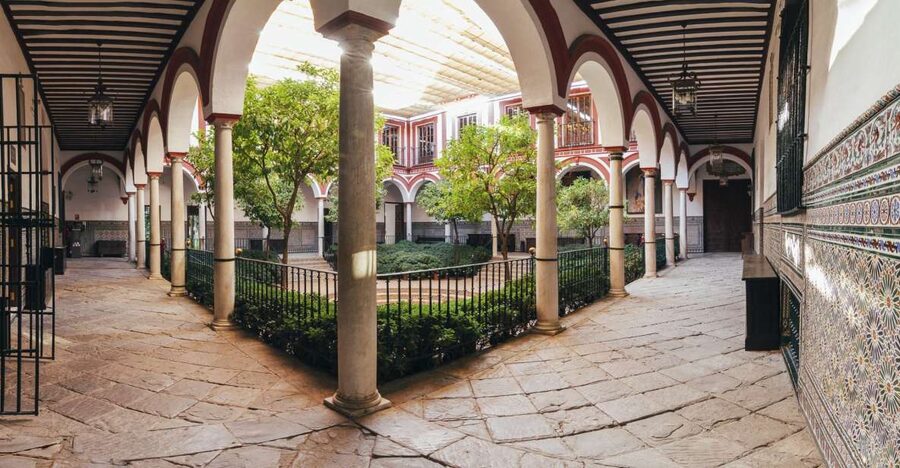
- The Sevillian courtyard comes first
- Inside the Baroque church
- The sacristy and the details most people miss
- The Centro Velázquez and the art collection
- What the audio guide adds
- The new VR360º experience
- Is $14 a fair price?
- Who should book this Seville experience?
- Final verdict: book it for art and atmosphere
- FAQ
- Where is the Hospital de los Venerables experience located?
- What does the ticket include?
- How much does admission cost?
- How long is the ticket valid?
- Is an audio guide included?
- Which languages are available for the audio guide?
- Is a live guide included?
- Is the VR360º experience included?
- Is the site wheelchair accessible?
- Can I cancel the booking?
- Can I reserve now and pay later?
Key points to know before you go
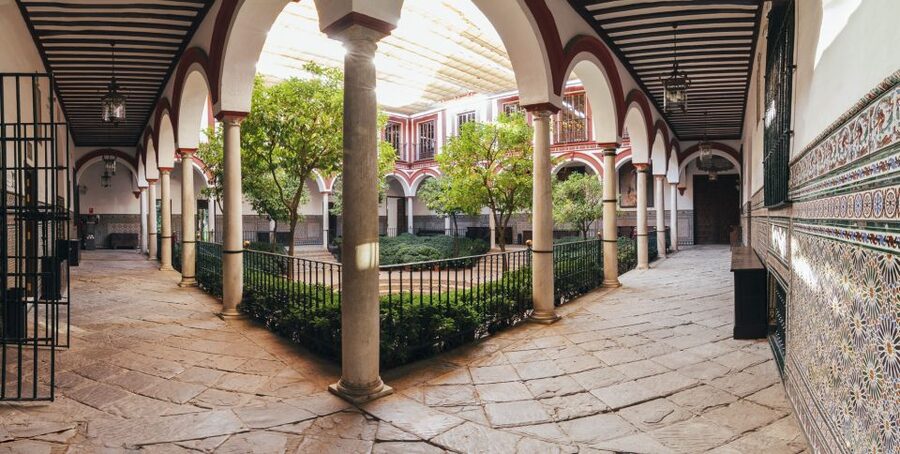
- The courtyard is a highlight: Orange trees, arches, and old wooden gates create one of the most appealing spaces in the visit.
- The church is compact but richly decorated: Fresco paintings by the Valdés family, sculpture linked to Pedro Roldán, and Baroque architecture reward a slow look.
- The Centro Velázquez adds real artistic value: You can see works associated with Diego de Silva y Velázquez and Bartolomé Esteban Murillo.
- The audio guide fills in the story: It is available in Spanish, French, German, and Italian, and helps connect the rooms and artwork.
- The VR360º feature changes the pace: This newer addition offers another way to see the Hospital de los Venerables.
- The ticket is flexible: Admission is valid for one day, cancellation is free up to 24 hours ahead, and wheelchair access is available.
Why this former hospital matters
The Hospital de los Venerables Sacerdotes was founded by Canon Justino de Neve to care for elderly priests. That purpose gives the building a different character from Seville’s grand palaces and cathedrals. It was built for service and religious care, yet it received the sort of artistic decoration usually associated with wealthier institutions.
The building dates from the 17th century, a period when Seville was filling its churches and religious foundations with dramatic Baroque design. You can see that taste in the arches, frescoes, sculptural details, and carefully planned courtyard.
I find the setting most rewarding when you take it as a small architectural ensemble rather than a single attraction. The visit moves between an open patio, a decorated church, a sacristy, and an art center. Each part has a different mood, so the experience does not depend on one famous painting alone.
The audio guide matters here. Without it, you could admire the shapes and colors but miss why the building was founded, how its rooms were used, and how the art fits into Seville’s religious culture. The guide is available in Spanish, French, German, and Italian. English is not listed among the available languages, so check that point carefully if you need commentary in English.
A few more Seville ideas to compare
- Seville: Royal Alcázar Entry Ticket
★ 4.6 · 28,378 reviews - Seville: Cathedral and La Giralda Entry Ticket
★ 4.5 · 24,592 reviews - Seville: Live Flamenco Dancing Show Ticket at the Theater
★ 4.7 · 16,396 reviews
The Sevillian courtyard comes first
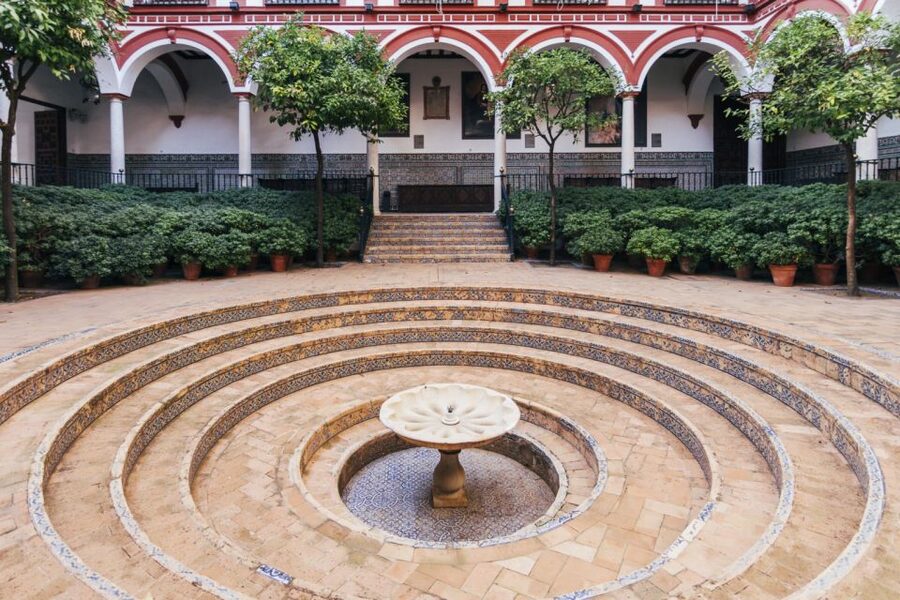
The traditional Sevillian patio is one of the easiest places to appreciate without specialist knowledge. You will see arches, orange trees, and carefully built wooden gates that give the courtyard a strong sense of place. It is not a wide public square. It is an enclosed, inward-looking space designed for shade, order, and quiet.
The patio also has a theatrical past. It was once used for performances of plays by Miguel de Cervantes and others. That detail changes the way I would look at the courtyard. The old gates and surrounding arches were not only practical features. They also created a setting for public performance.
Today, the patio remains suitable for theater events and musical performances. Even on a short visit, you can picture how sound would carry through the enclosed space. The orange trees soften the formal Baroque design and give the courtyard a more human feel.
I suggest pausing here before rushing to the art center. The patio gives you a visual introduction to Sevillian architecture. It also provides a welcome contrast to the church, where decoration is more intense and the walls demand closer attention.
The courtyard may be the best part of the visit for anyone who prefers atmosphere over a long list of paintings. It is also a strong spot for photographs, though the appeal is architectural rather than panoramic. There are no sweeping city views included in this experience.
Inside the Baroque church
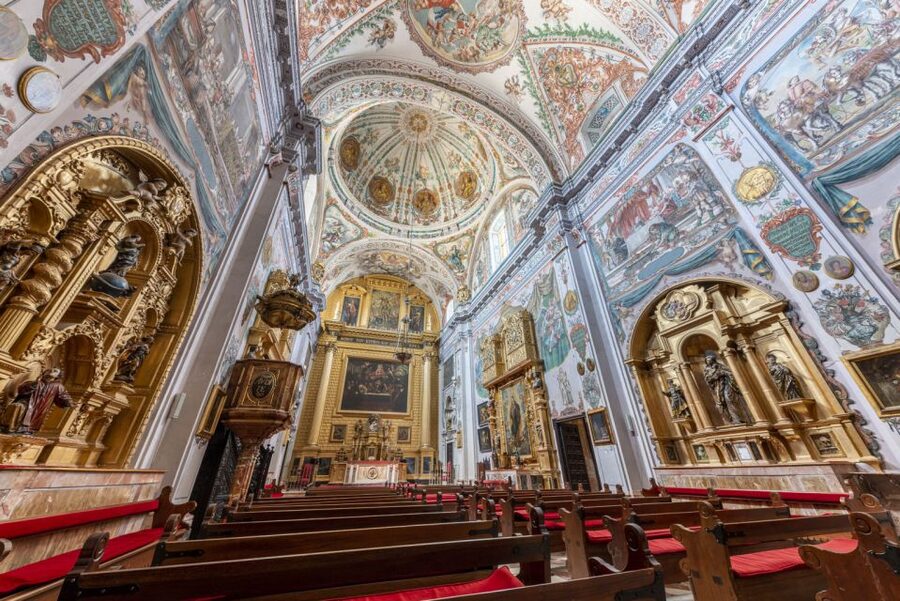
The church dates from the end of the 17th century and offers the most concentrated display of decoration. Look first at the arches and the overall design. Then slow down for the fresco paintings on the walls, which were designed and made by members of the Valdés family.
The frescoes show beautiful scenes and help explain the church’s visual drama. Baroque interiors were meant to catch the eye and lead it around the room. Here, painted surfaces, sculptural details, and curved architectural forms work together rather than sitting apart as separate exhibits.
The church also contains works connected with the sculptor Pedro Roldán. You do not need to be an art expert to enjoy the contrast between painted decoration and sculpture. The frescoes spread across the walls, while the sculptural pieces give the interior more physical depth.
This is a good place to use the audio guide in short bursts. Listen to a section, then look around without the device in front of your face. The church is small enough that you can study a detail, step back, and see how it relates to the whole room.
One practical point: the church is beautiful, but it is not enormous. If you have already spent hours in Seville’s major churches, you may find the visit quick. Its value comes from the quality and concentration of the decoration, not from scale.
The sacristy and the details most people miss
The sacristy continues the building’s religious and architectural story. It is easy to treat it as an extra room on the way out, but I would give it a proper pause. Its design shows how carefully even functional spaces were treated in an important Baroque institution.
The sacristy helps you understand that this was not simply a church with a hospital attached. The religious foundation had a complete environment for worship and care. The architecture still creates a strong impression despite the centuries that have passed.
The available information does not provide a detailed list of every object in the sacristy, so I would not arrive expecting a separate major collection. Instead, enjoy it as part of the building’s original arrangement. The audio guide can help explain its role and connect it to the church.
This stop is particularly useful if you enjoy historic interiors. You can compare the sacristy’s more practical purpose with the theatrical decoration of the church. That contrast makes the visit feel more complete.
Same base, a different kind of afternoon:
- Seville: Casa de la Memoria Flamenco Show
★ 4.8 · 12,964 reviews - Seville: 1-Hour Guadalquivir River Sightseeing Eco Cruise
★ 4.2 · 10,281 reviews - Seville: Cathedral, Giralda, and Royal Alcázar Guided Tour
★ 4.7 · 9,165 reviews - Seville: Setas de Sevilla Entry Ticket
★ 4.6 · 8,901 reviews
The Centro Velázquez and the art collection
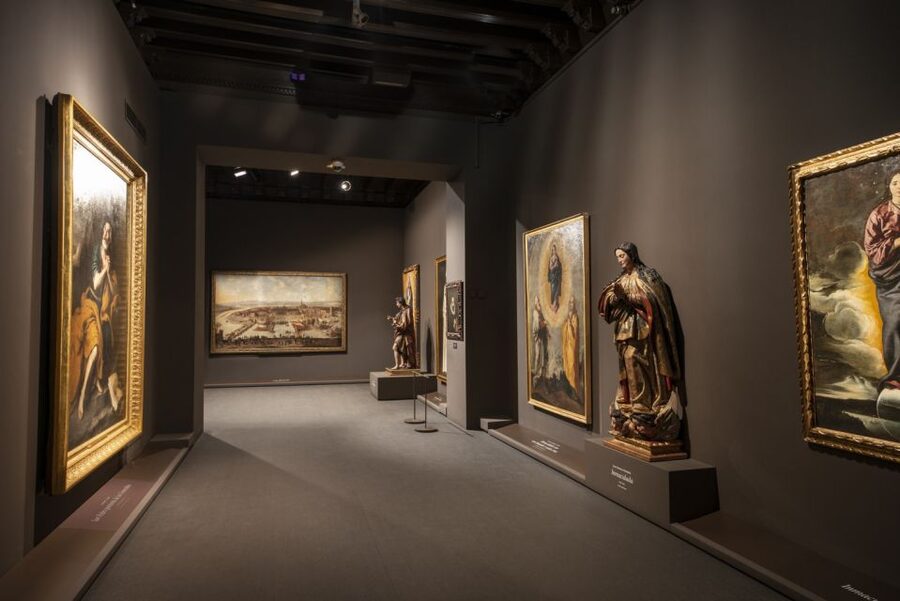
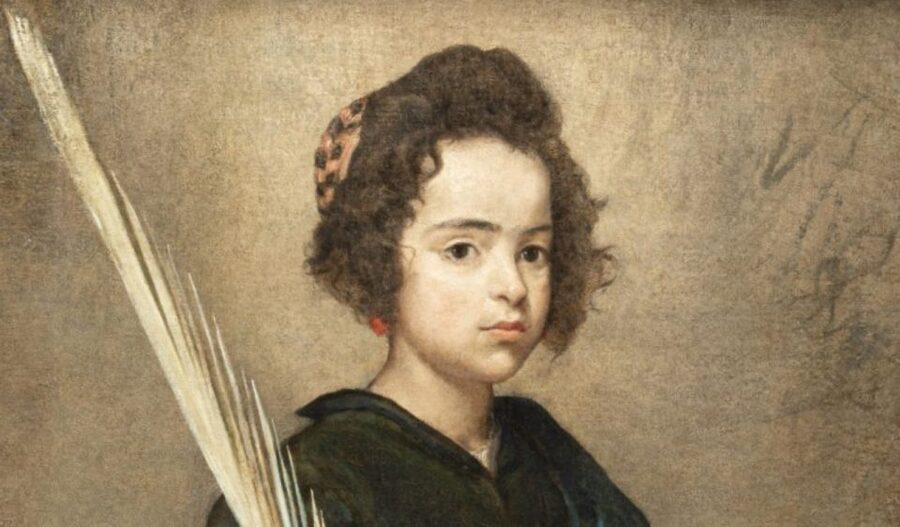
The Centro Velázquez gives the ticket much of its artistic appeal. Inside the old Baroque building, you can see works associated with famous Sevillian painters, including Diego de Silva y Velázquez and Bartolomé Esteban Murillo.
For many people, this will be the main reason to buy the ticket. Seeing Velázquez’s work in person is different from encountering it in a book or on a screen. Brushwork, scale, and surface details become easier to appreciate when you are standing in front of the painting.
The center also gives you a chance to place Velázquez within Seville’s wider artistic tradition. Murillo represents another major Sevillian name, and the collection helps show the city’s importance as a center of painting. The experience is not only about one celebrated artist.
I would set aside more time here than you might expect from the building’s size. The art center is not described as a vast museum, but a small collection can still deserve careful attention. Look at the works from a short distance first, then move closer to study faces, clothing, gestures, and the handling of light.
There is one important expectation to manage. The Hospital de los Venerables is not presented as a museum devoted entirely to the history of the hospital. The artistic displays take a prominent role. If that sounds ideal, the ticket offers a strong mix of art and architecture. If you want hospital records, medical history, or a room-by-room account of daily care, you may find the emphasis too narrow.
What the audio guide adds
A self-guided visit gives you control over the pace. You can spend longer with a painting, move quickly through a familiar section, or pause in the courtyard without waiting for a group. That independence suits this site because the building has several compact areas rather than one fixed route filled with timed performances.
The audio guide is described as easy to use and full of useful historical information. That makes it more than a simple list of dates. It should help you connect Canon Justino de Neve, the care of elderly priests, the religious setting, and the artistic program.
Language choice is the main limitation. The listed options are Spanish, French, German, and Italian. If you do not speak one of those languages, you may need to rely more on the visual details and any written information available on site. Do not assume English commentary is included.
One piece of booking feedback praises a guide named Alvaro, but the ticket described here includes an audio guide rather than a live guide. If a live-led option matters to you, confirm exactly what you are booking. The format can affect the feel of the visit, especially if you prefer to ask questions.
The new VR360º experience
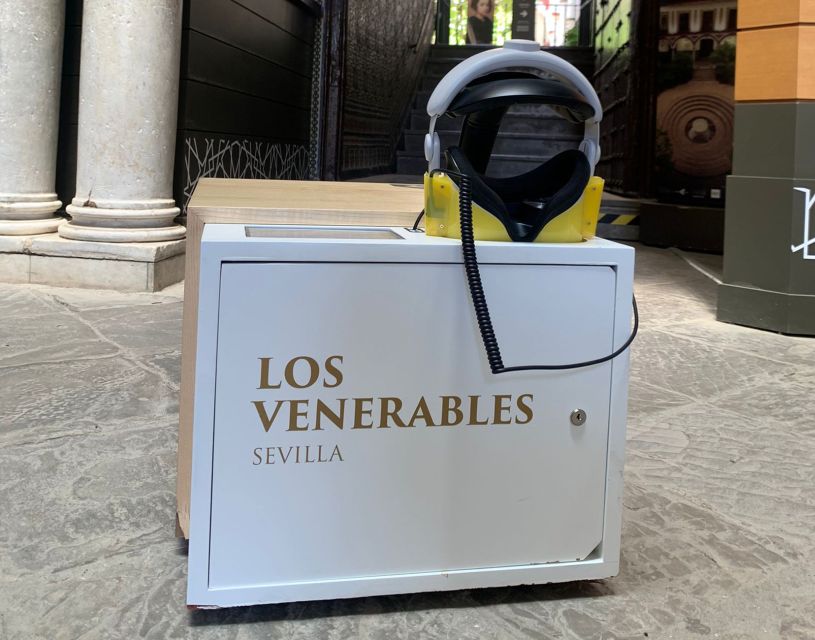
The VR360º addition gives the visit a modern finish. After seeing the actual courtyard, church, and rooms, you can use the virtual experience to view the Hospital de los Venerables from a different angle.
The supplied information does not specify how long the VR360º section lasts or exactly what equipment you will use. I would treat it as an added feature rather than the central reason to visit. The building itself is the main attraction, and no virtual version can replace the effect of standing beneath the church’s arches or looking across the patio.
Still, the VR element can be useful. It may help you see parts of the building that are difficult to understand from ground level, or give you a broader sense of how the rooms fit together. It also adds variety for children and anyone who enjoys digital interpretation.
Because it is included in the ticket, there is no separate value decision to make. Use it if it interests you, but do not choose this experience solely for the technology.
Is $14 a fair price?
At $14 per person, the ticket is reasonably priced for the amount included. You receive entry to the courtyard, church, sacristy, Centro Velázquez, audio guide, and VR360º experience. That is a fuller visit than a simple church admission.
The value is strongest for three types of people: art lovers who want to see Velázquez and Murillo, architecture fans who enjoy Baroque interiors, and repeat visitors to Seville looking for a smaller historic site beyond the city’s biggest monuments.
The value is weaker if you are counting on a long guided tour or a detailed museum about the hospital’s charitable work. One four-star assessment found the Baroque church attractive but felt the experience was mostly an art museum. That is a fair warning, not a flaw for everyone.
The ticket is valid for one day, with starting times dependent on availability. It also lets you cancel up to 24 hours in advance for a full refund, and you can reserve now and pay later. Those terms are useful if you are planning around Seville’s changeable schedule.
Who should book this Seville experience?
I would recommend it to you if you want a quieter cultural stop with several different elements in one building. The courtyard gives you atmosphere, the church supplies the visual drama, the art center offers famous names, and the audio guide helps make sense of the whole place.
It suits a flexible independent visit better than a tightly scheduled group outing. You can move at your own speed and decide how much time to give the paintings, frescoes, and sacristy.
Families may appreciate the VR360º feature, although no details are provided about age limits or the equipment. Art students and museum fans should find the Centro Velázquez particularly worthwhile. Anyone using a wheelchair can also consider it, since the experience is listed as wheelchair accessible.
I would be more cautious if your Seville schedule is already packed with major monuments and you have little interest in religious art. The visit is not presented as a large complex, and the church and art center may take less time than the Alcázar or cathedral. Its strength is quality and character, not size.
Final verdict: book it for art and atmosphere
I think this is a good $14 stop for a first or repeat visit to Seville, especially if Velázquez, Murillo, Baroque architecture, and intimate courtyards appeal to you. The 4.6 rating from 190 reviews reflects the experience’s strongest qualities: the audio guide is easy to use, the church is gorgeous, and the art can feel like a real treat if you have not seen Velázquez in person.
Book it when you want a compact visit with genuine architectural character. Skip it when your priority is the hospital’s social history or a live guide in English. The right expectation is simple: this is a former charitable institution presented mainly through its church, art, courtyard, and modern virtual experience.
FAQ
Where is the Hospital de los Venerables experience located?
It is located in Seville, in Andalusia, Spain.
What does the ticket include?
The ticket includes entry to the church, sacristy, courtyard, Centro Velázquez, the audio guide, and the VR360º virtual experience.
How much does admission cost?
The listed price is $14 per person.
How long is the ticket valid?
The ticket is valid for one day. Starting times depend on availability.
Is an audio guide included?
Yes. The audio guide is included with admission.
Which languages are available for the audio guide?
The listed audio guide languages are Spanish, French, German, and Italian.
Is a live guide included?
The ticket information specifies an audio guide, not a live guide. One booking comment names Alvaro as an excellent guide, so confirm the exact format if a live guide is important to you.
Is the VR360º experience included?
Yes. The new 360-degree virtual experience is included in the visit.
Is the site wheelchair accessible?
Yes. The experience is listed as wheelchair accessible.
Can I cancel the booking?
Yes. You can cancel up to 24 hours in advance for a full refund.
Can I reserve now and pay later?
Yes. The reserve-now, pay-later option is available, allowing you to delay payment while keeping your plans flexible.
Recently listed in Seville
- Seville: Small Group Jewish Quarter Tour with Tapas & Drinks★ 5.0 · 119 reviews
- Seville: Alcázar Fast-Track Access with Guided Tour★ 4.2 · 432 reviews
- Seville: Small-Group Jewish Quarter Discovery Walking Tour★ 4.9 · 499 reviews
- Seville: VIP Exclusive Early Access Tour of The Alcazar★ 4.8 · 276 reviews
- Seville: Sunset Roof Top Walking Tour★ 4.5 · 122 reviews
- Seville: 3.5-Hour Spanish Cooking Class & Triana Market Tour★ 4.9 · 751 reviews
- Seville: Flamenco Show at Tablao Almoraima in Triana★ 4.6 · 483 reviews
- Seville: Authentic and Romantic Horse-Drawn Carriage Ride★ 4.5 · 341 reviews
Audio Tours, compared.
Sagrada Familia Entry Ticket with Audio Guide
Read our review →
Casa Batllo Admission Ticket with Intelligent Audio Guide
Read our review →



Browse the lists this tour appears in