
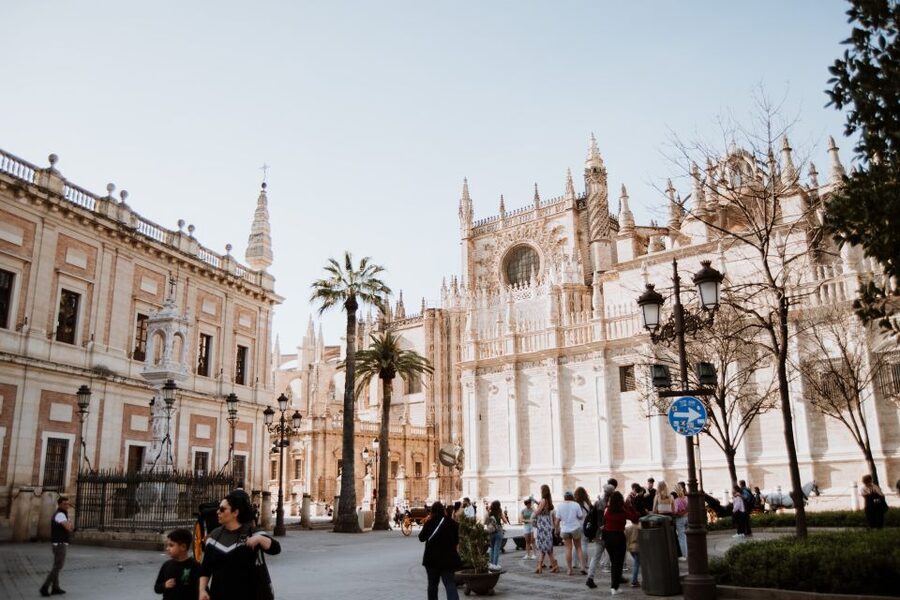
Reviewed · WALKING TOURS
Seville Jewish Quarter walking tour: Santa Cruz District
Santa Cruz rewards slow walking. This $15 tour brings Seville’s former Jewish quarter into focus through narrow lanes, flower-filled patios, and stories you would likely miss alone. I especially like the way the guides connect street names to local legends, and I like the small-group feel reported by several guests, including one tour with only two people. The main limitation is time: 90 minutes passes quickly in a district with this much to see.
The route covers Plaza del Triunfo, Plaza de la Alianza, Calle Susona, Hospital de los Venerables, Casa Murillo, and several other corners before finishing at Patio de Banderas. You get a useful first look at Santa Cruz, but this is primarily a storytelling walk, not a tour built around entering many buildings. Comfortable shoes and sunblock will make the experience far easier, especially in Seville’s heat.
In This Review
- Four things to know before you book
- Why Santa Cruz works best with a guide
- Plaza del Triunfo sets the scene
- Plaza de la Alianza and the first narrow lanes
- Plaza de Doña Elvira brings the romance
- Calle Susona and a story of love and betrayal
- Hospital de los Venerables and Seville’s Golden Age
- Casa Murillo and the city’s artistic side
- Rosina’s Balcony and Calle Ópera Carmen
- Patio de Banderas closes the circuit
- How the guides shape the experience
- Is $15 a fair price?
- Who will enjoy this Santa Cruz walk?
- Should you book it?
- FAQ
- Where does the Santa Cruz walking tour begin?
- How will I recognize the guide?
- How long does the tour last?
- Is the tour offered in English?
- What places does the route visit?
- Does the tour include hotel pickup?
- Are food and drinks included?
- Is the walking tour wheelchair accessible?
- Can I add a flamenco show?
Four things to know before you book
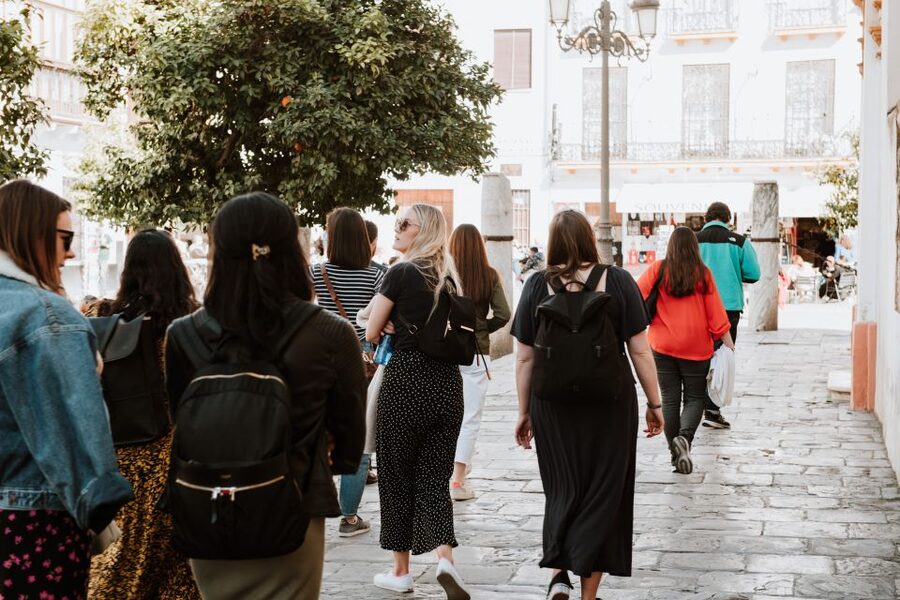
- Susona’s story gives the walk its emotional center: This tale of love, betrayal, and identity adds a human face to the old Jewish quarter.
- The route favors lanes and legends over major interiors: You will see places such as Hospital de los Venerables and Casa Murillo from the tour route, with explanations from your guide.
- Guides receive the strongest praise: Julio, Anna, Valentin, Juan, Alfredo, and Lara are all described as engaging, clear, funny, and well prepared.
- The $15 price is easy to justify: For a guided introduction to one of Seville’s most atmospheric districts, it offers solid value.
- The meeting point is simple: Look for the guide under the Virgen de la Inmaculada statue in Plaza del Triunfo, marked by a blue umbrella or Sevilla Guías & Tours name badge.
- The walk ends in a useful location: Patio de Banderas leaves you close to more Santa Cruz sights and the city’s historic core.
Why Santa Cruz works best with a guide
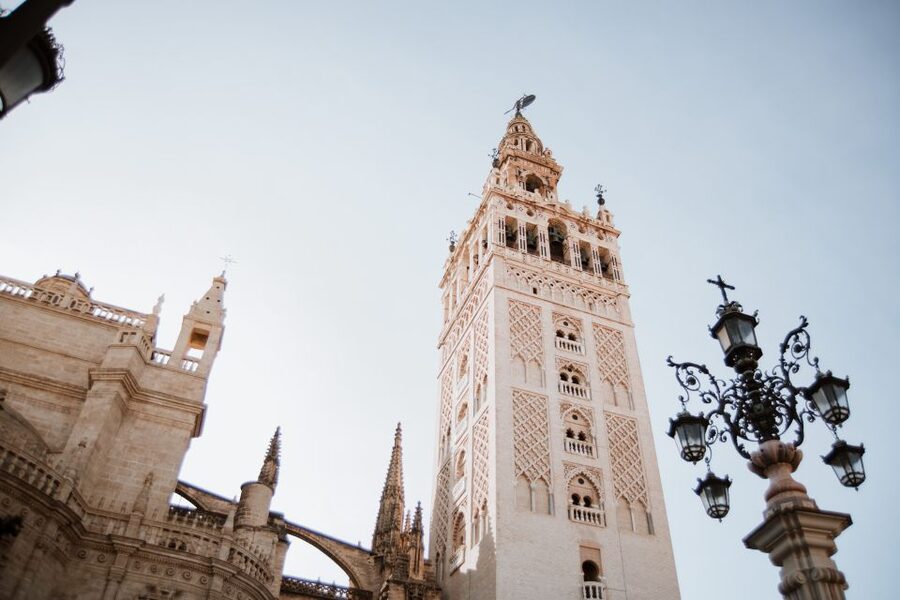
Santa Cruz is beautiful enough to enjoy without a plan. Its whitewashed walls, orange trees, fountains, and twisting streets do much of the work. But beauty alone will not explain why a lane has a particular name, how old water systems shaped the quarter, or why opera characters belong in a discussion of Seville.
That is where this tour earns its fee. Your guide supplies the links between the visible details and the stories behind them. One particularly useful strength is the attention to small features, such as original walls and water channels that remain part of the district. You are not simply taking photographs of pretty corners. You are learning how the neighborhood developed and how its legends still shape local identity.
I also like the balance between documented figures and folklore. Miguel Mañara appears alongside the tale of Don Juan, while the ghost of Barrabás belongs to Seville’s more mysterious storytelling tradition. The guide does not need to turn every detail into a solemn lecture. The best accounts of this walk describe humor, questions, and a relaxed style alongside the historical material.
The Jewish heritage is the central subject, but the tour also places Santa Cruz within Seville’s wider past. That makes it a good first walk in the city. You leave with a better sense of direction, a handful of local stories, and a clearer idea of which streets deserve another look later.
More Walking Tours in Seville
- Seville: Small-Group City Highlights Walking Tour
★ 5.0 · 1,204 reviews - Cultural Walking Tour of Seville Monumental
★ 5.0 · 861 reviews - Seville: Tapas, Taverns, and History Walking Tour
★ 4.9 · 676 reviews
Plaza del Triunfo sets the scene
Meet under the Virgen de la Inmaculada statue in Plaza del Triunfo. This is a practical starting point near some of Seville’s major sights, and the blue umbrella or Sevilla Guías & Tours name badge should help you identify the guide.
The opening explanation lasts about 10 minutes. That may sound modest, but it gives the guide a chance to place Santa Cruz in the wider setting of Seville’s historic center before the group turns into the neighborhood. I find this kind of introduction useful because it prevents the first narrow alley from feeling like an isolated photo stop.
Arrive with enough time to locate the statue and settle in. Hotel pickup is not included, and neither are food or drinks, so this is a meet-there walking tour from the start.
Plaza de la Alianza and the first narrow lanes
The next stop is Plaza de la Alianza, another short guided visit of roughly 10 minutes. Here, the appeal is less about checking off a monument and more about seeing how Santa Cruz opens and closes around small public spaces.
Your guide can help you notice the changes in scale: an open plaza gives way to a tight passage, then another courtyard or square appears. That rhythm is one of the pleasures of Santa Cruz. Without a guide, you might simply label the route pretty. With one, you get names, connections, and stories that give the route a stronger shape.
This is also where the tour’s pace becomes clear. Stops are brief, and the group keeps moving. If you like a relaxed walk with plenty of time for photographs, you may find the schedule a little brisk. If you want a compact orientation before exploring independently, the pace works well.
Plaza de Doña Elvira brings the romance
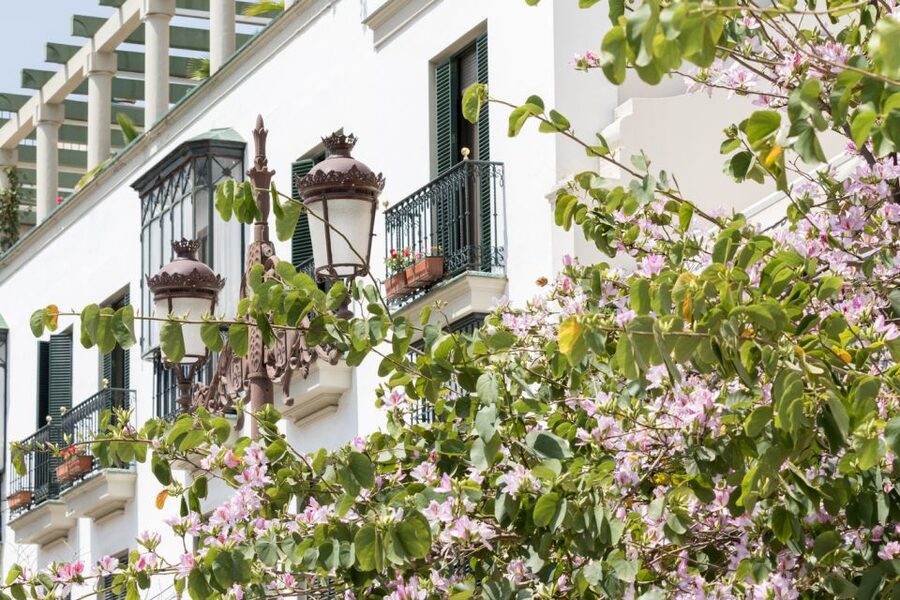
Plaza de Doña Elvira is one of the most inviting stops. Orange trees and a romantic atmosphere give the square a distinctly Andalusian feel, and the guide uses it to explain more about the neighborhood’s character.
This is a good place to pay attention to the details rather than only the center of the plaza. Look at the relationship between the tiled surfaces, white walls, plants, and shaded corners. The tour’s value comes from learning how these details fit into Santa Cruz’s traditions and stories.
I would not expect a long pause here. The stop is listed at about 10 minutes, so take photographs quickly and keep listening. The square is also the sort of place you may want to revisit after the tour, when you can sit for a while and enjoy it without trying to keep up.
Same base, a different kind of afternoon:
- Seville: Royal Alcázar Entry Ticket
★ 4.6 · 28,378 reviews - Seville: Cathedral and La Giralda Entry Ticket
★ 4.5 · 24,592 reviews - Seville: Live Flamenco Dancing Show Ticket at the Theater
★ 4.7 · 16,396 reviews - Seville: Casa de la Memoria Flamenco Show
★ 4.8 · 12,964 reviews
Calle Susona and a story of love and betrayal
Calle Susona is the emotional centerpiece of the walk. The story concerns Susona, a young Jewish woman caught between love, betrayal, and questions of identity. The guide explains why her name remains attached to this street and how legend and history overlap in the telling.
This stop shows why a local guide can change your experience of Santa Cruz. A street sign on its own gives you very little. A well-told story turns the lane into a place with memory and tension. The tale also helps you understand that the quarter is not only a collection of picturesque buildings. It is a place shaped by people, conflict, belief, and changing identities.
The story is a legend, so listen for the difference between folklore and established fact. That distinction does not make it less valuable. In Seville, legends are part of the way places are remembered, and the guide’s job is to explain both the tale and its role in local culture.
Hospital de los Venerables and Seville’s Golden Age
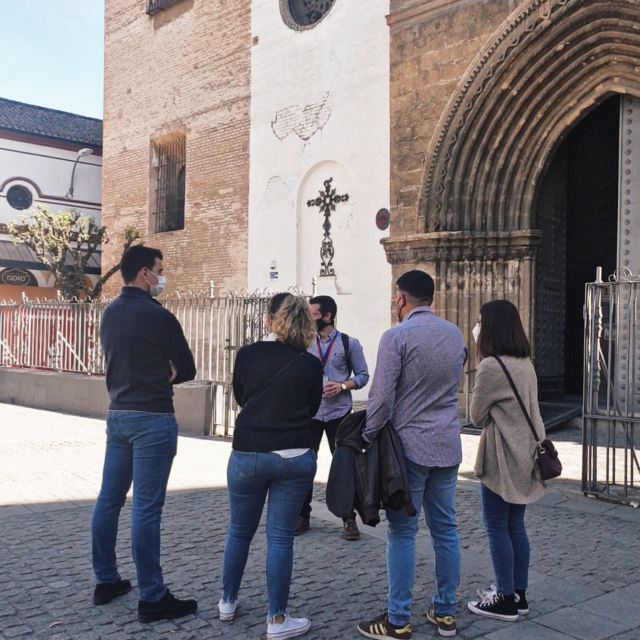
The route then reaches Hospital de los Venerables, associated with Seville’s Golden Age. The stop provides a change of focus after the Susona story, moving from personal legend to the city’s larger cultural and social past.
The itinerary identifies this as a guided stop, not a promise of an extended interior visit. That matters if you are hoping to tour every building from inside. This experience is best understood as an outdoor neighborhood walk with explanations at important sites.
The guide can also connect the building to the wider story of Seville, including the art, religion, and social structures that shaped the old center. Several guides are praised for explaining more than basic dates and for answering questions about Seville beyond Santa Cruz. That wider context is one of the tour’s strongest features.
Casa Murillo and the city’s artistic side
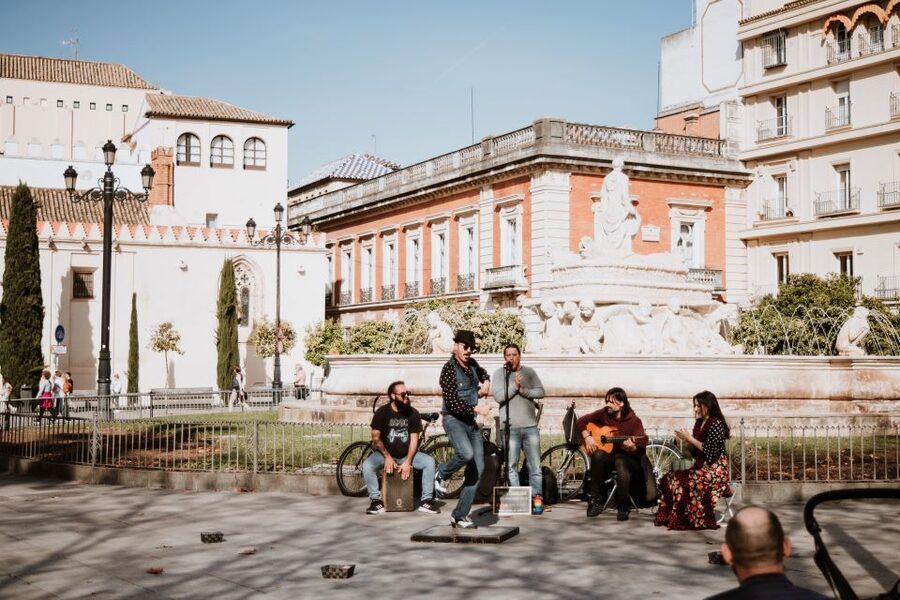
Casa Murillo offers another pause in the route. The name points toward Seville’s artistic tradition, and the guide uses the stop to add cultural depth to the walk.
You may find that the most useful information here concerns the relationship between artists, buildings, streets, and the city’s changing identity. This is not a museum visit with a long display of objects. It is a street-level introduction that leaves you better prepared to explore Seville’s art and architecture on your own.
The brief stop also keeps the tour moving toward some of its more unusual points, including Rosina’s Balcony and Calle Ópera Carmen. Those names signal that Seville’s stories are not confined to official history. Opera, literature, folklore, and local memory all have a place in the city’s public spaces.
Rosina’s Balcony and Calle Ópera Carmen
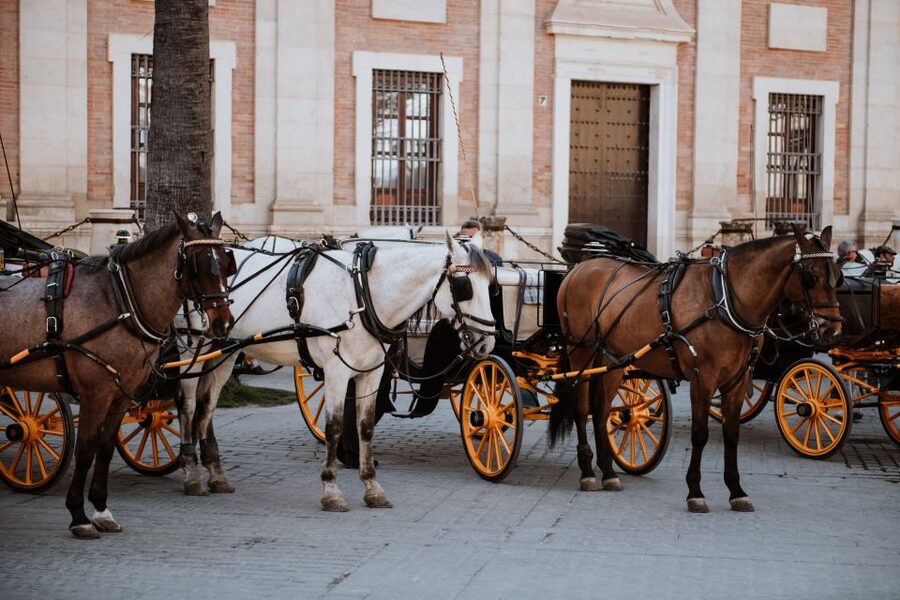
Rosina’s Balcony adds a theatrical touch to the route. The guide explains the connection between this corner and the opera tradition associated with Seville. Calle Ópera Carmen continues that theme, bringing opera into the walking tour rather than treating it as a separate subject.
This part will suit you if you enjoy seeing how a city’s image is shaped by performance and storytelling. Seville is not only a place of buildings and dates. It has also been reimagined through characters and scenes that became famous far beyond Spain.
The connection is especially useful because one guide, Julio, was praised for explaining how history plays out through opera. That kind of link can help you see why certain streets carry theatrical names and why Seville appears so often in European cultural stories.
If you prefer strictly archival history, these stops may feel less central. If you like folklore and the way art changes a city’s identity, they add variety to the walk.
Patio de Banderas closes the circuit
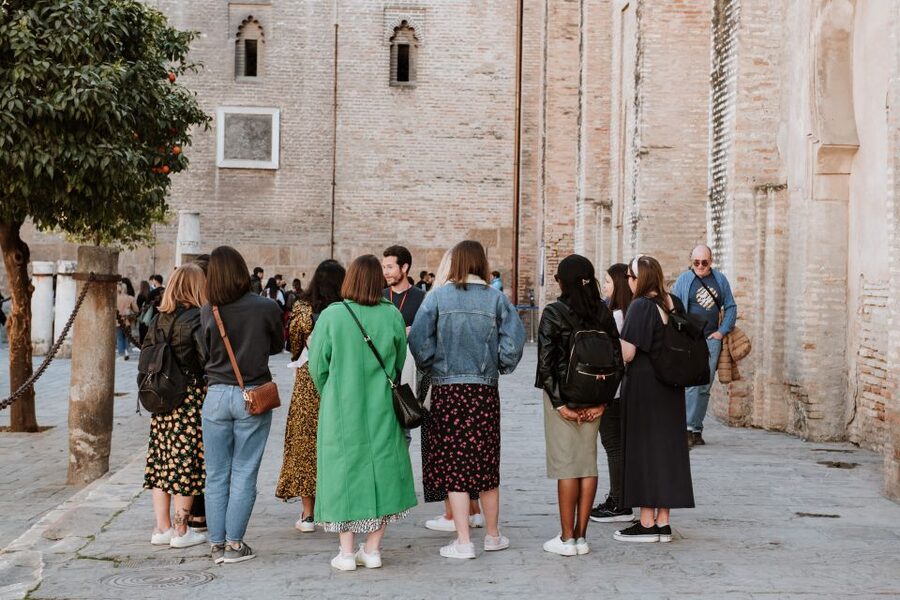
The tour finishes at Patio de Banderas, after a final stop that is also listed as a hop-on hop-off location. Ending here is practical. You are still in the heart of Seville’s historic center, with Santa Cruz close at hand for further wandering.
The last part of the route gives you a chance to connect the narrow quarter with the broader city. You can use the orientation to return to a plaza you liked, continue toward other sights, or simply wander without worrying that every turn will send you far off course.
Several people who took the walk found that it helped them get around Santa Cruz during the rest of their stay. That is an important benefit. A tour is more useful when it gives you confidence to explore independently afterward.
How the guides shape the experience
The provider uses English- and Spanish-speaking guides, and the strongest part of the experience is clearly the human delivery. Juan is described as friendly and adaptable, including one small group whose interests shaped the conversation. Alfredo receives especially strong praise for his command of the Jewish quarter and Seville’s wider past.
Julio appears repeatedly as a warm and well informed guide who could answer questions and point out small details. Anna is praised for clear English, humor, and the ability to make a short tour feel full of content. Valentin is described as both funny and passionate about teaching.
Those names do not guarantee who will lead your departure, but they show the range of guiding styles you might encounter. Lara is also praised for her command of local history, while other guides are described as charming, relaxed, and easy to understand.
I like that the best accounts do not focus only on memorized facts. They describe guides who invite questions, add anecdotes, explain opera, and adjust the walk to the group. That matters in a neighborhood such as Santa Cruz, where a rigid script could miss the very details that make the streets special.
Is $15 a fair price?
At $15 per person, this is a good-value introduction to Santa Cruz. You receive 90 minutes with a live guide, in English or Spanish, through one of Seville’s most storied districts. A self-guided walk costs nothing, of course, but it also leaves you to research Susona, Miguel Mañara, Barrabás, the water systems, and the opera connections on your own.
The price makes the most sense if you are new to Seville or want historical context without committing to a longer excursion. It is also useful early in your stay, since the route can help you understand the neighborhood before you return on your own.
The value is less clear if you want extensive interior access, a food component, or a long photography stop at every plaza. Food and drinks are not included, and hotel pickup is not provided. An optional flamenco show may be available, but you need to ask the guide at the meeting point or contact the company ahead of time to check.
Free cancellation up to 24 hours before the tour and the option to reserve now and pay later add flexibility. The tour is also listed as wheelchair accessible, though the information provided does not explain the exact route conditions, so it is sensible to confirm details if you have specific mobility needs.
Who will enjoy this Santa Cruz walk?
I would choose this tour for:
- First-time visitors who want a clear introduction to Santa Cruz
- People interested in Jewish heritage, local legends, and Seville’s past
- Opera and literature fans who enjoy cultural connections
- Couples looking for atmospheric plazas and romantic corners
- Independent explorers who want help getting their bearings
- Visitors who prefer a short, affordable activity rather than a full-day tour
You should think twice if your priority is entering several attractions, spending a long time at each site, or walking at a very slow pace. The route covers many stops in 90 minutes, so it favors compact explanations and steady movement.
Wear comfortable shoes and light, practical clothing. Sunblock is a sensible choice in Seville, and you should bring water even though the tour does not include drinks. The narrow streets provide shade in places, but you should not count on the whole route being cool.
Should you book it?
I would book this tour if you want Seville’s former Jewish quarter to feel like a real neighborhood rather than a set of attractive streets. The strongest reason is the guide. Julio, Anna, Valentin, Juan, Alfredo, and Lara are all associated with the kind of clear, lively storytelling that makes short walks worthwhile.
Book it early in your Seville visit if possible, then use the route as a map for later wandering. Skip it if you mainly want museum interiors or a slow, unstructured stroll. For $15, this is a smart choice for history, folklore, and a useful first look at Santa Cruz.
FAQ
Where does the Santa Cruz walking tour begin?
The meeting point is Plaza del Triunfo, under the Virgen de la Inmaculada statue.
How will I recognize the guide?
The guide will be holding a blue umbrella or wearing a name badge with the Sevilla Guías & Tours logo.
How long does the tour last?
The walking tour lasts 1.5 hours.
Is the tour offered in English?
Yes. The tour is available with a live guide in English or Spanish.
What places does the route visit?
The route includes Plaza del Triunfo, Plaza de la Alianza, Plaza de Doña Elvira, Calle Susona, Hospital de los Venerables, Casa Murillo, Rosina’s Balcony, Calle Ópera Carmen, and Patio de Banderas.
Does the tour include hotel pickup?
No. Hotel pickup is not included, so you need to reach Plaza del Triunfo yourself.
Are food and drinks included?
No. Food and drinks are not included in the tour price.
Is the walking tour wheelchair accessible?
The activity is listed as wheelchair accessible.
Can I add a flamenco show?
An optional flamenco show may be available. Ask the guide at the meeting point or contact the provider in advance to check availability.
Recently listed in Seville
- Seville: Small Group Jewish Quarter Tour with Tapas & Drinks★ 5.0 · 119 reviews
- Seville: Alcázar Fast-Track Access with Guided Tour★ 4.2 · 432 reviews
- Seville: Small-Group Jewish Quarter Discovery Walking Tour★ 4.9 · 499 reviews
- Seville: VIP Exclusive Early Access Tour of The Alcazar★ 4.8 · 276 reviews
- Seville: Sunset Roof Top Walking Tour★ 4.5 · 122 reviews
- Seville: 3.5-Hour Spanish Cooking Class & Triana Market Tour★ 4.9 · 751 reviews
- Seville: Flamenco Show at Tablao Almoraima in Triana★ 4.6 · 483 reviews
- Seville: Authentic and Romantic Horse-Drawn Carriage Ride★ 4.5 · 341 reviews
Walking Tours, compared.
Barcelona Tapas and Wine Experience Small-Group Walking Tour
Read our review →
Tapas Walking Tour with Food, Wine, and History
Read our review →
Albaicín and Sacromonte Guided Sunset Walking Tour
Read our review →
Toledo Tour & Vineyard Walk with Wine Tasting from Madrid
Read our review →
Madrid Walking Tour from Puerta del Sol to Retiro Park
Read our review →
Barcelona Tapas Walking Tour: Food, Wine & History
Read our review →
Madrid Old Town & Royal Palace Walking Tour Skip the Line Ticket
Read our review →
Browse the lists this tour appears in