
Reviewed · HISTORICAL TOURS
Tarragona: Roman Heritage Guided Walking Tour
Ancient Rome meets everyday Tarragona here. This two-hour walk brings you to the city’s Roman walls, Circus vaults, and seaside Amphitheater, with an official city guide tying the ruins together. I like the smart route through the old center, where Roman remains sit beside homes and modern streets, and I like the helpful city model and 3D presentation. The main drawback is time: two hours can feel short, especially when groups are large or the weather is poor.
I also appreciate the low $17 price and the chance to see the Circus and Amphitheater without committing to a full-day archaeology program. Guide Adrià has earned especially warm praise for clear, enthusiastic explanations, though one recent outing became hard to follow because several groups gathered at once. Arrive early, wear good shoes, and leave large bags behind.
In This Review
- Key points at a glance
- Why Tarragona’s Roman past deserves two hours
- Starting beside the oldest Roman walls outside Italy
- Roman buildings among modern homes
- Entering the Circus vaults
- Seeing Roman Tarragona in three dimensions
- Finishing at the Amphitheater beside the sea
- The guides and the group experience
- Is $17 a good value?
- Who should book this walking tour?
- Should you book the Tarragona Roman Heritage tour?
- FAQ
- Where does the tour meet?
- How early should I arrive?
- How long does the walking tour last?
- What is included in the price?
- Does the tour visit the Amphitheater?
- What languages are available?
- Is the tour wheelchair accessible?
- What should I bring?
- Can I bring luggage or a large bag?
- Can I cancel for a refund?
Key points at a glance
- Roman walls outside Italy: Start beside some of the oldest Roman fortifications outside Italy and learn why Tarragona was chosen as Rome’s base in Hispania.
- Circus vaults included: Enter the underground passages linked to ancient chariot racing, one of the tour’s most distinctive stops.
- City model adds context: A large model helps you picture Roman Tarragona before you walk among its surviving streets and monuments.
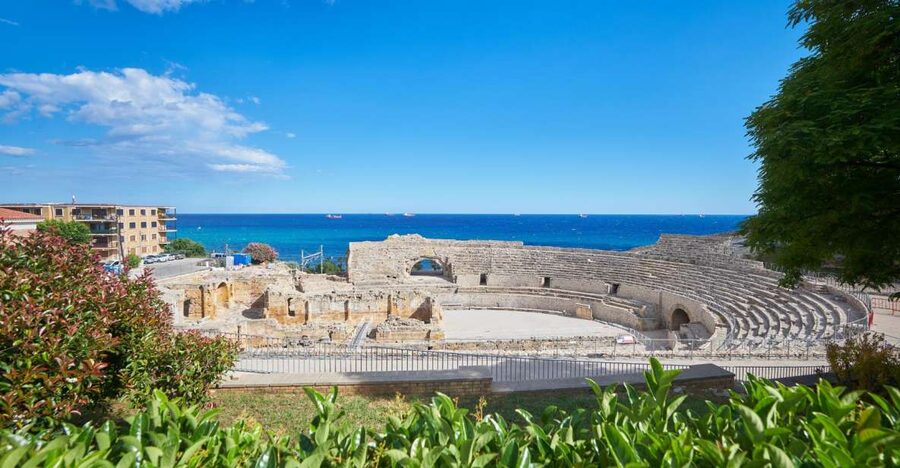
- Seaside Amphitheater: Finish beside the Mediterranean, where gladiator contests and animal hunts once took place.
- Strong value at $17: The price covers the guided walk and Circus entrance, making this an affordable introduction to Tarragona’s Roman core.
- Language and access matter: The live tour is offered in Catalan or Spanish and is wheelchair accessible.
Why Tarragona’s Roman past deserves two hours
Tarragona was not simply a town with a few old stones. Its position on a hill beside the Mediterranean made it an important Roman gateway to the Iberian Peninsula. That setting explains much of what you see on this walk: defenses on the upper ground, public buildings spread through the city, and an Amphitheater facing the sea.
I like tours that explain why a place exists before pointing out its monuments. This one begins with that larger idea. The walls are not treated as an isolated photo stop. Your guide uses them to explain Tarragona’s role in Roman expansion and the practical value of its position.
At $17 per person, the tour offers a useful first look at the city without taking over your whole day. You receive a guide-led introduction, the Circus entrance, and a route through several major Roman sites. The price is especially fair if you want context instead of simply walking past ruins with no explanation.
The tradeoff is pace. There is a lot to cover in two hours, and the tour is designed as an overview rather than a slow archaeological study. If you want long stops, detailed architectural analysis, or time to photograph every angle, you may wish the walk lasted three hours.
More Walking Tours in Spain:
- Barcelona Tapas and Wine Experience Small-Group Walking Tour
★ 5.0 · 5,804 reviews - Barcelona: Tapas Walking Tour with Food, Wine, and History
★ 4.8 · 4,261 reviews - Granada: Albaicín and Sacromonte Guided Sunset Walking Tour
★ 4.9 · 2,962 reviews
Starting beside the oldest Roman walls outside Italy
You meet at the Itinere office next to the Roman walls. Arrive 10 minutes early. That gives you time to find the office, gather with the group, and get ready before the explanation begins.
The walls are a strong opening because they immediately give you a sense of scale and purpose. You are not starting with a minor fragment tucked behind a building. You are standing beside major Roman defenses that are described as the oldest Roman walls outside Italy.
Your guide introduces the Roman history of the region here, then explains why this hill was selected beside the Mediterranean. That geographical explanation is one of the most useful parts of the tour. It helps you understand Tarragona as a strategic base, not just as a collection of monuments left behind.
I would pay close attention during this first stop. Once you enter the historic center, Roman remains become woven into present-day Tarragona. Without an introduction, it can be hard to tell which stones belong to the ancient city and which belong to later construction. The wall stop gives you a framework for everything that follows.
The walking itself requires comfortable shoes. The activity is wheelchair accessible, but the tour still takes place in an old historic area, so anyone concerned about mobility should confirm the route details before booking. Large bags and luggage are not allowed, so this is not a convenient activity to schedule while carrying suitcases.
Roman buildings among modern homes
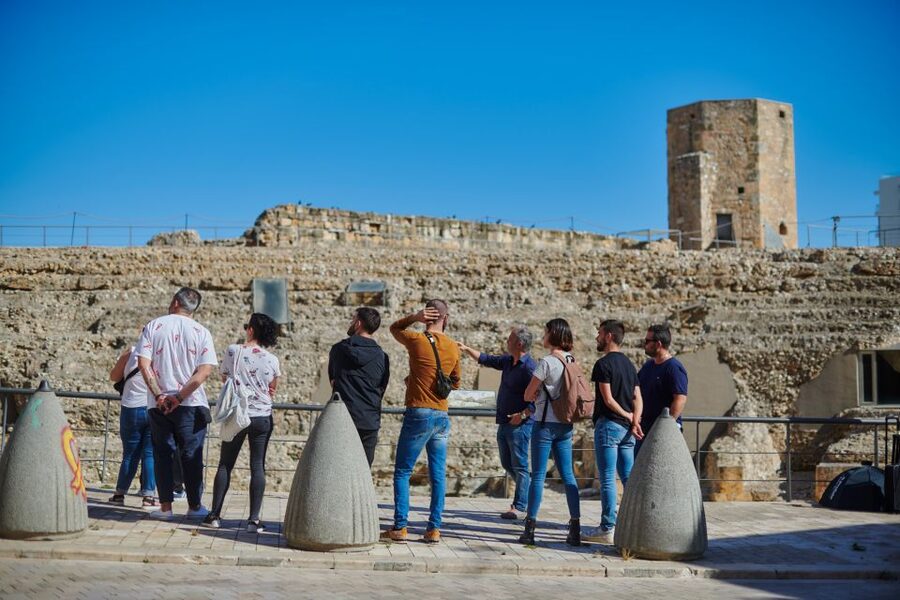
From the walls, the route continues into Tarragona’s historic center. This is where the tour becomes more interesting than a simple parade of isolated ruins. Roman monuments appear among today’s houses, streets, and squares, showing how the old city has remained part of daily life.
A large city model helps your guide show how Tarragona looked in Roman times. This is a valuable teaching tool because a ruin rarely explains its original function by itself. The model lets you see how the buildings related to one another and how the city worked as a whole.
I like this kind of visual aid for one simple reason: it saves you from guessing. You can look at a surviving wall and understand that it was once part of a much larger structure. You can also better picture the public spaces, circulation routes, and major buildings that shaped Roman Tarragona.
The city center portion is also where time pressure may become noticeable. There are many layers of Tarragona to discuss, and the guide must keep the group moving. One participant felt the tour was too short and suggested three hours instead. That is a fair criticism if you enjoy detailed explanations.
Still, the two-hour length has an advantage. You get a focused introduction without giving up an entire morning or afternoon. I would choose this format early in a Tarragona visit, then return independently to the places that caught your attention.
Entering the Circus vaults
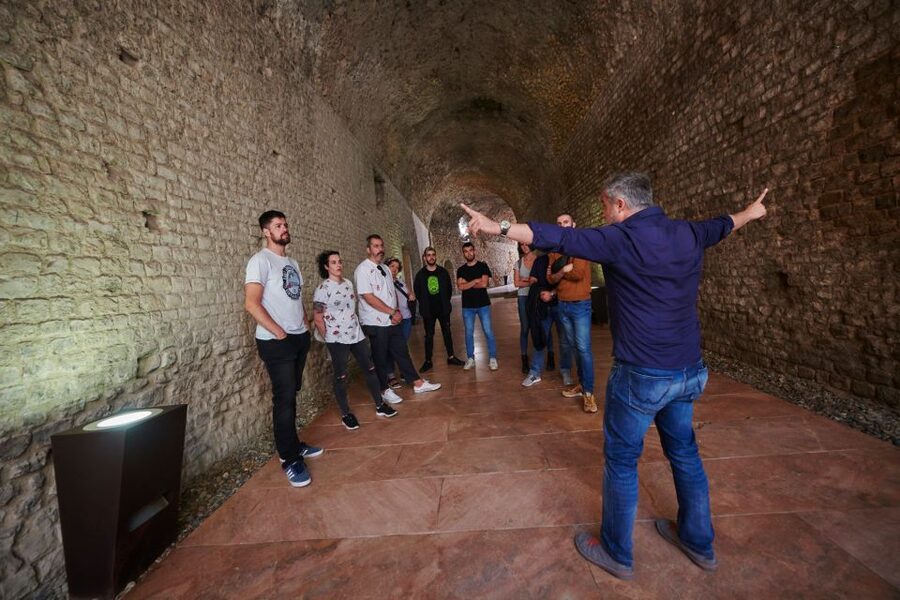
The Circus is the tour’s included entrance, and it gives you a chance to move beyond open-air viewing. The vaults are linked with the ancient stadium and the chariot races held there.
The reference to chariot racing is not a throwaway detail. It helps you picture the noise, speed, and public excitement associated with the Circus. Your guide can connect the underground spaces to the larger stadium and explain how this part of Roman entertainment functioned.
For many people, the vaults will be the most distinctive stop. Tarragona’s walls are powerful, and the Amphitheater has the best setting, but the Circus lets you experience an enclosed Roman space. The change in atmosphere makes the tour feel less like a street walk and more like a visit through the surviving structure.
The Circus entrance is included in the $17 price, which improves the value. You are not paying only for commentary while viewing monuments from outside. You receive access to one of the central Roman sites on the route.
The tour description does not promise entrance to every Roman monument in Tarragona, so keep your expectations clear. This is an introduction to the main Roman heritage sites, with the Circus specifically included. If you want a more extensive archaeological day, you will need additional sightseeing beyond this walk.
More History Tours in Spain:
- Madrid Essential: Historic Center, Plaza Mayor & Royal Palace
★ 5.0 · 6,416 reviews - Sevilla Food Tour: Tapas, Wine, History & Traditions
★ 5.0 · 3,468 reviews - Valencia Old Town Tour with Wine & Tapas in 11th Century Historic Monument
★ 5.0 · 3,234 reviews - Barcelona Tapas Walking Tour: Food, Wine & History
★ 4.5 · 1,928 reviews
Seeing Roman Tarragona in three dimensions
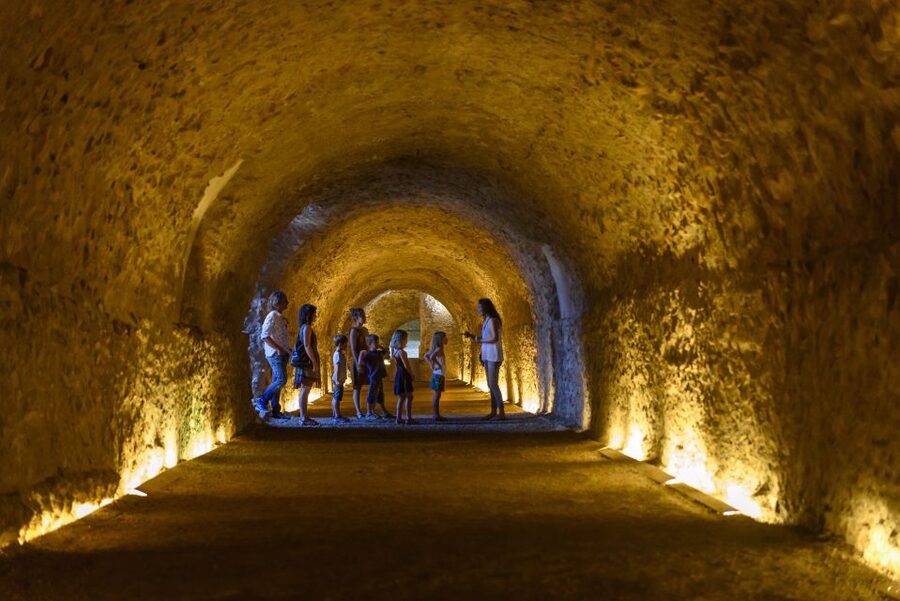
Before heading to the Amphitheater, you watch an audiovisual presentation with 3D images. This may sound like a small part of the program, but it serves a real purpose.
Roman ruins often require imagination. Walls may be incomplete, surfaces may be worn, and the original buildings can be difficult to picture from foundations alone. The 3D images help rebuild that lost appearance in your mind before you reach the final site.
A German-speaking participant gave the video particular praise, which fits the way this kind of presentation works. It can make Tarragona easier to understand for first-time visitors, especially if you are not already familiar with Roman urban design.
This stop also provides a change of pace. The tour moves between outdoor walls, city streets, an underground site, and a visual presentation. That variety helps keep a short walking tour from feeling repetitive.
The main caution is group noise. During one busy outing, several groups gathered around the same time, and the guide had trouble keeping the explanation easy to follow. The problem was not the material itself. It was the number of people and the surrounding sound. Arriving early helps with organization, but the group schedule is not entirely in your control.
Finishing at the Amphitheater beside the sea
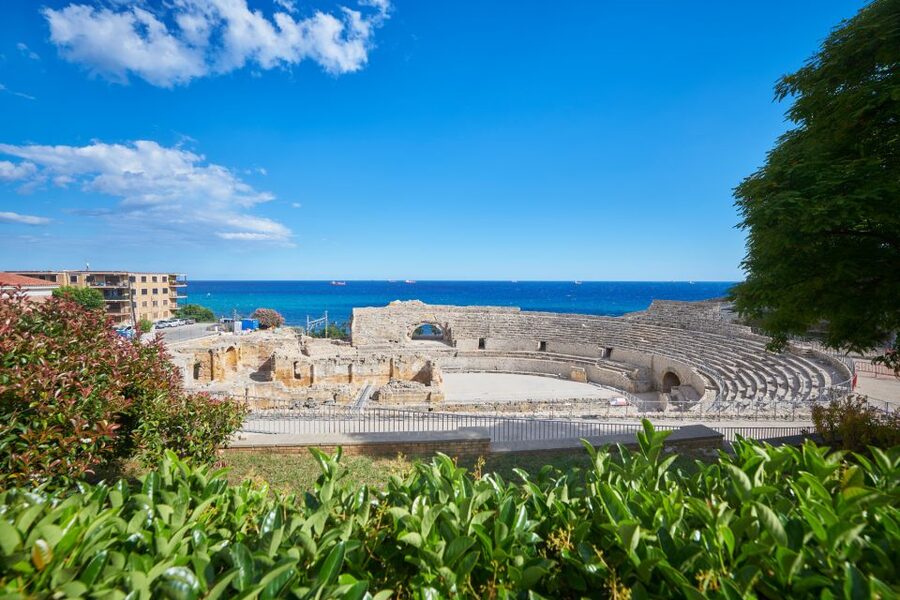
The final major stop is Tarragona’s Amphitheater, located by the sea. This is the tour’s most dramatic setting, with Roman remains and the Mediterranean in the same view.
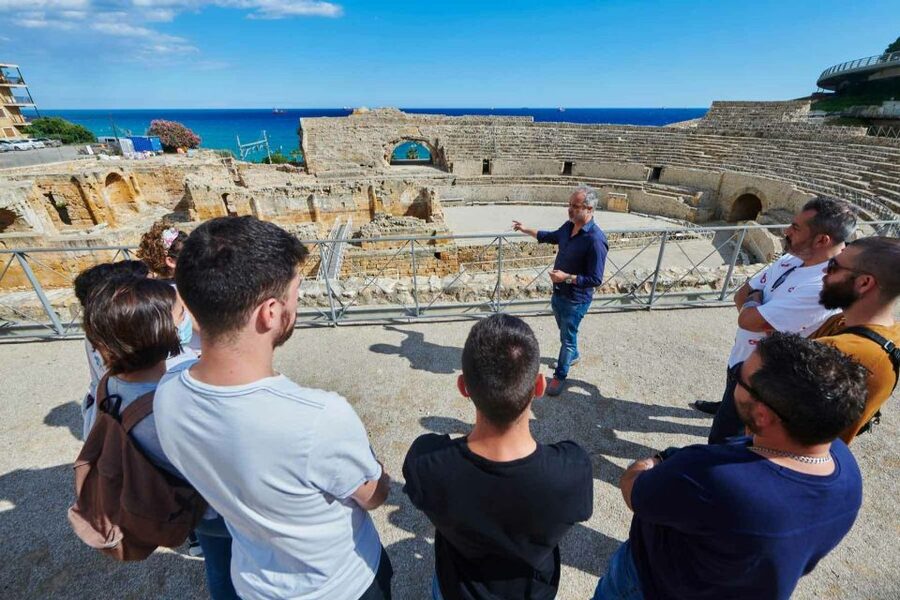
Here, your guide explains the gladiator contests and animal hunts that took place in ancient times. The site’s location makes the subject especially memorable. You are not studying an arena in an enclosed museum. You are looking at a Roman entertainment building with the sea beyond it.
The Amphitheater also has a long story extending beyond its ancient use. The guide reviews the stadium’s history up to the present, giving you a sense of how the site changed over time. That broader view matters because Roman monuments were not frozen in one period. Later generations reused, altered, or reinterpreted them.
I would save a little attention for the view rather than focusing only on the arena floor. The sea-facing position is one of the tour’s best visual rewards, and it gives the final stop a clear sense of place. The tour begins with Roman strategy and ends with Roman public spectacle, both tied to Tarragona’s position beside the Mediterranean.
Bad weather can affect this part of the walk. One outing took place during heavy rain and was still judged acceptable, but rain can make outdoor explanations less comfortable and may reduce the pleasure of the seaside view. Check the forecast and dress for conditions.
The guides and the group experience
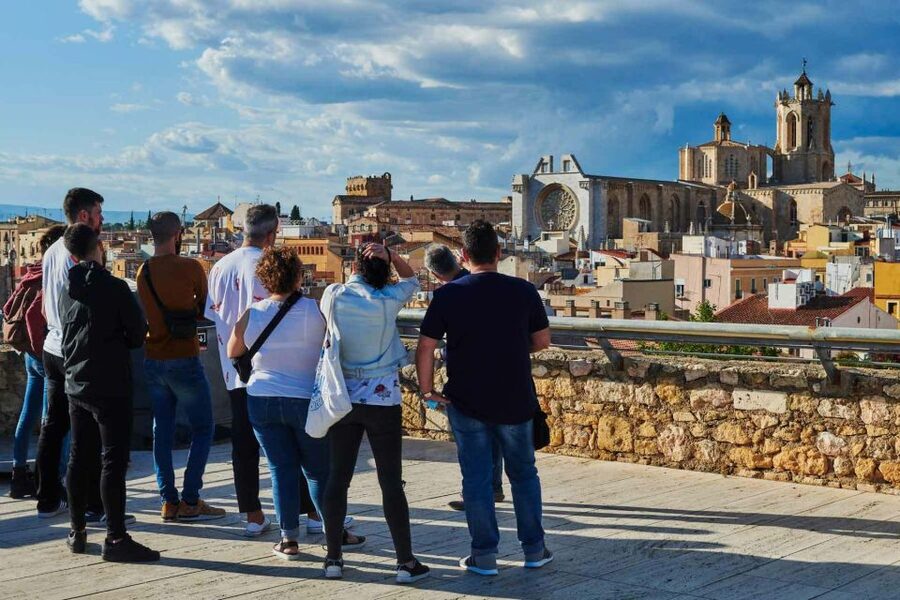
The official city guide is central to the tour’s value. A strong guide can connect walls, vaults, model, video, and Amphitheater into one story. A weaker presentation can leave you with a string of facts that do not quite connect.
Adrià has been singled out for clear explanations, strong knowledge of the city, and obvious pride in the region. That combination matters. His approach appears to work particularly well for visitors who want history explained in a direct, understandable way rather than delivered as a lecture.
The tour is offered in Catalan and Spanish. If you are comfortable in either language, this should be straightforward. The supplied information does not list English as a tour language, so do not book assuming an English presentation.
Group size can shape your experience. One crowded departure involved about three groups of roughly 20 people leaving at the same time. With that many voices in the same area, it became difficult for one guide to hold everyone’s attention. If your schedule allows, ask about the least crowded departure when checking availability.
The overall rating is 4.7 from 261 reviews, which points to a consistently positive experience, but the individual feedback shows why you should keep expectations realistic. Most of the value comes from the guide and the sites. The exact quality of the day can depend on weather, crowd levels, and how easily you hear the commentary.
Is $17 a good value?
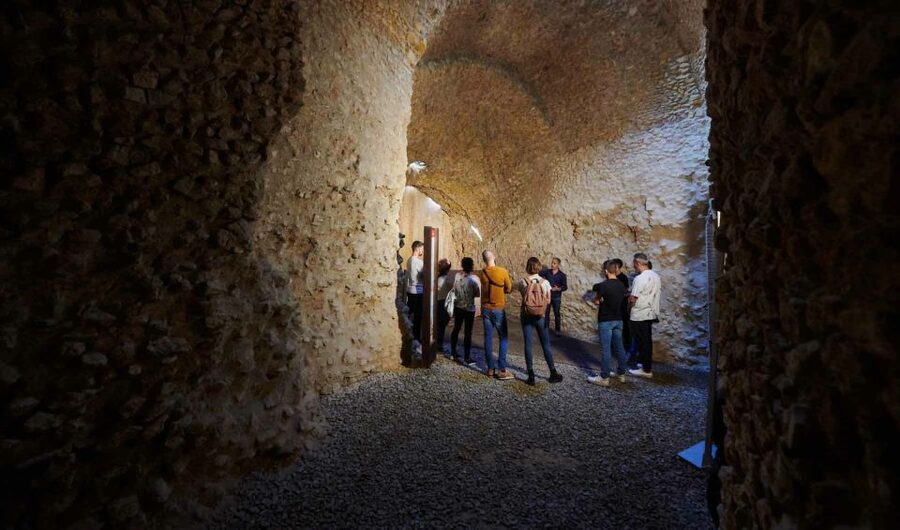
Yes, for the right purpose. At $17, this is a low-cost way to get oriented to Tarragona’s Roman center, enter the Circus, and reach the Amphitheater with a guide. You also receive visual help from the city model and 3D presentation, which can make later independent sightseeing more rewarding.
I would not judge the price against a full archaeology tour. This is a two-hour introduction, not a full-day program. The short duration keeps the cost down, but it also limits the amount of time available at each stop.
The value is strongest if you are visiting Tarragona for the first time, have only part of a day, or find Roman ruins hard to read without explanation. Families and casual sightseers may appreciate the mix of walking, underground spaces, models, and video.
History specialists may want more depth. If you already know Roman Tarragona well, or if you prefer to explore slowly on your own, the group pace could feel restrictive. You may get more from a self-guided visit with extra time at the sites.
Free cancellation up to 24 hours before the start and the option to reserve now and pay later make the booking less risky. Those terms are useful if your Tarragona plans may shift.
Who should book this walking tour?
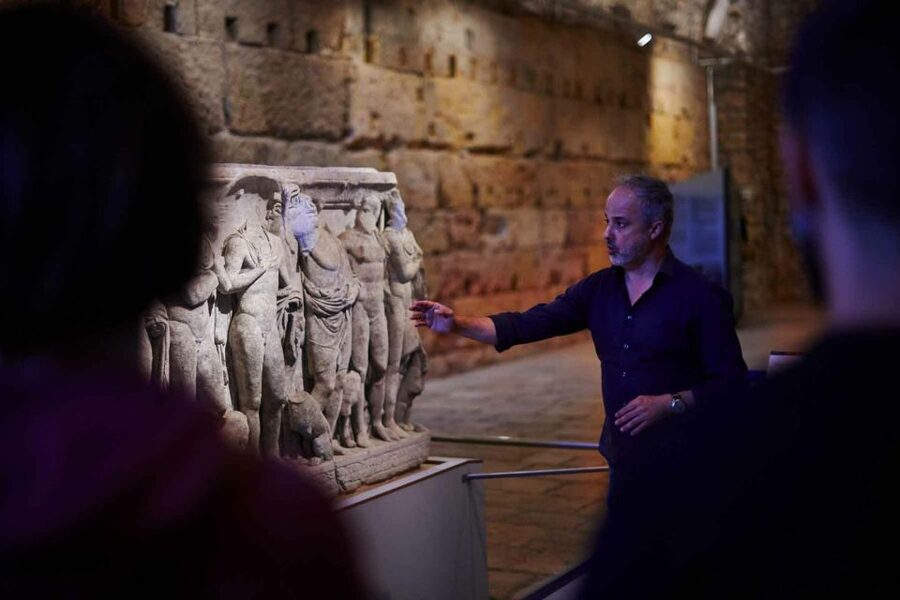
I would recommend it to first-time visitors who want a clear introduction without spending a full day. It also suits anyone interested in Roman military planning, public entertainment, and the way ancient remains fit into a modern city.
The tour should work well for families if children can manage a two-hour walk and follow a guided explanation. The Circus vaults, chariot racing, gladiators, and animal hunts provide subjects that are easier to picture than a list of dates.
It is also a good choice for visitors staying in Tarragona who want a structured start to their sightseeing. After the tour, you will know which places deserve a second look.
I would pause before booking if you need an English-language guide, carry luggage, or dislike group tours. I would also reconsider if you want a leisurely three-hour study of the Roman sites. The tour is wheelchair accessible, but the route details should still be confirmed for your particular needs.
Should you book the Tarragona Roman Heritage tour?
Book it if you want an affordable, well-organized introduction to Tarragona’s Roman core. The walls, Circus vaults, city model, 3D presentation, and seaside Amphitheater make a varied two-hour route, and the $17 cost is easy to justify.
Go in expecting an overview, not exhaustive study. Arrive 10 minutes early at the Itinere office, wear comfortable shoes, bring no large bag, and choose Catalan or Spanish with confidence. If you can accept the short format and possible crowd noise, this tour gives you the historical framework needed to enjoy Tarragona far more than a walk among unexplained ruins.
FAQ
Where does the tour meet?
The meeting point is the Itinere office next to the Roman walls in Tarragona.
How early should I arrive?
You should arrive 10 minutes before the activity begins.
How long does the walking tour last?
The tour lasts two hours.
What is included in the price?
The price includes the guided tour of Tarragona and entrance to the Circus.
Does the tour visit the Amphitheater?
Yes. The route finishes at the Amphitheater beside the sea.
What languages are available?
The live tour is offered in Catalan and Spanish.
Is the tour wheelchair accessible?
Yes, the activity is listed as wheelchair accessible.
What should I bring?
Bring comfortable shoes because the experience involves walking.
Can I bring luggage or a large bag?
No. Luggage and large bags are not allowed.
Can I cancel for a refund?
Yes. You can cancel up to 24 hours in advance for a full refund. You can also reserve now and pay later.
Recently listed in Spain
- Transfers From Cruise Port to Barcelona Airport★ 4.5 · 155 reviews
- Bohemian Barcelona Neighborhood Evening Tapas & Wine Tour★ 5.0 · 419 reviews
- Park Guell Guided Tour with Skip the Line Tickets★ 4.0 · 739 reviews
- Barcelona Sunset Cruise with Light Snacks and Open Bar★ 5.0 · 476 reviews
- Montserrat very early : Hiking, Abbey, very small group★ 5.0 · 127 reviews
- Barcelona: Sagrada Familia, Park Guell & Tapas Private Tour★ 5.0 · 903 reviews
- Authentic Flamenco Show Barcelona : Intimate Casa Sors Experience★ 5.0 · 809 reviews
- Barcelona Expert Tour with Local Guide in Eco Tuk Tuk Private★ 5.0 · 216 reviews
Historical Tours, compared.

Madrid Essential: Historic Center, Plaza Mayor & Royal Palace
Read our review →
Tapas Walking Tour with Food, Wine, and History
Read our review →
Sevilla Food Tour: Tapas, Wine, History & Traditions
Read our review →
Valencia Old Town Tour with Wine & Tapas in 11th Century Historic Monument
Read our review →
Barcelona Tapas Walking Tour: Food, Wine & History
Read our review →
Ultimate Seville Tapas, Wine & History Small Group Tour
Read our review →
Skip-the-Line Great Mosque-Cathedral History Tour
Read our review →
Browse the lists this tour appears in