
Reviewed · LANZAROTE TOURS
Tour to Timanfaya, Jameos del Agua, Cueva de los Verdes and viewpoint from the cliff
Lanzarote puts fire under your feet. This nine-hour island circuit is a smart way to see the island’s major volcanic sights in one day, from the red craters of Timanfaya to the strange green water of El Lago Verde. I especially like the three included admission tickets for Timanfaya, Jameos del Agua, and Cueva de los Verdes, plus the chance to see both the north and south of Lanzarote without arranging several separate trips. The main drawback is the pace: you cover a lot of ground, but some stops feel brief and you spend plenty of time on the coach.
I also like the practical hotel pickup arrangement and the guides’ mix of island history, geology, and everyday life. Vanessa receives particular praise for her warmth and clear English and Spanish, while driver Manolo is remembered for handling Timanfaya’s tight roads with care. Still, this is a large, bilingual group tour, so English commentary may compete with Spanish commentary at times.
In This Review
- Key points at a glance
- What this Lanzarote day tour actually delivers
- Cueva de los Verdes: start underground
- Jameos del Agua and César Manrique’s natural design
- Guinate, Haría, and the north of Lanzarote
- The Monumento al Campesino from the coach
- La Geria: vineyards in black volcanic soil
- The camel stop: optional, extra, and not for everyone
- Timanfaya National Park: the day’s main event
- El Lago Verde, the final volcanic surprise
- Lunch, coach time, and the real cost
- Who should book this island circuit?
- Should you book it?
- FAQ
- How long does the Lanzarote tour last?
- Are hotel pickups included?
- Which entrance tickets are included?
- Is lunch included in the tour price?
- How much does the camel ride cost?
- Is the tour available in English?
Key points at a glance
- Timanfaya’s Fire Mountains: The strongest part of the day, with a coach ride through red volcanic cones, lava fields, and barren ground shaped by eruptions lasting from 1730 to 1736.
- Cueva de los Verdes: An atmospheric cave visit with narrow steps and some climbing, so wear sensible shoes and be ready for uneven footing.
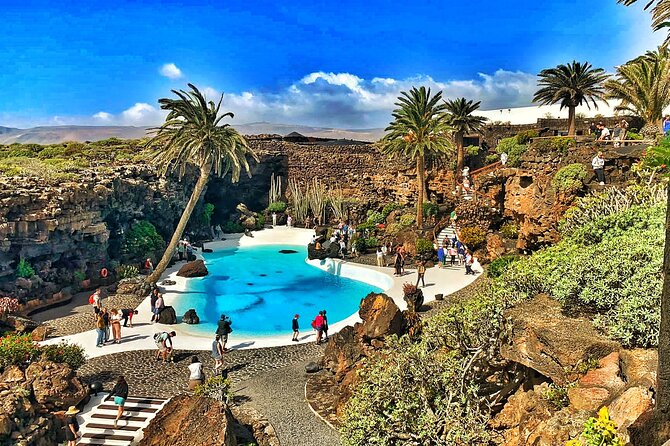
- Jameos del Agua: César Manrique’s first Art, Culture and Tourism Centre, built inside a volcanic tunnel and designed around the natural rock.
- La Geria wine country: A short stop at a winery includes a small tasting, though do not expect a full vineyard visit or serious wine lesson.
- A full island in one day: You see Haría, Guinate, the Monumento al Campesino, the camel area, Timanfaya, and El Lago Verde, but the trade-off is coach time.
- Extras affect the final cost: Lunch is not included, and the camel ride costs 11 euros per person. A buffet lunch costing 12 euros is widely considered good value.
What this Lanzarote day tour actually delivers
The tour begins around 8:00 a.m., although your exact pickup time and location arrive the day before. Pickup may be at your hotel or at a nearby bus stop in one of the main tourist areas, so do not assume the coach will pull up outside your accommodation. One booking received a steep uphill bus stop, an important detail if you are carrying luggage or have limited mobility.
You travel in an air-conditioned coach, with the advertised group limit set at 55 people. This is not a small minibus outing. It is a big, efficient island tour built around timed entries and a fixed route.
That arrangement has a real benefit. The company handles the driving, parking, entry arrangements, and much of the day’s timing. You can look out of the window instead of trying to navigate Timanfaya’s narrow roads. The drawback is that getting a large group off the coach takes time, and free moments at some sights can disappear quickly.
The tour is offered in English, with bilingual commentary in English and Spanish. Guides such as Vanessa have been praised for explaining Lanzarote’s geology and local life with humor and pride. At busy moments, though, Spanish commentary can be longer or louder, making the English harder to hear. If clear, English-only guiding is your top priority, a smaller specialist tour may suit you better.
A few more Lanzarote ideas to compare
- Lanzarote: Guided Off-Road Volcano Buggy Tour
★ 4.7 · 4,385 reviews - Lanzarote: Full-Day Island Highlights Tour
★ 4.6 · 2,660 reviews - Lanzarote: Dolphin-Watching Sunset Cruise with Transfers
★ 4.2 · 2,435 reviews
Cueva de los Verdes: start underground
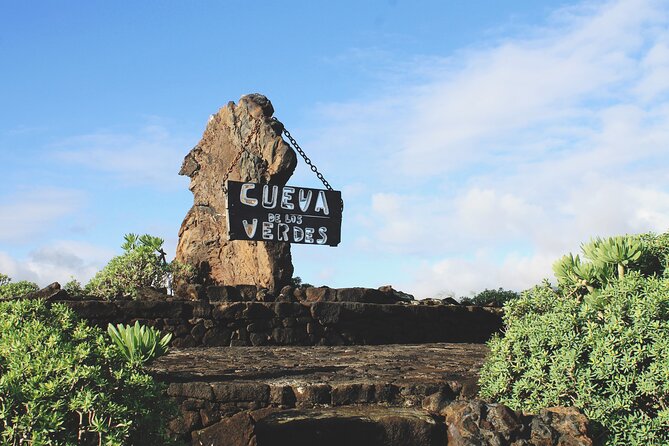
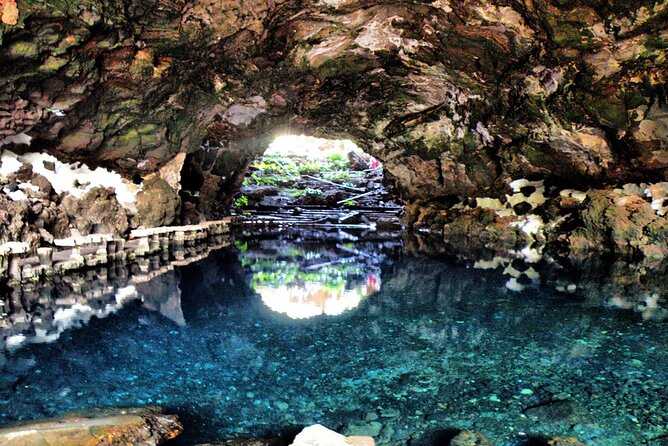
The first major stop is Cueva de los Verdes, one of Lanzarote’s most unusual volcanic sights. The cave formed within the Malpaís de la Corona, a broad volcanic area in the north of the island. It is not simply a pretty cavern. The passage is part of a long volcanic tunnel, created when molten rock moved beneath a hardened surface.
You have about 55 minutes here, with admission included. Expect a guided route through the cave, including narrow steps and some climbing. One traveler described the descent as a long trek down tight stairs, so this is not the easiest stop for anyone uneasy with enclosed spaces, steep steps, or uneven ground.
I would wear shoes with a secure sole and leave bulky bags behind if possible. The cave’s dark interior and unusual rock shapes make it one of the most memorable stops, but the visit is controlled and timed. You are there to follow the route, not wander off and explore at your own speed.
The timing works well early in the day. Several people appreciated arriving at major attractions before the main crowds. That matters at Cueva de los Verdes, where a quieter start makes the underground setting feel more mysterious and less like a queue through a popular attraction.
Jameos del Agua and César Manrique’s natural design
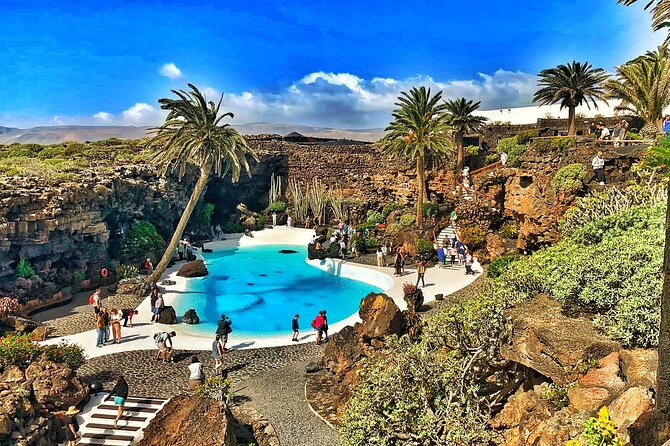
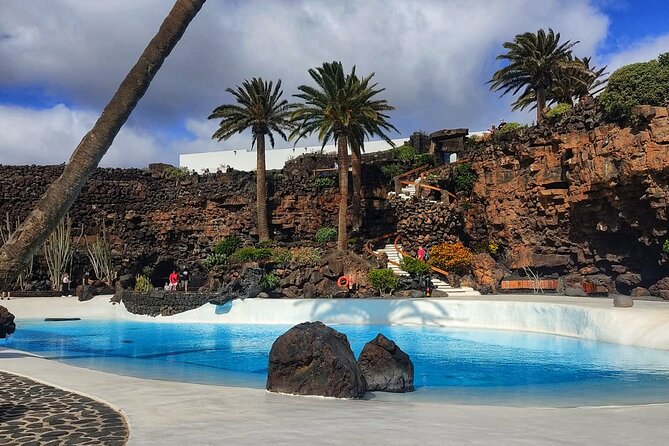
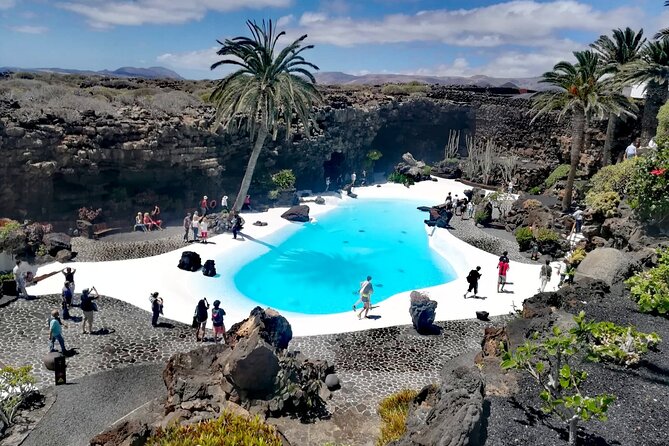
From the cave, the tour continues to Jameos del Agua, another volcanic tunnel transformed by César Manrique. The centre opened in 1968 and was the first Art, Culture and Tourism Centre created by the Lanzarote artist.
Manrique’s idea was simple but powerful: build with the natural space rather than covering it up. Whitewashed surfaces, dark volcanic rock, open air, and carefully placed design elements work together inside the tunnel. The result is part geological site and part artwork.
Your visit lasts about 50 minutes, and admission is included. This is a good place to slow down visually, even if the schedule does not allow a long independent stay. Look at how the architecture follows the curves and textures of the volcanic rock. Jameos del Agua helps explain why Manrique matters so much to Lanzarote. His work is not an add-on to the island’s scenery. It is a way of presenting that scenery without overwhelming it.
Some people could happily spend much longer at both caves. The short visits are enough to see the main route, but not enough for extended photography, browsing, or a relaxed coffee stop. If you prefer lingering at one attraction, this packed itinerary may feel hurried.
Guinate, Haría, and the north of Lanzarote
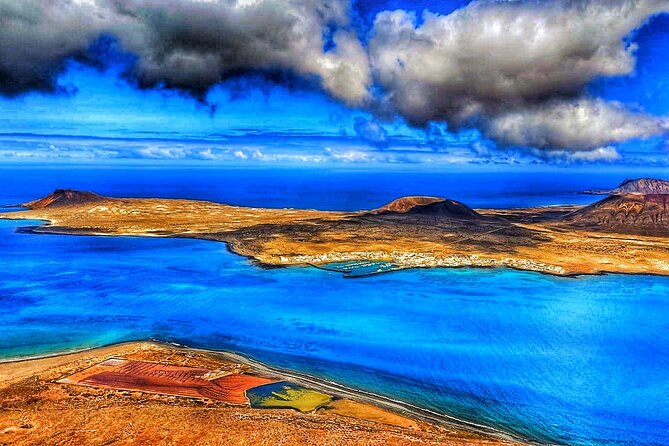
The route then opens out into the northern part of the island. At Mirador de Guinate, you stop for about 25 minutes at a viewpoint roughly 500 metres from the cliff. The reward is a broad view toward La Graciosa, the island lying off Lanzarote’s northern coast.
This is a short viewpoint stop, so your time is mainly for looking, taking photographs, and getting a sense of the island’s scale. The northern coast feels very different from the black volcanic ground around Timanfaya. From up here, Lanzarote’s dry terrain and nearby islands come together in one wide view.
The coach also passes through Haría, known as the valley of a thousand palm trees. The town sits among mountains and white island buildings, with cultivated ground breaking up the bare geology. It is a useful reminder that Lanzarote is not only craters and lava. Farming and settlement have shaped the island too.
Haría is described as a pass-through section rather than a long walking stop. You should treat it as scenery and context, not as free time in town. If Haría is high on your personal list, plan a separate visit.
Same base, a different kind of afternoon:
- Arrecife: Timanfaya and Green Lagoon for Cruise Passengers
★ 4.6 · 2,010 reviews - Lanzarote: Timanfaya Park and Jameos del Agua Full-Day Tour
★ 4.5 · 1,977 reviews - Lanzarote: Timanfaya Park, Jameos Agua, & Cueva Verdes Tour
★ 4.5 · 1,876 reviews - Puerto del Carmen: Dolphin-Watching Speedboat Tour with Swim
★ 3.7 · 1,807 reviews
The Monumento al Campesino from the coach
Near San Bartolomé, the tour passes the Casa-Museo del Campesino and the Monumento a la Fecundidad. The monument was created by César Manrique and Jesús Soto from old ship water tanks, iron, and concrete. At more than 15 metres tall, it has become one of Lanzarote’s best-known symbols.
The monument honors the island’s farmers and their hard work in difficult volcanic soil. That idea becomes clearer later at La Geria, where growers use ingenious methods to raise vines in ground that looks too dry and harsh for agriculture.
You see the monument from the bus rather than taking a full museum visit. That is convenient for a broad island circuit, but frustrating if you want to study Manrique’s work or learn more about rural life. Think of this as a quick introduction, not a complete cultural stop.
La Geria: vineyards in black volcanic soil
La Geria is one of Lanzarote’s most distinctive farming areas. Vines grow in dark volcanic ash, often protected by curved stone walls that help shield them from the wind. The sight of vineyards in such an arid setting is striking, and it gives the tour a welcome change from caves and craters.
The stop lasts about 20 minutes and includes a winery visit with a small wine tasting. Keep your expectations modest. This is a sample, not a detailed wine education session. Some people received less than a small glass and found that there was little explanation of the grape-growing method or the wine itself.
That is a missed opportunity because La Geria has a genuinely interesting story. I would have liked the tasting to explain more about how the vines survive and what makes the island’s wines distinctive. Still, the stop is short, and the volcanic vineyards are worth seeing even if the tasting itself is underwhelming.
The camel stop: optional, extra, and not for everyone
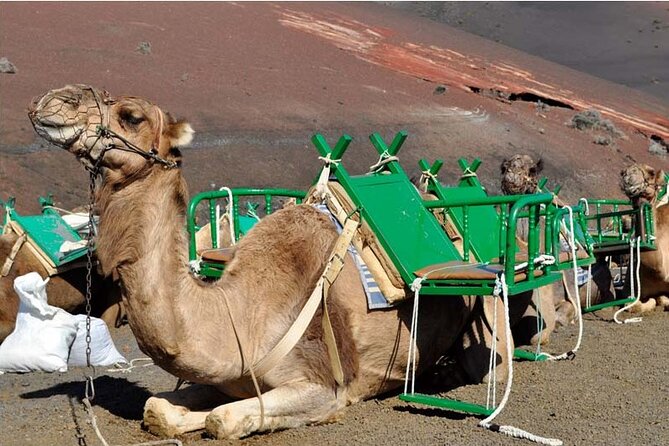
At the camel track, you can pay 11 euros for a ride lasting about 20 minutes. If you skip the ride, you can visit a small museum about the history of camels on Lanzarote.
This is the most divisive part of the day. Families and anyone curious about a traditional tourist activity may enjoy it. Others may prefer not to ride the animals, and the alternative museum is small. Several people found themselves waiting around with little to do while the camel riders finished.
That makes the stop feel longer for non-riders. If you know you will skip the camel ride, ask the guide what the waiting arrangement is before the group leaves the coach. The ride is not included in the tour price, so your decision affects both time and budget.
Timanfaya National Park: the day’s main event
Timanfaya is the reason many people book this tour. The Fire Mountains were formed by major eruptions in southern Lanzarote between 1730 and 1736, with further activity in the 18th and 19th centuries. The result is a broad field of red cones, black lava, ash-covered slopes, and craters that look almost unreal.
You spend about an hour in the national park, with admission included. The key experience is the coach route through the volcanic area. You are not simply dropped at a lookout and sent off for a few photographs. The bus follows the park road through the Fire Mountains, and the views change constantly as the road curves around cones and lava flows.
This is where the driver matters. The roads are tight and exposed in places, and several people singled out the driving as a highlight. Sit on the right side of the coach, facing forward, if you want a strong view during the national park route. Both sides offer good scenery, but the right side can be especially useful for photographs according to one detailed tip.
You should not expect a long hike to a volcano crater. The tour focuses on the coach route and designated viewing areas. That suits anyone who wants the main Timanfaya experience without a strenuous walk, but hikers may wish for more time on foot.
Timanfaya can also be windy and cool despite Lanzarote’s generally warm weather. Bring a light layer, and keep your camera ready. The scenery changes quickly, and stopping the coach to repeat a view is not part of the plan.
El Lago Verde, the final volcanic surprise
The final major stop is El Lago Verde, also called Charco de los Clicos. This green lake lies inside a volcanic crater near the coast and has become one of Lanzarote’s signature sights.
The visit lasts about 20 minutes. That is enough to reach the viewing area, take photographs, and appreciate the contrast between the green water, dark volcanic rock, and coastal setting. It is a strong ending because the color is so different from the reds and blacks of Timanfaya.
The stop is free, but it is still shaped by the group schedule. You will not have a long coastal walk or a leisurely afternoon here. Consider it a final scenic viewpoint rather than an open-ended beach visit.
Lunch, coach time, and the real cost
Lunch is not included in the $108.84 price. A buffet option costing 12 euros is available, and it is widely considered a sensible buy because food on Lanzarote can be expensive. It is described as plentiful and solid rather than special. Shared tables may be used, which will suit social people more than anyone hoping for a quiet meal.
Add 11 euros if you want the camel ride. With lunch and the camel experience, the day costs more than the advertised base price, but the core entrance fees are already covered. Timanfaya, Jameos del Agua, and Cueva de los Verdes would otherwise require separate admission, transport, and planning.
That is why I think the tour offers fair value for a first visit. You see the north, centre, wine country, volcanic south, and coast in one day. You also avoid renting a car for unfamiliar roads and do not need to work out how to fit several major sites into one route.
The cost is less convincing if you already have a car, several days on the island, or a strong preference for slow travel. You may save money and enjoy yourself more by visiting fewer places at your own pace.
Who should book this island circuit?
I would choose this tour if I had only one day for Lanzarote or wanted a broad introduction before returning to favorite places independently. It suits first-time visitors, families who want easy access to major sights, and anyone who would rather let a driver handle Timanfaya.
It also works well if you value history and local context. Guides such as Vanessa add useful detail about Lanzarote’s culture and daily life, not only the next photo stop. The best guides keep the day moving while giving the island a human story.
I would hesitate if you dislike coaches, crowded groups, bilingual commentary, or fixed schedules. You spend a fair amount of time seated, and some stops allow little room for toilets, gift shops, or unhurried photography. The camel stop is especially awkward if you do not want to ride.
The experience has a 4.8 rating from 1,381 reviews, with 96 percent recommending it. Those figures fit the tour’s strengths: strong organization, excellent scenery, included major admissions, and a very full route. They do not erase the trade-offs around group size, noise, and limited free time.
Should you book it?
Book it if you want the island’s major natural sights in one packed day, especially Timanfaya, the two volcanic cave sites, La Geria, and El Lago Verde. Sit on the right side of the bus for the Timanfaya route, wear secure shoes for Cueva de los Verdes, bring a light layer, and budget another 12 euros for the buffet lunch.
Skip it in favor of a smaller tour or rental car if your priority is quiet guiding and long visits. For most first-time visitors on a short stay, though, Lanzaroteguides offers a practical and good-value overview, with Timanfaya and the caves providing the day’s strongest moments.
FAQ
How long does the Lanzarote tour last?
The tour lasts approximately nine hours. The stated start time is around 8:00 a.m., with the exact pickup time confirmed the day before.
Are hotel pickups included?
Pickup is offered at hotels or nearby bus stops in tourist areas. The final location and time are sent the day before, so the stated meeting point should not be treated as final.
Which entrance tickets are included?
Admission is included for Timanfaya National Park, Jameos del Agua, and Cueva de los Verdes, depending on the option booked.
Is lunch included in the tour price?
No. Lunch is not included. A buffet option costing 12 euros is available during the day.
How much does the camel ride cost?
The camel ride costs 11 euros per person and lasts about 20 minutes. If you do not ride, you can visit a small camel-history museum instead.
Is the tour available in English?
Yes. The tour is offered in English, with bilingual English and Spanish commentary. The group may include speakers of both languages.
Recently listed in Lanzarote
- Aqualava Waterpark Lanzarote Entrance Ticket★ 3.5 · 468 reviews
- Lanzarote: Timanfaya National Park & La Geria Tour★ 4.5 · 458 reviews
- Timanfaya And El Golfo For Cruise Passengers (Mornings)★ 4.5 · 944 reviews
- Playa Papagayo: Self-Drive Boat Rental★ 4.9 · 113 reviews
- Puerto Del Carmen: Try Scuba Diving with 2 Dives and Photos★ 4.9 · 140 reviews
- Lanzarote: MHT – Music Hall Tavern – Comedy Drag Dinner Show★ 4.6 · 422 reviews
- Playa Blanca: Guided Quad Bike Tour★ 4.4 · 129 reviews
- Lanzarote: Cueva de los Verdes & Jameos del Agua Tour★ 4.4 · 329 reviews
Lanzarote Tours, compared.
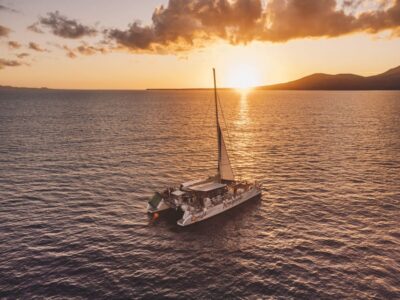
Dolphin-Watching Sunset Cruise with Transfers
Read our review →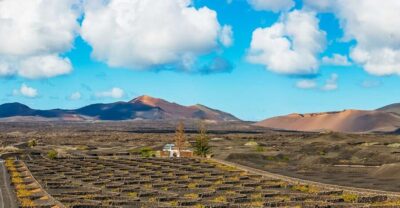
Timanfaya and Green Lagoon for Cruise Passengers
Read our review →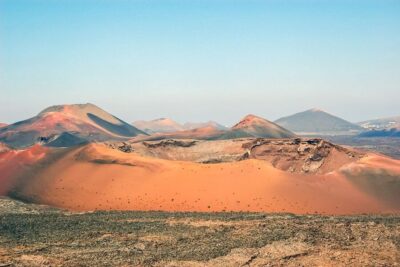
Timanfaya Park and Jameos del Agua Full-Day Tour
Read our review →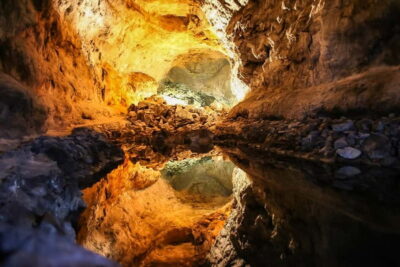
Timanfaya Park, Jameos Agua, & Cueva Verdes Tour
Read our review →
Puerto del Carmen: Dolphin-Watching Speedboat Tour with Swim
Read our review →
Browse the lists this tour appears in