
Reviewed · CITY TOURS
From Seville: Italica Roman City & Medieval Monastery Tour
Ancient stones, big stories, easy logistics. This four-hour outing gives you two very different sights close to Seville: the remarkably preserved Roman city of Italica and the medieval Monastery of San Isidoro del Campo. I especially like the excellent guides, including Carlos, Miguel, Jesus, Alberto, and Jose Luis, who bring archaeology and daily Roman life to a level you can follow. I also like the comfortable coach ride and the way the monastery adds a second period of Spanish history rather than making the trip all about ruins.
The main drawback is time. Italica receives 105 minutes, and some of that is guided walking, so you may want more freedom to return to the amphitheater or linger over the mosaics. The tour can also run beyond its advertised four hours, which is helpful when traffic delays the departure but worth remembering if you have evening plans.
In This Review
- Key points to know before booking
- Why Italica makes a strong half-day trip from Seville
- The 20-minute coach ride from Seville
- Entering Italica, a city linked to Trajan and Hadrian
- The amphitheater and its underground passages
- A short transfer to San Isidoro del Campo
- How the guiding shapes the experience
- Shared or private tour?
- Who will enjoy this tour most?
- Return to Seville and practical timing
- Should you book the Italica and monastery tour?
- FAQ
- How long does the tour take?
- How far is Italica from Seville?
- How long do you spend at Italica?
- Is the amphitheater included?
- Is Italica connected to Game of Thrones?
- How long is the monastery visit?
- What languages are available?
- Is hotel pickup available?
- Are food and drinks included?
Key points to know before booking
- Italica is only about 20 minutes from Seville, making this an easy half-day escape from the city.
- The amphitheater once held about 25,000 people and includes underground passages and the former animal holding area.
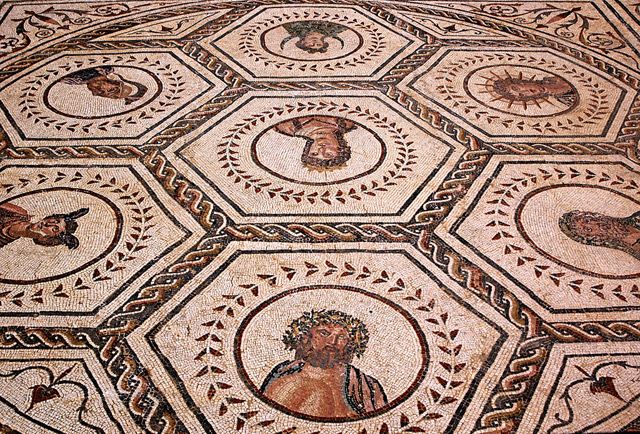
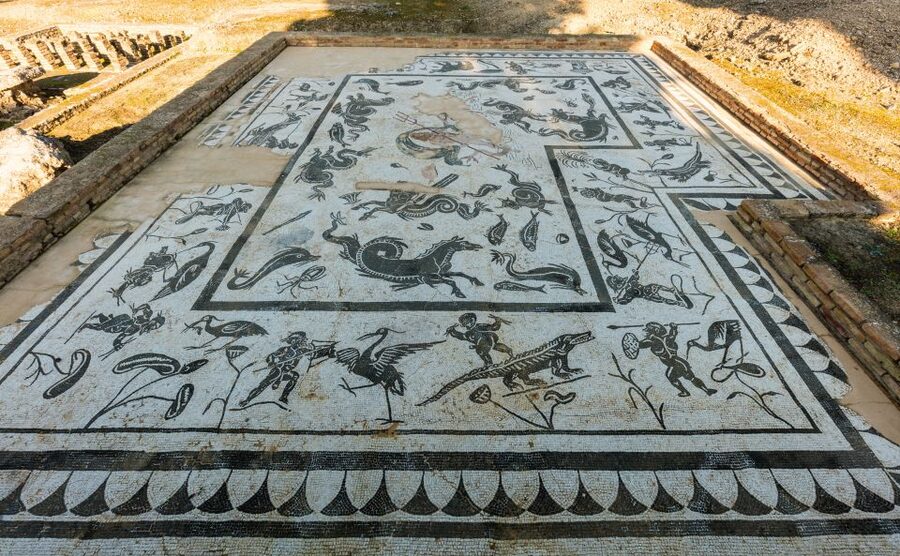
- The Roman mosaics are the visual highlight, with many floors still remarkably well preserved.
- Game of Thrones fans can see the amphitheater used as the Dragonpit, though the site is much more than a filming location.
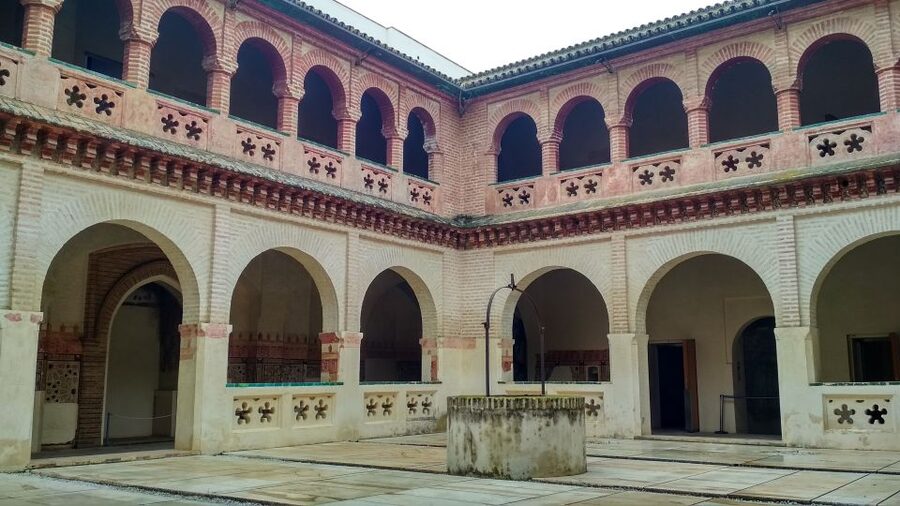
- The monastery changes the pace, with Mudejar, Gothic, and Baroque details inside a former religious complex.
- Shared and private options are available, with hotel pickup offered for private tours within the service area.
Why Italica makes a strong half-day trip from Seville
Seville is full of grand palaces, churches, and plazas, so it is easy to spend your whole visit inside the modern city. Italica gives you a clear look at the Roman presence in southern Spain without committing to a long day on the road.
The settlement was founded in 206 BC by the Roman general Publius Cornelius Scipio. It later became associated with emperors Trajan and Hadrian, both born there. That fact gives the site unusual importance: you are not simply looking at a provincial outpost, but at a place linked to two rulers of the Roman Empire.
I like the scale of the visit. The coach ride takes about 20 minutes, then the archaeological site gives you enough time to understand the layout without turning the morning into an exhausting excavation marathon. The route includes ancient streets, houses, mosaics, and the amphitheater, with a guide explaining how the pieces fit together.
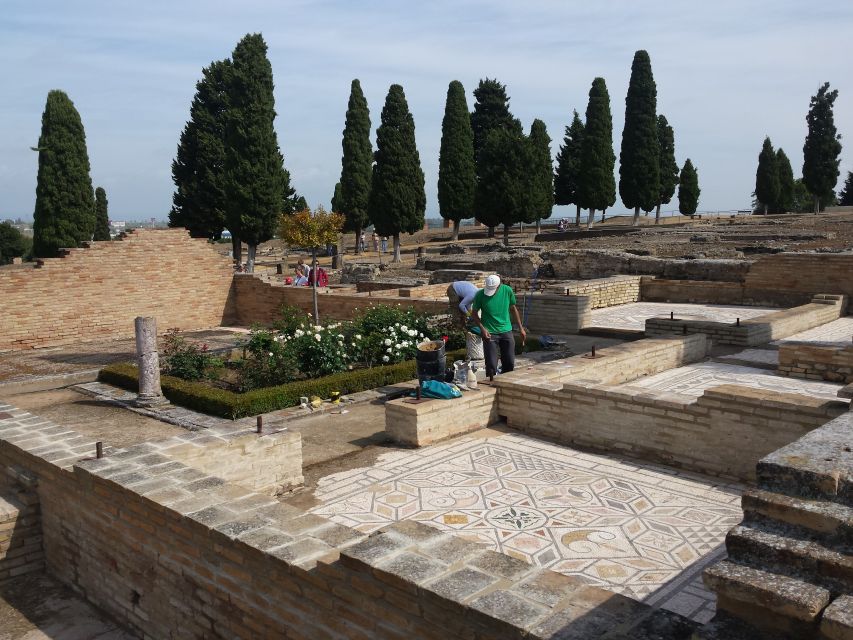
The site is not fully excavated. That is part of its appeal, but it also means you should not expect a complete Roman city with every building restored. You see exposed streets and foundations, decorated floors, and major structures surrounded by areas still awaiting further work.
A few more Seville ideas to compare
- Seville: Royal Alcázar Entry Ticket
★ 4.6 · 28,378 reviews - Seville: Cathedral and La Giralda Entry Ticket
★ 4.5 · 24,592 reviews - Seville: Live Flamenco Dancing Show Ticket at the Theater
★ 4.7 · 16,396 reviews
The 20-minute coach ride from Seville
Transport is included, and that matters here. Italica is outside central Seville, so booking a tour removes the need to work out the trip on your own and helps you use the four-hour schedule efficiently.
For the shared option, you choose from three meeting points in Seville. The exact meeting point depends on the option you book, so check it carefully rather than relying only on a phone navigation app. One person found that satellite navigation led slightly away from the correct location, and clearer instructions about what to look for would have helped.
The private option can include hotel or apartment pickup in Seville. After booking, you provide your accommodation name and address. If it falls outside the pickup area, the operator gives you the closest accessible collection point.
The coach has been described as comfortable, and one bus included USB charging ports. Traffic leaving Seville can delay the start, especially at busy times. On one occasion, the tour was extended rather than simply cutting time from the visits, but you should still leave a buffer after the scheduled return.
Entering Italica, a city linked to Trajan and Hadrian
Your guided visit to Italica lasts about 105 minutes. That is long enough for a proper introduction, though not quite long enough for a leisurely independent wander at every stop.
A good guide makes a major difference here. The ruins do not speak for themselves. Without context, an ancient street can look like a line of stones and a mosaic can become just another attractive floor. Guides such as Carlos Leon, Miguel, Jesus, Alberto, and Jose Luis have been praised for explaining archaeology, Roman customs, local history, and the connection between the buildings.
I particularly like the way this kind of tour gives you a sense of the city beneath modern Spain. You can follow ancient streets and imagine the organized urban setting that once included homes, public buildings, entertainment, and trade. The preserved sections make the Roman planning easier to see than in many sites where later construction covered the original layout.
The mosaics are a major reason to visit. Their patterns and colors have survived in remarkable condition, and they show that Roman homes were not plain stone structures. The floors offered status, decoration, and clues about the people who lived there.
If you are interested in archaeology, you will appreciate the guide’s explanations of what is visible and what remains underground. If you are less interested in technical details, the visit still works because the stories connect the ruins to ordinary life, imperial power, and the development of Roman Spain.
The amphitheater and its underground passages
The amphitheater is the emotional high point for many visitors. It once held around 25,000 people, a striking figure when you consider the size of Italica’s surviving ruins.
You can see the vast oval arena, the seating areas, and the underground passages used by gladiators. The den where lions were held before combat adds a darker note. This was a place built for spectacle, and the design makes the machinery of Roman entertainment easier to understand.
The amphitheater also served as the Dragonpit in season seven of Game of Thrones. That connection may bring you through the gates, but the Roman story is the reason to stay. The filming link is a fun extra, particularly if you recognize the setting, but it does not dominate the visit.
Time is the issue. The guided route gives you the main view, yet several people wanted another 15 minutes to walk back, take photographs from different levels, or explore at their own pace. If you walk slowly or use a walking aid, keep track of the group and allow time for the bathroom before leaving the site.
Facilities at the ruins are limited to a small exhibition and toilets. The condition of the toilets has been criticized, so do not expect museum-level facilities. Since this is a half-day tour, the limitation is manageable, but it is useful to know before you go.
Same base, a different kind of afternoon:
- Seville: Casa de la Memoria Flamenco Show
★ 4.8 · 12,964 reviews - Seville: 1-Hour Guadalquivir River Sightseeing Eco Cruise
★ 4.2 · 10,281 reviews - Seville: Cathedral, Giralda, and Royal Alcázar Guided Tour
★ 4.7 · 9,165 reviews - Seville: Setas de Sevilla Entry Ticket
★ 4.6 · 8,901 reviews
A short transfer to San Isidoro del Campo
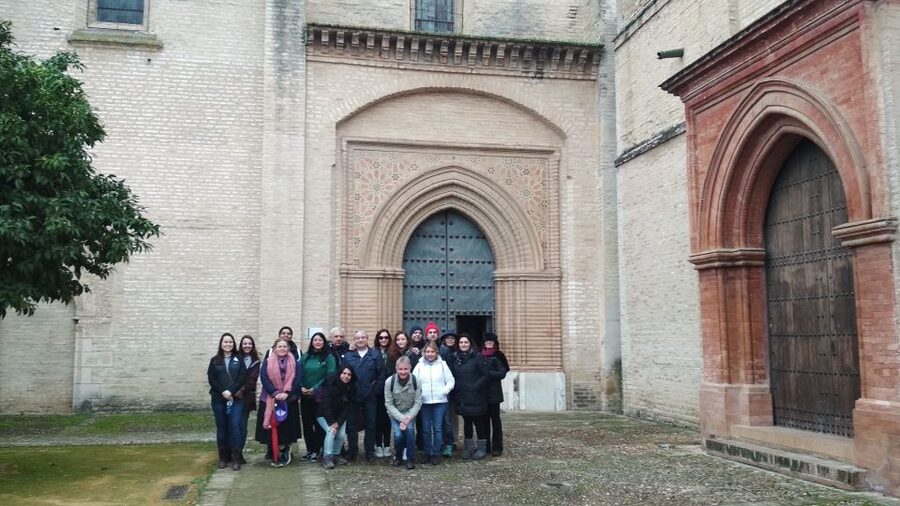
After Italica, the coach ride to the monastery takes about 10 minutes. The change of setting works well. You move from an ancient Roman settlement to a medieval religious complex, then see how later Spanish builders used different materials, styles, and ideas.
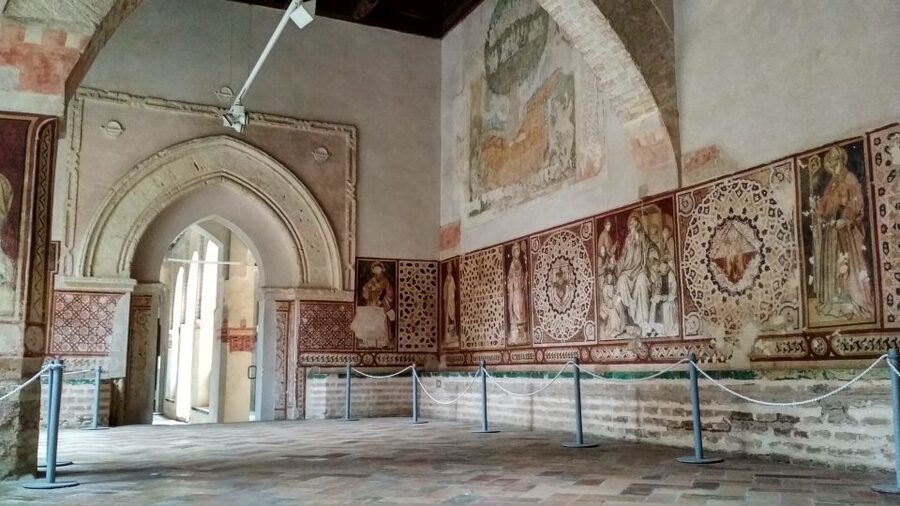
The guided visit lasts about 40 minutes. The Monastery of San Isidoro del Campo is described as a medieval fortress and includes Mudejar, Gothic, and Baroque architecture. That mixture makes it more than a quick add-on. You can look for the contrast between the sturdy, defensive character of the complex and the more decorative details added over time.
Some people prefer the monastery to Italica, especially if they enjoy architecture, religious art, and photography. Others find the Roman ruins more powerful. I think the two stops balance each other: Italica gives you open archaeological space and imperial Rome, while San Isidoro del Campo gives you enclosed rooms, layered design, and a later chapter of Andalusian history.
Only part of the monastery may be open because of funding limits. That can make the visit feel shorter than expected, but the accessible sections still provide a useful sense of how the complex functioned when it was active.
How the guiding shapes the experience
The strongest feature of this tour is the guide. A skilled guide turns a pile of old stones into a place with purpose, hierarchy, and human drama.
The named guides praised for their approach include Petra, Miguel, Jesus, Carlos, Carlos Leon, Alberto, Jose, Jose Luis, Rebecca, Joanna, Nieve, Katherine, Sergio, Nacho, Roberto, and Emelio. The recurring strengths are clear: good pacing, humor, strong explanations, and the ability to answer questions without making the group feel rushed.
Carlos Leon was especially effective for visitors interested in archaeology and art history. He also took care to help someone using a walking aid keep pace. Alberto was praised for answering many questions and showing real enthusiasm for Roman history. Miguel received repeated praise for being entertaining and clear, while Jesus was often described as funny and able to make the Roman period easier to picture.
Tours are offered in English, French, Italian, and Spanish. A minimum of four participants speaking the same language is needed to guarantee that language. If that number is not met, you may be offered another language, another date, or a full refund.
On shared departures, people may ride together on a larger coach before splitting into language groups at Italica. That system keeps transport efficient, though it may feel less personal than a private tour.
Shared or private tour?
The shared tour is the better value for most people. At $46 per person, the price includes transport from Seville, entry tickets, and a local guide. For a half-day outing with two admission-based sights, that is a fair price, especially if you want history explained rather than simply finding the ruins on your own.
A private tour costs more, though the exact price depends on the booking option. The benefit is control. You can arrange pickup at your Seville accommodation if it lies within the service area, and you receive a more personal experience with the guide. One private group described Jesus as personable, entertaining, and able to bring the site to life with stories and examples.
Choose shared if you want a practical introduction at a sensible price. Choose private if you are traveling with family, need pickup, prefer a flexible conversation, or have a strong interest in archaeology and want more time for questions.
Food and drinks are not included. There is no planned meal stop, and one person felt hungry toward the end and wished there had been time to buy a snack at Italica. Eat before departure and bring water, particularly in warm weather.
Who will enjoy this tour most?
I would recommend this outing to first-time visitors to Seville who want to add Roman Spain to their trip without renting a car. It also suits families with older children and teenagers, since the amphitheater, gladiator passages, and filming location give the history several easy entry points.
It works especially well for:
- People interested in Roman archaeology
- Game of Thrones fans who also want the real history behind the location
- Visitors who like guided storytelling more than reading signs alone
- Families seeking a manageable half-day activity
- Architecture and photography enthusiasts drawn to the monastery and mosaics
You should think twice if you want a completely independent visit. The schedule is guided and fairly structured, and the time for returning to favorite spots is limited. It may also be less comfortable for anyone who finds uneven archaeological ground difficult, though one guide made a clear effort to help a visitor using a walking aid.
The trip can run longer than four hours because of traffic or the pace of the group. Do not book a tightly timed lunch, museum entry, or train immediately afterward.
Return to Seville and practical timing
The return coach takes about 20 minutes. Drop-off options include Calle Rastro 12a, Hotel Don Paco, Calle Trajano 6, and Seville, depending on the selected departure.
The schedule is compact:
- About 20 minutes from Seville to Italica
- About 105 minutes at Italica
- About 10 minutes to San Isidoro del Campo
- About 40 minutes at the monastery
- About 20 minutes back to Seville
That leaves little spare time, which is why the tour can run beyond four hours. The structure is efficient, but it is not designed for long café breaks or solo exploration.
Free cancellation is available up to 24 hours before departure, and you can reserve now and pay later. Starting times vary, so check availability for your date before building the rest of your day around it.
Should you book the Italica and monastery tour?
Book it if you want an easy, well-explained introduction to two major sites near Seville. The Roman mosaics, enormous amphitheater, and underground passages make Italica worth the short ride. San Isidoro del Campo then adds medieval architecture and keeps the outing from feeling like a single-site excursion.
At $46, the shared tour offers good value for transport, entry, and guiding. I would choose the private option for a small family group, anyone needing hotel pickup, or anyone who wants more time for questions.
Go prepared for limited facilities, no included food, and a schedule that may stretch past four hours. If you can accept those small inconveniences, this is one of the more rewarding half-day trips from Seville, and the guide may be the difference between seeing ruins and actually understanding them.
FAQ
How long does the tour take?
The scheduled duration is four hours. Traffic or the pace of the visit can make the outing run longer, so leave several hours free afterward.
How far is Italica from Seville?
The coach ride from Seville to Italica takes about 20 minutes.
How long do you spend at Italica?
The guided visit to Italica lasts about 105 minutes.
Is the amphitheater included?
Yes. The visit includes the amphitheater, its underground passages, and the area where lions were held before combat.
Is Italica connected to Game of Thrones?
Yes. The amphitheater was used as the Dragonpit in season seven.
How long is the monastery visit?
The guided visit to the Monastery of San Isidoro del Campo lasts about 40 minutes.
What languages are available?
The tour is offered in English, French, Italian, and Spanish. At least four participants speaking the same language are needed to guarantee that language.
Is hotel pickup available?
Hotel or apartment pickup is available for the private tour option, depending on the accommodation’s location within Seville. The shared tour uses one of three meeting points.
Are food and drinks included?
No. Food and drinks are not included, so eat before departure and bring anything you may need during the half-day outing.
Recently listed in Seville
- Seville: Small Group Jewish Quarter Tour with Tapas & Drinks★ 5.0 · 119 reviews
- Seville: Alcázar Fast-Track Access with Guided Tour★ 4.2 · 432 reviews
- Seville: Small-Group Jewish Quarter Discovery Walking Tour★ 4.9 · 499 reviews
- Seville: VIP Exclusive Early Access Tour of The Alcazar★ 4.8 · 276 reviews
- Seville: Sunset Roof Top Walking Tour★ 4.5 · 122 reviews
- Seville: 3.5-Hour Spanish Cooking Class & Triana Market Tour★ 4.9 · 751 reviews
- Seville: Flamenco Show at Tablao Almoraima in Triana★ 4.6 · 483 reviews
- Seville: Authentic and Romantic Horse-Drawn Carriage Ride★ 4.5 · 341 reviews
City Tours, compared.



City Sightseeing Barcelona Hop-On Hop-Off Bus Tour: 24 or 48-Hour
Read our review →

Granada City Train 1 or 2-Day Hop-On Hop-Off Ticket
Read our review →

Barcelona City Tour Hop-On Hop-Off with Optional Boat
Read our review →Browse the lists this tour appears in