
Reviewed · CITY TOURS
From Seville: Italica Roman City Tour
Ancient Rome is closer than you think. This half-day trip takes you from central Seville to Italica, the Roman city founded in 206 B.C. and birthplace of emperors Trajan and Hadrian. I like the easy round-trip coach ride and the chance to see the huge amphitheater, fine mosaics, public baths, and Roman streets with a guide who can explain what the stones once meant. I also like that entrance fees and transport are included in the $51 price.
The main drawback is the pace. The three-hour visit is guided, and you may have little time to wander alone or linger over favorite mosaics. If the tour includes the monastery visit sometimes added to the route, you may prefer that time at Italica instead. Large groups can also make it hard to hear, so stay close to the guide.
In This Review
- Key things to know before visiting Italica
- Why Italica makes a strong half-day from Seville
- Meeting the coach in central Seville
- Walking the streets of the Archaeological Ensemble
- The amphitheater, tunnels, and Roman spectacle
- Mosaics, homes, baths, and the Traianeum
- The Roman theater in Santiponce
- The possible monastery stop and the question of free time
- Is $51 a fair price?
- Who will enjoy this Italica tour most?
- Practical advice for a better visit
- Should you book the Seville to Italica tour?
- FAQ
- How long is the Italica tour from Seville?
- How much does the tour cost?
- What is included in the price?
- Where does pickup take place?
- Where does the tour return in Seville?
- Which languages are available?
- Can I cancel the booking?
- Is lunch included?
- Will I have free time to explore Italica alone?
Key things to know before visiting Italica
- The amphitheater held about 25,000 people: Its tunnels, seating areas, and broad arena give you the clearest sense of Italica’s scale.
- Italica is only about 15 minutes from Seville: The included coach removes the need to arrange local transport.
- Mosaics are a major highlight: Floors in the Roman houses show geometric designs and colorful scenes still visible outdoors.
- The city is tied to two Roman emperors: Trajan and Hadrian were born here, adding weight to what might otherwise seem like a quiet ruin field.
- The tour lasts four hours door to door: Plan on about 30 minutes each way and three hours at the archaeological site.
- Guide quality matters: Guides such as José Luis, Jesús, Alberto, Miguel, Sergio, and Nieves have been praised for clear explanations, humor, and lively storytelling.
Why Italica makes a strong half-day from Seville
Seville is famous for Islamic palaces, Gothic churches, flamenco, and orange-lined streets. Italica gives you a different chapter of Andalusia, one set more than two thousand years ago.
The city was founded by Roman General Publius Cornelius Scipio Africanus in 206 B.C. after Rome’s campaigns in Hispania. It was not simply a military camp or a scattering of broken columns. Italica developed into a Roman city with paved streets, large homes, baths, public buildings, an amphitheater, and a theater.
I find that scale important. A Roman ruin can be hard to understand when all you see are isolated stones. At Italica, you walk along the old street plan and pass through the remains of a functioning city. The mosaics help too. They bring color and design to the exposed foundations, showing that these were once prosperous homes rather than empty shells.
The connection to Trajan and Hadrian adds another layer. Both future emperors were born in Italica, and Hadrian later expanded the city. Your guide can help connect the ruins to the wider Roman world, rather than leaving you with a list of dates and names.
A few more Seville ideas to compare
- Seville: Royal Alcázar Entry Ticket
★ 4.6 · 28,378 reviews - Seville: Cathedral and La Giralda Entry Ticket
★ 4.5 · 24,592 reviews - Seville: Live Flamenco Dancing Show Ticket at the Theater
★ 4.7 · 16,396 reviews
Meeting the coach in central Seville
You can choose from three pickup points:
- Calle Rastro 12A at 9:45
- Hotel Don Paco at 9:50
- Calle Trajano 6 at 10:00
The return is to the same central-area points. This is useful if you are staying in Seville’s historic center and do not want to spend part of the morning finding a bus to Santiponce, the town beside Italica.
The ride is listed as 30 minutes each way. That gives you a short transition from Seville’s city streets to the archaeological site. The transport has been described as comfortable, including a comfortable bus and, on some departures, a van or open-air bus.
I would arrive early at your selected stop. One person specifically found pickup timing less precise than hoped, and a few extra minutes will make the start less stressful. Check the exact meeting point on your booking confirmation, especially since Calle Trajano and Calle Rastro are separate locations.
Spanish and English tours are available. French, German, and Italian tours can be arranged on request, although you should check with the operator before booking if one of those languages is essential. The order of visits can change, and a tour may be given in two languages when needed.
Walking the streets of the Archaeological Ensemble
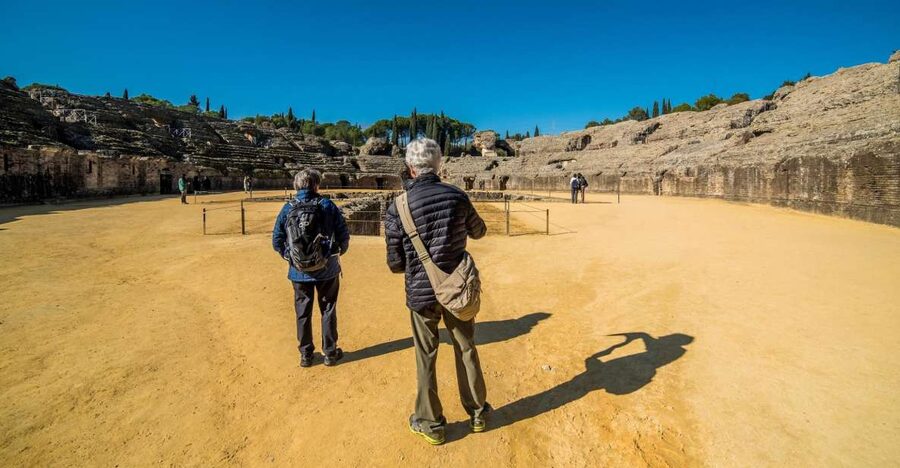
Once inside, the tour moves through the Archaeological Ensemble of Italica. This is not a museum-only visit. You walk outdoors among foundations, streets, public buildings, and preserved details from Roman homes.
A guide makes a real difference here. Without context, a low wall can look like little more than a low wall. With a good explanation, you can begin to see the room divisions, street layout, and purpose of the buildings around you.
The best guides turn ordinary fragments into usable pictures. Alberto has been praised for answering questions clearly and helping people picture the ancient city. Miguel has been singled out for mixing humor with solid explanations. José Luis, Jesús, Sergio, and Nieves have also received strong praise for their energy and command of the subject.
That quality is not guaranteed on every departure. One recent assessment found the guide pleasant and funny but not detailed enough, while another praised the explanation but wanted more free time. The lesson is simple: stay near the guide and ask questions early. If you drift to the back of the group, you may miss parts of the commentary.
The amphitheater, tunnels, and Roman spectacle
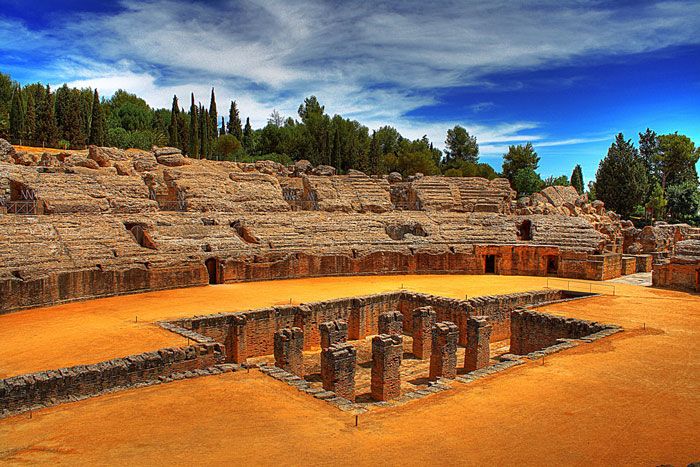
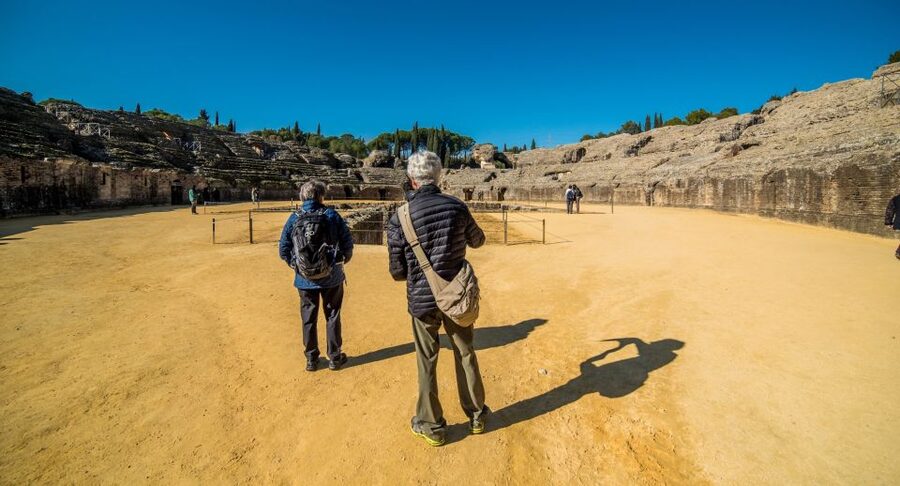
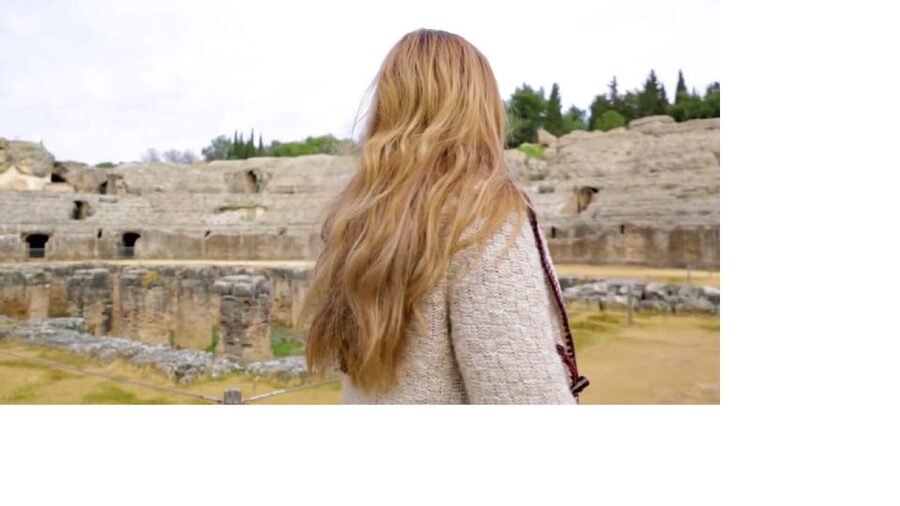
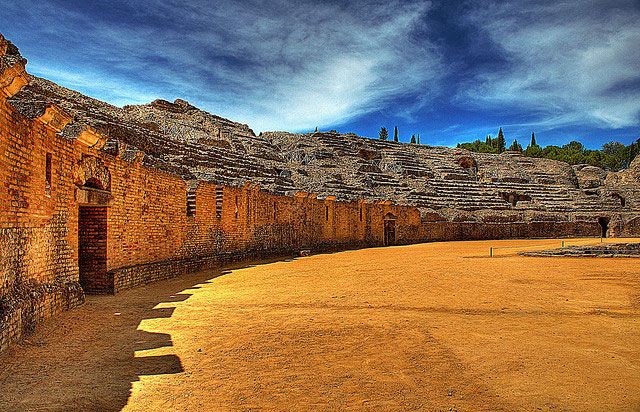
The amphitheater is the emotional center of the visit. It held about 25,000 people and is described as the third largest in the Roman Empire. That figure becomes easier to grasp once you see the broad oval arena and the seating rising around it.
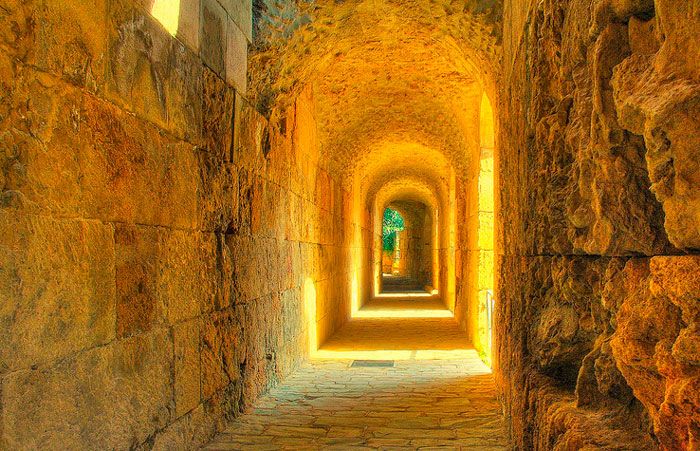
You can also walk through the tunnels beneath the seating. These passageways are one of the most memorable physical parts of the tour because they show how people, equipment, and performers could move around without crossing the main arena.
I like the amphitheater because it explains Roman public life better than a textbook can. The building was designed for crowds, spectacle, and control. Your guide’s stories can help you imagine how sound, movement, and ceremony worked in a place built to hold thousands of people.
The site has also attracted interest from fans of Game of Thrones, which used Italica’s amphitheater for filming. That connection may be what first brings you here, but the Roman site has enough substance to reward you even if you have never watched the series.
Expect a lot of walking and open-air exposure. One parent found the tour manageable with a four-year-old and a one-and-a-half-year-old, but recommended bringing a stroller. You cannot use it everywhere, yet it helped during the parts of the route where the ground allowed it.
Same base, a different kind of afternoon:
- Seville: Casa de la Memoria Flamenco Show
★ 4.8 · 12,964 reviews - Seville: 1-Hour Guadalquivir River Sightseeing Eco Cruise
★ 4.2 · 10,281 reviews - Seville: Cathedral, Giralda, and Royal Alcázar Guided Tour
★ 4.7 · 9,165 reviews - Seville: Setas de Sevilla Entry Ticket
★ 4.6 · 8,901 reviews
Mosaics, homes, baths, and the Traianeum
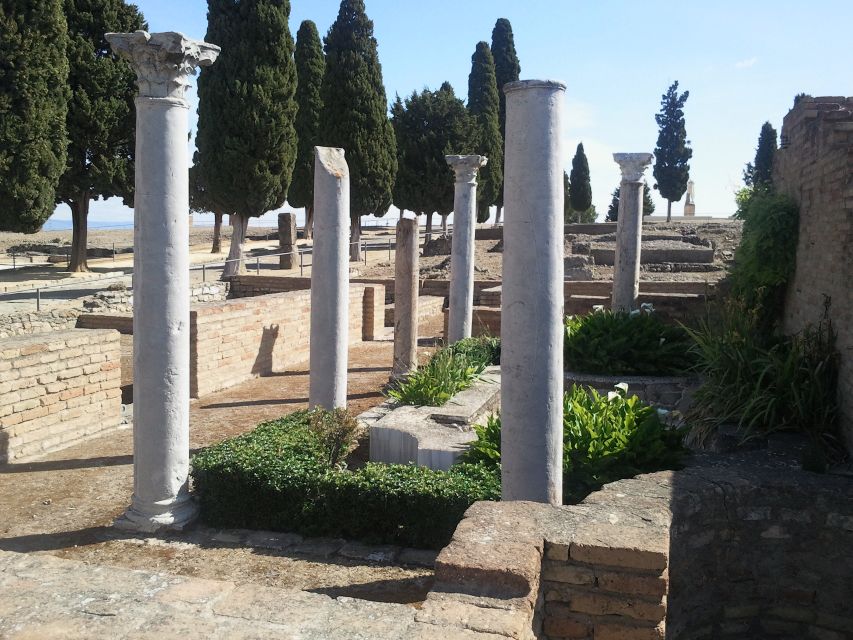
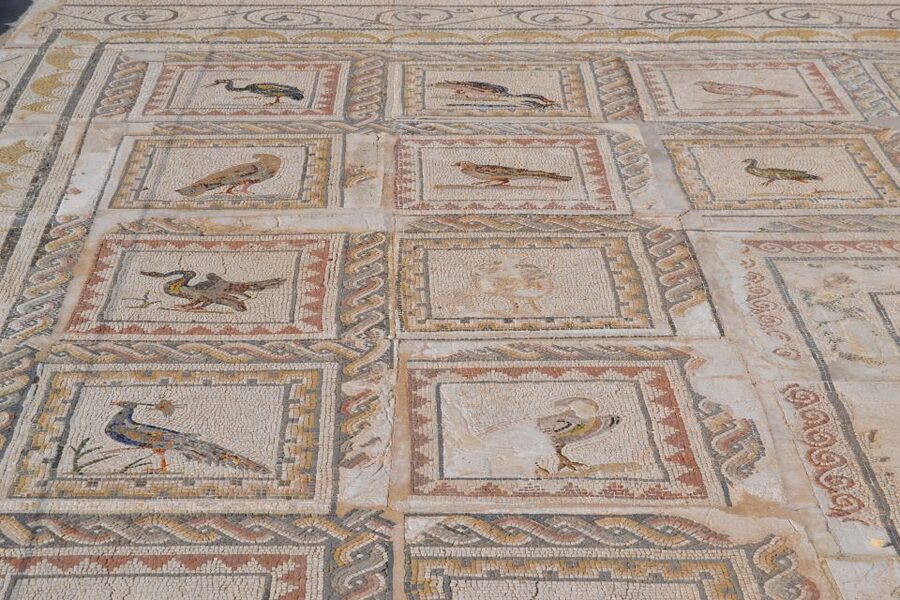
The mosaics are among Italica’s finest details. They survive in the floors of Roman houses, where geometric patterns and decorative scenes give you a glimpse of domestic taste and wealth.
I would not rush past them. The amphitheater is bigger and more dramatic, but the mosaics often provide the most intimate look at daily life. They suggest how rooms were decorated and how owners used design to display status.
The route also includes the Traianeum, statues of Diana, Venus, and Trajan, and the public baths. Each adds a different piece to the city.
The Traianeum reflects the official and religious side of Roman society. The statues connect the site to Roman gods and imperial power. The baths show that public buildings were not only practical. They were social spaces where people gathered as part of ordinary city life.
You may find these areas more rewarding after the guide explains their original purpose. This is one reason I would choose a guided visit rather than simply arriving alone with a map. The ruins are impressive, but the meaning is not always obvious from the surviving walls.
The Roman theater in Santiponce
The partially reconstructed Roman theater is in Santiponce, the modern town associated with Italica. It gives you a look at Roman performance and public entertainment beyond the amphitheater.
Because it is partly reconstructed, it has a different feel from the excavated streets and houses. Some visitors may find it easier to read, while others may prefer the rougher, more untouched remains of the main archaeological ensemble.
The theater also helps broaden the visit. Italica was not only a place for gladiatorial spectacles. It had several kinds of public buildings that served religious, political, social, and cultural purposes.
The exact order of the theater, main ruins, and any additional stop can change. The operator notes that unexpected circumstances may require adjustments. I would treat the published order as a plan rather than a promise.
The possible monastery stop and the question of free time
Some departures have included a visit to a monastery after Italica, along with light refreshments such as wine, bread, and cheese. Several people enjoyed this extra stop, describing the monastery as beautiful and a welcome addition.
Others did not care for the monastery visit and would have preferred more time at the Roman ruins. One person also said the monastery was not expected, which points to a practical issue: ask at the start whether it is part of your day’s route.
The supplied details present Italica and the Roman theater as the core experience, while the monastery appears as an additional or changing part of some tours. Do not book this trip solely for the monastery unless the operator confirms it for your departure.
If your priority is photography, close study of mosaics, or quiet exploration, this possible extra stop matters. The tour is designed to give you a guided overview, not a long unstructured archaeological visit.
Is $51 a fair price?
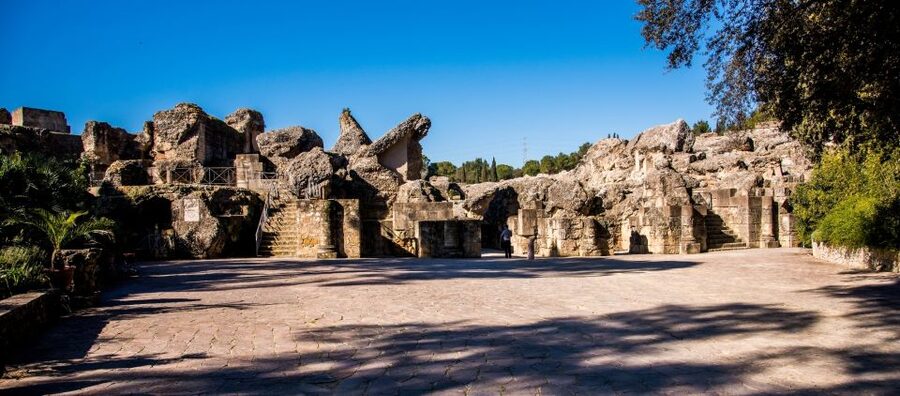
At $51 per person, the price is reasonable for a four-hour guided outing from Seville. You receive round-trip transport, entry to Italica, and an official tourist guide. That removes the separate cost and planning involved in reaching Santiponce and buying admission.
The value depends on how you like to visit ancient sites. If you want background, transport, and a clear route, the package makes sense. If you prefer to study every mosaic at your own pace, the price may feel less attractive because the guided schedule leaves limited free time.
An optional lunch is available for €18. Since it is not included, ask what the lunch involves and how much time it takes before accepting it. The same applies to any monastery or refreshment stop. The main price covers the Roman site, transport, and guide, not unspecified extras.
The strong overall rating of 4.4 from 139 assessments supports the basic value, but the lower scores point to the same limitations: pickup timing, mixed guide detail, and not enough independent time. Those are manageable concerns if you know what kind of outing you are buying.
Who will enjoy this Italica tour most?
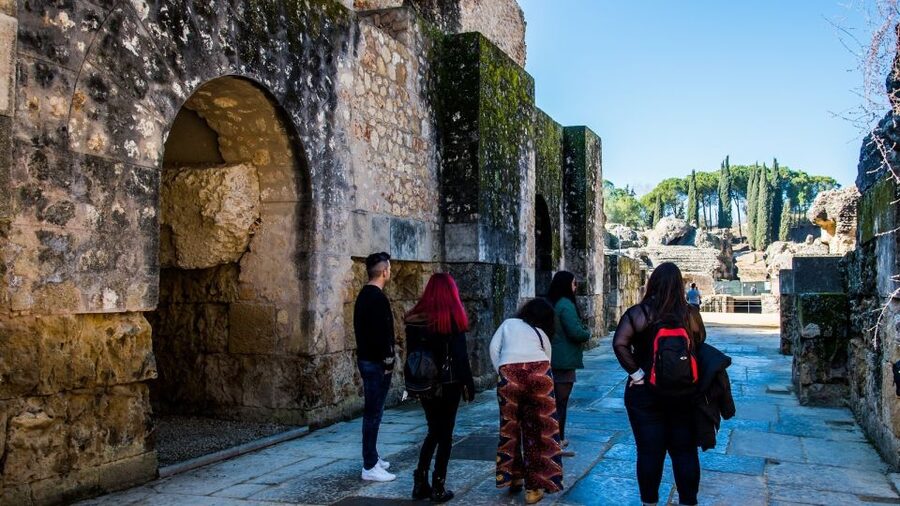
I would recommend it to first-time visitors to Seville who want a well-organized historical half-day without renting a car or figuring out regional buses.
It also suits:
- People interested in Roman Spain and imperial history
- Fans of ancient architecture and mosaics
- Families who prefer a fixed route and included transport
- Visitors who enjoy stories, anecdotes, and guided interpretation
- Anyone with only a few days in Seville who wants to see beyond the city center
It may be less suitable if you want a slow archaeological study. Photographers and serious history enthusiasts may wish for more time alone, especially around the amphitheater and mosaics.
The tour can work for children, but this is still an outdoor walking visit. Bring a stroller for very young children if needed, and prepare for sun or changing weather. A parent found the stroller useful even though it could not be used across the entire route.
Practical advice for a better visit
Wear shoes suited to outdoor walking and bring protection from the weather. The site is open and exposed, and one guide specifically advised coming prepared for the conditions.
Choose your pickup point carefully and arrive before the stated time. The stops are all central, but they are not interchangeable once the group begins assembling.
At the site, keep your group within sight. Large groups can make hearing difficult, especially when the guide is speaking near the amphitheater or among the houses. If you want the best explanation, stand close and avoid waiting until the end to ask your questions.
If you want photos without people in the way, use the moments when the guide is explaining a feature to look around the edges of the group. You should not expect a long photography break, so have your camera ready.
Italica also pairs well with Seville’s major monuments. One useful way to plan your visit is to see Seville’s cathedral and royal palace first, then visit Italica. The contrast helps you understand how Roman, Islamic, Gothic, and later Spanish culture overlap in Andalusia.
Should you book the Seville to Italica tour?
Book it if you want easy transport, included admission, and a guide who can make sense of a large Roman ruin. The amphitheater, underground passages, mosaics, baths, and imperial connections give the visit real substance, and the short ride from Seville makes it an efficient half-day.
Think twice if free exploration matters more to you than interpretation. The schedule can feel tight, the group may be large, and the monastery stop may reduce time at Italica on some departures.
For most visitors, I think the $51 cost is justified, especially if you are staying in central Seville and would otherwise need to arrange the trip yourself. Confirm the language, pickup point, and whether a monastery or lunch is planned, then book with realistic expectations: this is a guided introduction to one of Spain’s most important Roman sites, not a leisurely day of archaeological wandering.
FAQ
How long is the Italica tour from Seville?
The tour lasts four hours, including approximately 30 minutes of coach travel each way and about three hours at Italica.
How much does the tour cost?
The listed price is $51 per person.
What is included in the price?
Round-trip transportation between Seville and Italica, entrance fees to Italica, and an official tourist guide are included.
Where does pickup take place?
Pickup options are Calle Rastro 12A at 9:45, Hotel Don Paco at 9:50, and Calle Trajano 6 at 10:00.
Where does the tour return in Seville?
Drop-off is available at Calle Trajano 6, Calle Rastro 12A, or Hotel Don Paco.
Which languages are available?
The regular tour languages are English and Spanish. French, German, and Italian tours are available on request through the local operator.
Can I cancel the booking?
You can cancel up to 24 hours before the activity for a full refund.
Is lunch included?
No. An optional lunch is available for €18, but it is not included in the main tour price.
Will I have free time to explore Italica alone?
The visit is primarily guided, and free time may be limited. The order of visits can also change, so ask the guide at the beginning how much independent time is planned.
Recently listed in Seville
- Seville: Small Group Jewish Quarter Tour with Tapas & Drinks★ 5.0 · 119 reviews
- Seville: Alcázar Fast-Track Access with Guided Tour★ 4.2 · 432 reviews
- Seville: Small-Group Jewish Quarter Discovery Walking Tour★ 4.9 · 499 reviews
- Seville: VIP Exclusive Early Access Tour of The Alcazar★ 4.8 · 276 reviews
- Seville: Sunset Roof Top Walking Tour★ 4.5 · 122 reviews
- Seville: 3.5-Hour Spanish Cooking Class & Triana Market Tour★ 4.9 · 751 reviews
- Seville: Flamenco Show at Tablao Almoraima in Triana★ 4.6 · 483 reviews
- Seville: Authentic and Romantic Horse-Drawn Carriage Ride★ 4.5 · 341 reviews
City Tours, compared.



City Sightseeing Barcelona Hop-On Hop-Off Bus Tour: 24 or 48-Hour
Read our review →
Granada City Train 1 or 2-Day Hop-On Hop-Off Ticket
Read our review →
Barcelona City Tour Hop-On Hop-Off with Optional Boat
Read our review →Browse the lists this tour appears in