
Reviewed · HISTORICAL TOURS
Guided Tour Historic Town in small group
Start with the cathedral, then follow the stories. This small-group walking tour gives you a clear first look at Santiago de Compostela, moving from the grand Plaza del Obradoiro through old lanes, monastery squares, and the Mercado de Abastos. I especially like the low $14.51 price and the visit to the food market, which adds a useful local touch beyond the usual cathedral view.
I also like the human side of the tour. Guides such as Maria, Carolina, Veronica, and Mire have brought humor, practical advice, and plenty of historical detail to the walk. The main consideration is pace: some guides speak quickly, and Spanish names, outside noise, and a group of up to 30 can make it hard to catch every word.
At about 90 minutes, this is a good orientation tour, not a full cathedral visit or a scholarly lecture. You finish where you began, with a better sense of what to see next and where to return for food, further sightseeing, or a quieter look at the old quarter.
In This Review
- Key points to know before booking
- Why this $14.51 walk can be a smart first step
- Meeting beneath the cathedral in Plaza del Obradoiro
- Romanesque details in Praza das Praterias
- The Holy Door and Praza da Quintana de Vivos
- Monastery stories in Praza da Inmaculada
- Local food at the Mercado de Abastos
- What the guides do best
- Group size, headphones, and walking pace
- What is not included
- Who will get the most from this tour
- Should you book the Santiago historic town tour?
- FAQ
- Where does the tour begin?
- Where does the tour finish?
- How long does the tour last?
- Is the tour offered in English?
- Is entrance to Santiago Cathedral included?
- How large can the group be?
- Can I cancel for a full refund?
Key points to know before booking
- The tour begins under an orange umbrella in Plaza del Obradoiro, making the guide easier to find.
- The cathedral interior is not included, so plan another visit if you want to see the building inside.
- The Mercado de Abastos is part of the route, giving the walk a useful food and daily-life angle.
- English is offered, with headphone equipment used on at least some tours to help you hear the guide.
- The group can reach 30 people, though one especially praised outing had only eight.
- Book it early in your stay, since it works best as a first-day introduction to Santiago.
Why this $14.51 walk can be a smart first step
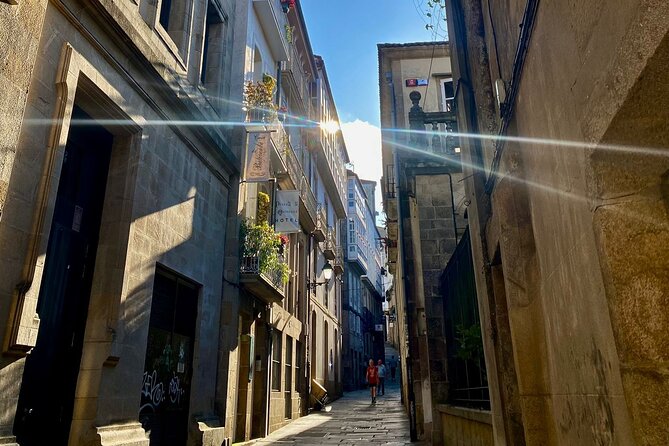
Santiago de Compostela rewards wandering, but the old center can feel confusing at first. The cathedral appears from several angles, squares change names quickly, and important buildings often sit behind plain stone walls. A guide helps you connect those pieces before you set off on your own.
At $14.51 per person, the price is unusually modest for a 90-minute tour led by an official tourist guide. You are paying mainly for orientation and interpretation, not entry tickets. Since each stop has free admission, the value comes from the explanations, local context, and chance to ask questions.
I would book this soon after arrival, especially if you have just completed the Camino. One of the strongest uses of the tour is as a gentle introduction the day after a long walk. You can see the major squares without committing to a long outing, then decide how much cathedral, museum, food, or free time you want afterward.
The tour is offered in English and is intended for most people who can take part in a normal city walking tour. Service animals are allowed, and the meeting point is near public transportation. The route ends back at the starting place, which makes it easier to continue with your own plans.
More History Tours in Santiago de Compostela:
- Madrid Essential: Historic Center, Plaza Mayor & Royal Palace
★ 5.0 · 6,416 reviews - Barcelona: Tapas Walking Tour with Food, Wine, and History
★ 4.8 · 4,261 reviews - Sevilla Food Tour: Tapas, Wine, History & Traditions
★ 5.0 · 3,468 reviews
Meeting beneath the cathedral in Plaza del Obradoiro
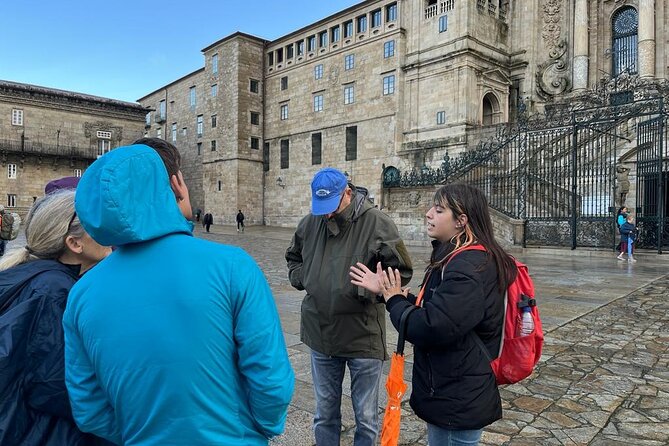
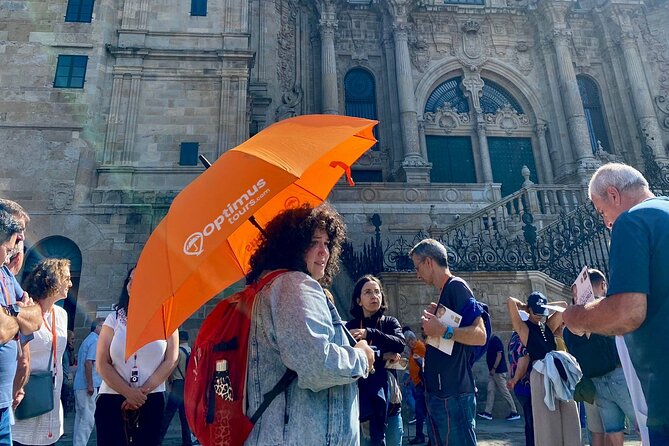
The walk begins in Plaza del Obradoiro, Santiago’s great arrival square. Look for the guide with an orange umbrella. That detail matters, because the open plaza can be busy and a guide holding a small sign would be easy to miss.
You begin with about 20 minutes here. This is the right place for an opening explanation because several major buildings frame the square, with the cathedral dominating the scene. A good guide can help you read the space before you start looking at individual details.
Carolina has been praised for bringing the past to life with humor and for offering useful suggestions about restaurants and other activities. Maria has also received strong praise for her clear explanations, warmth, and willingness to answer questions. You may not get one of these specific guides, but their approach gives you a sense of what the best version of the tour offers: a welcoming overview rather than a dry list of dates.
The square is also a practical place to ask your first questions. If you want to know how to return for a quieter look, where the cathedral visit fits into your day, or what to do after the walk, this is the time to ask.
Romanesque details in Praza das Praterias
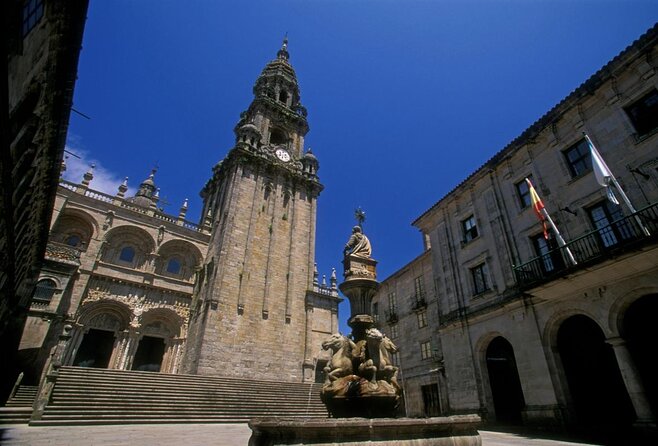
From the main square, the route moves to Praza das Praterias, where the guide explains the cathedral’s Romanesque façade. The stop lasts about 10 minutes, so expect a focused explanation rather than a detailed architectural class.
This part of the tour is valuable because a façade can look like a wall of stone until someone points out what you are seeing. You will hear the guide place the design in its historical setting and explain why this side of the cathedral matters.
The short stop also keeps the tour moving. If you enjoy architecture, you may want to return later and study the carvings at your own pace. The walking tour gives you a first reading of the façade, then leaves room for your own closer look.
One point to keep in mind is the listening conditions. Several comments praise the guides’ English, but some people found the pace quick. With Spanish place names and outdoor sound around you, do not hesitate to ask the guide to repeat an important point.
The Holy Door and Praza da Quintana de Vivos
The next stop is Praza da Quintana de Vivos, where the guide discusses the Holy Door and the monastery. This is one of the more meaningful parts of the route because it connects religious tradition, architecture, and the experience of arriving in Santiago.
The explanation is scheduled for about 10 minutes. That is enough to give you the basic story and show you where to look, but not enough for an extended treatment of every ceremony or architectural change. I see this as a preview that can shape a later visit.
The square also helps you understand how Santiago’s religious buildings relate to public space. Rather than seeing the cathedral as an isolated monument, you begin to see a network of doors, steps, walls, and monasteries around it.
If your main reason for booking is religious history, this stop will likely be one of the highlights. If you want a highly technical guide to church art, you may find the talk more general. The tour aims to make the old town understandable to a broad audience.
A few more Santiago de Compostela ideas to compare
- Santiago: Cathedral & Museum Tour + Pórtico of Glory Option
★ 4.7 · 2,116 reviews - From Santiago: Finisterre, Muxia & Costa da Morte Excursion
★ 4.7 · 1,481 reviews - Excursion to Finisterre + Muxia + Costa da Morte (7 stops)
★ 5.0 · 1,367 reviews - Finisterre and Costa da Morte: The Most Complete Tour of Santiago
★ 5.0 · 733 reviews
Monastery stories in Praza da Inmaculada
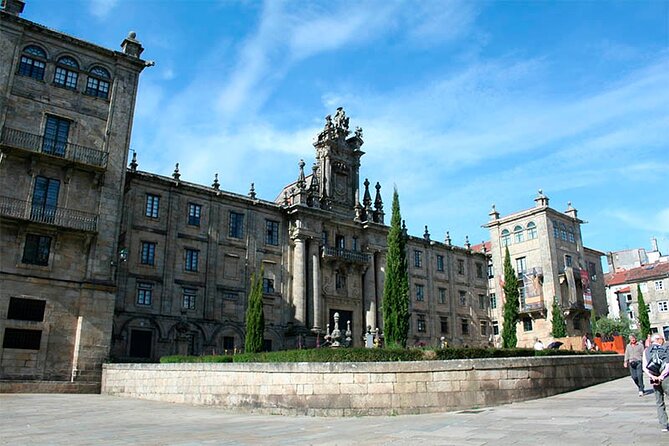
At Praza da Inmaculada, the guide turns to the Monastery of San Martín Pinario, the azabache tradition, and other local subjects. Azabache, or jet, is a distinctive Santiago craft material, and its appearance in the tour gives you something different from another cathedral-centered explanation.
This stop lasts around 10 minutes. The strongest guides use the time to mix major events with small details, which is why Maria and Veronica have been praised for combining broad context with fun facts. That balance suits this kind of walk. You get enough structure to understand the city, without spending the whole hour memorizing names.
The monastery discussion also gives you a sense of how much of Santiago’s identity grew around religious institutions. You may want to note the buildings and topics that interest you, then ask at the end if there is a suitable follow-up visit.
Keep your expectations in check. One description of the experience characterizes it as a casual walk and talk with limited historical detail. That is a fair warning for anyone hoping for a long specialist lecture. The quality depends partly on the individual guide and on how much detail the group can absorb while standing outdoors.
Local food at the Mercado de Abastos
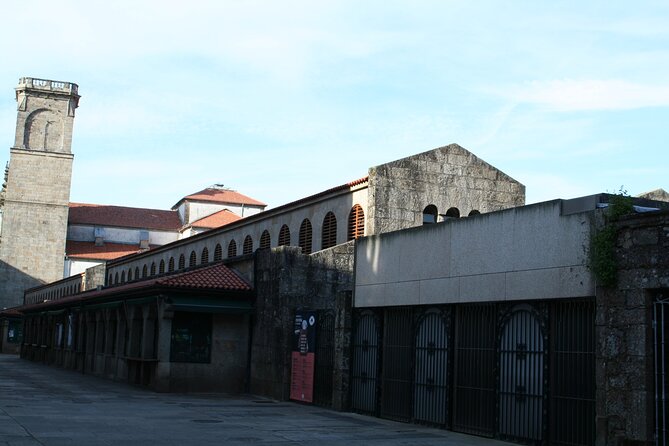
The final listed stop is the Mercado de Abastos de Santiago, where the guide explains the city’s gastronomic market. I particularly like this addition because it changes the rhythm of the tour. After several monumental squares and religious buildings, you get a look at a place tied to food and everyday life.
The market explanation takes about 10 minutes. It is not a cooking class or a tasting tour, and no food is listed as included. Instead, the guide helps you understand why the market belongs on your Santiago list.
A visit here can also shape your next meal. Veronica’s tour left one person planning to return to the market for dinner, while Maria was praised for restaurant and activity suggestions. You should ask for current ideas before the walk ends, especially if you want to eat close to the old center.
The market is a useful finishing point because it turns sightseeing into a practical plan. You leave with more than a set of monuments in your memory. You may also have an idea of where to shop, eat, or revisit later.
What the guides do best
The most praised part of this experience is the guide’s personal touch. Carolina has been described as well informed, funny, and able to connect history to real places. Maria receives repeated praise for her kindness, clear English, humor, and willingness to include questions. Veronica is noted for explaining the city’s buildings and history while making the market especially useful.
Mire has also been praised for providing a well-done introduction with a good mix of history and humor. These comments point to the tour’s main strength: it can make an unfamiliar city easier to read without making you feel like you are sitting in a classroom.
The guide is also there to help with the practical side of Santiago. You can ask about restaurants, later activities, the cathedral, and places worth returning to. That informal advice can be as useful as the official commentary, especially if you have only a short stay.
Still, guide quality and speaking pace can vary. One person found the amount of information almost too much and wished the guide would speak more slowly. Another found the walk more casual than substantial. The headphone system has worked well for some groups, allowing people to spread out while listening, but outdoor noise can still affect comprehension.
Group size, headphones, and walking pace
The maximum group size is 30. That is not a tiny private walk, so you should expect a shared experience rather than constant individual attention. A smaller group can feel more relaxed, and one highly praised outing had eight people, but the available information does not promise that size.
Headphones have been used on the tour, and they can help when the group is moving or standing in a large square. Maria’s use of the system was specifically praised because people did not need to stand shoulder to shoulder with her. That is a practical advantage in busy public spaces.
The route lasts about 90 minutes, although one guide extended the walk to nearly two hours. You should allow extra time if the guide is answering questions or if the group wants to include more than the basic route. If you have a train, meal reservation, or cathedral entry planned immediately afterward, leave a buffer.
The itinerary lists five main stops, with about an hour of stated stop time. The rest of the 90 minutes allows for walking, transitions, and explanation. You will be on foot in the historic center, so comfortable shoes are sensible, though the tour does not state a special footwear requirement.
What is not included
The price covers the official tourist guide. It does not cover entrance to Santiago Cathedral. This distinction is important because the tour explains the cathedral from the outside but does not replace a ticketed interior visit.
If you want to see the cathedral inside, arrange that separately and do not assume the walking tour gives you entry. One group extended its experience to include the cathedral and museum, but that was an additional arrangement, not part of the stated inclusions.
The free-admission stops keep the basic price low. You are not paying for a bundle of tickets you might not use. Instead, you get an introduction, then choose your own follow-up visits based on what interests you.
Who will get the most from this tour
I would choose this tour if you are new to Santiago, have limited time, or want a clear starting point before exploring alone. It is also a good fit after the Camino, when your legs may not be ready for another long day but you still want to understand the city.
Families and mixed-interest groups may like the balance of famous buildings, stories, humor, and food-market context. The tour is also useful for anyone who prefers to ask questions rather than read every detail from a guidebook.
You may want a different experience if you need a specialist architectural tour, a small private group, or a cathedral interior visit included in the price. You should also think twice if you find fast English difficult in noisy outdoor spaces. The guide can be excellent, but the setting still requires attention.
The free cancellation policy gives you some flexibility: you can cancel for a full refund up to 24 hours before the local start time. Changes or cancellations inside that 24-hour window are not accepted for a refund.
Should you book the Santiago historic town tour?
Yes, if you want an inexpensive first look at the old town and cathedral area. The $14.51 cost, English commentary, central meeting point, and market stop make this a strong value for a short orientation.
Book it early in your visit, and use the end of the walk to ask about restaurants, the market, the cathedral, and other places you want to see. Just remember that the experience is a guided introduction, not a full museum or cathedral tour. If you accept that limit, this short walk can give your Santiago visit a useful shape.
FAQ
Where does the tour begin?
It begins at Praza do Obradoiro in Santiago de Compostela. The guide will be waiting with an orange umbrella.
Where does the tour finish?
The tour ends back at the meeting point in Praza do Obradoiro.
How long does the tour last?
The listed duration is approximately 1 hour and 30 minutes. One guide-led outing lasted nearly two hours, so leaving a little extra time is sensible.
Is the tour offered in English?
Yes. English is the stated language offered for this experience.
Is entrance to Santiago Cathedral included?
No. Entrance to Santiago Cathedral is not included in the tour price.
How large can the group be?
The tour can have a maximum of 30 participants. Group size may be smaller, and one described group had eight people.
Can I cancel for a full refund?
Yes. You can cancel at least 24 hours before the local start time for a full refund. Cancellations or changes made less than 24 hours before the start are not accepted for a refund.
Recently listed in Santiago de Compostela
- Tapas Tour of Santiago de Compostela★ 4.5 · 191 reviews
- Guided tour of Bodegas Granbazán★ 5.0 · 101 reviews
- Masaje del Peregrino★ 5.0 · 243 reviews
- Private tours Santiago de Compostela : choose your option★ 5.0 · 120 reviews
- From Santiago: Lugo & Cathedrals Beach Guided Excursion★ 4.5 · 174 reviews
- Visit to the Cathedral of Santiago + Portico de la Gloria Option★ 4.5 · 503 reviews
- Excursion From Santiago to: Lugo, Catedrais Beach and Asturias★ 5.0 · 158 reviews
- Santiago de Compostela: Finisterre, Costa da Morte, Ézaro, Muros & Carnota★ 4.5 · 220 reviews
Historical Tours, compared.
Madrid Essential: Historic Center, Plaza Mayor & Royal Palace
Read our review →
Tapas Walking Tour with Food, Wine, and History
Read our review →
Sevilla Food Tour: Tapas, Wine, History & Traditions
Read our review →
Valencia Old Town Tour with Wine & Tapas in 11th Century Historic Monument
Read our review →
Barcelona Tapas Walking Tour: Food, Wine & History
Read our review →
Ultimate Seville Tapas, Wine & History Small Group Tour
Read our review →
Skip-the-Line Great Mosque-Cathedral History Tour
Read our review →
Browse the lists this tour appears in