
Reviewed · PRADO MUSEUM TOURS
Madrid: Prado Museum Masterpieces Tour with Entry Ticket
The Prado rewards a plan. This three-hour visit makes Madrid’s vast picture collection easier to understand, with art restorer Delfi guiding a small group through major works by Titian, El Greco, Rubens, Velázquez, Goya, and others. I especially like the chronological route and the way Spanish royal history is tied to the paintings, rather than treated as a separate lecture. The main drawback is simple: three hours gives you a strong introduction, not a complete tour of the museum.
I also like the group limit of seven people. You can ask questions, get closer to the pictures, and keep up with the guide without being swallowed by a large crowd. Delfi’s use of headsets is another practical touch, especially in busy galleries. Still, this is an intense art-history session, so you should bring comfortable shoes and expect plenty of standing and walking.
In This Review
- What makes this Prado tour worth considering
- Meeting Goya before entering the Prado
- Understanding the Prado building and collections
- Following four centuries in chronological order
- Titian, El Greco, Rubens, Velázquez, and Goya
- Learning how to read a painting
- A small group that keeps the tour personal
- Why three hours is the right length
- Is $74 a fair price?
- Who will get the most from this experience?
- Practical details before you go
- Should you book the Prado masterpieces tour?
- FAQ
- How long does the Prado Museum tour last?
- What language is the tour conducted in?
- How many people are in the group?
- Where do I meet the guide?
- Is the Prado entry ticket included?
- What should I bring, and what is not allowed?
What makes this Prado tour worth considering
- A chronological route from the 15th to 19th centuries: You see artistic change as a connected story, not a random parade of famous canvases.
- Delfi’s restoration background: Her training helps her discuss technique, materials, condition, and the small visual clues that are easy to miss.
- A maximum of seven participants: The small group leaves room for questions and makes it easier to hear explanations.
- Spanish history beside European art: The tour links artists to the Hispanic Monarchy, royal patrons, religion, politics, and cultural change.
- A focused selection of masterpieces: You see the works most visitors hope to find, along with additional paintings that help connect the main themes.
- A useful first visit: If the Prado feels overwhelming, this route gives you a working map of what matters and why.
Meeting Goya before entering the Prado

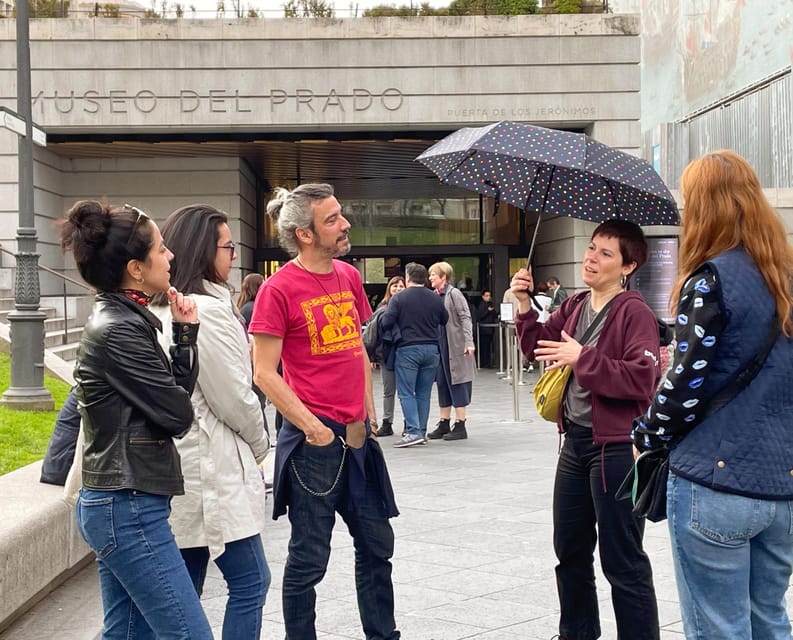
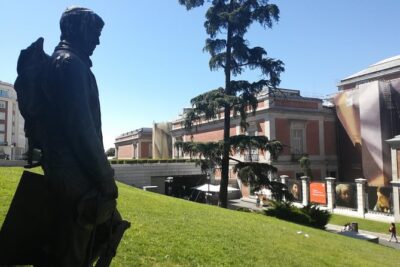
The tour begins beside the Monumento a Goya, a sensible meeting point for a visit centered on one of Spain’s greatest painters. Look for the guide carrying a dark gray umbrella with colorful polka dots. That detail may sound small, but it can save time when several groups gather near the museum.
The meeting point also gives Delfi a chance to set the scene before you enter. The Prado is not simply a large building filled with old paintings. Its collection grew from royal holdings, and the museum’s story is closely tied to Spain’s monarchy and its political reach across Europe.
The opening explanation covers the origin of the building and the origin of the collections. This matters because it changes how you look at the rooms inside. You are not just seeing isolated works selected by chance. You are seeing paintings connected to royal taste, court priorities, religious commissions, and the cultural ambitions of Spain.
More Museum Tours in Madrid
- Madrid: Prado Museum Entry Ticket
★ 4.6 · 17,509 reviews - Madrid: Reina Sofía Museum Entrance Ticket
★ 4.5 · 6,889 reviews - Madrid: Small Group of Prado Museum Tour & Optional Tapas
★ 4.6 · 2,437 reviews
Understanding the Prado building and collections
Before the painting tour gets moving, you learn why the Prado exists in its present form and how its collection took shape. That introduction helps answer a basic question many first-time visitors have: why are these particular artists and subjects gathered here?
The answer is tied to Spain’s rulers and their links with other European courts. Artists such as Titian and Rubens were not simply admired from a distance. Their work had a place in the world of royal patronage, diplomacy, religion, and power.
I find this kind of introduction useful because it gives the museum a clear purpose. Without it, you can spend hours looking at magnificent paintings without understanding why one artist mattered so much to Spain, or why certain subjects appear again and again.
The drawback is that every minute spent on background is a minute not spent in front of a painting. That tradeoff is worthwhile for most first-time visitors, but art lovers who already know the Prado may prefer to move straight to specific rooms.
Following four centuries in chronological order
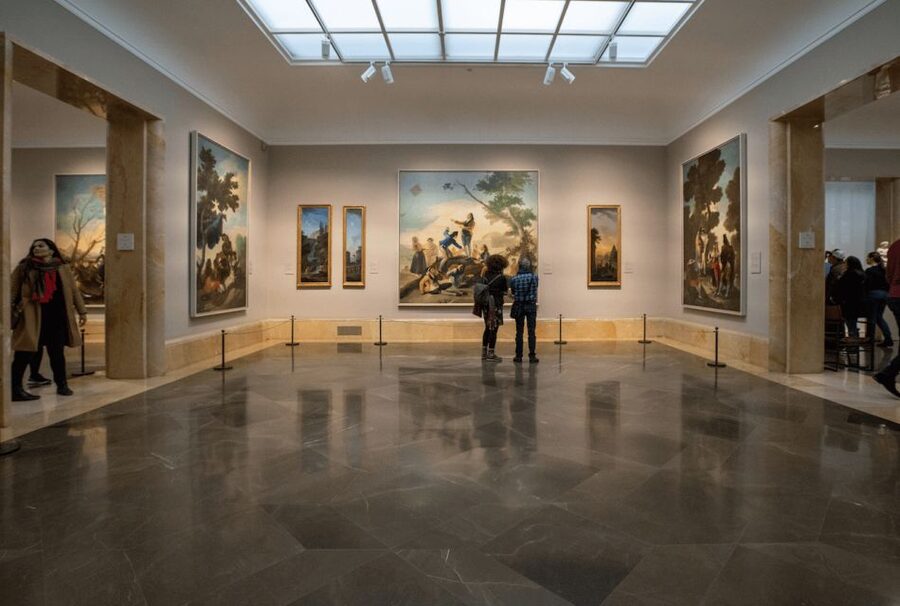
The central idea is easy to follow: move from the 15th century toward the 19th, watching artistic styles, subjects, and techniques change over time. This structure is one of the tour’s strongest features because it lets you compare artists rather than study each one in isolation.
You can expect the route to focus on artists who worked in Spain or served the Hispanic Monarchy. Titian, El Greco, Rubens, Velázquez, and Goya receive special attention, among others. The exact selection may vary, but the purpose is clear: show how the Prado’s art reflects both European exchange and Spain’s own cultural identity.
A chronological route also helps if you are not comfortable with art history. You do not need to arrive with a list of dates or movements. The guide provides the order, then explains how one generation of artists responded to earlier ideas.
This is not a quick walk past a dozen famous pictures. Delfi spends time on the background, subject, symbolism, and visual choices of the works she selects. That depth explains why the three-hour duration is useful. A shorter visit could show you the same names, but it would leave less room to understand them.
Titian, El Greco, Rubens, Velázquez, and Goya
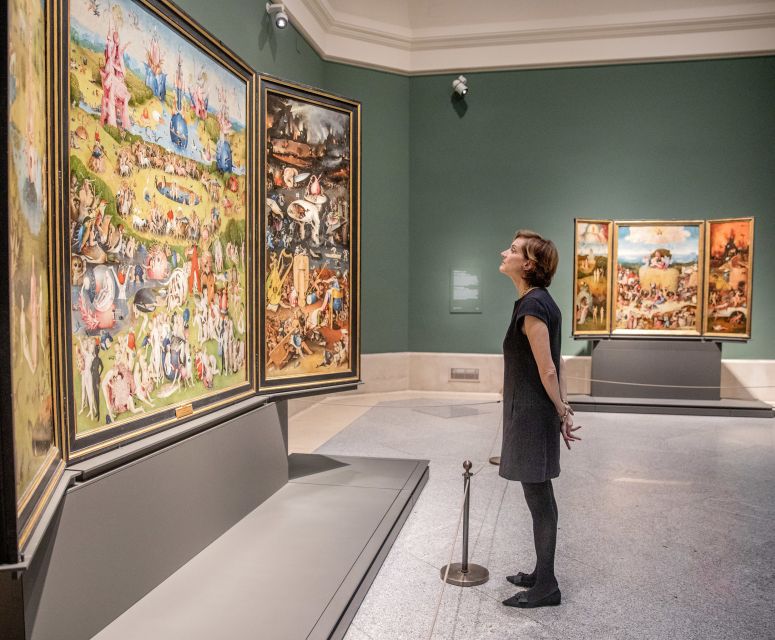
The tour’s artist list covers a large span of European painting. Titian represents the power of Venetian color and the reach of Italian art. El Greco brings a very different energy, with elongated figures and an unmistakable spiritual intensity.
Rubens opens another window onto court culture and Flemish painting. His connection to European rulers helps show how artists, patrons, and political networks crossed national borders long before modern tourism made those connections easy to see.
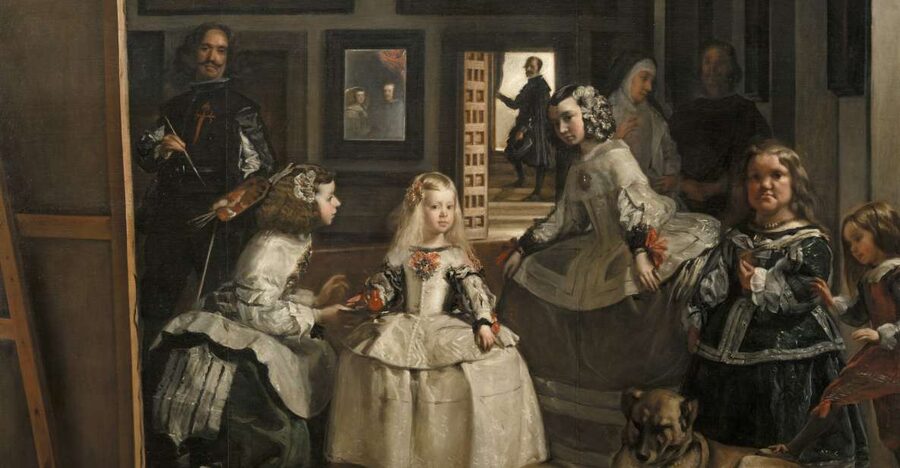
Velázquez is central to any serious visit to the Prado. His work brings together court portraiture, observation, status, and questions about what painting can actually do. A guide can point out why a picture matters beyond its fame, including the relationship between figures, the viewer, and the act of looking.
Goya carries the story into a later and more troubled period. Beginning near his monument gives the visit a fitting frame, although the tour does not simply focus on him. His paintings help show how Spanish art changed as the country faced shifting political and social conditions.
The value here is not just seeing famous names. Delfi connects artists and works through influence, technique, historical events, and changes in taste. I like that approach because it gives you a way to keep thinking after you leave the museum.
More Prado Museum tickets:
- Madrid: Prado Museum Guided Tour with Skip-the-Line Ticket
★ 4.5 · 2,018 reviews - Madrid: Prado Museum Guided Tour With Fast Access
★ 4.8 · 1,785 reviews - Prado Museum Small Group Tour with Skip the Line Ticket
★ 5.0 · 1,738 reviews - Royal Palace & Prado Museum Skip the Line Guided Tour
★ 4.5 · 1,347 reviews
Learning how to read a painting
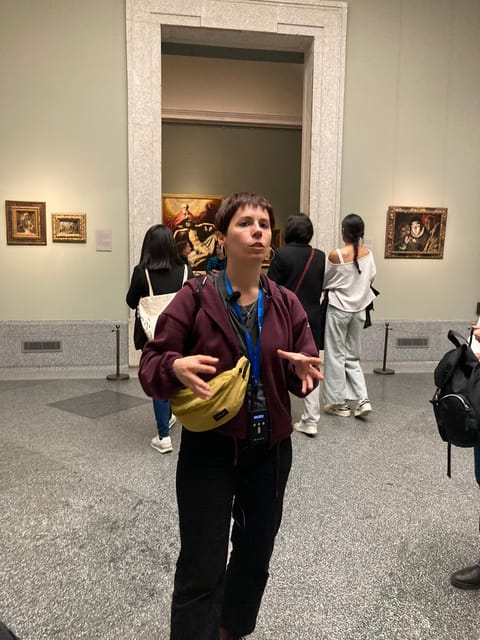
A good museum guide does more than identify a canvas. Delfi’s approach is designed to help you read what is in front of you. That can include the arrangement of figures, gestures, color, light, symbols, religious meaning, and the artist’s method.
This is especially helpful at the Prado, where many paintings are large, detailed, and filled with references that are not obvious to a modern viewer. A guide can direct your attention to the corner of a picture, a repeated object, or a change in technique that you might otherwise pass over.
Delfi’s background as a visual artist and art restorer adds a useful angle. Restoration requires close attention to how a work is made and how it has changed over time. You should not expect a technical conservation course, but her experience supports a more careful look at the physical and artistic choices in the paintings.
The explanations are also designed to stay approachable. The tour combines art, history, religion, and politics in a way that works for people with different levels of museum experience. Beginners get a clear path into the collection, while experienced museum visitors can gain new comparisons and context.
A small group that keeps the tour personal
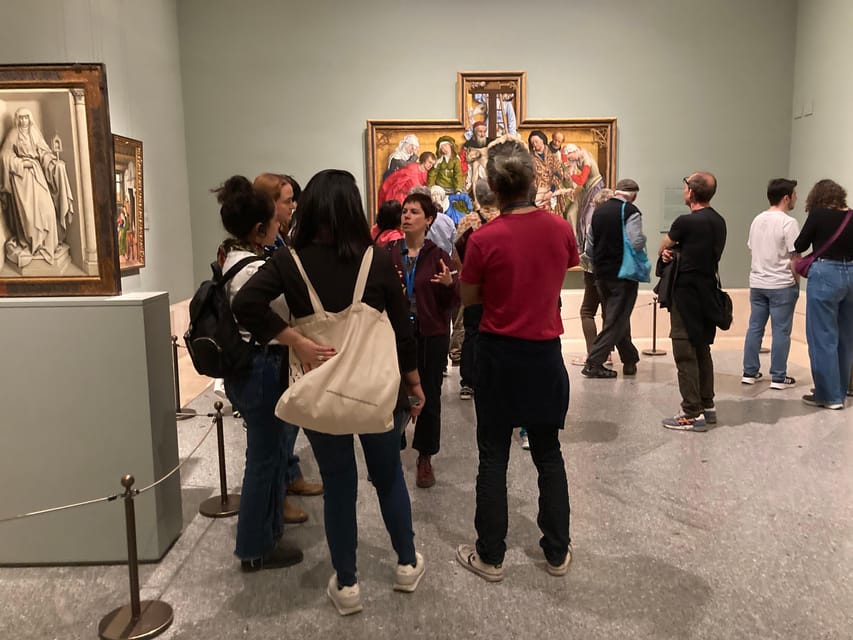
With no more than seven participants, this is far more personal than a standard large museum group. You can ask a question without stopping an entire crowd, and the guide can adjust the pace when someone wants another look.
That flexibility matters at the Prado. Some works need only a short explanation, while others reward more time. A small group makes it easier to pause without creating confusion.
The headsets are another strong practical feature. In crowded rooms, you can listen to Delfi while looking at the painting instead of standing shoulder to shoulder around her. The clear audio is particularly useful if you have hearing concerns or simply want to focus on the details.
The small group does not mean the museum will feel quiet. The Prado can be busy, and the tour still involves walking between rooms and standing in front of popular works. But the format reduces the usual problem of losing the guide in a crowd.
Why three hours is the right length
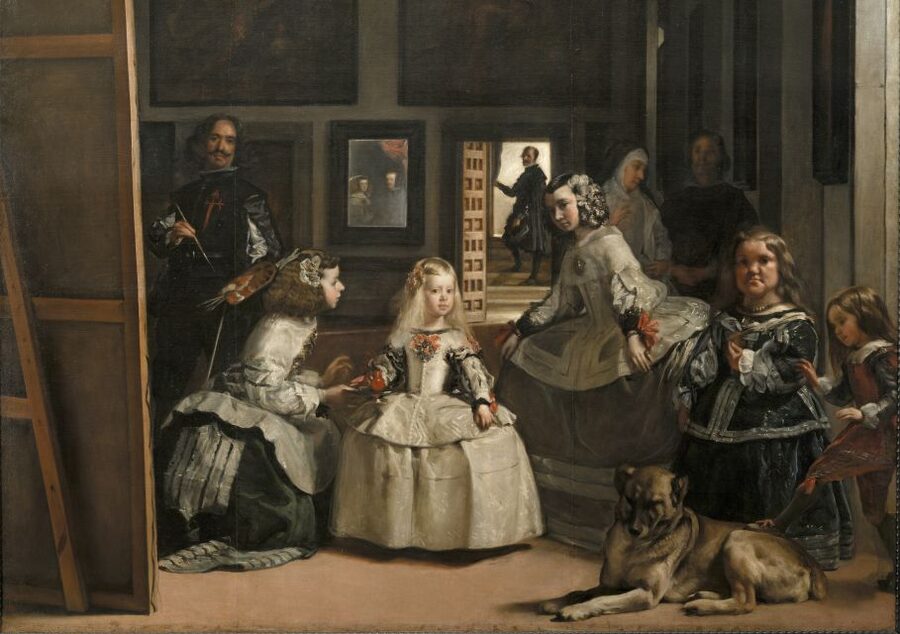
Three hours may sound long if you are not a regular museum visitor. In practice, the time works because the Prado is too large for a meaningful first visit in a hurry.
The tour gives you enough time to cover several periods, explain major artists, compare styles, and answer questions. The sequence also helps the hours pass quickly because each room contributes to the larger story.
Still, you should plan your energy carefully. Wear comfortable shoes, arrive ready to walk, and avoid scheduling another demanding activity immediately afterward. This is not a casual 45-minute highlight sprint.
You will not see every important painting in the Prado. That is impossible in three hours, and any tour promising otherwise would be misleading. Instead, you get a selected route through the museum’s most important works, plus additional pieces that help explain the connections between them.
For a first visit, I consider that a sensible bargain. You leave with a better idea of what you saw and a useful list of works to revisit later.
Is $74 a fair price?
The cost is $74 per person, including the Prado entry ticket, guide, and small-group format. That is not a budget museum outing, especially if you are traveling with several people.
The value depends on what you want from the visit. If your plan is simply to enter, wander, and look at a few famous paintings, buying a guided experience may feel expensive. If you want a structured introduction to one of Europe’s major collections, the price covers more than admission.
You are paying for three hours of organization, interpretation, historical background, and help with navigation. The group limit of seven is important here. A large tour may cost less, but it usually offers less room for questions and personal attention.
I would consider the price reasonable for a first-time visitor who might otherwise feel lost. It is also a good fit for couples or families who want to make one serious museum visit rather than return several times.
The value is less clear for someone who already knows the Prado well or has a strong art-history background. In that case, you may prefer independent time with specific painters or galleries.
Who will get the most from this experience?
This tour suits you best if you are visiting the Prado for the first time, feel unsure where to begin, or want the collection explained in plain English. It also works well if you like history and politics alongside painting.
Families can benefit from the pace and storytelling. One parent’s interest in art does not have to leave everyone else behind, since the guide works to keep the group engaged. The small size also helps younger visitors ask questions without feeling lost in a crowd.
Experienced museum visitors may enjoy the connections between artists and the close attention to historical setting. One couple with a strong background in art history still found that the guide added useful insight to familiar works.
You may want to skip this tour if you dislike guided visits, prefer complete freedom to linger, or already have a detailed plan for the museum. Three hours is a firm commitment, and the chronological route may not match your personal priorities.
Practical details before you go
The tour is conducted in English and is wheelchair accessible. You need to bring a passport or ID card, and all visitors must send their belongings through an X-ray scanner before entry.
Food and drinks are not allowed inside. Large bags and luggage are also prohibited, so do not arrive with your main suitcase. Photography inside is not allowed, which means you should plan to experience the paintings directly rather than document the entire route.
The activity lasts three hours, with starting times dependent on availability. Free cancellation is offered up to 24 hours in advance for a full refund, and you can reserve now and pay later.
Arrive at the Monumento a Goya with enough time to find the meeting point. The colorful polka-dot umbrella is the marker to watch for. Comfortable shoes are not optional advice here; they are the sensible choice.
Should you book the Prado masterpieces tour?
I would book this tour if you have limited time in Madrid and want the Prado to make sense, not just look impressive. Delfi’s art-restoration background, clear English, historical storytelling, and friendly style give the visit a strong human guide.
The best reasons to choose it are the seven-person limit, the chronological route, and the attention to connections between artists. You will see the major names, but you will also understand why they belong together.
Skip it if you want a quiet, self-directed visit or only have enough energy for a short museum stop. For everyone else, the $74 fee is a fair exchange for a focused three-hour introduction to one of Madrid’s essential sights.
FAQ
How long does the Prado Museum tour last?
The tour lasts three hours. It covers selected works from the 15th through the 19th centuries.
What language is the tour conducted in?
The live tour guide speaks English.
How many people are in the group?
The tour is limited to seven participants, making it easier to ask questions and hear the guide.
Where do I meet the guide?
Meet next to the Monumento a Goya. The guide carries a dark gray umbrella with colorful polka dots.
Is the Prado entry ticket included?
Yes. The Prado Museum entry ticket is included in the price.
What should I bring, and what is not allowed?
Bring a passport or ID card and wear comfortable shoes. Food, drinks, luggage, large bags, and photography inside the museum are not allowed. All belongings must pass through an X-ray scanner.
Recently listed in Madrid
- Madrid: Don Quixote de la Mancha Windmills & Toledo Tour★ 4.9 · 254 reviews
- Tour Madrid: Secrets in a Electric Tuk Tuk★ 4.6 · 155 reviews
- Madrid: Toledo Day Trip with Winery Visit and Wine Tasting★ 4.4 · 177 reviews
- Madrid: Guided Tour of Toledo with Cathedral Visit★ 4.3 · 399 reviews
- Madrid: 6-Hour Day Trip to Toledo with Guided Walking Tour★ 4.0 · 865 reviews
- Madrid: Tasty Tapas Tour & Visit to a Terrace with Views★ 4.5 · 118 reviews
- Madrid: Flamenco Show&Drink at Tablao 1911 (World’s Oldest)★ 4.7 · 253 reviews
- Madrid: Street Art Tour with Local Graffiti Hunter★ 4.8 · 270 reviews
Prado Museum Tours, compared.

Small Group of Prado Museum Tour & Optional Tapas
Read our review →
Prado Museum Guided Tour with Skip-the-Line Ticket
Read our review →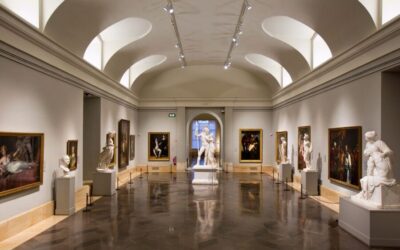
Prado Museum Small Group Tour with Skip the Line Ticket
Read our review →
Royal Palace & Prado Museum Skip the Line Guided Tour
Read our review →

Prado Museum Guided Tour with Skip-the-Line Ticket
Read our review →Browse the lists this tour appears in