
Reviewed · MUSEUMS
Madrid: Reina Sofía Museum Guided Tour
Guernica changes the mood. This 75-minute Reina Sofía tour gives you a clear path through Spain’s modern art, from Cubism and Surrealism to Picasso’s monumental anti-war painting. I especially like the guide-led explanations of symbolism and technique, plus the chance to remain inside and explore on your own after the tour. The main drawback is pace: 75 minutes is enough for the major works, but the museum is large, and some guides may move quickly to cover the highlights.
I also like that the tour begins with the building itself, a former hospital with handsome vaulted corridors and gardens outside. Guides such as Helena, Paula, Alex, Livia, and Nerea have earned praise for making difficult art easy to approach, often by asking what you see before explaining the work. The tour is bilingual in English and Spanish, so English-speaking visitors should confirm the language arrangement when booking.
In This Review
- Key points to know before you book
- Why the Reina Sofía deserves a place in your Madrid plans
- Meeting at C. de Sta. Isabel, 52
- The former hospital makes a memorable entrance
- A guided route through Cubism, Surrealism, and abstract art
- Picasso’s Guernica is worth the guided build-up
- Dalí, Miró, and the wider Spanish collection
- How the 75 minutes actually feels
- Photography, bags, and access
- Is $38 a fair price?
- Who should book this Reina Sofía tour?
- Final verdict: book it for context, not just entry
- FAQ
- How long is the Reina Sofía guided tour?
- What languages are available?
- Is museum admission included?
- Is transportation included?
- Can I take photographs inside?
- Is the museum wheelchair accessible?
Key points to know before you book
- Picasso’s Guernica is the emotional centerpiece: The tour builds toward one of the most powerful anti-war paintings of the 20th century.
- The route explains art movements clearly: You move through Cubism, Surrealism, abstract art, and modernism rather than seeing unrelated paintings without context.
- The museum building is part of the visit: Former hospital rooms, vaulted hallways, and outside gardens add another layer to the experience.
- The guide helps with challenging art: Symbolism, unusual shapes, and abstract ideas become easier to read with a trained explanation.
- You can stay after the guided portion: Once the 75-minute tour ends, you may continue exploring the museum independently.
- The pace may feel brisk: You see a selected group of major works, not every gallery, and one visitor found the tour shorter than expected.
Why the Reina Sofía deserves a place in your Madrid plans
Madrid is famous for its older masters, but the Reina Sofía gives you a different view of Spain. Its focus is Spanish art from the 20th century onward, with major works by Pablo Picasso, Salvador Dalí, and Joan Miró.
That focus makes the museum a useful counterpoint to the Prado. The Prado is the place for Velázquez, Goya, and earlier European painting. The Reina Sofía asks different questions: What happens when artists break the rules of perspective? How can a painting show fear, war, memory, or dreams? Why might a work look confusing at first and still be carefully constructed?
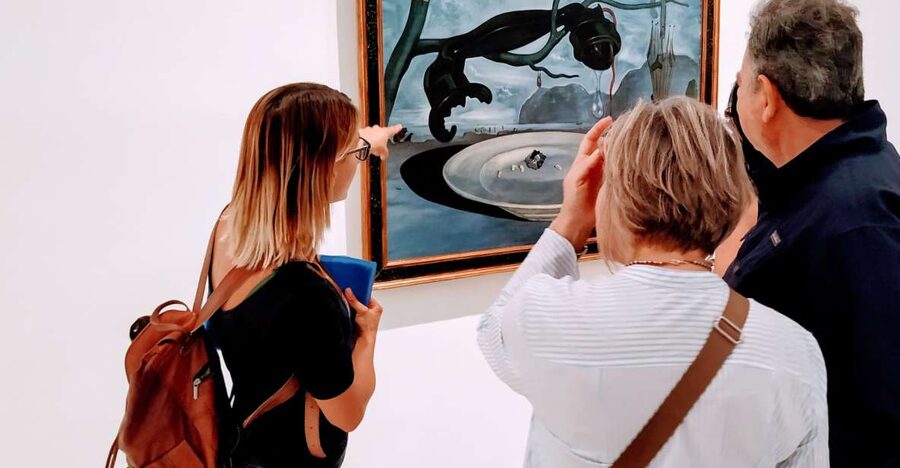
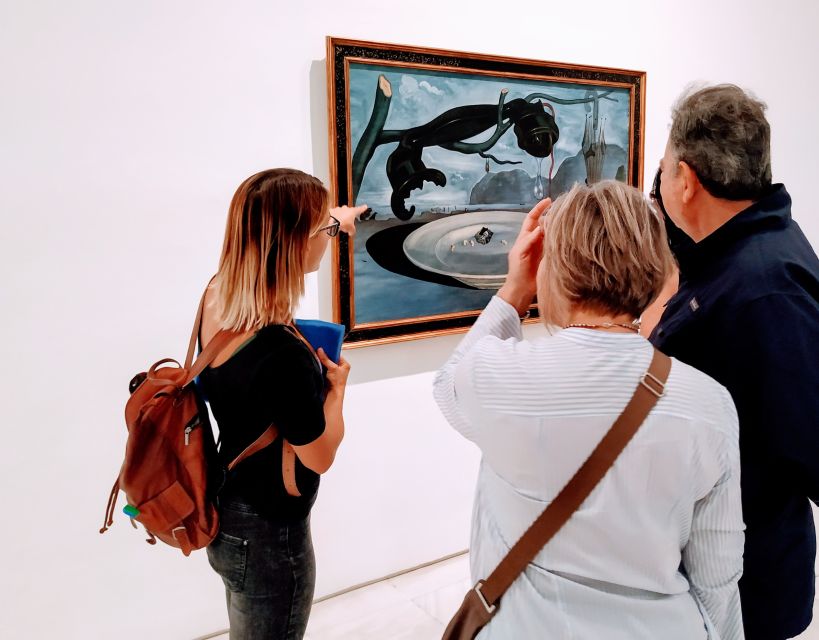
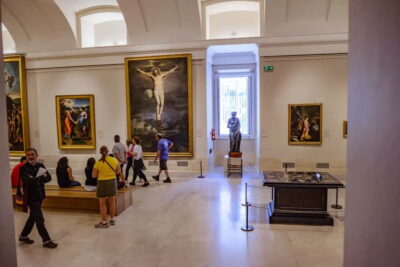
I think a guided visit helps here because modern art can be easy to rush past. A guide can point out a repeated shape, a distorted face, or a strange grouping of objects that you might otherwise miss. The best guides on this tour also connect the painting to the artist’s life and the period when it was made.
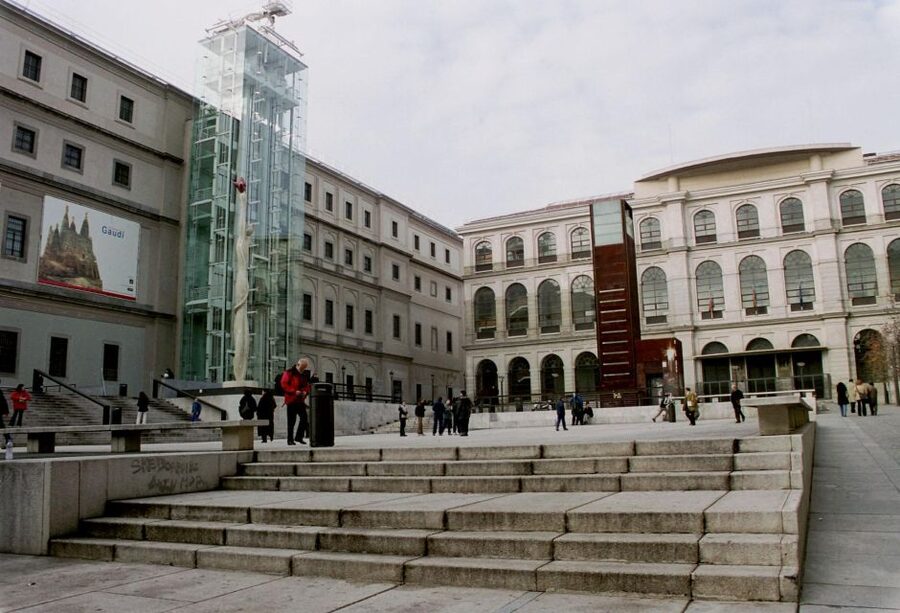
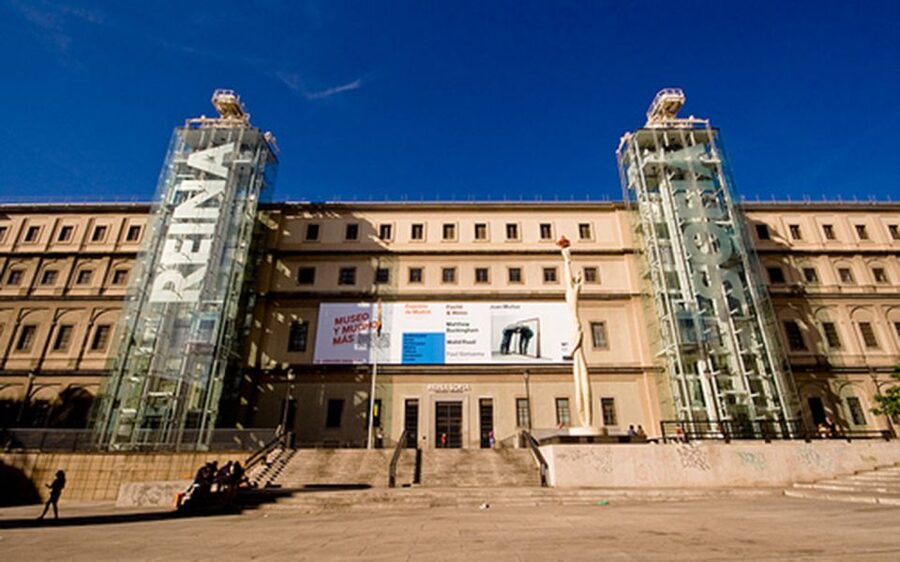
The museum itself adds interest. It occupies a former hospital building, and the vaulted corridors give the galleries a grand, slightly unexpected setting. The visit may include a walk through the gardens so you can see the building from outside. That short change of scene is welcome after standing in crowded galleries.
More Museum Tours in Madrid
- Madrid: Prado Museum Entry Ticket
★ 4.6 · 17,509 reviews - Madrid: Reina Sofía Museum Entrance Ticket
★ 4.5 · 6,889 reviews - Madrid: Small Group of Prado Museum Tour & Optional Tapas
★ 4.6 · 2,437 reviews
Meeting at C. de Sta. Isabel, 52
The listed starting point is at C. de Sta. Isabel, 52, beside the Reina Sofía. Your exact meeting arrangement can vary according to the option you book, so read the meeting instructions carefully before setting out.
There is no transportation included. You make your own way to the museum, which is worth remembering if you are planning a packed day elsewhere in Madrid. Allow enough time to find the meeting point and enter the right part of the complex. Being late can create stress, especially if the guide has already taken the group into the galleries.
The experience includes museum admission and skip-the-ticket-line access. That matters most at busy times, when waiting outside can eat into your museum time. It does not mean you have unlimited access to every special exhibition or every possible museum service, so check the details attached to your selected booking.
Comfortable shoes are a simple but useful choice. You will be on your feet in galleries and corridors, and the tour is built around walking from one work to another rather than sitting through a lecture.
The former hospital makes a memorable entrance
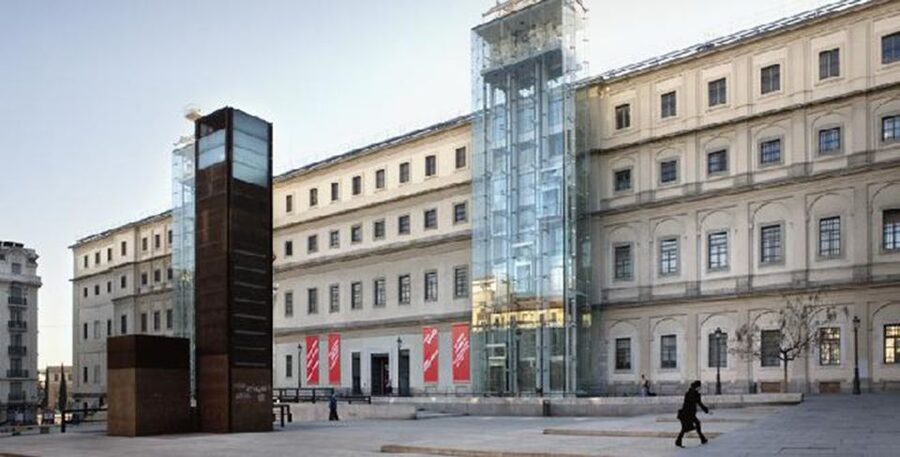
Before the art takes over, look up and around. The Reina Sofía’s former hospital structure gives the visit a sense of place that a plain modern gallery would not have. The vaulted passageways make the building feel more like a historic Madrid institution than a neutral art container.
That setting also helps you understand the museum’s character. This is not only a room filled with famous paintings. It is a place where Spanish art, politics, social change, and new artistic ideas meet.
A short garden walk can provide a better view of the exterior. It is not the main reason to book the tour, but it helps you see how the museum has been adapted from its earlier use. If you enjoy architecture, pay attention during this part instead of treating it as a simple transfer between galleries.
A guided route through Cubism, Surrealism, and abstract art
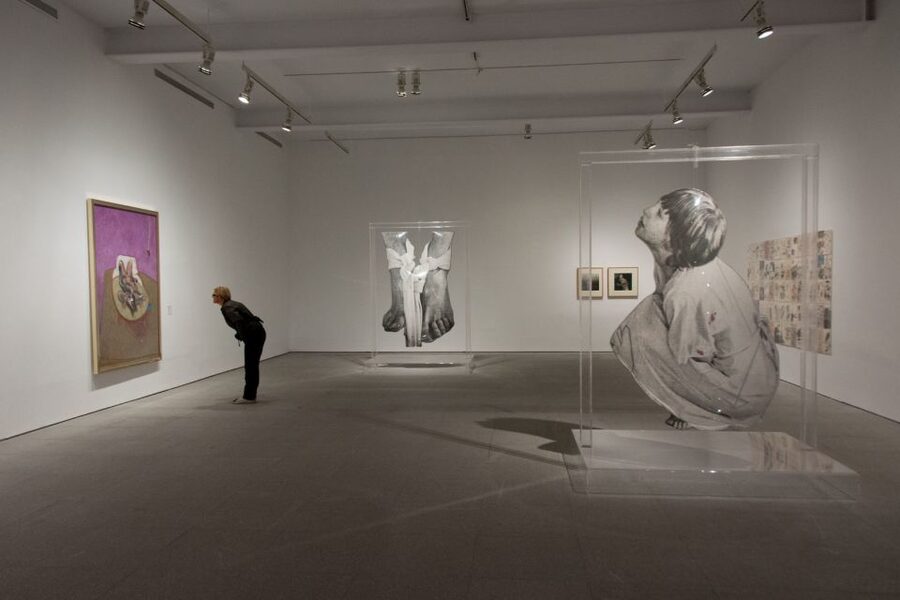
The guide leads you through selected works rather than attempting to cover the entire museum. The usual emphasis is on major Spanish artists and key 20th-century movements, including Cubism, Surrealism, abstract art, and modernism.
This order is useful. Instead of asking you to admire a strange painting on faith, the guide can explain how artists moved away from traditional realistic representation. You begin to see that Cubism is not simply a jumble of angles, and Surrealism is not merely a collection of odd images.
The strongest part of this approach is comparison. A guide may place different artists or styles side by side and ask what changes from one work to the next. You can look at color, line, proportion, viewpoint, and the treatment of the human body. That turns the visit into an exercise in seeing, not just a parade of famous names.
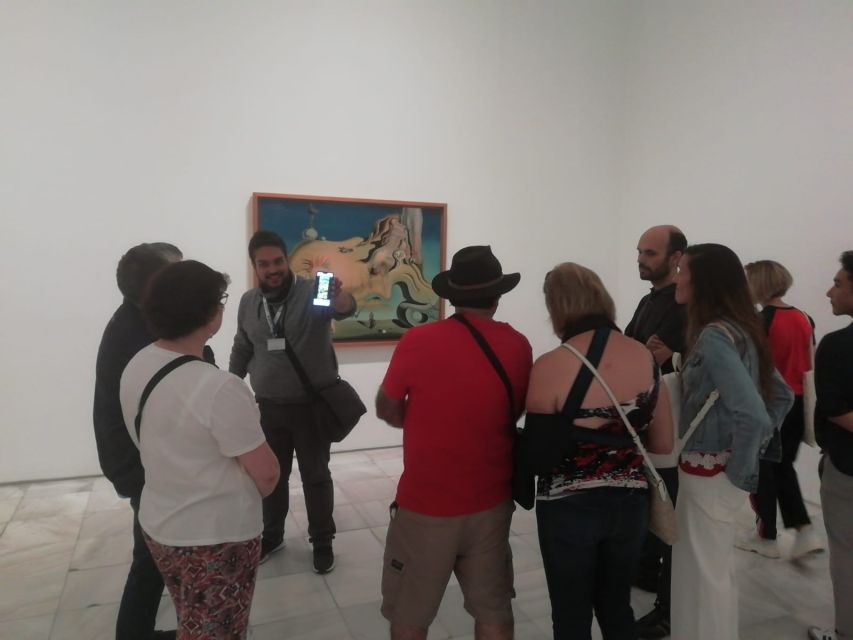
Several visitors praised guides who invited the group to describe what they noticed before giving the explanation. I like this method because it gives you a chance to form your own response. You do not need an art degree, and you are not tested. You simply look, think, and then hear how the work fits into a larger story.
Guides have also used images on an iPad or copies of related works from other museums to make comparisons clearer. These touches are not guaranteed on every departure, but they show how a good guide can make a difficult subject more concrete.
Same base, a different kind of afternoon:
- Madrid: Tour Bernabéu Entry Ticket
★ 4.5 · 21,573 reviews - Madrid: Royal Palace Fast-Access Admission Ticket
★ 4.6 · 13,856 reviews - Madrid: “Emociones” Live Flamenco Performance
★ 4.8 · 12,866 reviews - Madrid: Panoramic Route City Tour
★ 4.1 · 12,259 reviews
Picasso’s Guernica is worth the guided build-up
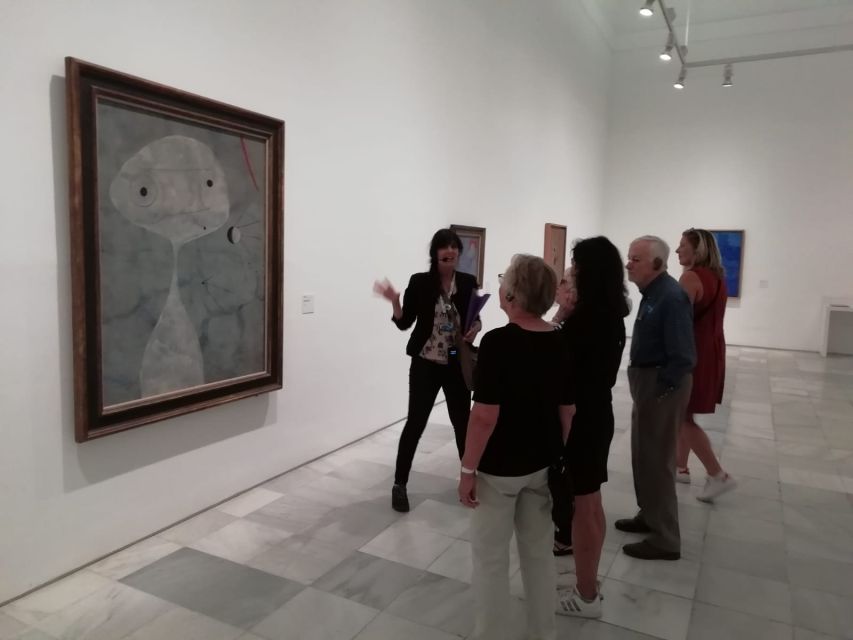
The visit generally works toward Picasso’s Guernica, the Reina Sofía’s most famous painting and the work most people are eager to see. It is a mural-sized oil painting, and seeing it in person gives you a better sense of its scale and force than a reproduction can provide.
The painting is widely regarded as one of the major anti-war works of the 20th century. Its fractured bodies, anguished faces, stark forms, and limited colors create an atmosphere of panic and grief. A guide can help you notice the symbols and visual choices without telling you there is only one correct response.
The placement of Guernica near the end of the guided route is both effective and slightly frustrating. It gives the tour a strong finish, and the earlier discussion of art movements helps you understand how Picasso reached this style. But if Guernica is your main reason for coming, you may wish you had more time with it during the guided portion.
One visitor specifically felt that the tour moved too quickly through individual works. Another said the guide selected the right number of paintings and avoided overload. Both reactions make sense. The tour is designed as an introduction, not a full-day study session.
Once the guided visit ends, you can remain inside and return to Guernica or spend more time with other galleries. That freedom is important. You are not forced to leave when the guide finishes, so plan to stay if your schedule allows.
Dalí, Miró, and the wider Spanish collection
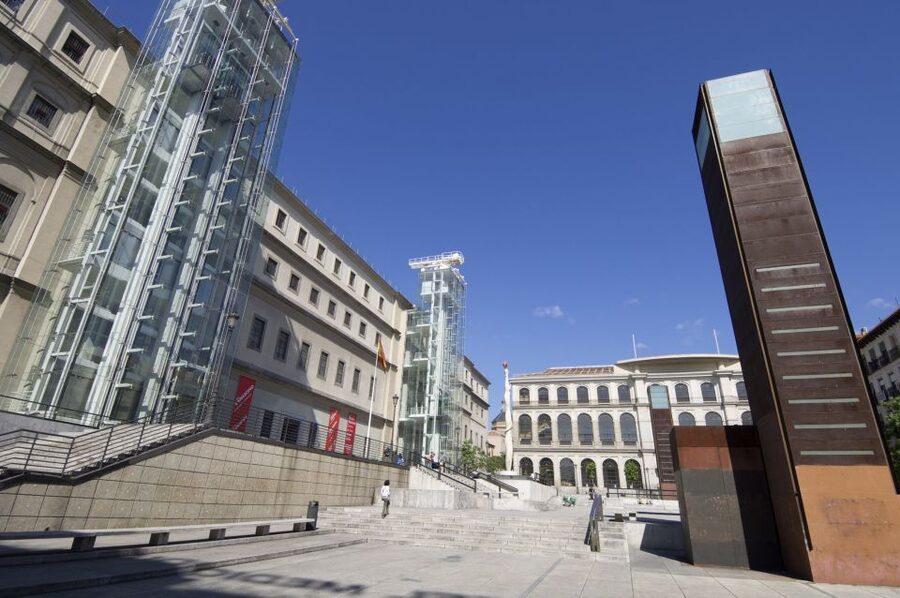
Picasso is the star, but the museum’s appeal does not end with Guernica. You also encounter major works connected with Salvador Dalí and Joan Miró, two artists who show very different ways of handling imagination, form, and visual logic.
Dalí’s work gives the guide an opening to discuss Surrealism and the relationship between dreams and painting. Miró brings another language of simplified shapes, signs, and bold visual marks. Seeing these artists within the same museum makes comparison easy, especially when the guide explains how their personal styles differ.
The value here lies in the connections. You are not simply ticking off Picasso, Dalí, and Miró. You are learning how artists working in the same broad period could reach such different results. A capable guide can explain the ideas without turning the visit into a stream of dates and names.
This is also where the tour can help casual art lovers. You do not have to arrive with background knowledge. Guides such as Ali and Irene were praised for explaining paintings in ways that worked for both adults and children. Several guides were described as warm, engaging, and easy to understand, which is especially useful when the subject matter feels intimidating.
How the 75 minutes actually feels
Seventy-five minutes is a sensible length for a first look. It is long enough to establish a story and short enough to fit into a busy Madrid day. You see important works, hear the main ideas behind them, and finish with time to continue alone.
Still, the clock shapes the experience. The museum is large, and a guided route cannot show everything. If you enjoy lingering over one painting, sketching, or reading every label, you may find the group pace restrictive.
Some departures may feel closer to an hour and a half according to individual timing, while one visitor found the tour shorter than the advertised 75 minutes. Treat the stated duration as the planning figure, but allow extra time if you want to explore after the guide leaves.
The group setup can also affect the experience. A private group is available, but the standard format may include more people. One earlier visitor described a large group that was divided into separate English and Spanish groups when a second guide arrived. That made the visit easier to follow, but the exact arrangement can vary.
The bilingual format deserves attention. Live commentary is offered in English and Spanish, and the tour may be conducted simultaneously in both languages. For a complex subject such as Cubism or the symbolism in Guernica, simultaneous interpretation can slow the rhythm. If you prefer a fully English presentation, check the specific option before paying.
Photography, bags, and access
Pack light. Large bags and luggage are not allowed, and selfie sticks, tripods, and flash photography are prohibited. Photography rules vary by room: some areas do not permit pictures at all, while permitted areas require no flash and no camera stabilization.
That can be annoying if you hoped to photograph every favorite work, but it is normal museum practice. The best way to enjoy the visit is to keep your phone away during the explanation and take only the pictures allowed by the gallery rules.
The museum is wheelchair accessible. Transportation is not included, so you will need to arrange your own route to the meeting point. Comfortable shoes remain the most useful thing to bring.
The tour offers free cancellation up to 24 hours before the start time, and you can reserve now and pay later. Those terms are helpful if your Madrid schedule is still shifting, but always check the conditions attached to your selected time.
Is $38 a fair price?
At $38 per person, this is not the cheapest way to enter the Reina Sofía. The value depends on what you want from the museum.
If you already know modern art well and are happy reading labels, independent admission may suit you better. You can move at your own speed and spend as long as you like with Guernica or a temporary exhibition.
I think the guided price is reasonable for a first visit if the museum feels unfamiliar. You are paying for admission, a skip-the-line entry arrangement, and 75 minutes of focused interpretation. The guide saves you from wandering through a large building without a plan and helps you decide what deserves more of your time afterward.
The price makes the most sense for visitors with limited time, families who need a clear route, and anyone who finds abstract art hard to approach. It is less compelling for a serious art student who wants a slow, specialist examination of many works.
Who should book this Reina Sofía tour?
I would choose this tour if you want to understand what you are seeing rather than simply stand in front of famous paintings. It works especially well as an introduction to Spanish modern art and as a way to place Guernica within the wider development of 20th-century painting.
Families may appreciate the interactive explanations and the manageable length. The tour has also worked well for visitors who wanted a clear overview without spending an entire day indoors.
I would be cautious if your priority is solitude. A group tour has a fixed route and a set pace. If you want to sit quietly with one painting for 20 minutes, continue independently after the guided portion or book a private group if that option suits your budget.
Guides named in strong feedback include Livia, Alex, Paula, Helena, Elena, Nerea, Ali, Irene, and Xavier. The repeated praise is not only about facts. People valued guides who were friendly, passionate, clear, flexible, and willing to answer questions. That human element is a major part of the tour’s appeal.
Final verdict: book it for context, not just entry
Book this experience if you want a well-organized introduction to the Reina Sofía, especially if Guernica is high on your Madrid list. The guide turns difficult modern art into something you can discuss, compare, and remember, and you can stay afterward for a slower look.
Skip it if you prefer complete independence or already have a strong grasp of Picasso, Dalí, Miró, and 20th-century art movements. For most first-time visitors, though, the combination of museum admission, a focused route, and a guide who can explain the ideas behind the paintings makes $38 a sensible use of a morning or afternoon.
FAQ
How long is the Reina Sofía guided tour?
The advertised duration is 75 minutes. You may continue exploring inside the museum independently once the guided portion ends.
What languages are available?
Live tour commentary is available in English and Spanish. The tour may be bilingual, with both languages used during the visit.
Is museum admission included?
Yes. The experience includes entrance to the Reina Sofía Museum and a guided visit with a professional guide.
Is transportation included?
No. You must make your own way to the museum and the meeting point.
Can I take photographs inside?
Photography is not permitted in some rooms. In areas where it is allowed, you must not use flash, selfie sticks, tripods, or other camera stabilization.
Is the museum wheelchair accessible?
Yes. The museum is wheelchair accessible.
Recently listed in Madrid
- Madrid: Don Quixote de la Mancha Windmills & Toledo Tour★ 4.9 · 254 reviews
- Tour Madrid: Secrets in a Electric Tuk Tuk★ 4.6 · 155 reviews
- Madrid: Toledo Day Trip with Winery Visit and Wine Tasting★ 4.4 · 177 reviews
- Madrid: Guided Tour of Toledo with Cathedral Visit★ 4.3 · 399 reviews
- Madrid: 6-Hour Day Trip to Toledo with Guided Walking Tour★ 4.0 · 865 reviews
- Madrid: Tasty Tapas Tour & Visit to a Terrace with Views★ 4.5 · 118 reviews
- Madrid: Flamenco Show&Drink at Tablao 1911 (World’s Oldest)★ 4.7 · 253 reviews
- Madrid: Street Art Tour with Local Graffiti Hunter★ 4.8 · 270 reviews
Museums, compared.

FC Barcelona Museum “Barça Immersive Tour” Ticket
Read our review →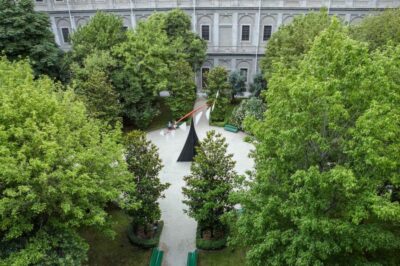
Park Güell and Gaudí House Museum Entry Ticket
Read our review →
Puro Flamenco Show with Optional Museum Ticket
Read our review →
Girona & Dali Museum Small Group Tour with Pick-up from Barcelona
Read our review →
Oceanogràfic, Hemisfèric & Science Museum Combo
Read our review →Browse the lists this tour appears in