

Reviewed · MALAGA TOURS
Málaga: Museo del Automóvil y la Moda Ticket
Classic cars get a stylish Spanish setting. In the former La Tabacalera tobacco factory, Málaga’s Automobile and Fashion Museum pairs beautifully restored vehicles with period clothing, art, and design. I love the clever links between each car and its era, and I also like that the displays work for people who are not devoted car fans. The main consideration is location: it sits outside Málaga’s central sightseeing area, so you need to allow extra time to reach it.
At $14 per person, this is a good-value indoor stop, especially for families, mixed-interest couples, and anyone escaping a hot afternoon. The visit is listed at 50 minutes, though you may easily spend an hour if you read the display notes and stop for photographs. If you want extra explanation, a guided tour is available, but check that your museum admission is included as well.
In This Review
- Key points to know before you go
- Why La Tabacalera makes a fitting home
- Start with the building, then slow down
- The early cars and the changing idea of travel
- The Roaring Twenties and cars as fashion objects
- American dream cars and the Cadillac collection
- Rolls Royce, Jaguar, and English restraint
- Popular cars that bring the collection back to earth
- Engines, sculptures, and the museum’s playful side
- Sunday at 12:30: hear the engines run
- How the museum works for families and mixed groups
- Price, timing, and practical value
- What could be better
- Who should book the Automobile and Fashion Museum?
- FAQ
- How long does the museum visit take?
- Where is the Automobile and Fashion Museum located?
- Is parking available?
- Is there a guided tour?
- Can I visit on Sunday to hear the engines?
- What types of cars are displayed?
- Is the museum accessible for seniors and visitors with disabilities?
- What should I bring to the museum?
Key points to know before you go
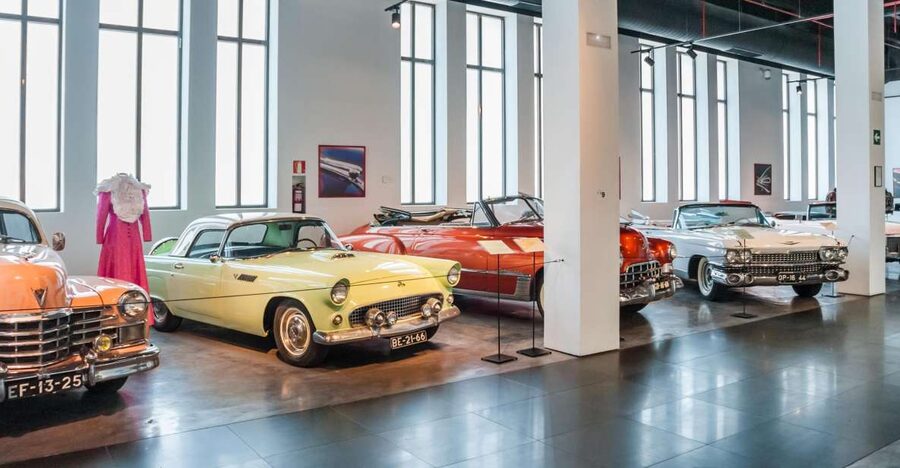
- The old tobacco factory adds atmosphere: La Tabacalera dates from 1923, and the former industrial building gives the museum a spacious, unusual setting.
- Cars share the stage with fashion: Period dresses, designer pieces, posters, and artwork help explain the style of each automobile.
- The collection covers more than luxury cars: You will see popular everyday models, unusual designs, alternative-energy vehicles, American classics, and English marques.
- Sunday has a special sound track: At 12:30, selected engines are started during the Running the Engines activity.
- Free parking makes the out-of-town location easier: The site is suitable for visitors arriving by car and has rest areas.
- It suits non-car enthusiasts too: The fashion displays and visual design give you plenty to enjoy even if horsepower is not your main interest.
Why La Tabacalera makes a fitting home
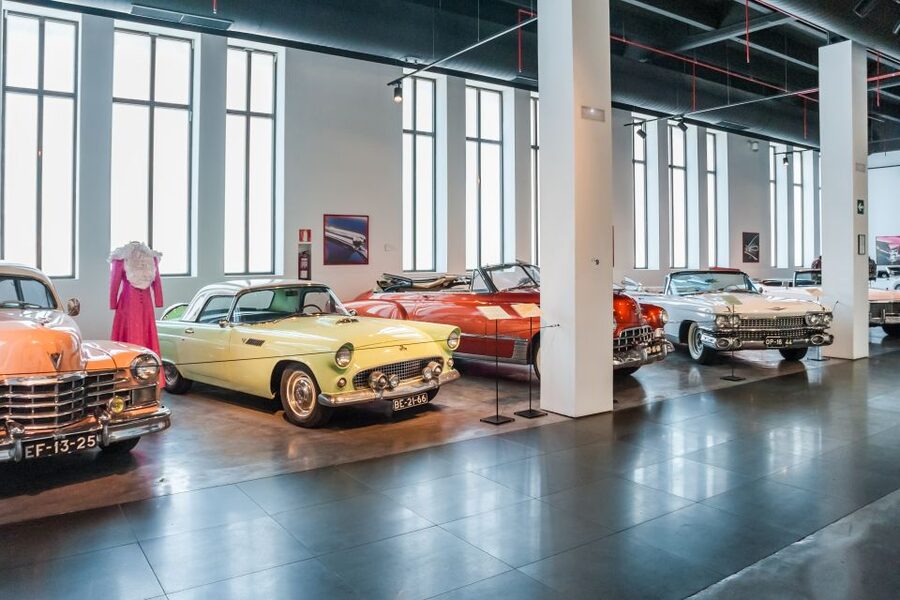
The museum occupies La Tabacalera, a former tobacco factory built in 1923. That detail matters. You are not entering a plain modern hall with cars lined up in rows. The old industrial building gives the visit a sense of place before you even reach the exhibits.
Inside, the space is described as airy, well lit, cool, and well maintained. That makes the museum pleasant during Málaga’s hotter months, when an indoor attraction can be a welcome break from the sun. The broad setting also helps the cars feel like display objects rather than vehicles packed tightly into a garage.
The museum is on Avenida Sor Teresa Prat, outside the old center. It is not an impossible journey, but it is far enough from the main historic sights that you should treat it as a planned stop rather than something you casually pass on the way to the cathedral. Free parking is a useful advantage if you have a rental car. There is also a small coffee shop outside, though queues may build during the busiest summer periods.
A few more Malaga ideas to compare
- Málaga: Caminito del Rey Guided Tour with Transportation
★ 4.8 · 12,183 reviews - Caminito del Rey: Guided Tour and Entry Ticket
★ 4.6 · 11,286 reviews - Málaga: Museo Picasso Málaga Entry Ticket
★ 4.4 · 11,138 reviews
Start with the building, then slow down
The stated visit time is 50 minutes, which gives you a useful basic plan. You can move through the main displays in that time, but I would allow closer to an hour if you enjoy reading the labels, comparing designs, and looking at the clothing.
There is no need to rush from car to car. The museum is designed as a sequence of themed areas, so the pleasure comes from seeing how materials, shapes, colors, and social tastes change over time. Short notes beside the vehicles give the model, year, and historical background. Those labels are especially helpful because the display includes many makes and periods.
A self-guided visit works well for most people. You can pause at the cars that catch your eye and move more quickly past those that do not. A guided option is available if you prefer professional commentary, but make sure you purchase museum admission as well if the guided tour is sold separately. The supplied information does not name individual guides, so there is no particular guide to request.
The early cars and the changing idea of travel
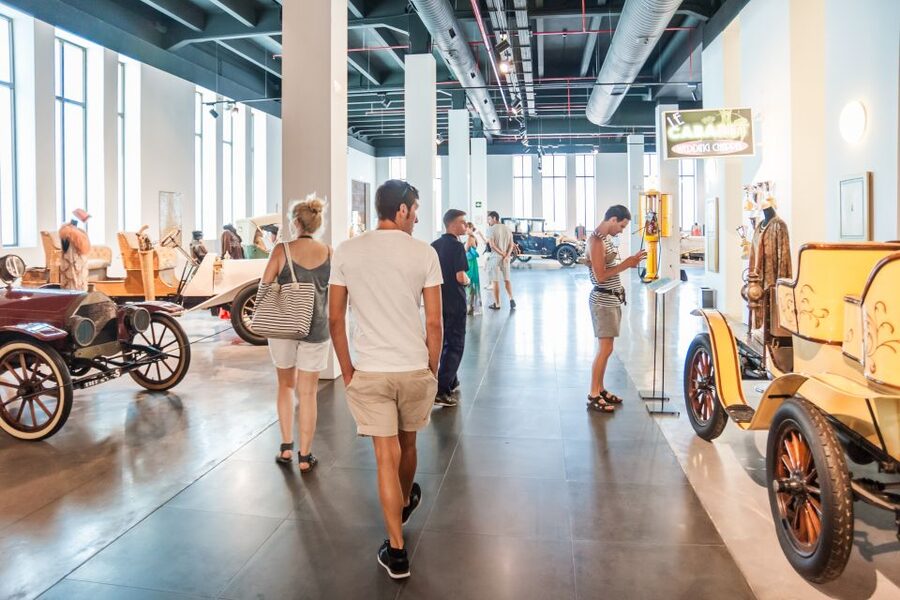
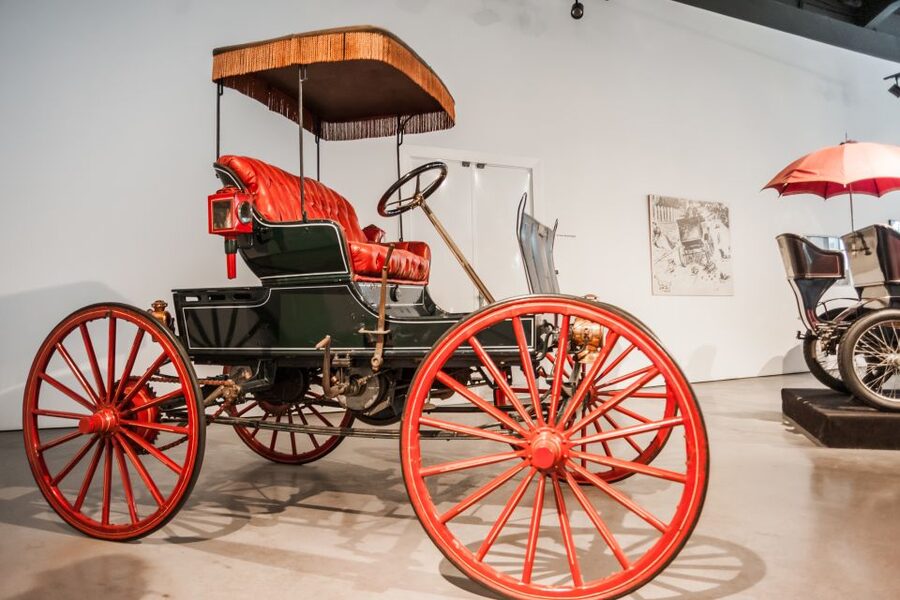
The first sections take you back toward the late 19th century, when the automobile was still a new and uncertain idea. These early models help you see how quickly vehicle design developed. The shapes can look delicate or strange beside modern cars, but that is part of their appeal.
You will also encounter vehicles designed to use alternative energy sources. This gives the collection a useful connection to present-day concerns. Instead of showing the automobile only as a story of bigger engines and greater speed, the museum also points to attempts to solve the problem in different ways.
I like this part because it puts later glamour into perspective. The dramatic American cars and polished luxury models did not appear fully formed. They grew from decades of experiments in engineering, comfort, body shape, and production.
The Roaring Twenties and cars as fashion objects
The 1920s displays shift the mood. Cars from this period often feel more formal and decorative, and the surrounding fashion helps you read them as products of their time. This is one of the museum’s strongest ideas: a car is not only a machine. It also reflects what people wanted to look like, how they wanted to travel, and what they considered modern.
The clothing is not simply background decoration. Dresses and designer pieces are placed beside vehicles from matching eras, with posters and artwork helping complete the setting. This turns the visit into a lesson in design rather than a simple list of marques.
The pairings are particularly useful for anyone interested in fashion, textiles, art, or graphic design. A parent who expects to spend the visit waiting beside a car enthusiast may find far more to examine than expected. The museum has also included virtual elements connected with fashion, including a playful room where you can virtually try on Dior dresses.
Same base, a different kind of afternoon:
- El Chorro: Caminito del Rey Guided Tour with Shuttle Bus
★ 4.7 · 7,091 reviews - Caminito del Rey: Tour with Official Guide and Drink
★ 4.7 · 6,190 reviews - Málaga: Alcazaba and Roman Theatre Guided Tour With Entry
★ 4.8 · 5,792 reviews - Caminito del Rey: Entry Ticket
★ 4.8 · 4,710 reviews
American dream cars and the Cadillac collection
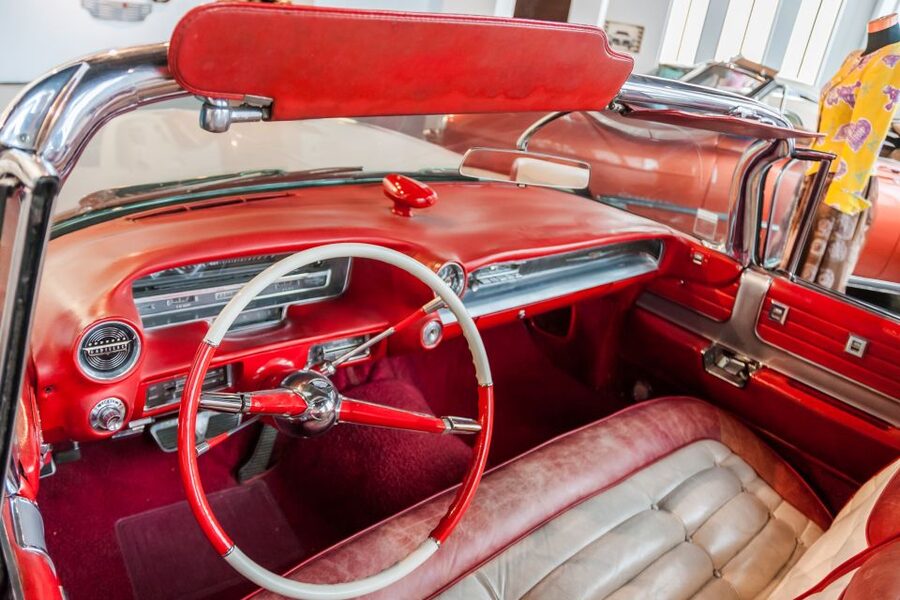
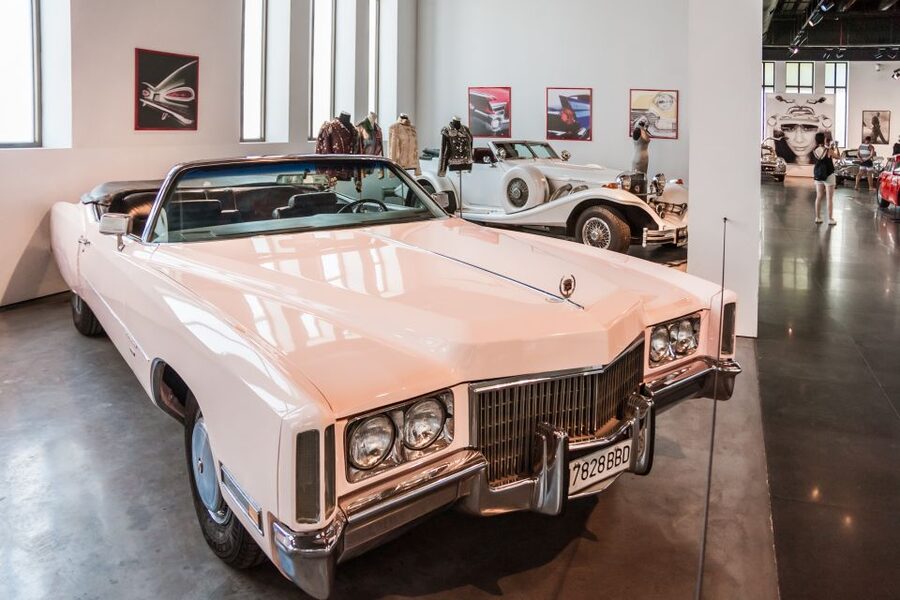
The American section brings a very different character. Expect large, confident shapes and the visual drama associated with 1950s dream cars. The collection includes a group of Cadillacs, and these models are among the best stops for understanding postwar American style.
Here, size and ornament tell part of the story. The cars express optimism, wealth, and an appetite for bold design. You do not need to know the technical specifications to appreciate the visual message. Their polished surfaces and generous proportions make them immediately photogenic.
This section may be the favorite for anyone who loves classic Americana. It is also a good contrast with the smaller, more restrained European models elsewhere in the museum. Moving between the two makes the differences in design philosophy easy to see.
Rolls Royce, Jaguar, and English restraint
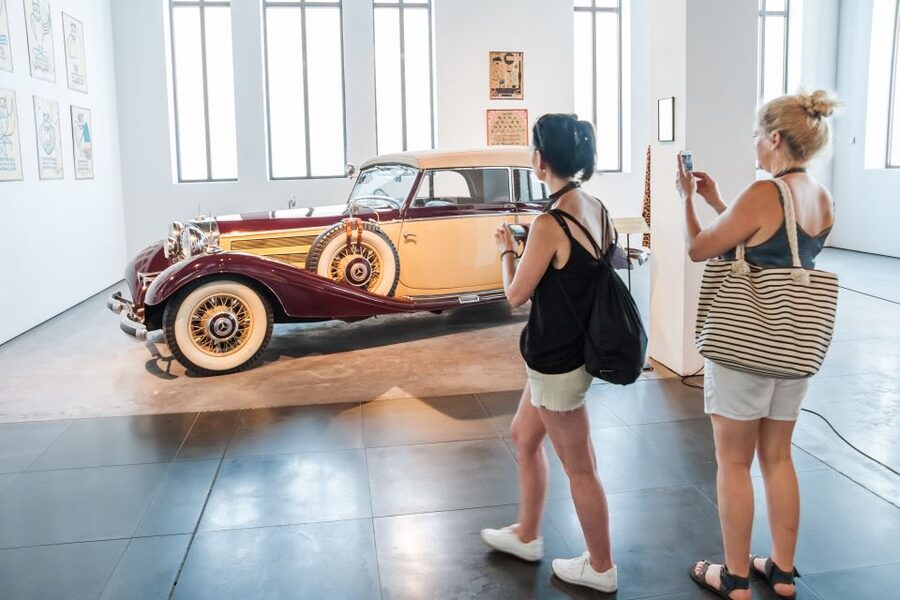
The English heritage section offers a change of pace. Rolls Royce and Jaguar represent a more reserved idea of luxury, with attention to craftsmanship, proportion, and formal presentation. Their appeal is less about visual excess and more about the sense of occasion built into the design.
The fashion pairings help here too. Clothing from the same period gives you a better feel for the social world these cars belonged to. You are not only looking at a vehicle; you are seeing a complete style made up of car, dress, artwork, and public image.
The displays are generally kept in excellent condition. That is important with older cars, since scratches, dull paint, or neglected interiors can weaken the effect. Here, the care given to restoration and presentation is one of the museum’s most praised qualities.
Popular cars that bring the collection back to earth
A museum full of rare luxury cars can become a little remote. The section devoted to popular cars solves that problem by showing vehicles that ordinary people could recognize and use.
The group includes an Austin Seven, a Morris Minor, and a 1960s Velorex. These models are valuable because they widen the story. The automobile was not only a symbol of wealth or futuristic design. It also became part of daily life for families and workers.
I find this section particularly helpful for children and casual visitors. The cars are easier to relate to than some of the grander models, and they show how practical needs shaped design. The Velorex, in particular, adds an unusual note to the display and keeps the visit from becoming predictable.
Engines, sculptures, and the museum’s playful side
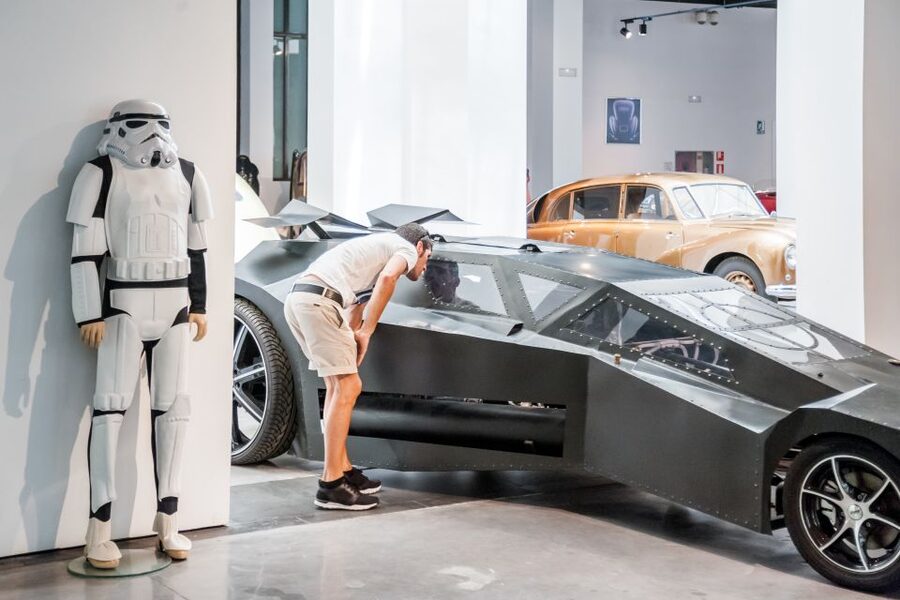
The museum does not limit itself to polished bodywork. Rebuilt engines appear as decorative objects, with some painted and arranged in deliberately extravagant ways. These pieces add humor and visual energy to the galleries.
Artwork and unusual themed displays also appear throughout the museum. One visitor found a skull and Halloween-themed arrangement slightly creepy, while others may see it as part of the museum’s playful style. If you prefer a strictly traditional automobile museum, some of these touches may feel odd. If you enjoy theatrical presentation, they make the visit more memorable.
Mannequins seated inside cars are another matter of taste. They help show how the clothing relates to the vehicle, but they can also distract from the cars themselves. I see them as useful for the fashion story, though serious automotive fans may prefer an uncluttered view.
Sunday at 12:30: hear the engines run
If you can arrange your visit for Sunday, the Running the Engines activity takes place at 12:30. Selected vehicles are started, allowing you to hear the engines and learn about their power.
This is more than a small bonus. A stationary classic car can tell you about shape, finish, and status, but sound gives it another dimension. The mechanical noise helps you understand that these are working machines, not just beautifully polished sculptures.
The activity is not described as starting every car, so keep your expectations realistic. Still, it is the clearest reason to favor Sunday if your schedule allows. Arrive with enough time to see the displays before or after the demonstration, since the main visit is short but the engine activity gives the stop extra weight.
How the museum works for families and mixed groups
The museum is a strong choice for a family because it offers several entry points. Children can focus on unusual shapes, large American cars, engines, and the Velorex. Adults may spend more time with the clothing, posters, restoration, and social history.
It also solves a common holiday problem: one person wants a car museum, another does not. The fashion and art sections make the experience broader than a technical display. Several parents and couples have found that the combination kept everyone interested, including people who arrived mainly to please a car-loving companion.
The museum is also suitable for older visitors and people with disabilities. Facilities are adapted, parking is easy, and rest areas are available. Special tours can be arranged for people with sensory limitations. Free WiFi is available on site. Bring a passport or ID card, and bring a student card or disability card if you need to show eligibility.
Price, timing, and practical value
At $14, the admission is fair for the quality of the cars and the range of material around them. You are paying for more than a room of vehicles. The visit includes a distinctive historic building, fashion displays, art, information panels, and access to the full themed collection.
The value is strongest if you take time to read and compare. A quick 30-minute walk through would still show you the main cars, but it would miss much of the connection between automobile design and fashion. Plan on 50 minutes as the minimum, and around an hour if you want the visit to feel unhurried.
Free parking improves the deal for drivers. The museum’s location is the main practical drawback, since you need to travel beyond central Málaga. If you are already visiting the area around La Tabacalera, it fits naturally into your day. If your schedule is packed with the Alcazaba, Picasso Museum, cathedral, and port, allow for the extra journey rather than assuming this is a quick central stop.
Large bags and luggage are not allowed inside. Smoking is prohibited indoors, and swimwear is not suitable clothing for the museum. These rules are simple, but they matter if you are arriving directly from the beach or carrying cruise luggage.
What could be better
The museum receives very high marks for presentation, maintenance, and the quality of the cars. Still, it is not perfect for every visitor.
The collection may feel smaller than expected if you have visited a huge national automobile museum. One assessment found the cars beautiful but wished there were more to see. The 50-minute format is efficient, but it also means you should not expect a full-day attraction.
Some display choices divide opinion. Mannequins inside cars can make the fashion connection clearer, but they may block parts of the vehicles. The occasional Halloween or skull-themed decoration may feel out of place beside elegant classics. The setup is imaginative, though not every visitor will find every arrangement equally successful.
Rest areas are available, but one visitor wanted more chairs for taking a break. If you need frequent seating, keep that in mind. The museum is accessible and comfortable overall, yet the number of places to sit may not match what you find in a much larger public museum.
The museum shop has also had limited stock of collection books. If you want a guidebook, buy one when available rather than assuming you can order it later online or by mail.
Who should book the Automobile and Fashion Museum?
I would book this for anyone with even a mild interest in classic cars, design, fashion, or unusual Málaga museums. It is especially good for couples with different interests, families with older children, and visitors who appreciate careful restoration and visual presentation.
I would be less quick to recommend it if you have only a short time in Málaga and want to stay within the historic center. The museum is worth the trip, but it is not a substitute for Málaga’s main monuments if this is your first and only afternoon.
Book it if you can spare an hour and reach La Tabacalera without stress. Choose Sunday at 12:30 if hearing the engines matters to you. At $14, the mix of cars, couture, art, and industrial setting gives you a distinctive stop that feels different from a standard car collection.
FAQ
How long does the museum visit take?
The listed duration is 50 minutes. You may spend about an hour if you read the information beside the cars and take time with the fashion and art displays.
Where is the Automobile and Fashion Museum located?
It is at Avenida Sor Teresa Prat, 15, 29003 Málaga, Spain, inside the former La Tabacalera tobacco factory.
Is parking available?
Yes. Free parking is included on site.
Is there a guided tour?
Yes. You can choose an optional guided tour. If you select that option, make sure you also purchase admission to the museum.
Can I visit on Sunday to hear the engines?
Yes. The Running the Engines activity takes place every Sunday at 12:30, when selected vehicles are started.
What types of cars are displayed?
The museum includes late 19th-century models, 1920s cars, American dream cars, Cadillacs, Rolls Royce, Jaguar, popular models such as the Austin Seven and Morris Minor, a 1960s Velorex, and vehicles designed to use alternative energy sources.
Is the museum accessible for seniors and visitors with disabilities?
Yes. The facilities are adapted for seniors and disabled visitors, with easy parking and rest areas. Special tours are available for people with sensory limitations.
What should I bring to the museum?
Bring a passport or ID card. You may also need a student card or disability card. Large bags and luggage are not allowed, and smoking indoors is prohibited.
Recently listed in Malaga
- Tour to Gibralfaro★ 4.7 · 182 reviews
- Málaga: Picasso Birthplace Museum Ticket & City Audio Guide★ 4.1 · 158 reviews
- From Costa del Sol: Mijas, Marbella and Puerto Banús Tour★ 4.3 · 234 reviews
- Malaga: Tuk tuk tour★ 4.8 · 402 reviews
- Malaga: Wine and Tapas Tour with Tastings and Drinks★ 4.8 · 217 reviews
- Málaga: Traditional Andalusian Tapas and Wine Tour★ 4.7 · 167 reviews
- Malaga: The Ultimate Tapas Workshop with Market Visit★ 4.9 · 108 reviews
- Malaga: Organic Vineyard Tour with 6 Wines, Tapas & Transfer★ 4.8 · 334 reviews
Malaga Tours, compared.

Caminito del Rey Guided Tour with Transportation
Read our review →
Caminito del Rey: Guided Tour and Entry Ticket
Read our review →

Caminito del Rey Guided Tour with Shuttle Bus
Read our review →
Caminito del Rey: Tour with Official Guide and Drink
Read our review →
Alcazaba and Roman Theatre Guided Tour With Entry
Read our review →

Browse the lists this tour appears in