
Reviewed · PRADO MUSEUM TOURS
Prado Museum with Reina Sofia Museum Guided Tour
Madrid’s greatest art is too much for one afternoon. This four-hour tour gives you a useful introduction to two major museums, with admission to both included and guides who connect paintings to Spanish politics, history, and daily life. I especially like the carefully chosen masterpieces at the Prado and the way guides such as Elena, Alicia, and Helena explain modern art at the Reina Sofía without drowning you in theory. The main concern is organization: group sizes and audio equipment can vary, and some departures have been less smooth than advertised.
At $81.70 per person, this is not a cheap museum visit. It can still be good value if you want help finding the essential works in enormous collections. I would choose it for a first visit, but I would not treat it as a complete museum experience. The Prado alone deserves more time if you want to explore beyond its famous rooms.
In This Review
- Key points before you book
- Why visit both Madrid museums in one morning?
- Starting at the Velázquez monument
- The Prado in 90 minutes: choosing the essential works
- Moving from the Prado to the Reina Sofía
- The Reina Sofía and the road to Guernica
- Guide quality can make or break the visit
- Group size, audio, and the small-group promise
- Is $81.70 a fair price?
- Who should book this tour?
- Booking, cancellation, and practical details
- Should you book the Prado and Reina Sofía tour?
- FAQ
- How long does the tour last?
- What time does the tour start?
- Where does the tour meet?
- Where does the tour end?
- Are entrance tickets included?
- Is transportation included?
- Is the tour offered in English?
- How many people can join the tour?
- Can I cancel for a full refund?
Key points before you book
- Two museums in about four hours: You visit the Prado for roughly 90 minutes, then the Reina Sofía for about 75 minutes, with extra time needed for check-in and museum procedures.
- The Prado focuses on major Spanish masters: Expect works associated with Velázquez, El Greco, Bosch, and Goya, with attention to composition, symbolism, and historical setting.
- The Reina Sofía brings you into 20th-century art: Picasso, Dalí, and Miró receive attention, with Guernica as the major draw.
- The advertised maximum is 10 people: Some departures have reportedly been larger, particularly during busy periods, so confirm the group arrangement before relying on a private-feeling visit.
- English and Spanish may run together: This can add waiting time, especially inside the Reina Sofía.
- The tour ends at the Reina Sofía: Transportation and food are not included, and you will need to make your own plans after the final stop.
Why visit both Madrid museums in one morning?
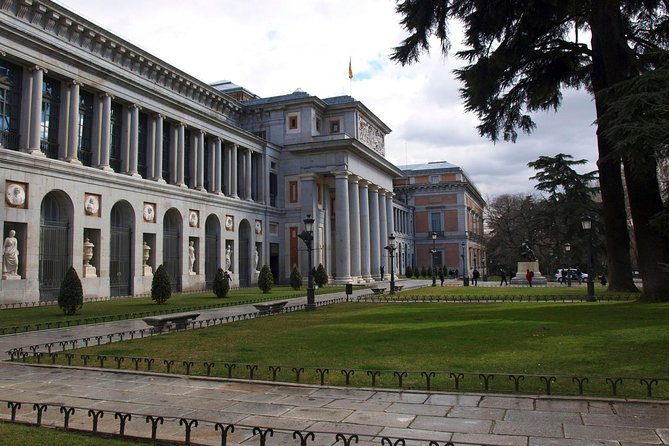
The Prado and Reina Sofía tell two very different stories about Spain. The Prado is a grand survey of older European and Spanish painting, while the Reina Sofía concentrates on modern Spanish art and the upheavals of the 20th century.
That contrast gives this tour its purpose. You move from royal portraits, religious scenes, and court painting to fractured bodies, surreal images, and political protest. A good guide can show how Spain changed, not just how its art styles changed.
The schedule is brisk. You are not signing up for a leisurely day with every gallery. You are paying for orientation, selection, and explanation. If you walk into the Prado without a plan, the scale of the collection can be tiring. A guide helps you spend your limited time on works that matter most.
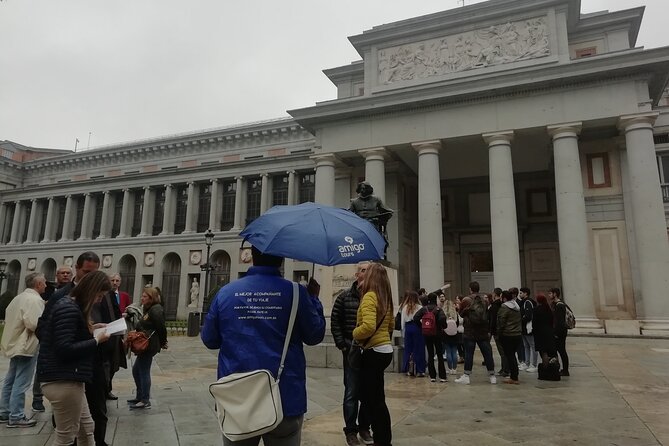
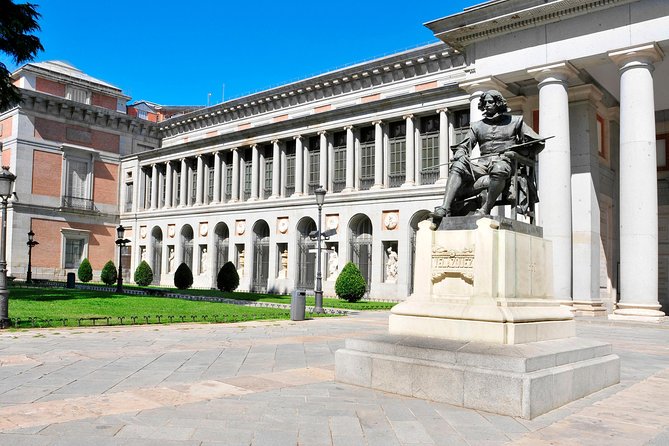
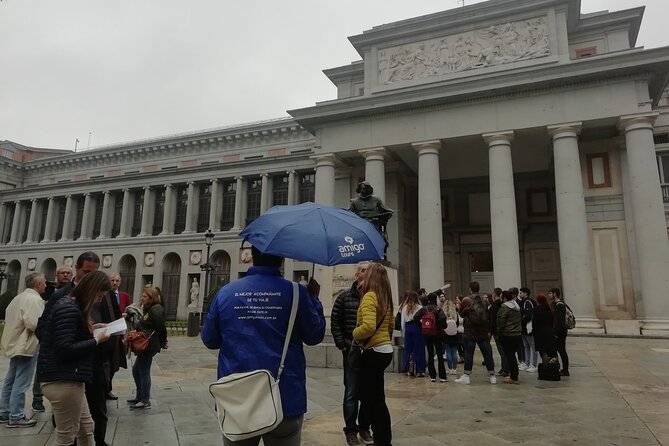
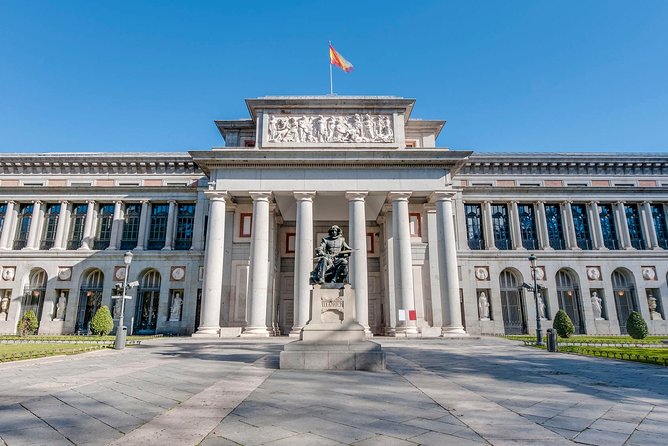
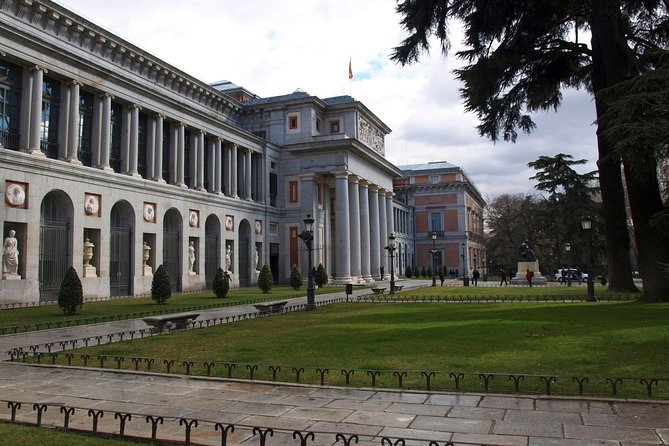
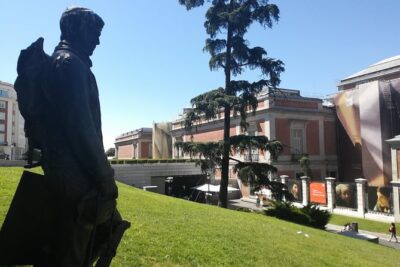
The experience begins at 9:45 a.m. outside the Prado, near the Monument to Velázquez on Paseo del Prado. This is an easy meeting place to identify, but arrive early. Check-in, ticket organization, and whisper devices take time, and the Prado portion itself is listed as 90 minutes.
More Museum Tours in Madrid
- Madrid: Prado Museum Entry Ticket
★ 4.6 · 17,509 reviews - Madrid: Reina Sofía Museum Entrance Ticket
★ 4.5 · 6,889 reviews - Madrid: Small Group of Prado Museum Tour & Optional Tapas
★ 4.6 · 2,437 reviews
Starting at the Velázquez monument
The meeting point near the Velázquez monument is fitting. Diego Velázquez is one of the Prado’s central figures, and the statue gives you a clear landmark on a major Madrid boulevard.
From there, the guide takes the group toward the museum entrance. Bring your booking confirmation on your phone, since the tour uses mobile tickets. You will not need to arrange separate admission for either museum.
The first few minutes can feel administrative. That is normal for a museum group, but it matters when the total visit is short. Some participants have felt that too much of the early slot went to organizing the group and audio equipment.
The tour uses whisper systems or similar audio devices so the guide can speak without shouting in the galleries. These are useful when they work. They have also been a weak point on some departures, with poor sound making it hard to follow the explanation. Before entering, check that you can hear clearly and tell the guide at once if the device is failing.
The Prado in 90 minutes: choosing the essential works
The Prado is not a museum you can finish in a morning. It is a huge national collection, so the guide has to make firm choices.
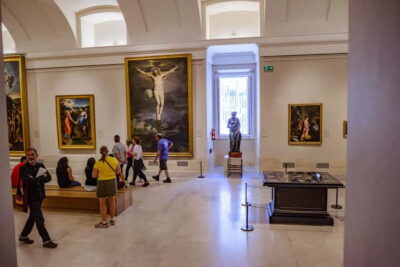
The usual approach is to focus on landmark works by artists such as Velázquez, El Greco, Hieronymus Bosch, and Goya. You will likely spend more time on selected paintings than on moving through every room. That is a strength if you want meaning and context, but a limitation if your goal is to see as much as possible.
Velázquez offers a natural anchor. His compositions reward slow looking, especially in the way figures, space, and royal power are arranged. A strong guide can point out small details that are easy to miss when you are standing alone in front of a famous painting.
El Greco gives you a different experience. His stretched forms and intense color can seem unusual beside the controlled court painting of Velázquez. The value of the tour is not simply being told who painted what. You get a clearer sense of why the styles look so different and what each artist was trying to achieve.
Hieronymus Bosch adds another kind of challenge. His crowded scenes invite close inspection, and a guide can help you make sense of the strange figures and layered stories. This is exactly the sort of painting where a few well-chosen details can make the work more memorable.
Goya is another key figure. His work helps bridge the Prado’s older traditions and the darker, more personal art that follows. Several guides have been praised for linking individual paintings to wider Spanish and European events, which gives the visit more weight than a simple list of artist names.
The best guides do not rush from masterpiece to masterpiece. Elena, Alicia, Helena, and Ayla have each been praised for clear explanations, historical context, and a friendly willingness to take questions. Elena in particular received strong praise for connecting art to five centuries of political and social change.
The tradeoff is coverage. You may see only a small fraction of the collection. One useful way to think about this stop is as a first meeting with the Prado. If you love the museum, return later with a map and more time.
Moving from the Prado to the Reina Sofía
The tour continues to the Reina Sofía Museum on Calle de Santa Isabel. Transportation is not included, and the published plan indicates that the guide takes the group onward. Still, this transition deserves your attention.
At least one departure was criticized because the group was left to find the second museum alone. That may have been an isolated problem, but it is sensible to keep the Reina Sofía address saved on your phone: Calle de Santa Isabel, 52.
Do not assume the transfer will feel like a private walk. The group may need to gather, wait for slower participants, or deal with a second check-in. Some people found that waiting reduced the time available inside the museums.
The Reina Sofía is close enough to combine with the Prado in one cultural outing, but the two buildings create a demanding morning. You will spend several hours standing and walking, often at a steady pace. Wear comfortable shoes and avoid carrying unnecessary food or drinks. Bags and water bottles can be subject to museum rules, and some people have had to discard water before the visit.
More Prado Museum tickets:
- Madrid: Prado Museum Guided Tour with Skip-the-Line Ticket
★ 4.5 · 2,018 reviews - Madrid: Prado Museum Guided Tour With Fast Access
★ 4.8 · 1,785 reviews - Prado Museum Small Group Tour with Skip the Line Ticket
★ 5.0 · 1,738 reviews - Royal Palace & Prado Museum Skip the Line Guided Tour
★ 4.5 · 1,347 reviews
The Reina Sofía and the road to Guernica
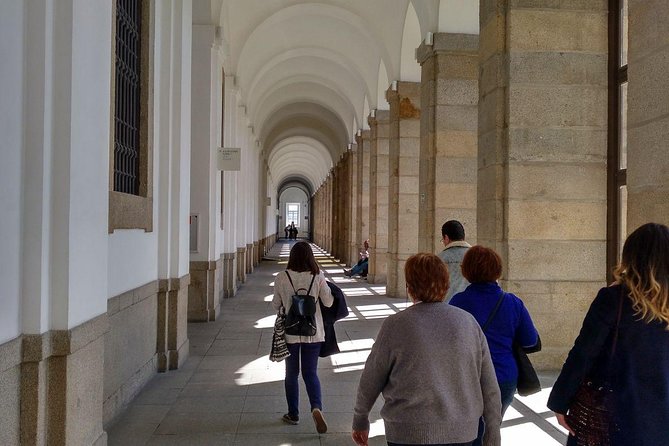
The Reina Sofía is dedicated to Spanish art of the 20th century, so the tone changes sharply after the Prado. The guide leads you through modern artists and explains both the works and the building.
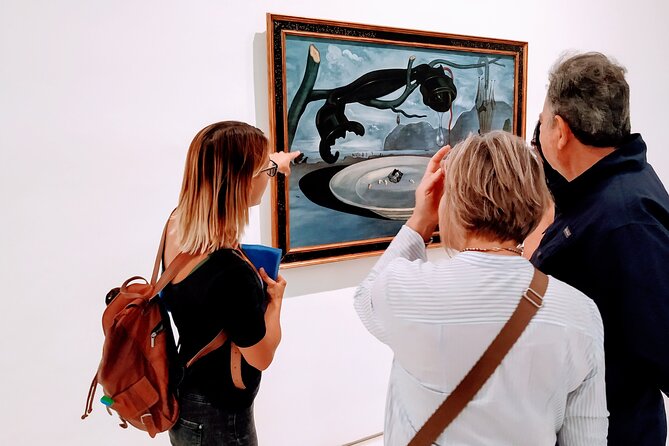
Picasso, Salvador Dalí, and Joan Miró are central names here. Their work can be difficult to read without some background. Surrealism, Cubism, and other modern movements often rely on distortion, symbolism, and unusual materials. The guide’s job is to explain what you are seeing without insisting that there is only one correct answer.
Picasso’s Guernica is the major reason many people visit. A guided explanation can help place the painting within the story of war, suffering, and political protest. You also learn how Picasso used scale, broken forms, and limited color to create an emotional effect.
The Reina Sofía portion lasts about 75 minutes. That is enough for a strong introduction, not enough for the whole collection. You may leave with a better grasp of the main modern artists, but you will need a return visit if you want to explore lesser-known rooms.
The biggest practical issue here is simultaneous language. Tours may operate in English and Spanish at the same time. This can mean pauses while the guide repeats explanations, and one person described the Reina Sofía portion as slower for that reason. If your tour is bilingual, expect less uninterrupted time in front of each work.
Still, the museum seems to be where the strongest educational moments happen. Several guides have been praised for making modern art accessible and for explaining the social, economic, and political forces behind it. That is especially helpful if you normally feel more comfortable with older painting than with Picasso or Miró.
Guide quality can make or break the visit
The guide is the heart of this experience. The museums supply the art, but the guide determines whether the four hours feel focused or hurried.
The most praised guides have a clear pattern. They explain selected paintings in plain English, invite questions, connect artists to Spanish history, and avoid trying to cover every object in sight. Alicia was praised for linking works across time. Ayla was appreciated for giving enough information without overload. Helena and Elena received repeated praise for combining art knowledge with social and political context.
That kind of interpretation is valuable because both museums can overwhelm you. You might recognize the famous names, but recognition alone does not explain why a painting matters. A good explanation gives you a way to look.
There are also less positive possibilities. Some groups have dealt with late guides, a rushed pace, or weak communication between the two museums. One participant eventually returned the audio device and continued alone because the guide was moving too fast to follow.
You cannot choose your guide in advance, so consider your expectations. If you want a highly personal conversation about every work, this may disappoint. If you want a structured introduction with a selection of major pieces, it can work very well.
Group size, audio, and the small-group promise
The experience is advertised with a maximum of 10 people. That would be an excellent size for crowded museum rooms, where a large group can block other visitors and make it hard to hear.
In practice, group size has not always felt that small. One group reached around 25 people at the Prado, and the larger number made it harder to move efficiently. Busy holiday periods may be the reason, but you should not assume that every departure will have the same intimate format.
Ask at the meeting point how many people are in your group and which language arrangement applies. If the group is larger than expected, stand near the guide and check your audio before the tour gets underway.
A small group also does not guarantee a slow pace. The guide still has to keep the schedule and move between two museums. If you have limited mobility or simply prefer to stop often, tell the guide early. The activity is described as suitable for most people, and service animals are allowed, but the route involves substantial standing and walking.
Is $81.70 a fair price?
At $81.70, this costs far more than buying basic museum admission and exploring alone. The difference is the guide’s time, the prearranged entry, and the effort of choosing a sensible route through two enormous institutions.
The price makes the most sense for you if:
- You have only one morning for both museums.
- You want historical background, not just the names of famous artists.
- You feel unsure about modern art and want help with Guernica, Picasso, Dalí, and Miró.
- You prefer having tickets organized in advance.
- You value an English-speaking guide who can answer questions.
The value is weaker if you already know the Prado well, want several hours in each museum, or dislike fixed pacing. You could spend the same morning in one museum and leave with a fuller impression.
I see this as an orientation tour, not a complete museum ticket. It is a good way to learn what deserves a second visit. The fact that it is often booked well ahead, around 38 days in advance on average, suggests that popular dates can fill early. Book ahead if your Madrid schedule is fixed, but read the selected option carefully because inclusions can differ.
Who should book this tour?
I would recommend it to a first-time Madrid visitor who wants a clear introduction to Spanish art. It is particularly useful if you know you want to see Velázquez and Guernica, but do not know how to organize the museums yourself.
It also suits couples and small groups who enjoy discussion but do not want a full-day art seminar. The four-hour length leaves part of the day free for lunch, the Retiro area, or another Madrid sight.
I would be more cautious if you are an art specialist, a slow museum browser, or someone who needs a quiet, unhurried visit. You may get more from separate self-guided visits on different days.
The tour is also not ideal if you need guaranteed small-group treatment. The stated maximum is 10, but past departures have not always matched that expectation. Audio problems and bilingual explanations can also reduce the ease of following every word.
Booking, cancellation, and practical details
You receive confirmation when you book, and the tour accepts mobile tickets. The start time is 9:45 a.m. at the Monumento a Velázquez, Paseo del Prado 11.
Free cancellation is available up to 24 hours before the local start time. Changes made inside that period are not accepted, and late cancellations are not refunded. The experience also requires good weather, with another date or a full refund offered if poor weather causes cancellation.
The route ends at the Reina Sofía when that museum option is included. If you choose an option without the Reina Sofía visit, you may remain at the Prado as long as you wish. Check your exact selection before paying, since the inclusions can differ.
Bring a charged phone, arrive early, and keep the Reina Sofía address handy. Do not count on food, drinks, or transportation being supplied. Most people can take part, and service animals are permitted.
Should you book the Prado and Reina Sofía tour?
Book it if you want expert orientation across two major museums and understand that the visit will cover highlights rather than every gallery. The best guides can turn Velázquez, El Greco, Goya, Picasso, and Miró into part of one understandable story.
Skip it if you want to set your own pace or spend a full day with one collection. You should also think twice if a larger group, bilingual commentary, or imperfect audio would frustrate you.
For the right person, the $81.70 price buys more than entry. It buys a route through two intimidating museums and a set of ideas to carry with you. Just arrive prepared for a brisk introduction, not the final word on Madrid’s art.
FAQ
How long does the tour last?
The full experience lasts approximately four hours. The Prado portion is about 1 hour and 30 minutes, and the Reina Sofía portion is about 1 hour and 15 minutes, with additional time for organization and movement between museums.
What time does the tour start?
The tour starts at 9:45 a.m.
Where does the tour meet?
The meeting point is the Monumento a Velázquez at Paseo del Prado, 11, in Madrid.
Where does the tour end?
When the Reina Sofía option is included, the tour ends at the Museo Nacional Centro de Arte Reina Sofía, Calle de Santa Isabel, 52.
Are entrance tickets included?
Yes. Admission to the Prado Museum and the Reina Sofía Museum is included when you select the option that visits both museums.
Is transportation included?
No. Transportation is not included in the tour price.
Is the tour offered in English?
The experience is offered in English, but tours may run simultaneously in English and Spanish. This can create pauses while the guide repeats information.
How many people can join the tour?
The stated maximum is 10 people. Group size may vary in practice, especially during busy periods, so confirm the arrangement at the meeting point.
Can I cancel for a full refund?
You can cancel at least 24 hours before the local start time for a full refund. Cancellations or changes made less than 24 hours before the start are not accepted for a refund.
Recently listed in Madrid
- From Madrid: Ribera del Duero Tour of 3 Wineries w/ Tastings★ 4.9 · 150 reviews
- Madrid: Royal Palace VIP Tour with Skip-the-Line Ticket★ 4.3 · 645 reviews
- Madrid: Las Ventas Bullring VIP Private Guided Tour★ 5.0 · 151 reviews
- Photographic tour of Madrid with a professional photographer★ 5.0 · 104 reviews
- Zarzuela Opera and Dinner at La Castafiore Restaurant in Madrid★ 5.0 · 143 reviews
- Madrid Local’s Wine and Tapas Lunch Tour with a side of History★ 5.0 · 101 reviews
- Tapas and history tour ending with churros with chocolate★ 5.0 · 119 reviews
- Atletico de Madrid Stadium & Interactive Museum Admission Ticket★ 4.5 · 183 reviews
Prado Museum Tours, compared.

Small Group of Prado Museum Tour & Optional Tapas
Read our review →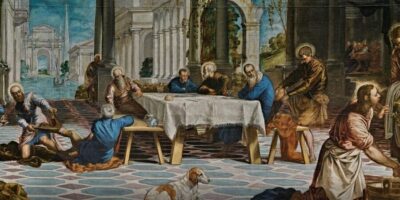
Prado Museum Guided Tour with Skip-the-Line Ticket
Read our review →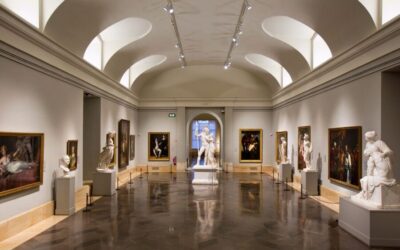
Prado Museum Small Group Tour with Skip the Line Ticket
Read our review →
Royal Palace & Prado Museum Skip the Line Guided Tour
Read our review →

Prado Museum Guided Tour with Skip-the-Line Ticket
Read our review →Browse the lists this tour appears in