
Reviewed · MUSEUMS
Reina Sofia Museum Guided Tour in Madrid
Guernica changes the mood. This short Reina Sofía tour gives you a useful introduction to Spain’s modern art, with clear attention to Picasso, Dalí, Miró, cubism, surrealism, and the museum’s famous centerpiece. I especially like the art-historian guide and the chance to stay inside after the tour ends. The main caution is time: 75 minutes can feel tight in a large, scattered museum, particularly when entry arrangements or explanations run long.
I also like that the visit puts the art into Spanish and European history rather than treating each painting as a puzzle with no answer. Guides such as Flor, Gabriela, Helena, Alicia, Borja, and Lisa have been praised for warmth, humor, clear explanations, and thoughtful questions. Still, guide quality and organization can vary, and the tour runs simultaneously in English and Spanish, so the experience may not feel equally smooth for everyone.
In This Review
- Key points to know before you book
- What this Reina Sofía tour is really offering
- Meeting at Calle de Santa Isabel 52
- Inside a former hospital building
- Learning cubism, surrealism, and abstractionism
- Picasso, Dalí, Miró, and Diego Rivera
- Guernica deserves the extra time
- What the 75-minute route can and cannot cover
- English, Spanish, and guide quality
- Who should book this museum tour?
- Should you book the Reina Sofia guided tour?
- FAQ
- How long does the Reina Sofia guided tour last?
- What time does the tour begin?
- Where do I meet the guide?
- Is museum admission included?
- Is the tour offered in English?
- Can I stay in the museum after the tour?
- Is photography allowed inside the museum?
- What is the cancellation policy?
Key points to know before you book
- Guernica is the grand finale: The tour is built around Picasso’s monumental antiwar painting and the events behind it.
- The museum is part of the experience: Reina Sofía occupies an old hospital building, giving the visit a different feel from Madrid’s Prado.
- Expect selected masterpieces, not every highlight: Guides may discuss fewer than 10 works in detail during the short route.
- Art movements get explained plainly: Cubism, surrealism, abstractionism, and modernism receive the attention many first-time modern-art visitors need.
- The group is capped at 15 people: That is small enough for questions, though headsets may still be used.
- Meeting carefully matters: Start time is 12:45 pm at the statue outside the main entrance on Calle de Santa Isabel 52.
What this Reina Sofía tour is really offering
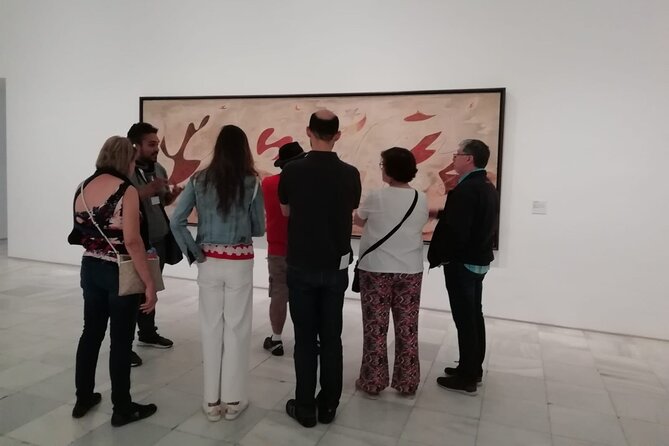
At $34.99 per person, this is not the cheapest way to enter the Reina Sofía. You are paying for admission plus a guided explanation in English or Spanish, not for a long museum seminar. The value comes from having someone help you make sense of modern art, point out the most important Spanish artists, and connect the paintings to the country’s past.
That matters at Reina Sofía. The collection is not arranged like a simple march from one famous canvas to the next. Works are spread through a large former hospital, and finding a particular Picasso, Miró, or Dalí can take effort. A guide gives you a route and a story, which can save time and prevent the visit from becoming a hunt for labels.
The tradeoff is clear. You get an introduction rather than a full museum visit. The advertised length is about one hour and 15 minutes, and some people have found the actual art time shorter because of ticket collection, locker stops, late starts, or other delays. If you want a leisurely look at the collection, plan to remain inside afterward.
More Museum Tours in Madrid
- Madrid: Prado Museum Entry Ticket
★ 4.6 · 17,509 reviews - Madrid: Reina Sofía Museum Entrance Ticket
★ 4.5 · 6,889 reviews - Madrid: Small Group of Prado Museum Tour & Optional Tapas
★ 4.6 · 2,437 reviews
Meeting at Calle de Santa Isabel 52
The tour begins at 12:45 pm at C. de Sta. Isabel, 52, in Madrid’s Centro district. You are instructed to meet your guide by the statue outside the main entrance. This detail deserves more attention than it usually gets because the museum has more than one side, and the meeting point can be confusing.
I recommend arriving early, but do not simply follow the first map pin you see. Confirm that you are at the main entrance and remain by the tall statue until the guide arrives. A few people have lost the tour after waiting at the wrong entrance or failing to locate the guide before the scheduled start.
This is a walking museum tour, not a hotel pickup service. You make your own way there and return to the same general meeting point when the activity ends. The museum is near public transportation, so the location works well with a day spent in central Madrid.
The group maximum is 15. That is a sensible size for a gallery visit, although the guide may provide headsets so everyone can hear. One practical complaint concerns audio clarity. A guide can speak excellent English, yet an unclear sound system or a fast delivery can make art explanations harder to follow.
Inside a former hospital building
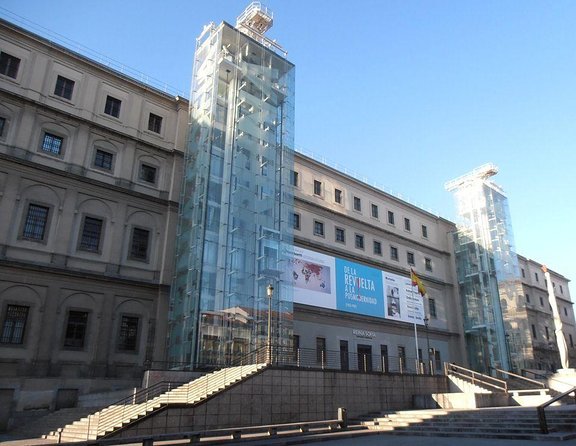
Before the paintings take over, pause to notice the Reina Sofía itself. The museum occupies an old hospital building, and its corridors and rooms give the visit a more unusual setting than Madrid’s grander classical galleries.
That architectural contrast helps explain why people often enjoy this museum alongside the Prado. The Prado presents older European painting in a traditional setting. Reina Sofía focuses on 20th-century and contemporary art, and its former hospital structure feels more spare and unconventional.
The building is not just a backdrop. It affects how you move through the collection. Rooms and works can feel scattered, and you may not always find artists displayed in the order you expect. That is another reason a guide can help. The guide gives you a path through the building instead of leaving you to guess which corridor contains the important works.
Keep your belongings manageable. Large bags and drinks are not allowed in the galleries, and lockers are available. There may also be limited places to sit while the guide speaks, so comfortable shoes and a little patience help.
Learning cubism, surrealism, and abstractionism
The strongest part of the tour is its attempt to make modern art less intimidating. A good guide does not merely identify the painter. You learn how artists broke with realistic representation, why shapes became fragmented, and how color, form, and symbols began doing work that a recognizable scene once handled.
Cubism and surrealism receive particular attention, along with abstractionism and modernism. This is useful if you normally find modern art difficult to approach. Instead of asking you to admire a painting because it is famous, the guide may ask questions about what you notice and how the image makes you feel.
Several guides have been praised for using simple language and thought-provoking questions. Helena, in particular, was appreciated for making modern art understandable to people who knew little about it. Gabriela helped explain why Guernica has had such a wide impact, while Alicia connected the artists not only to art history but also to Spain itself.
That teaching style is important. The tour is not best for someone who wants a rapid list of names and dates. It suits you if you want a few paintings explained properly, with enough background to keep looking after the guide moves on.
The limitation is pace. One detailed explanation can use a large part of the allotted time. If you prefer to see many rooms and artists, you may feel that the group stops too long at selected works.
Same base, a different kind of afternoon:
- Madrid: Tour Bernabéu Entry Ticket
★ 4.5 · 21,573 reviews - Madrid: Royal Palace Fast-Access Admission Ticket
★ 4.6 · 13,856 reviews - Madrid: “Emociones” Live Flamenco Performance
★ 4.8 · 12,866 reviews - Madrid: Panoramic Route City Tour
★ 4.1 · 12,259 reviews
Picasso, Dalí, Miró, and Diego Rivera
The Spanish artists form the heart of this visit. Pablo Picasso receives the most attention, but you should also expect works connected with Salvador Dalí and Joan Miró. These artists represent very different approaches to modern art, and seeing them in one museum helps you compare their choices.
Picasso’s work is especially important here because the museum houses Guernica, his enormous response to the bombing of the Basque town during the Spanish Civil War. The painting is not a quiet decorative stop. Its scale, distorted figures, harsh forms, and emotional force make it the moment most people remember.
You may also see related works connected with Guernica, including preparatory material. These pairings help show that the final painting did not appear fully formed from nowhere. A guide can point out repeated shapes, changes in composition, and the way Picasso built a public statement from private studies.
The tour also points to Diego Rivera, the Mexican painter. International art is not the main focus of this museum route, so Rivera appears as part of a wider story rather than as a separate survey of Latin American art. That is worth knowing if you expect a broad global collection.
The museum has national and international temporary exhibitions as well. Their availability can change, and this short tour may not spend much time on them. If a temporary display interests you, stay afterward and explore it independently.
Guernica deserves the extra time
The tour’s promise of Guernica is a major reason to book. You will not simply be led to the painting, told its name, and sent onward. The guide should explain its political setting, the violence it represents, and the visual choices that make it so unsettling.
Strong guides use the painting as a way to bring several subjects together: cubist structure, symbolism, wartime reporting, Spanish politics, and the role of art as protest. Gabriela was especially praised for explaining why the work continues to affect people around the world. Helena was appreciated for breaking down its complex imagery in plain terms.
Still, Guernica is popular for a reason, and the room can be busy. The guide’s explanation may be harder to hear if the group is spread out or the audio equipment is not working well. Stay close enough to the guide to see the details being discussed, and do not assume you can return later without checking the museum’s internal route.
I would treat this tour as an introduction to Guernica, not the final word. After the guide finishes, use your remaining time to look again without commentary. The first pass gives you the facts. The second lets the painting work on you.
What the 75-minute route can and cannot cover
A 75-minute museum tour sounds reasonable until you consider the building, the ticket process, the number of artists, and the popularity of Guernica. In practice, the guide must choose between breadth and detail.
The best version of this tour selects a handful of works and explains them well. You might see fewer than 10 pieces, but those stops can give you a better understanding of Spanish art than a rushed march through 30 rooms.
The weaker version feels squeezed. Delays at the entrance, a late start, a locker stop, or a long restroom break can reduce the time available for art. One person reported arriving late to the museum because of a delayed start and having to leave early for another plan. Another described a tour that ended much sooner than expected.
That makes your schedule important. Do not book this experience immediately before a train, timed attraction, or dinner reservation you cannot move. Leave breathing room. If the tour begins late, you will need it.
The activity ends back at the meeting point, but you can remain in the museum after the guided portion if you wish. This is one of the best features of the arrangement. It gives you a structured beginning, then the freedom to explore at your own speed.
English, Spanish, and guide quality
The tour is offered in English and Spanish, but the visit is guided bilingually, with English and Spanish spoken at the same time. That arrangement can work well when the guide keeps a clear rhythm. It can also make a short tour feel even shorter if every explanation must be repeated.
Guide quality appears to be the biggest variable. Flor was praised for her history of Spanish artists. Borja was described as kind and especially helpful for an older participant using the provided earpiece. Narea was appreciated for knowledge and humor, while Elena and Helena received praise for enthusiasm and clear English.
Alicia’s strength was explaining why the artists mattered to Spain as well as to art history. That national context is exactly what makes this museum worth visiting in Madrid rather than treating it as a generic modern-art gallery.
There have also been serious complaints about guides arriving late, failing to introduce themselves clearly, rushing the route, or not appearing at all. One scheduled tour was canceled only hours before departure, and another person missed the experience after confusion over the meeting point. These problems appear uncommon compared with the positive accounts, but they are significant enough to affect the booking decision.
Who should book this museum tour?
I would recommend it to you if modern art is not your comfort zone, if you want Guernica explained, or if you have limited time in Madrid and prefer a guided introduction. It is also a good fit for families when the guide uses questions and stories to keep everyone involved.
The tour can work well for older relatives too, since the provided earpiece helped one 82-year-old participant follow the explanations. Children must be accompanied by an adult, and most people can take part.
I would choose a different plan if you already know modern art well, want to see a large number of works, or dislike bilingual tours. In those cases, independent entry may give you more control. You can move directly to the artists you want and spend as long as you like with Guernica.
At $34.99, the tour is fair value when the guide is strong and the full 75 minutes are used. It feels expensive if the start is delayed or the route covers only a few paintings without enough time afterward. The free cancellation policy helps reduce the risk: you can cancel for a full refund up to 24 hours before the local start time. Changes or cancellations inside that window are not refunded.
Should you book the Reina Sofia guided tour?
Book this tour if you want a clear, human explanation of Picasso, Guernica, Dalí, Miró, and the main modern-art movements. The strongest guides turn a confusing collection into a story about artistic change and Spain’s troubled 20th century.
Go independently if you want a longer visit or a precise artist-by-artist route. If you book the tour, arrive early at the tall statue by the main entrance, keep your schedule flexible, listen for the bilingual format, and stay afterward. That extra museum time is what turns a short guided introduction into a fuller Reina Sofía visit.
FAQ
How long does the Reina Sofia guided tour last?
The tour lasts approximately one hour and 15 minutes. The guided portion can feel shorter if entry procedures, delays, or other stops take time.
What time does the tour begin?
The scheduled start time is 12:45 pm.
Where do I meet the guide?
Meet at the statue outside the main entrance of the Reina Sofía Museum, at C. de Sta. Isabel, 52, Centro, Madrid.
Is museum admission included?
Yes. Entrance to the Reina Sofía is included, along with the guided visit.
Is the tour offered in English?
Yes. The tour is offered in English or Spanish, with the guide conducting the visit bilingually in both languages at the same time.
Can I stay in the museum after the tour?
Yes. The guided portion ends in the museum, and you can remain longer if you wish.
Is photography allowed inside the museum?
No. Photography is not allowed inside the museum.
What is the cancellation policy?
You can cancel at least 24 hours before the experience starts for a full refund. Cancellations or changes made less than 24 hours before the start time are not refunded.
Recently listed in Madrid
- From Madrid: Ribera del Duero Tour of 3 Wineries w/ Tastings★ 4.9 · 150 reviews
- Madrid: Royal Palace VIP Tour with Skip-the-Line Ticket★ 4.3 · 645 reviews
- Madrid: Las Ventas Bullring VIP Private Guided Tour★ 5.0 · 151 reviews
- Photographic tour of Madrid with a professional photographer★ 5.0 · 104 reviews
- Zarzuela Opera and Dinner at La Castafiore Restaurant in Madrid★ 5.0 · 143 reviews
- Madrid Local’s Wine and Tapas Lunch Tour with a side of History★ 5.0 · 101 reviews
- Tapas and history tour ending with churros with chocolate★ 5.0 · 119 reviews
- Atletico de Madrid Stadium & Interactive Museum Admission Ticket★ 4.5 · 183 reviews
Museums, compared.

FC Barcelona Museum “Barça Immersive Tour” Ticket
Read our review →
Park Güell and Gaudí House Museum Entry Ticket
Read our review →
Puro Flamenco Show with Optional Museum Ticket
Read our review →
Girona & Dali Museum Small Group Tour with Pick-up from Barcelona
Read our review →
Oceanogràfic, Hemisfèric & Science Museum Combo
Read our review →Browse the lists this tour appears in