
Reviewed · CITY TOURS
Seville: Italica Roman Ruins City Tour
Roman grandeur begins just outside Seville. This two-hour Italica tour takes you through Spain’s first Roman city, founded in 206 BC after the Battle of Ilipa, with a local guide explaining the amphitheater, homes, mosaics, and imperial past. I especially like the skip-the-line entry and the chance to see the famous Game of Thrones filming site without spending a full day away from Seville. The main drawback is that transport to Santiponce is not included, and larger multilingual groups can make the tour run long.
The site feels far more substantial than a quick ruin stop. I like that the tour covers both the amphitheater and the wider city, rather than treating the arena as the whole story. Guides such as Juanra, Miguel, Jesus, Carlos, Manuel, and Barbara have been praised for lively explanations and clear answers, though a few groups have been delayed or slowed by multiple languages.
In This Review
- Key points to know before you go
- Why Italica makes a good half-day outing from Seville
- Meeting at Avenida de Extremadura 2
- The amphitheater: Roman spectacle and modern television fame
- The Roman city beyond the arena
- Trajan, Hadrian, and the imperial story
- Mosaics and the small details that reward patience
- How group size and language affect the visit
- Is $21 a fair price?
- Who will enjoy this Italica tour most?
- My verdict on the Seville to Italica experience
- FAQ
- How long does the Italica tour last?
- Where does the tour meet?
- How far is Italica from Seville?
- Is transportation to Italica included?
- Does the tour include the entrance ticket?
- Which languages are available?
- Is the tour private or shared?
- What happens if an Italian or French tour does not reach its minimum number?
- Can I cancel the booking?
- Can I reserve now and pay later?
Key points to know before you go
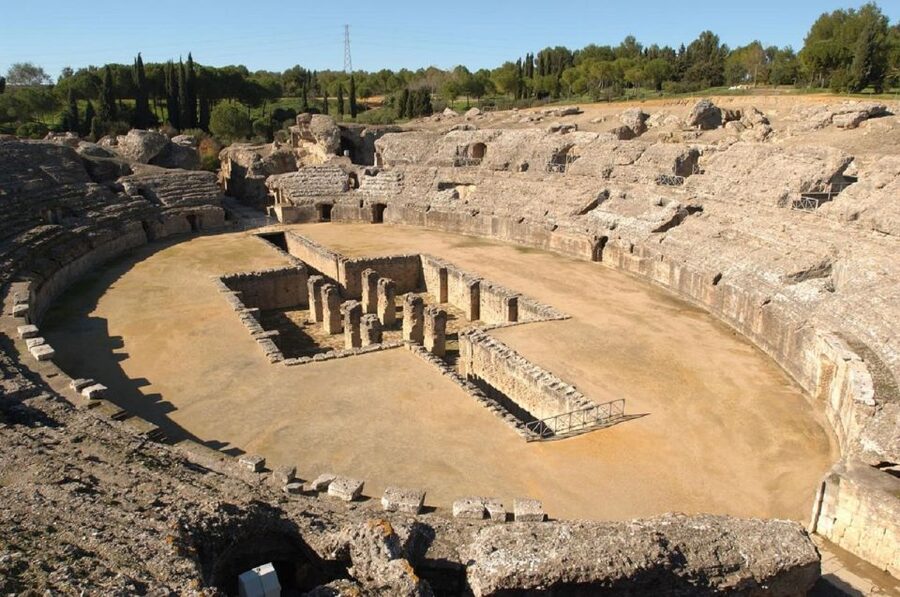
- The amphitheater is the headline attraction: Walk through the arena used as a Game of Thrones filming location, then look into its passageways and viewing points.
- Italica is tied to two emperors: The city was the birthplace of Trajan and Hadrian, two of Rome’s most important rulers.
- The wider ruins reward close attention: The residential streets and preserved floor mosaics add detail that the amphitheater alone cannot provide.
- The tour begins at the site entrance: Meet at Avenida de Extremadura 2 in Santiponce, about 8 kilometers northwest of Seville.
- Guide quality is a major strength: Several guides have been praised for enthusiasm, fluent English, strong site knowledge, and an easy style with questions.
- Group size can affect the pace: Small or private options are available, but some departures may combine languages or include a large group.
Why Italica makes a good half-day outing from Seville
Seville has no shortage of palaces, churches, tapas bars, and orange-tree squares. Italica gives you a different view of Andalusia: not Moorish or early modern, but Roman and imperial.
The city was founded in 206 BC, after Roman forces defeated the Carthaginians at Ilipa. That date gives Italica an important place in the story of Roman Spain. It was not a minor roadside settlement. Under Emperor Hadrian, the city expanded during the second century, and its connection to both Hadrian and Trajan gives the ruins an unusual imperial pedigree.
You do not need a full day to see the main remains. The scheduled visit lasts two hours, with about 15 minutes focused on the amphitheater and roughly 75 minutes on the broader Italica site. That leaves a little room for starting and finishing the visit without turning the outing into an exhausting archaeological marathon.
I think the duration suits most people well. You get enough time to understand the site, but the visit remains manageable for families, first-time ruin explorers, and anyone fitting Italica between Seville plans. If ancient history is your main interest, you may wish the official visit allowed more time at certain stops.
A few more Seville ideas to compare
- Seville: Royal Alcázar Entry Ticket
★ 4.6 · 28,378 reviews - Seville: Cathedral and La Giralda Entry Ticket
★ 4.5 · 24,592 reviews - Seville: Live Flamenco Dancing Show Ticket at the Theater
★ 4.7 · 16,396 reviews
Meeting at Avenida de Extremadura 2
The tour meets at the main entrance to the Italica archaeological site, at Avenida de Extremadura 2, 41970 Santiponce, Seville. Transport to this point is not included, so you need to plan your own way from Seville.
That detail matters. The ruins are about 8 kilometers northwest of the city, close enough for a simple outing but not located in Seville’s historic center. Build in extra time for reaching Santiponce, finding the entrance, and arriving before the start.
The guide waits at the entrance, which keeps the meeting point clear. Once you arrive, the skip-the-line ticket means you can head into the site rather than spending part of a short tour waiting at the ticket counter.
The tour offers Spanish, English, French, and Italian. English-language departures appear to be a strong choice, with Manuel praised for fluent English and the ability to answer questions directly. Jesus, Carlos, Barbara, Juanra, and Miguel have also been praised for clear, enthusiastic presentations.
There is one practical catch for Italian and French departures. A minimum number is required for those tours to operate. If that number is not reached, you can choose another language or receive a full refund.
The amphitheater: Roman spectacle and modern television fame
The amphitheater is the first major stop, with about 15 minutes set aside for the visit, photographs, and guide commentary. It is the part of Italica most people recognize, thanks to its use as a filming location for Game of Thrones.
The television connection may bring you here, but the building itself is the reason to stay focused. The arena, seating areas, entrances, and underground spaces help you picture the scale of Roman public entertainment. You can look through passageways and find viewpoints toward the arena, details that make the structure feel less like a pile of stones and more like a working venue.
One visitor particularly enjoyed exploring the amphitheater’s vomitorium after the guided portion, finding small views into the arena. That is useful advice: listen closely during the official explanation, then take a few extra moments to look around if the schedule permits.
The stop is short, so do not expect a long lesson on every architectural feature. The benefit is that you get a clear introduction before moving into the city itself. The limitation is pace. If the amphitheater is your main reason for visiting, you may want to confirm how much free time follows the guide’s explanation.
The Roman city beyond the arena
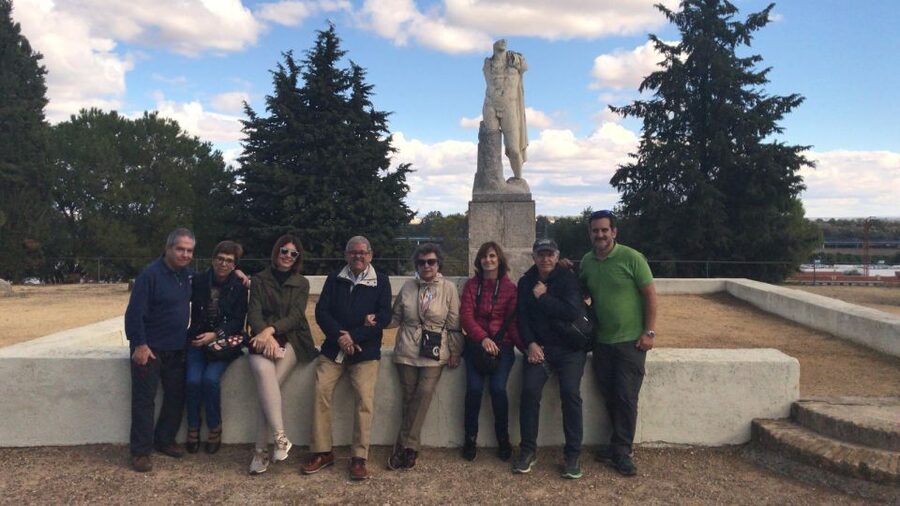
The longer section of the tour lasts about 75 minutes and covers the wider Italica ruins. This is where the visit gains much of its value.
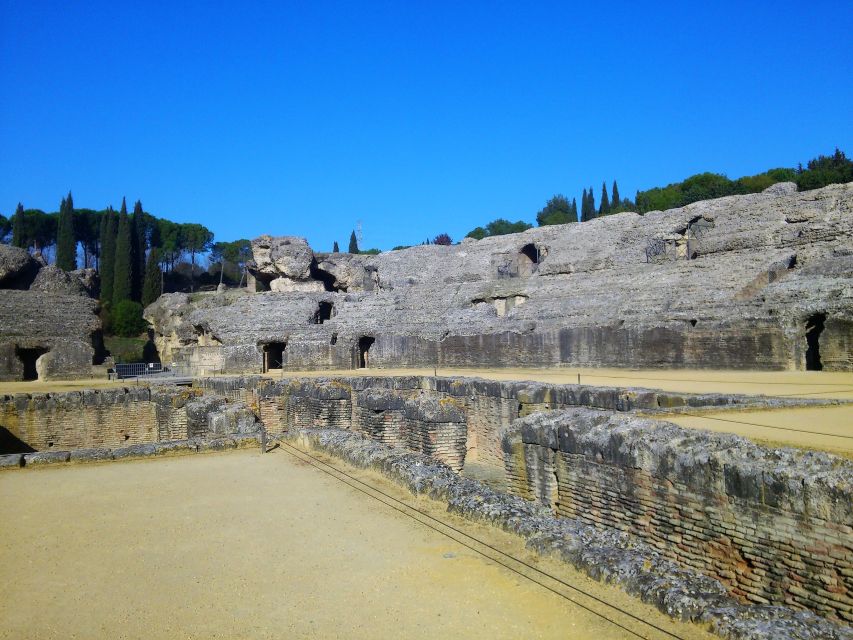
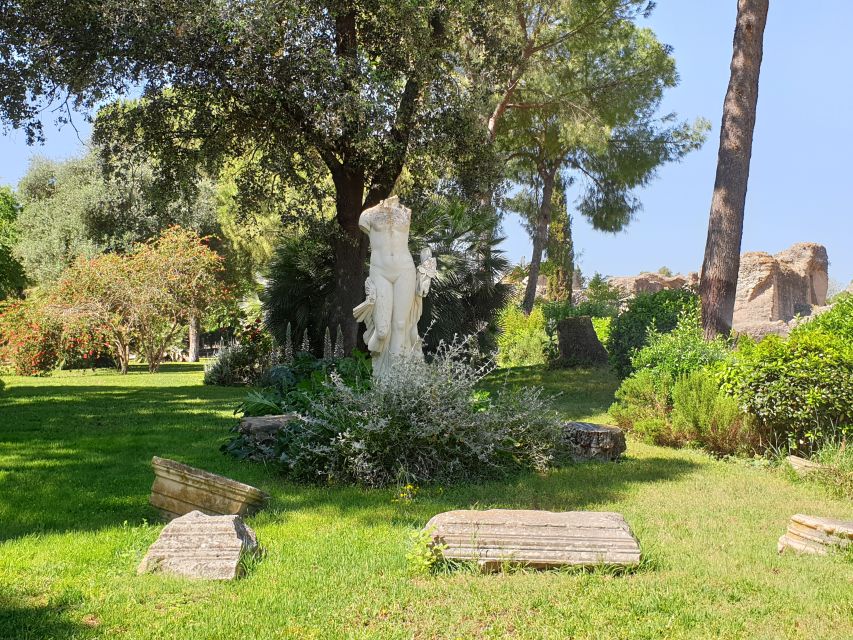
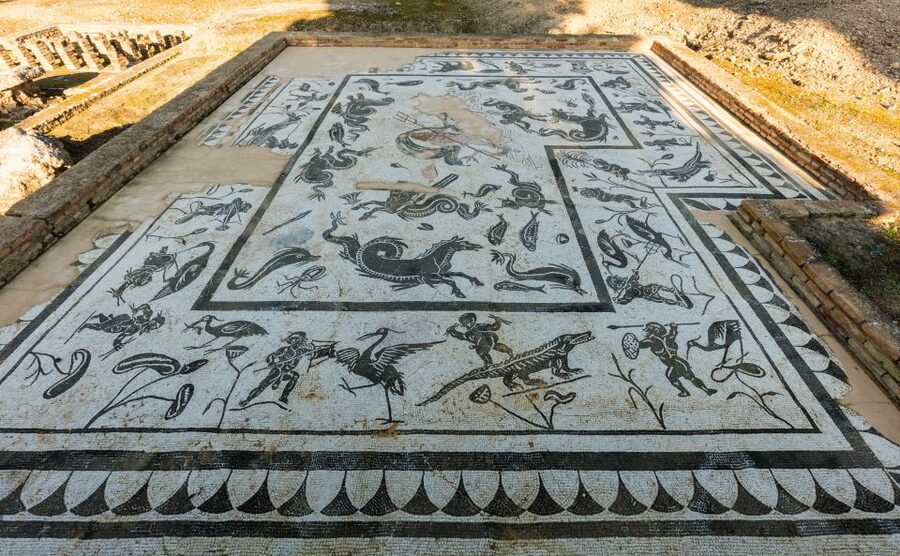
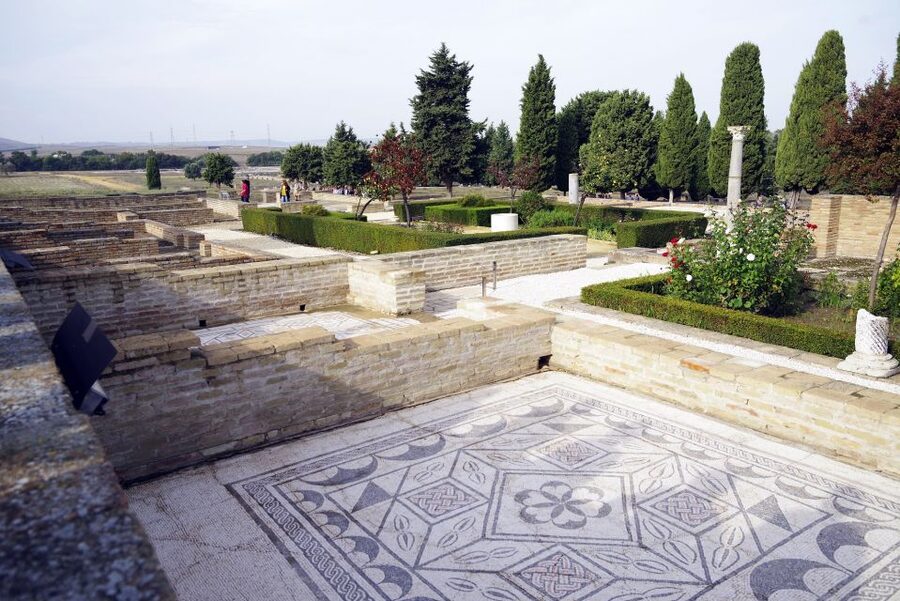
The amphitheater is dramatic, but it represents only one part of Roman life. Across the city, you get a sense of homes, streets, and domestic spaces. Preserved floor mosaics are a major highlight, especially in the residential remains. Their patterns and scale offer a glimpse of the money and taste available to the city’s wealthier residents.
I like this balance between public and private life. The arena shows how Rome entertained crowds. The houses and mosaics show how people wanted their own spaces to look. Together, the two parts make Italica easier to understand than a visit focused only on the most famous monument.
The guide’s role is especially useful here because ruins can blur together without context. A strong guide points out what you are looking at, explains how the city changed under Hadrian, and connects local remains to the wider Roman world. Carlos has been praised for his passion and engaging manner, while Barbara received praise for explaining the site at each stop and welcoming questions.
The amount of detail can vary by guide and group. One guide was considered friendly and well paced, though a little more site history would have been welcome. That is a fair expectation to bring: you should receive a useful overview, but this is not an academic seminar on Roman urban planning.
Same base, a different kind of afternoon:
- Seville: Casa de la Memoria Flamenco Show
★ 4.8 · 12,964 reviews - Seville: 1-Hour Guadalquivir River Sightseeing Eco Cruise
★ 4.2 · 10,281 reviews - Seville: Cathedral, Giralda, and Royal Alcázar Guided Tour
★ 4.7 · 9,165 reviews - Seville: Setas de Sevilla Entry Ticket
★ 4.6 · 8,901 reviews
Trajan, Hadrian, and the imperial story
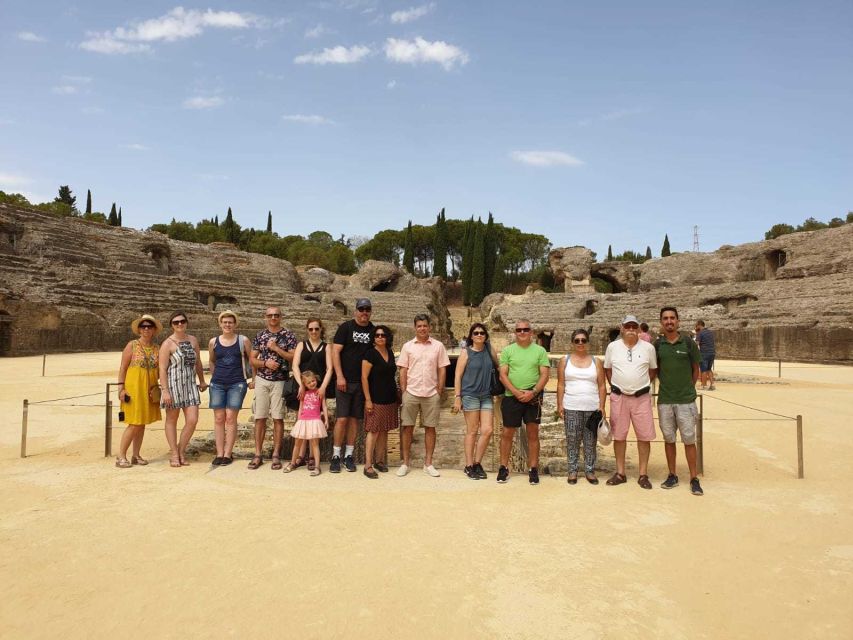
Italica’s strongest historical hook is its connection to Trajan and Hadrian. Both emperors were born in Italica, giving the city a direct link to the highest level of Roman power.
Trajan ruled from AD 98 to 117 and became one of Rome’s most important emperors. Hadrian followed from AD 117 to 138 and is known for consolidating and organizing the empire. Their connection helps explain why Italica expanded during the second century and why the site has such grand remains.
A good guide can turn those names into something more useful than a list of dates. Look for explanations of how imperial favor affected the city, how expansion changed its scale, and why its surviving homes and public buildings are important.
The site still holds the atmosphere of an ancient Roman city, but you should keep expectations sensible. Much of what you see is preserved at foundation or partial-wall level. The mosaics, street plan, amphitheater, and scale of the ruins carry the experience more than complete buildings do.
Mosaics and the small details that reward patience
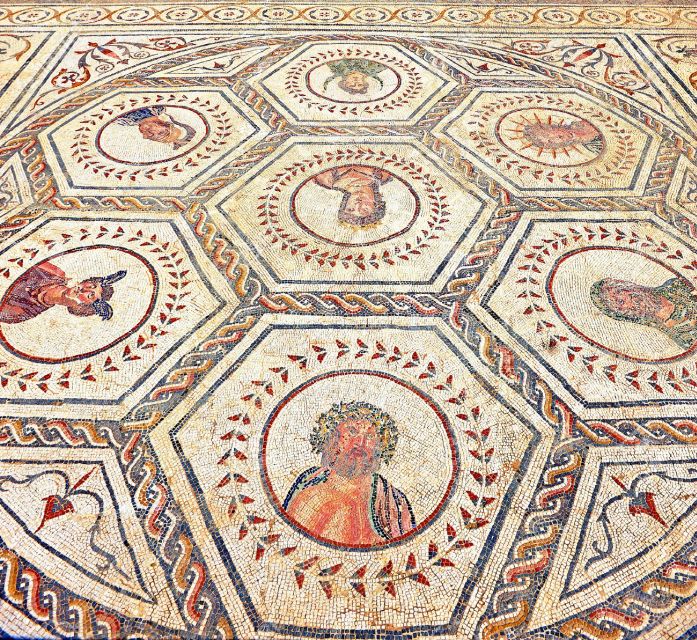
The mosaics are among Italica’s most memorable features. They give the ruins color, pattern, and a human touch that bare walls cannot provide.
Take time to look at the floor work rather than rushing from one large structure to the next. The designs help you imagine the interiors of Roman homes and show how decoration could signal status. They also make the residential areas easier to appreciate, especially if your first reaction is that the amphitheater has overshadowed everything else.
The site works best when you slow down for these details. A guide can explain their place in the houses and point out features you might miss alone. After the explanation, look at the mosaics from different angles and notice how much remains in place after more than 2,000 years.
The site’s condition is one of its pleasures, but it also calls for care. This is an archaeological area, not a reconstructed theme park. You are seeing surviving remains, and your understanding depends on the guide’s explanation and your willingness to study partial evidence.
How group size and language affect the visit
Private and small-group options are available, which is worth considering if you value questions, a steady pace, or a quieter visit. The tour can also operate with larger groups, and this is where some practical issues arise.
A group may include people taking the tour in more than one language. When French and English explanations are both needed, the visit can become much longer. One departure also started 15 minutes late because a coach arriving from Seville was delayed, pushing the rest of the schedule back.
This does not make the tour a poor choice, but it affects how you plan the day. Avoid booking a tight restaurant reservation, museum entry, or train connection immediately afterward. If you are traveling independently to Santiponce, you may need to wait for a scheduled group arriving from Seville before the guided visit begins.
Smaller groups usually offer a better chance to hear every explanation and ask questions. One family found the group comfortably sized, with a guide who was easy to hear. That is the kind of setup I would choose for a first visit.
Is $21 a fair price?
At $21 per person, this tour is reasonably priced for a guided visit that includes the entrance ticket and a two-hour explanation of the site. You are paying for more than access to the ruins. You are paying for the historical framework that helps you understand why Italica matters.
The value is strongest if you would otherwise walk through the site without knowing what you were seeing. The amphitheater is easy to recognize, but the homes, mosaics, and urban remains need more interpretation. A good guide turns the visit from a photo stop into a coherent story.
The price does not include transport, food, or drinks. That keeps the listed cost low, but you should add your own travel expense and allow enough time to reach Santiponce. Since the outing lasts only two hours, the overall value depends partly on how easily you can get to the entrance.
For flexible planning, you can reserve now and pay later. Cancellation is allowed up to 24 hours in advance for a full refund. Those terms are useful if your Seville schedule is still moving around.
Who will enjoy this Italica tour most?
I would recommend it to you if you want a compact Roman excursion from Seville, prefer a guide to explain archaeological remains, or have a special interest in Trajan, Hadrian, or Game of Thrones locations.
It also suits families. The amphitheater provides an immediate visual hook, while the mosaics and stories give older children more to notice. The two-hour format avoids the fatigue that can come with a much longer history tour.
History fans may prefer a private or small-group departure. You will have a better chance to ask about the city’s expansion, the emperors, and the mosaics without being hurried by a large schedule.
I would be more cautious if you need a tightly timed day, dislike multilingual group tours, or expect a fully reconstructed Roman city. Delays are possible, and the ruins require imagination. You should also arrange transport carefully because the meeting point is outside central Seville.
My verdict on the Seville to Italica experience
This is a good-value way to see one of Spain’s most important Roman sites without committing to a full day. The amphitheater delivers the drama, the mosaics provide the fine detail, and the stories of Trajan and Hadrian give the ruins a place in European history.
The strongest part is the guiding. Juanra, Miguel, Jesus, Carlos, Manuel, and Barbara have all been praised for enthusiasm, clarity, and strong command of the subject. The main weakness is not the site itself, but the possibility of a large or multilingual group and a late start.
Book this tour if you want context, skip-the-line entry, and a focused visit lasting about two hours. Choose a small or private option if available, leave breathing room after the tour, and treat the Game of Thrones connection as an extra rather than the whole reason to go. Italica is far more interesting when you look past the arena.
FAQ
How long does the Italica tour last?
The tour lasts two hours. Around 15 minutes are scheduled for the amphitheater, followed by about 75 minutes exploring the wider Italica ruins, with the remaining time used for the start and finish of the visit.
Where does the tour meet?
The meeting point is at the main entrance to the Italica archaeological site, Avenida de Extremadura 2, 41970 Santiponce, Seville.
How far is Italica from Seville?
The archaeological site is about 8 kilometers northwest of Seville.
Is transportation to Italica included?
No. Transport to the meeting point is not included. You need to arrange your own way to the entrance in Santiponce.
Does the tour include the entrance ticket?
Yes. A skip-the-line entrance ticket is included.
Which languages are available?
The tour is available in Spanish, English, French, and Italian.
Is the tour private or shared?
Private and small-group options are available. Group arrangements may vary by departure.
What happens if an Italian or French tour does not reach its minimum number?
You can choose to take the tour in another available language or receive a full refund.
Can I cancel the booking?
Yes. You can cancel up to 24 hours in advance for a full refund.
Can I reserve now and pay later?
Yes. You can reserve your place and pay nothing at the time of booking, keeping your plans flexible.
Recently listed in Seville
- Seville: Small Group Jewish Quarter Tour with Tapas & Drinks★ 5.0 · 119 reviews
- Seville: Alcázar Fast-Track Access with Guided Tour★ 4.2 · 432 reviews
- Seville: Small-Group Jewish Quarter Discovery Walking Tour★ 4.9 · 499 reviews
- Seville: VIP Exclusive Early Access Tour of The Alcazar★ 4.8 · 276 reviews
- Seville: Sunset Roof Top Walking Tour★ 4.5 · 122 reviews
- Seville: 3.5-Hour Spanish Cooking Class & Triana Market Tour★ 4.9 · 751 reviews
- Seville: Flamenco Show at Tablao Almoraima in Triana★ 4.6 · 483 reviews
- Seville: Authentic and Romantic Horse-Drawn Carriage Ride★ 4.5 · 341 reviews
City Tours, compared.



City Sightseeing Barcelona Hop-On Hop-Off Bus Tour: 24 or 48-Hour
Read our review →

Granada City Train 1 or 2-Day Hop-On Hop-Off Ticket
Read our review →

Barcelona City Tour Hop-On Hop-Off with Optional Boat
Read our review →Browse the lists this tour appears in