
Reviewed · MUSEUMS
Seville: Museum of Fine Arts Guided Tour
Art makes more sense when Seville supplies the setting. This two-hour visit pairs the city’s finest art museum with clear historical storytelling, and I especially like the peaceful cloisters and the chance to see Murillo, Torrigiano, and other Andalusian masters in their original setting. The main consideration is pace: two hours gives you a smart introduction, not time to study every room.
I also like the small group of no more than eight, which makes it easier to ask questions and hear the guide. Julio Dean Del Junco receives especially strong praise for connecting paintings to Seville’s history, while Lorraine has also led engaging visits. At $23 per person, the tour offers good value if you want context rather than a silent walk through galleries, though independent art lovers may prefer to explore alone and stay longer.
In This Review
- Key points to know before you book
- Why Seville’s fine arts museum deserves your time
- Meeting at Plaza del Museo
- Inside the former Convent of La Merced
- From Gothic Seville to Torrigiano’s Saint Jerome
- Murillo and Seville’s Baroque identity
- What makes the guided format worthwhile
- Timing, group size, and accessibility
- Is $23 a fair price?
- Who should book this museum tour?
- FAQ
- Where does the Museum of Fine Arts tour begin?
- How will I identify the guide?
- How long does the guided tour last?
- Is museum admission included?
- What languages are available?
- How large is the group?
- Can I stay in the museum after the guided visit?
- Is the tour wheelchair accessible?
- Can I bring a pet?
- Should you book it?
Key points to know before you book
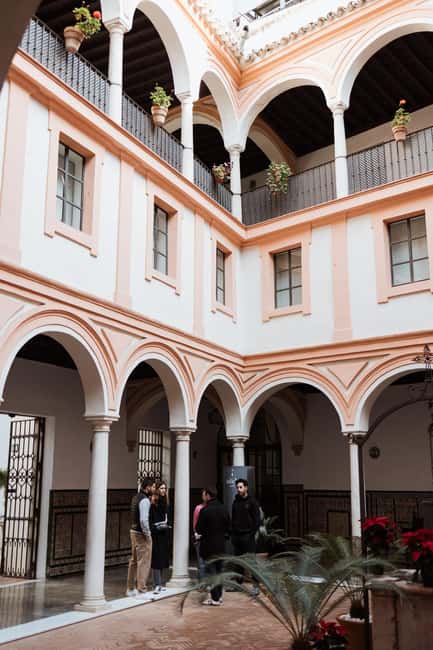
- A former convent is part of the attraction: The Museum of Fine Arts occupies Seville’s historic Convent of La Merced, with Renaissance and Baroque architecture, two cloisters, and elegant halls.
- The guide supplies the missing context: Expect explanations of symbolism, artists, historical periods, and the relationship between art and Spanish society.
- Murillo gets special attention: A dedicated room presents selected works by Bartolomé Esteban Murillo, one of Seville’s most important painters.
- The tour covers several centuries: You’ll move from Sevillian Gothic works to Renaissance pieces such as Saint Jerome Penitent by Torrigiano, then into the Baroque and Sevillian Costumbrismo.
- The group stays small: With a limit of eight participants, this is a more personal visit than a large museum walk.
- You can remain afterward: The guided portion lasts about two hours, and you may continue looking through the museum after the tour.
Why Seville’s fine arts museum deserves your time
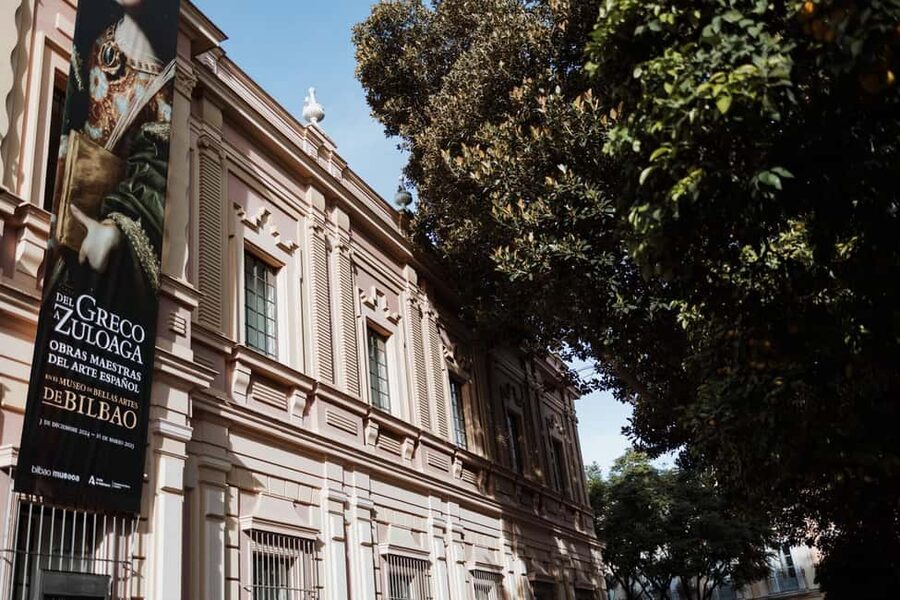
The Museum of Fine Arts of Seville is not simply a container for paintings. The building shapes the visit.
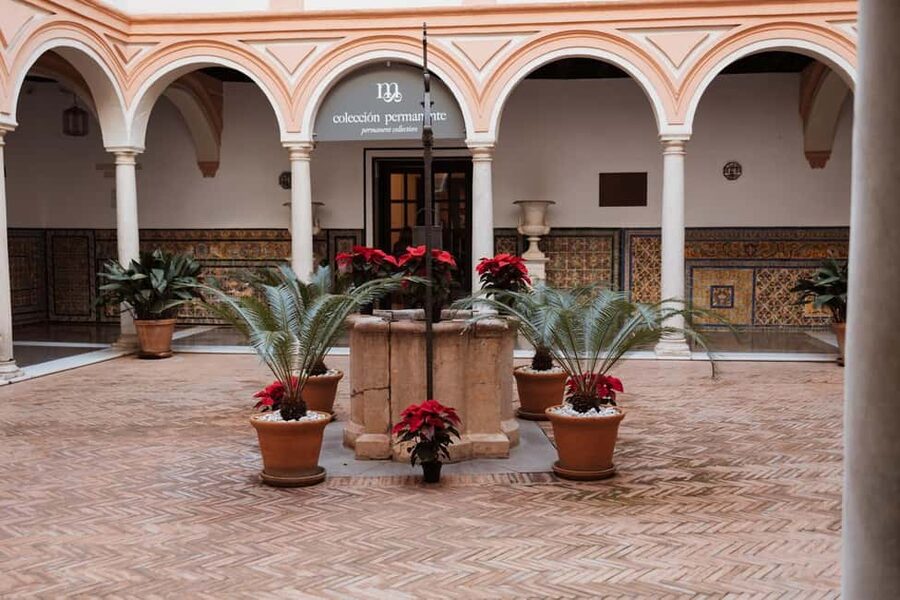
The museum occupies the former Convent of La Merced, founded in the heart of Seville. Its architecture gives the collection a strong sense of place. Instead of moving through plain modern galleries, you pass through historic rooms and cloisters where the scale, light, and quiet help explain why religious art played such a major role in Spanish culture.
That setting matters most when you reach the Claustro de los Bojes and the Claustro Mayor. These peaceful courtyards provide a break between galleries, but they also frame the collection. The museum feels like a monument as much as a gallery.
I find this especially useful for visitors who are not art specialists. A long list of names and dates can make Spanish painting feel remote. Here, the building gives you a physical starting point, and the guide links the architecture to the art around it.
The collection covers Gothic, Renaissance, Baroque, and Sevillian Costumbrismo works. That range lets you watch artistic ideas change over time. You are not just seeing isolated masterpieces. You are following the way Seville and Andalusia represented faith, people, power, and everyday life.
More Museum Tours in Seville:
- Seville: Puro Flamenco Show with Optional Museum Ticket
★ 4.8 · 6,088 reviews - Seville: Museum of Illusions Entry Ticket
★ 4.2 · 1,196 reviews - Seville: Museum of Flamenco Dance Admission Ticket
★ 4.4 · 197 reviews
Meeting at Plaza del Museo
The tour begins at the Asociación Amigos del Museo de Bellas Artes, by Plaza del Museo. Look for the guide next to the statue of Murillo, carrying a blue umbrella or wearing a name tag marked Sevilla Guías & Tours.
This meeting point is practical because it is directly beside the museum. You do not need transportation as part of the tour, and no food or drinks are included, so plan those separately. Arriving with a little time to spare is sensible, particularly if you want to orient yourself in the plaza before the group leaves.
The guide leads the group back to the museum after everyone has met. The tour includes admission and an express security check, so you avoid the ordinary uncertainty of arriving without a timed plan. This does not mean the entire museum is private or empty, but it does make the entry process simpler.
The tour is offered in English or Spanish. That choice is important in an art museum, where a small language gap can make symbolism and historical references hard to follow.
Inside the former Convent of La Merced
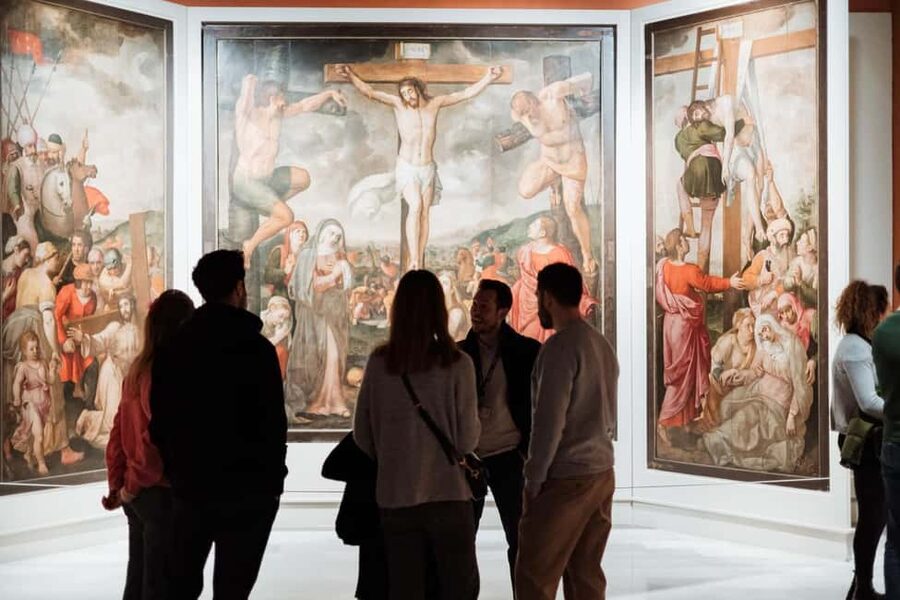
The first part of the visit introduces the building and its artistic setting. You’ll see Renaissance and Baroque features while walking through spaces that once served a religious community.
The cloisters are a key part of the route. Claustro de los Bojes and the Claustro Mayor are not just attractive pauses for photographs. They help you understand how the museum’s works relate to the structure around them. The calm open spaces also provide welcome relief if the paintings begin to feel visually dense.
Your guide’s role here is to keep the architecture from becoming background decoration. Julio, in particular, is praised for linking historical periods to the objects in front of you. He has a background in history and art history, and his strongest contribution is explaining why a work was made, not merely naming the painter.
That approach suits beginners. You do not need prior art training to follow the tour. At the same time, people with some background can ask about iconography, interpretation, or artistic technique. The group size gives the guide room to adjust the level of detail.
One practical detail helps with the listening experience: a headset may be used. A previous visit led by Lorraine was praised for using an earpiece rather than making the guide shout across the galleries. In a museum, that makes a real difference. You can look at the work while still hearing the explanation.
From Gothic Seville to Torrigiano’s Saint Jerome
The collection’s early works show how art in Seville and Andalusia developed before the great Baroque period. The tour includes Sevillian Gothic pieces and examples from other parts of Andalusia.
These works help set up the later paintings. You’ll see how religious subjects, visual symbols, and artistic conventions changed as Renaissance ideas entered Spain. The guide’s explanations are useful here because the meaning of a painting is not always obvious to a modern eye.
A major Renaissance highlight is Saint Jerome Penitent by Torrigiano. The work gives you a chance to consider sculpture alongside painting. It also shows how the museum’s collection reaches beyond one local style, placing Seville within wider European artistic change.
This is the kind of stop that benefits from a guide who can explain details you might otherwise pass without noticing. The tour is not simply a procession of famous names. It focuses on how an image works, what its symbols mean, and how its period shaped its appearance.
The drawback is that a two-hour route cannot give every piece equal treatment. The guide must choose. If you have a personal interest in a particular artist or period, ask about it during the tour and use your remaining time afterward to return to the rooms that caught your attention.
A few more Seville ideas to compare
- Seville: Royal Alcázar Entry Ticket
★ 4.6 · 28,378 reviews - Seville: Cathedral and La Giralda Entry Ticket
★ 4.5 · 24,592 reviews - Seville: Live Flamenco Dancing Show Ticket at the Theater
★ 4.7 · 16,396 reviews - Seville: Casa de la Memoria Flamenco Show
★ 4.8 · 12,964 reviews
Murillo and Seville’s Baroque identity
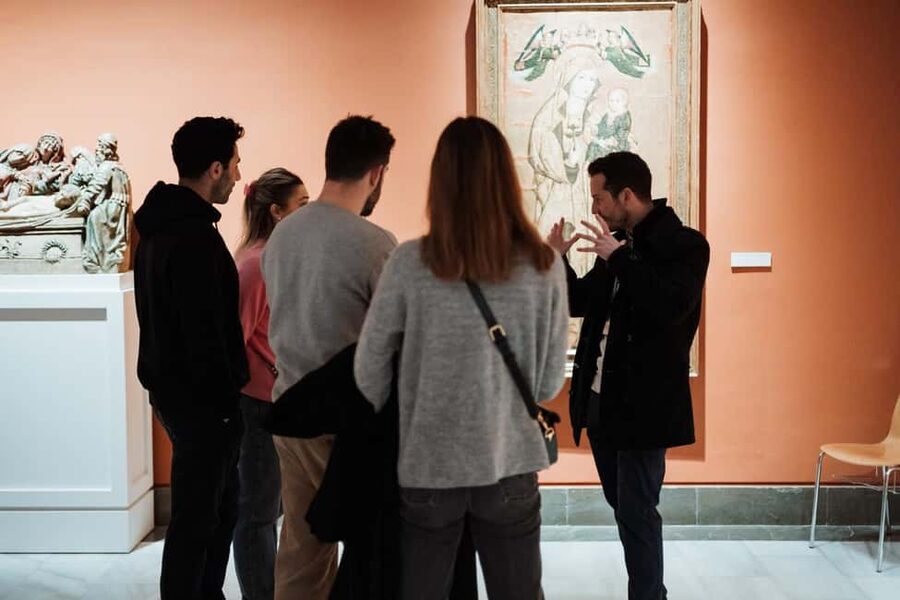
The room dedicated to Bartolomé Esteban Murillo is one of the visit’s central points. Murillo is closely tied to Seville, and the museum gives you a focused look at selected works by the city’s best-known painter.
The value here comes from context. Rather than viewing Murillo as an isolated name in a textbook, you can place his work within Seville’s religious, social, and artistic life. The guide explains the subjects, symbols, and period behind the paintings, making it easier to understand why Murillo’s style became so influential.
Several visitors have found that Julio’s explanations made the paintings feel more accessible, even for people with little art background. He is also praised for answering questions fully and for adjusting his talk to the group. That flexibility is worth paying for because museum visits can otherwise become a blur of labels and dates.
The route also includes other important Sevillian artists and Baroque works. You’ll encounter the dramatic religious feeling that shaped much of Spanish art, but the discussion is not limited to technique. It also considers the connection between art and Spanish society.
If you are interested in religious painting, Murillo alone may justify the visit. If you prefer modern or contemporary art, this museum may not be your first choice. The tour is firmly centered on historic Spanish and Andalusian collections.
What makes the guided format worthwhile
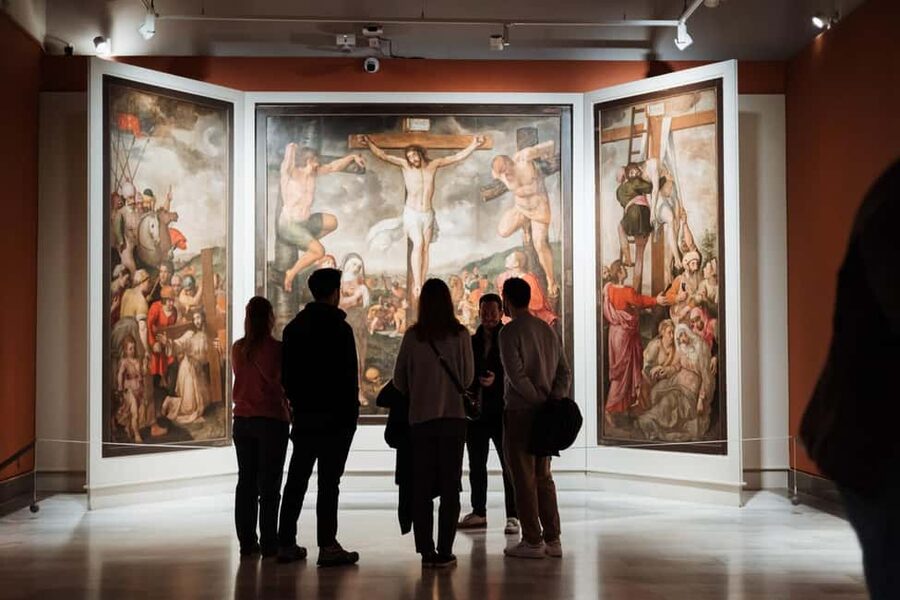
An audio guide can identify a painting. A good local guide can explain why it matters.
That difference is the main reason I would choose this tour over a solo visit. The strongest accounts of the experience praise Julio’s ability to connect individual works with the political, religious, and social period in which they were created. He explains iconography and symbolism in plain language, then gives you enough background to look again with sharper eyes.
The guide also adds a human element. Julio has introduced himself before the tour, answered questions throughout, and offered advice about Seville when asked. His manner is described as friendly and professional, not stiff or overly academic.
That balance is important. A museum talk can become tiring if every work receives a lecture. One particularly strong feature of this visit is the guide’s selection of stories. The route focuses on a manageable number of pieces and gives them enough attention to remain memorable.
The experience is not dependent on Julio alone. Lorraine has also been praised for lively delivery and humor, and the tour is conducted by a licensed guide in English or Spanish. Still, if Julio is listed for your date, his history-based approach will appeal to anyone who wants more than surface-level facts.
Timing, group size, and accessibility
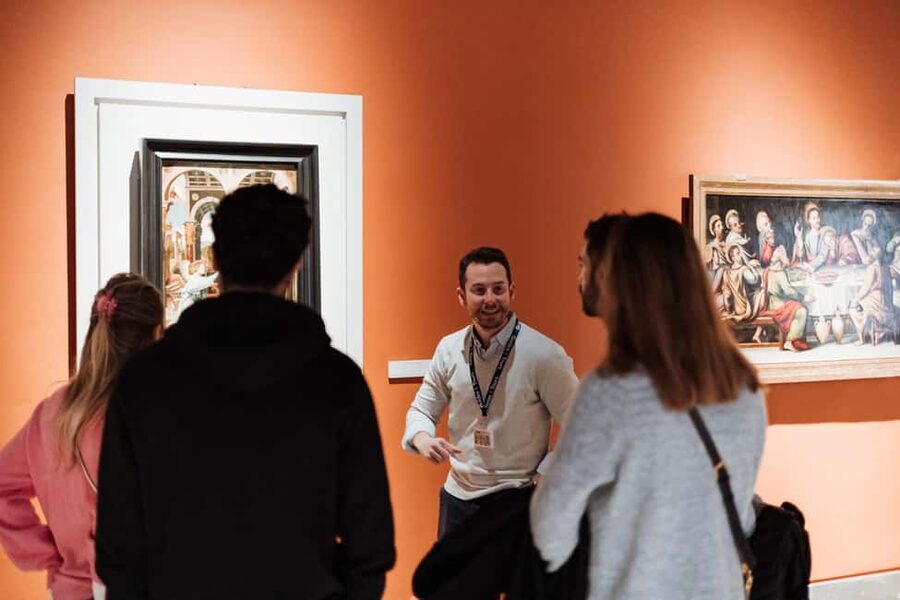
The official duration is two hours. That is long enough for a structured introduction without taking over your entire day in Seville.
I like this length for a first visit. You get a guided route through the building, a selection of major works, and an explanation of the museum’s development. Afterward, you may stay in the museum and continue at your own speed, which solves the main limitation of a timed tour.
The group is limited to eight participants. That small size should make it easier to hear the guide, ask questions, and stand near a painting without being separated from the group. It also makes the experience feel less like a formal lecture.
The museum and tour are wheelchair accessible. Pets are not allowed. Transportation to the meeting point is not included, so you need to make your own way to Plaza del Museo.
Cancellation is free up to 24 hours before the scheduled visit, and you can reserve now while paying later. Those terms are useful if your Seville plans are still shifting, but the most important practical detail remains the starting point: statue of Murillo, blue umbrella or Sevilla Guías & Tours name tag.
Is $23 a fair price?
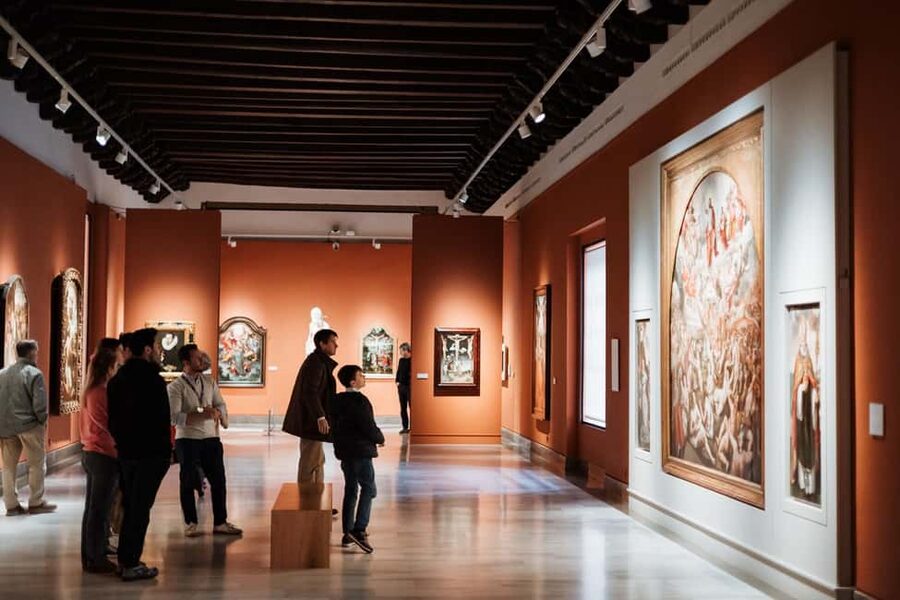
At $23 per person, this is a reasonable museum tour price, especially because admission and the guide are included. The small group also matters. You are paying for access to a local explanation, not only for a ticket you could use independently.
The value is strongest for three types of visitors:
- You are visiting Seville for a short time and want the museum to make sense quickly.
- You enjoy art but want help with Spanish history, religious symbolism, and local artists.
- You prefer asking questions rather than reading wall labels alone.
The value is less clear if you already know the collection well or want to examine every room at length. You will still need extra time after the tour for a thorough visit. The guided portion selects highlights rather than covering every object.
I would treat the $23 as payment for structure and interpretation. The building itself is free of the usual confusion that can come with a large collection, and the guide helps you spend your attention wisely.
Who should book this museum tour?
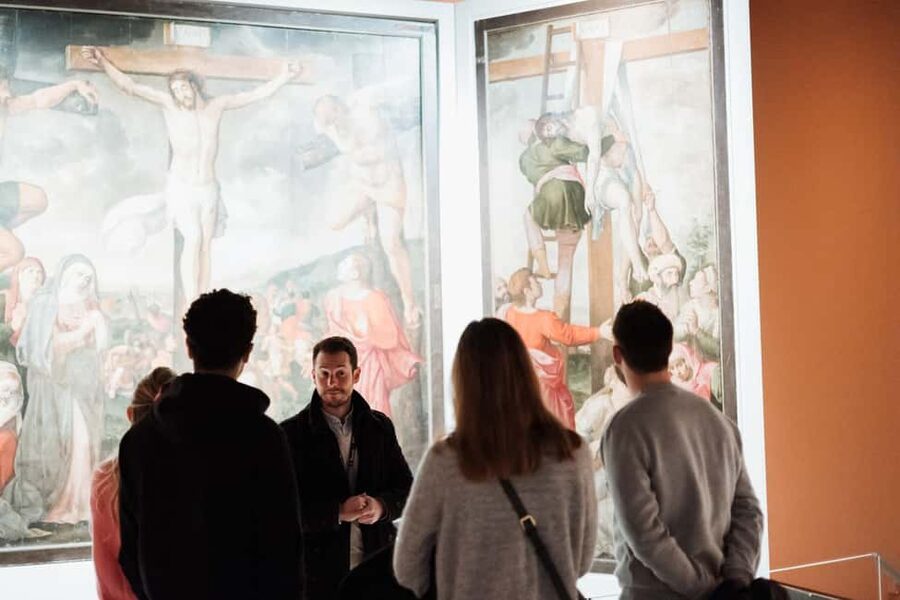
I recommend it for first-time visitors to Seville, couples, families with older children, and anyone who feels uncertain around Spanish religious art. The guide’s storytelling makes the collection easier to approach, and the two-hour format is not overwhelming.
It also works well for art lovers who want local context. You can ask about artists, symbolism, and historical periods, then remain inside afterward to revisit the pieces that interested you most.
I would be more cautious if you dislike guided pacing or prefer modern art. The visit is focused on historic Spanish and Andalusian collections, with particular attention to Gothic, Renaissance, Baroque, Murillo, and Sevillian Costumbrismo works.
FAQ
Where does the Museum of Fine Arts tour begin?
The meeting point is the Asociación Amigos del Museo de Bellas Artes at Plaza del Museo, next to the statue of Murillo.
How will I identify the guide?
Look for a guide with a blue umbrella or a name tag that says Sevilla Guías & Tours.
How long does the guided tour last?
The guided museum visit lasts two hours.
Is museum admission included?
Yes. Entrance to the Museum of Fine Arts of Seville is included in the tour price.
What languages are available?
The tour is available in English or Spanish with a live licensed guide.
How large is the group?
The group is limited to eight participants.
Can I stay in the museum after the guided visit?
Yes. You may remain at the museum after the two-hour tour and continue exploring on your own.
Is the tour wheelchair accessible?
Yes, the activity is wheelchair accessible.
Can I bring a pet?
No. Pets are not allowed.
Should you book it?
Book this tour if you want Seville’s art to come with a clear story. The former convent, the cloisters, the Murillo room, and the Gothic and Renaissance works make the museum worthwhile on their own, but the guide adds the connections that labels often leave out.
At $23, the combination of admission, a small group, express security entry, and two hours with an English or Spanish guide is good value. Choose it especially if Julio is leading your date and you want history, symbolism, and friendly answers rather than a quick list of artists.
Skip it only if you prefer complete independence or plan to spend many hours examining the entire collection. For most first-time visitors, the best plan is simple: take the guided introduction, then stay afterward for a quieter second look.
Recently listed in Seville
- Seville: Small Group Jewish Quarter Tour with Tapas & Drinks★ 5.0 · 119 reviews
- Seville: Alcázar Fast-Track Access with Guided Tour★ 4.2 · 432 reviews
- Seville: Small-Group Jewish Quarter Discovery Walking Tour★ 4.9 · 499 reviews
- Seville: VIP Exclusive Early Access Tour of The Alcazar★ 4.8 · 276 reviews
- Seville: Sunset Roof Top Walking Tour★ 4.5 · 122 reviews
- Seville: 3.5-Hour Spanish Cooking Class & Triana Market Tour★ 4.9 · 751 reviews
- Seville: Flamenco Show at Tablao Almoraima in Triana★ 4.6 · 483 reviews
- Seville: Authentic and Romantic Horse-Drawn Carriage Ride★ 4.5 · 341 reviews
Museums, compared.

FC Barcelona Museum “Barça Immersive Tour” Ticket
Read our review →
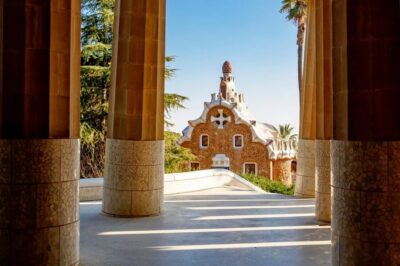
Park Güell and Gaudí House Museum Entry Ticket
Read our review →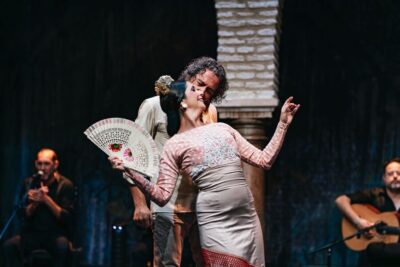
Puro Flamenco Show with Optional Museum Ticket
Read our review →
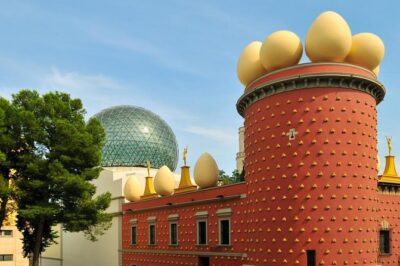
Girona & Dali Museum Small Group Tour with Pick-up from Barcelona
Read our review →
Oceanogràfic, Hemisfèric & Science Museum Combo
Read our review →Browse the lists this tour appears in