Reviewed · MADRID TOURS
Spanish Civil War start of 2 World War, Guernica Franco
War still marks Madrid’s streets. This 2.5-hour walking tour connects bomb-scarred buildings, wartime monuments, and major viewpoints to explain how the Spanish Civil War began and how it led toward Franco’s dictatorship and World War II. I like the clear seven-stop route and the way maps, images, audio, and video bring difficult history into focus.
I also like the human scale of the storytelling, from civilians caught under bombardment to musicians, medics, artists, and families trying to live through war. The main drawback is that this is an outdoor walking experience with no site admissions included, so the value depends on your interest in history and your comfort walking between central Madrid and Moncloa.
In This Review
- Key points at a glance
- Why this Madrid history walk matters
- Plaza del Callao and the scars of central Madrid
- Palacio del Senado and the two divided Spains
- Plaza de España and 900 days under siege
- Templo de Debod, money, and propaganda
- Paseo del Pintor Rosales, Picasso, and civilians under fire
- Cuartel General del Ejército del Aire and wartime innovation
- Victory Arch and the problem of public memory
- Guides, group size, and the feel of the walk
- Who should book this Madrid Civil War tour?
- Should you book it?
- FAQ
- Where does the tour begin?
- Where does the tour end?
- How long does the tour last?
- What language is offered?
- How much does the tour cost?
- How large can the group be?
- Are entry tickets included?
- Can I cancel for a refund?
Key points at a glance
- Seven meaningful stops: The route runs from Plaza del Callao through Plaza de España and Templo de Debod to Madrid’s Victory Arch.
- A strong visual approach: Maps, photographs, audio, and videos help explain events that can otherwise feel distant or confusing.
- History beyond generals: You hear about cinema, propaganda, music, blood transfusion, art, money, and daily life during the war.
- A useful Franco-era context: The tour links the Civil War, the siege of Madrid, the end of the conflict, and the dictatorship that followed.
- An affordable group price: The listed price is $3.62 per group of up to 15, with a maximum activity size of 30 people.
- Guides praised for warmth: Victor, Maikel, Adria, Guillermo, and Chato are named in the feedback, with particular praise for clear and engaging storytelling.
Why this Madrid history walk matters
Madrid is not a city where the Spanish Civil War is confined to one museum. Its memory appears in squares, monuments, government buildings, military sites, and even the names and shapes of public spaces. This tour uses that setting well.
You move through central Madrid toward Moncloa while following the conflict in time. The route begins with the causes of the war, moves into the defense and bombardment of the capital, then turns to propaganda, international support, art, medical innovation, music, defeat, dictatorship, and the question of how societies remember victory.
That structure gives you more than a list of dates. I like that the tour asks how ordinary life continued during the fighting. Would you go to the cinema during wartime? How did people pay for the war? How did art survive when museums and civilians were under threat? Those questions make the subject easier to grasp.
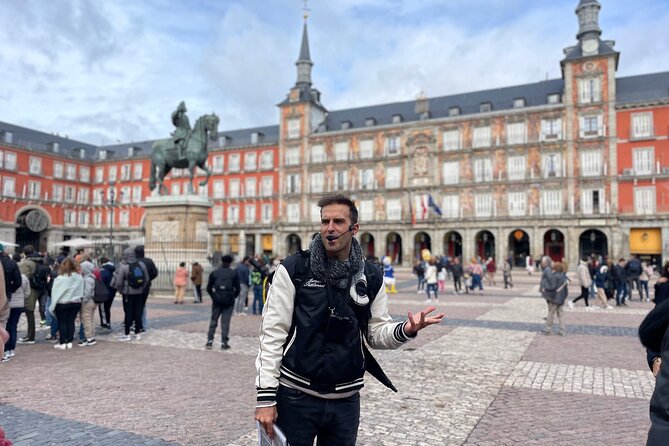
The tour is offered in English, and the guide supplies extra material through maps, images, audio, videos, and other resources. That matters because many of the places on the route look ordinary at first glance. A visual reference can show you what a building looked like during the fighting or help explain where opposing forces were positioned.
A few more Madrid ideas to compare
- Madrid: Tour Bernabéu Entry Ticket
★ 4.5 · 21,573 reviews - Madrid: Prado Museum Entry Ticket
★ 4.6 · 17,509 reviews - Madrid: Royal Palace Fast-Access Admission Ticket
★ 4.6 · 13,856 reviews
Plaza del Callao and the scars of central Madrid
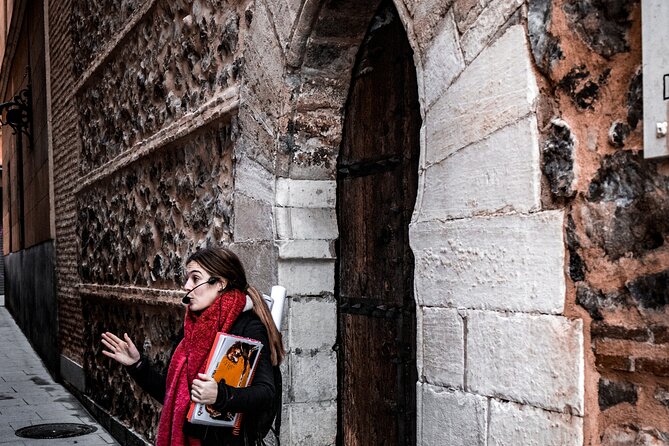
The meeting point is on C. del Postigo de San Martín, 26, near Plaza del Callao. This is a busy central location, easy to reach by public transport, and a fitting place to begin because the first stop deals with bombings in central Madrid.
The opening section focuses on buildings that still carry scars from the conflict. You get an early lesson in the tour’s method: look at the city in front of you, then connect it to what happened there during wartime.
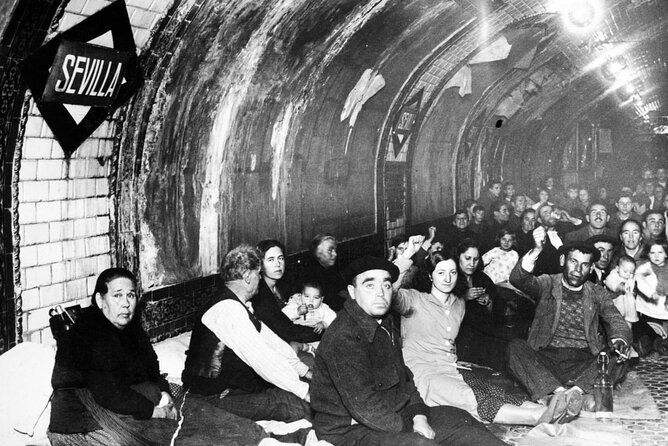
The subject is not only destruction. The guide also examines the life of a Spaniard at war, including the striking question of whether people would still go to the movies. That detail shifts the story away from military movements and toward routine, distraction, fear, and survival.
I find this a good opening because it gives the war a human face before the tour turns to political causes. The stop lasts about 15 minutes, so expect a focused introduction rather than a long lecture. You will want to pay close attention to the visual material, since the buildings themselves may not tell the whole story without explanation.
Palacio del Senado and the two divided Spains
The second stop, at the Palacio del Senado, addresses one of the hardest questions: how did the Spanish Civil War start?
The guide presents Spain as two divided societies, then places the conflict within a wider European setting. The phrase Spain as a World War II test range points to the importance of the war beyond Spain’s borders. This section helps explain why the conflict became such a powerful symbol for competing political ideas and foreign interests.
For me, this is likely one of the most useful parts for anyone who knows the names Franco, anarchists, socialists, or fascists but does not yet understand how they fit together. The tour aims to explain those divisions rather than reduce the war to a simple fight between two neat teams.
You should expect a serious political section here, but the route keeps it tied to a real Madrid building. The stop lasts roughly 20 minutes. If you prefer history presented in a clear sequence, this is where the tour begins to build its main framework.
Plaza de España and 900 days under siege
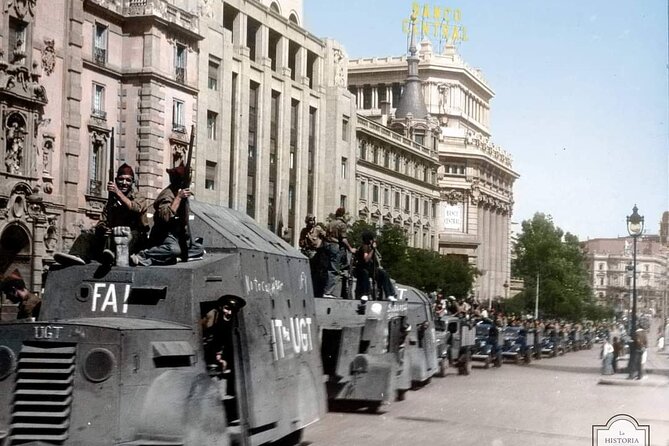
At Plaza de España, the subject turns to Francisco Franco and the defense of Madrid. The tour presents the capital’s siege as lasting about 900 days, a figure that gives you a sense of the conflict’s long strain rather than a brief military episode.
This stop also looks at Madrid under bombardment and at wartime sayings. Those sayings may seem like a small detail, but they show how people use language to cope with danger and political change. I like this blend of major events and everyday expression.
The location is also useful for understanding how public spaces can carry several layers of meaning. Plaza de España is part of modern Madrid life, yet the tour asks you to picture it in a city under pressure. That contrast can make the past feel close without turning the experience into a staged performance.
The stop lasts about 15 minutes. The subject is weighty, so the guide’s presentation style matters. The strongest feedback names Victor as friendly and full of information, with praise for making the subject educational and fun. That balance is valuable here, where too much detail can become hard to follow.
Same base, a different kind of afternoon:
- Madrid: “Emociones” Live Flamenco Performance
★ 4.8 · 12,866 reviews - Madrid: Panoramic Route City Tour
★ 4.1 · 12,259 reviews - Madrid: Live Flamenco Show with Food and Drinks Options
★ 4.5 · 9,901 reviews - Avila & Segovia Tour with Tickets to Monuments from Madrid
★ 5.0 · 9,762 reviews
Templo de Debod, money, and propaganda
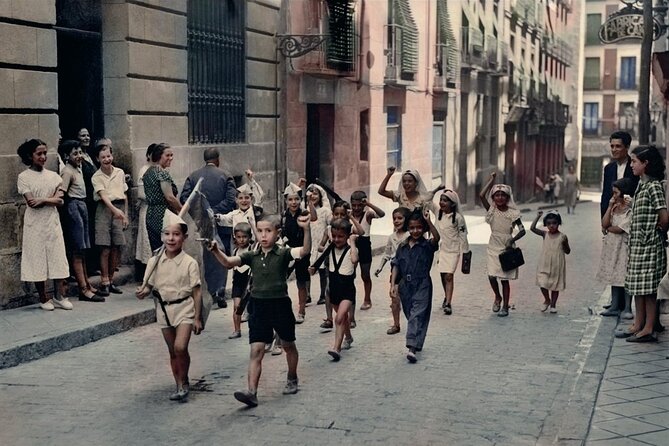
The walk continues to the Templo de Debod, where the focus shifts from battlefield events to the machinery behind war. The guide asks who paid for the conflict and explains propaganda as a war of ideas.
This is an important change of pace. Armies need money, but wars also need stories. Each side must persuade people that its cause is just, its sacrifices necessary, and its opponents dangerous. By putting finance and propaganda together, the tour shows how a civil war reaches far beyond the front line.
The Templo de Debod itself adds a memorable setting, although the experience described here does not require an entry ticket. You are using the area as part of a walking route and historical discussion, not taking a guided visit inside a paid attraction.
The stop also includes the Sculpture to the Fallen of the Civil War. That brings the story back to memory and mourning. A monument can honor the dead, shape public memory, or raise uncomfortable questions about who receives recognition. The stop lasts around 20 minutes, giving the guide room to connect money, ideas, monuments, and the city around you.
Paseo del Pintor Rosales, Picasso, and civilians under fire
At Paseo del Pintor Rosales, the tour takes up one of the most recognizable subjects connected with the Spanish Civil War: Picasso’s Guernica and the bombing of civilians.
The point is not simply to mention a famous painting. The subject is how an attack on civilians became an artistic and political image with meaning far beyond the town itself. This part can help you understand why Guernica remains tied to the wider story of modern warfare and civilian suffering.
The guide also discusses the Prado Museum and art under fire. That broadens the subject from one painting to the problem of protecting cultural works during war. You are encouraged to think about museums and masterpieces as part of a society’s identity, not just as attractive stops on a sightseeing list.
A lighter but still revealing topic follows: Christmas during a truce. The idea of a temporary pause offers a brief look at how people might search for relief even while the wider conflict continued. It is a reminder that war is made of pauses and routines as well as battles.
This 20-minute stop should suit you if you enjoy history through art. It may feel less satisfying if you want only military facts, but the route’s strength is precisely its wider view of the conflict.
Cuartel General del Ejército del Aire and wartime innovation
The sixth stop is at the Cuartel General del Ejército del Aire. Here, the tour brings in music, including They Won’t Happen and Cara al Sol, as well as the first remote blood transfusion.
Music provides a direct route into political identity. Songs can rally supporters, create belonging, and carry a message well beyond a speech. Including them helps you see propaganda as something people heard and remembered, not just something printed on a poster.
The blood transfusion story introduces a different kind of wartime history. Medical care had to respond to mass injury and difficult conditions, and the first remote blood transfusion is presented as an example of life-saving work in the middle of death. This is one of the tour’s most distinctive details because it shifts attention from ideology to practical human effort.
The section then connects the end of the war with the beginning of World War II and the dictatorship. That link is central to the entire experience. The Spanish Civil War was not an isolated chapter that ended neatly when fighting stopped. Its aftermath shaped Spain for decades, while the international forces and political ideas involved pointed toward a wider European crisis.
This stop lasts about 15 minutes. It packs several subjects into a short period, so you may want to ask the guide to repeat a name or song title if you want to explore the topic later.
Victory Arch and the problem of public memory
The final stop is the Victory Arch, or Arco de la Victoria, near Moncloa. The route ends here with a direct question: should the arch be destroyed or preserved?
That question gives the tour a thoughtful ending. Victory monuments are never only stone and ceremony. They can honor one side, remind others of defeat, or become part of a later argument about memory and public space. The guide uses the arch to consider how Madrid deals with the physical remains of war and dictatorship.
The stop also includes reflections on wars. This keeps the ending from being a simple declaration of who won. Instead, you are left with the problems that remain after the guns fall silent: who controls the story, what gets commemorated, and how a city lives with symbols that carry painful meaning.
The finish is at Arco de Moncloa, Av. de la Memoria, 32, close to Metro Moncloa. That makes the end practical for continuing your day, though the route crosses a substantial part of Madrid and you should wear comfortable shoes.
Guides, group size, and the feel of the walk
The guide is a major part of the experience. The names attached to the tour include Victor, Maikel, Adria, Guillermo, and Chato. The strongest praise centers on guides who are clear, warm, authentic, and able to make a difficult subject interesting without losing its seriousness.
Chato is specifically noted for giving more time than the planned 2 hours and 30 minutes. That suggests the pace can sometimes stretch when the guide is answering questions or adding context, though you should not assume every departure will run long.
The advertised price is for a group of up to 15 people, while the activity maximum is 30. That difference is worth clarifying at booking if group size matters to you. A smaller group usually makes it easier to hear the guide and ask questions, while a larger group can feel less personal.
There are no required admissions on the route. The supplied maps, images, audio, and videos are included, along with a link to personalized Madrid recommendations and continued attention from the guide after the tour. The listed price of $3.62 per group is exceptionally low for a 2.5-hour guided experience, so it offers strong value if the price is current. I would still check the final booking total and group terms before relying on that figure.
Who should book this Madrid Civil War tour?
I would choose this tour if you want a clear introduction to the Spanish Civil War without spending the day inside a museum. It suits history-focused visitors, students, politically curious readers, and anyone planning to visit places such as the Prado Museum or the Templo de Debod with more context.
It also works well early in a Madrid stay. The route helps you get your bearings between central Madrid and Moncloa, while the guide’s personalized recommendations may help shape the rest of your visit.
You may want to skip it if you dislike walking tours, outdoor history talks, or discussions of fascism, anarchism, socialism, dictatorship, and civilian suffering. The subjects are serious, even when the guide adds humor and everyday stories.
The tour is offered in English, service animals are allowed, and most people can participate. Confirmation arrives at booking. Free cancellation is available up to 24 hours before the start time, but changes or cancellations inside that window are not accepted for a refund.
Should you book it?
Yes, if you want Madrid’s Civil War story tied to actual streets, buildings, monuments, art, and public memory. I especially like the range of subjects: cinema, money, propaganda, Guernica, music, medical care, and the politics of monuments.
Book it with realistic expectations. This is not a museum visit with extensive indoor displays, and the low listed price may not remain the same. It is a guided city walk, and its success depends on the guide’s ability to make complex politics understandable. The consistent praise for Victor, Maikel, Adria, Guillermo, and Chato suggests that the human side of the experience is a real strength.
FAQ
Where does the tour begin?
It begins at C. del Postigo de San Martín, 26, Centro, 28013 Madrid, Spain.
Where does the tour end?
It ends at Arco de Moncloa, Av. de la Memoria, 32, Moncloa-Aravaca, 28040 Madrid, near Metro Moncloa.
How long does the tour last?
The scheduled duration is approximately 2 hours and 30 minutes.
What language is offered?
The tour is offered in English.
How much does the tour cost?
The listed price is $3.62 per group of up to 15 people.
How large can the group be?
The price information refers to groups of up to 15 people, while the activity maximum is 30 travelers.
Are entry tickets included?
There are no required site entries on this route, and admissions are not included because they are not necessary.
Can I cancel for a refund?
Yes. You can cancel up to 24 hours before the experience start time for a full refund. Cancellations or changes made less than 24 hours before the start time are not accepted.
Recently listed in Madrid
- From Madrid: Ribera del Duero Tour of 3 Wineries w/ Tastings★ 4.9 · 150 reviews
- Madrid: Royal Palace VIP Tour with Skip-the-Line Ticket★ 4.3 · 645 reviews
- Madrid: Las Ventas Bullring VIP Private Guided Tour★ 5.0 · 151 reviews
- Photographic tour of Madrid with a professional photographer★ 5.0 · 104 reviews
- Zarzuela Opera and Dinner at La Castafiore Restaurant in Madrid★ 5.0 · 143 reviews
- Madrid Local’s Wine and Tapas Lunch Tour with a side of History★ 5.0 · 101 reviews
- Wine Tasting near Plaza Mayor in Madrid★ 5.0 · 210 reviews
- Tapas and history tour ending with churros with chocolate★ 5.0 · 119 reviews
Madrid Tours, compared.
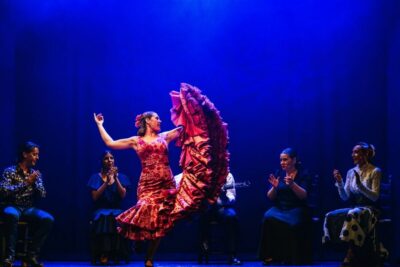
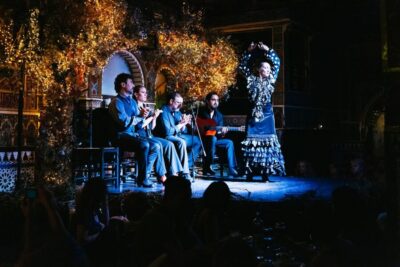
Live Flamenco Show with Food and Drinks Options
Read our review →
Avila & Segovia Tour with Tickets to Monuments from Madrid
Read our review →