
Reviewed · WINE TOURS
Wine Tasting near Plaza Mayor in Madrid
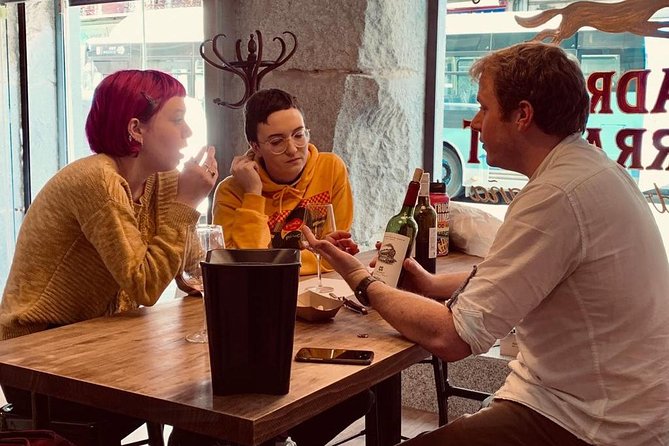
Wine can explain Spain better than a guidebook. This one-hour tasting near Plaza Mayor uses three Spanish wines, a map of the country, and plenty of humor to introduce you to the basics without making wine feel like school. I like the friendly, informal style, and I like that the small group, capped at 10 people, leaves room for questions. The main thing to watch is timing: the session is advertised at about an hour, but it can run closer to 90 minutes.
The tasting takes place at Madrid & Darracott, a small wine shop on Calle del Conde de Romanones, 2. I especially like the mix of a white and two reds, since you get a quick sense of Spain’s range, and the convenient central location makes this a smart stop before dinner or a night out. If you want a technical tasting focused on detailed notes for each bottle, this may feel too broad and playful.
In This Review
- Key points to know before booking
- Meeting at Calle del Conde de Romanones
- Three glasses that show Spain’s range
- Learning regions without the wine-school stiffness
- A funny, informal hour in Madrid
- Why the timing matters near Plaza Mayor
- Is $30.25 a fair price?
- Who will enjoy this experience most?
- Practical details before you go
- Should you book this Madrid wine tasting?
- FAQ
- Where does the wine tasting begin?
- Does the experience take place near Plaza Mayor?
- How many wines are included?
- How long does the tasting last?
- Is the tasting offered in English?
- How many people can join the group?
- Can I cancel for a full refund?
Key points to know before booking
- Three Spanish wines: You taste one white and two reds from different parts of Spain.
- A useful regional introduction: The session explains Spanish wine regions, grape styles, DO areas, ordering, and basic tasting technique.
- Small, social setting: The group limit is 10, which helps keep the discussion personal.
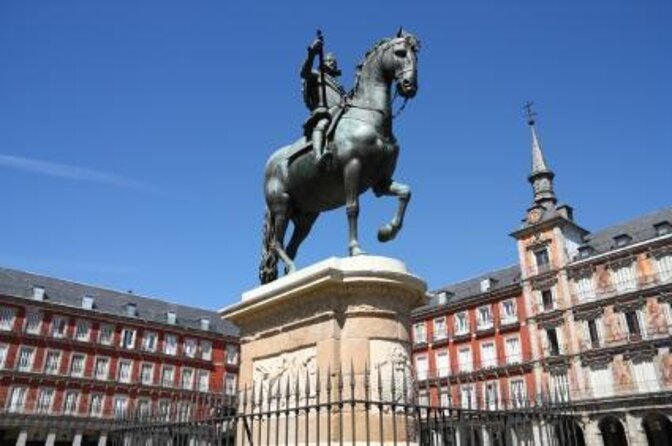
- Near Plaza Mayor: The shop is in central Madrid and close to public transportation.
- Funny rather than formal: Luke Darracott and other hosts use jokes and an irreverent style to keep the lesson light.
- Plan beyond one hour: The tasting can continue for around 90 minutes, especially when questions and conversation get going.
Meeting at Calle del Conde de Romanones
The experience begins at Madrid & Darracott, Vinos y experiencias, at Calle del Conde de Romanones, 2, in Madrid’s Centro district. Plaza Mayor is the listed sightseeing stop, but the actual meeting point is the shop, so use the full street address when finding your way there.
This location works well in a day spent around central Madrid. You can visit Plaza Mayor, walk through the surrounding streets, and then pause for an educational aperitif without committing half a day to a winery outside the city. The activity ends back at the same shop, so there is no second meeting point to find.
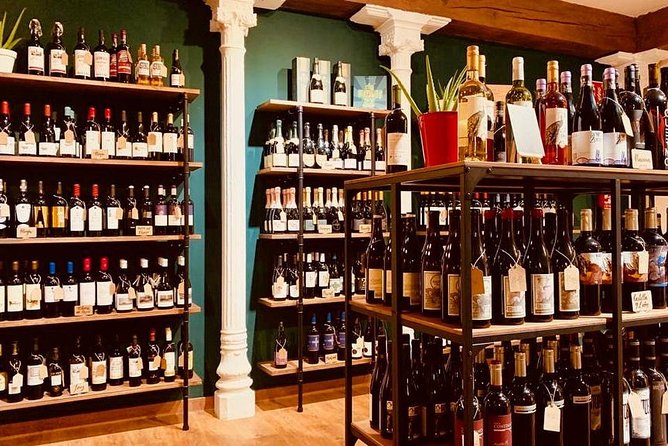
The shop itself is described as cosy and elegant, with a boutique feel rather than a large restaurant or formal wine school. That matters because the setting encourages conversation. You are not being moved from room to room or rushed through a grand production. You sit, taste, listen, and talk.
The small maximum of 10 people is another practical plus. A group this size usually gives you a better chance to ask about a grape, region, or tasting habit that puzzles you. It also makes the social side more natural, especially if you are traveling alone or want an easy way to meet other people over a glass of wine.
More Food Tours in Madrid
- Madrid: Live Flamenco Show with Food and Drinks Options
★ 4.5 · 9,901 reviews - Toledo Tour & Vineyard Walk with Wine Tasting from Madrid
★ 5.0 · 2,546 reviews - Madrid: Tapas & Wine Tasting Tour with Local Guide
★ 4.8 · 2,171 reviews
Three glasses that show Spain’s range
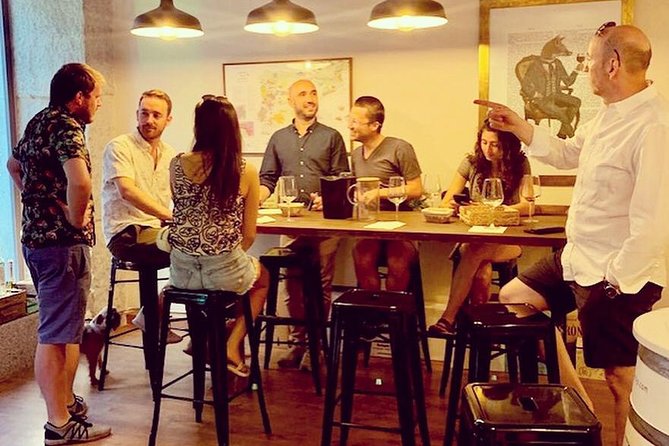
The tasting includes three glasses: one white and two reds. The point is not to sample a long list of bottles. It is to use a few contrasting wines to show how much variety exists across Spain.
The white gives the session a clear change of pace before the reds arrive. The two red wines then help demonstrate that Spanish red wine is not one single style. The wines come from different Spanish growing areas, according to the experience details shared during the session, so the tasting connects what is in your glass to where it was produced.
You should not expect the exact wines to be selected around a fixed published menu. The focus is an introduction to Spanish wine as a whole. That means the bottles may be chosen to explain regional patterns and basic tasting ideas rather than to offer a collector’s flight.
The pours are described as generous. That is good value, but it also explains why the tasting may feel more like a relaxed social hour than a strict professional tasting. If you are new to wine, three properly sized glasses give you enough to compare without overwhelming you. If you already know Spanish wine well, you might wish for more bottles or more detailed discussion of each one.
One useful point is that the staff can respond to preferences. One participant requested only red wines and had that request accommodated. It is wise to ask ahead rather than assume, but the experience appears able to adjust when a preference is made clear.
Learning regions without the wine-school stiffness
The central teaching tool is a map of Spain and its DO regions. DO, short for Denominación de Origen, refers to Spanish wine areas with rules and identities linked to production. You are introduced to how regions work, how wine fits into Spanish culture, and what to notice when ordering or tasting.
That regional approach is useful for a first visit to Spain. Instead of memorizing a long list of grape names, you get a framework for reading a wine menu. You begin to connect the name of a place with the style of wine it may produce, which can make later meals and bar stops more interesting.
The hosts also cover basic tasting technique. You learn how to approach the wine, what to look for, and how to taste with more purpose. The explanations are aimed at normal people, not at aspiring sommeliers. That is one of the activity’s strongest qualities.
Luke Darracott is frequently praised for making the subject easy to follow and funny. Siegfried is also noted for being friendly, prepared, and clear, while Rocky is remembered for an entertaining session about Spanish varieties and wine service. The specific host may vary, but the common thread is a relaxed presentation rather than a stiff lecture.
There is an important limit here. This tasting is not built around detailed notes for every bottle. You may not receive a full breakdown of the exact wine, its producer, or every grape variety. One dissatisfied participant wanted more information about the wines actually being poured and felt that the session did not provide enough education on those bottles.
The provider’s position is clear: this is an introduction to Spanish wine, not a tasting tailored to one particular wine or region. I would treat that as the best way to set your expectations. Come to understand the broad system, learn how to taste, and enjoy the atmosphere. Do not book it if your main goal is to compare specific vintages or buy bottles based on a detailed technical explanation.
A funny, informal hour in Madrid
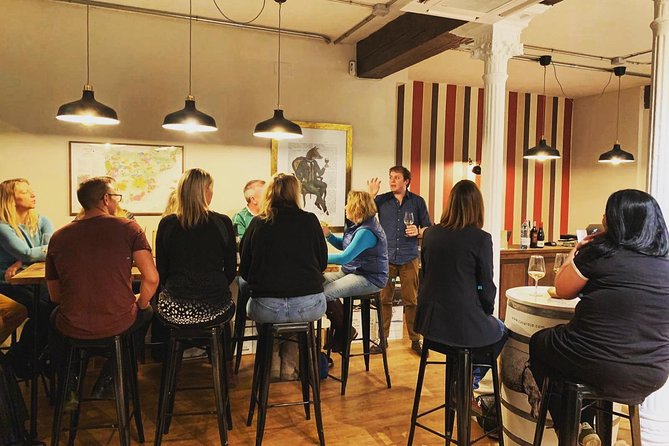
The humor is not a side note. It is part of the format. The host uses terrible jokes, playful comments, and an irreverent manner to make the class feel less formal.
That style works especially well if wine terms usually make you nervous. You can ask a basic question without feeling that everyone else knows more than you. The relaxed mood also helps the group interact. Several sessions are described as social, with time to chat with people from different places while trying the wines.
I like this approach for a first tasting. Wine can become needlessly serious, and a little humor helps you remember the useful parts. You are more likely to recall a regional fact or tasting tip if it is delivered with a laugh rather than a list of technical definitions.
Still, the tone will not suit everyone. If you prefer quiet concentration, precise tasting notes, and a formal presentation, the jokes may get in the way. Some people describe the event as feeling almost like a comedy performance alongside the wine lesson. That is a compliment for the right audience, but a warning for anyone seeking a serious certification-style class.
The atmosphere also depends on the group. With up to 10 people, the session can become lively and conversational. That is part of its appeal, but it means the pace may not be identical each time. A group that asks many questions can run well beyond the planned hour.
More Wine Tastings in Madrid
- Madrid Tapas & Wine Tour with Rooftop Views and Local Guide
★ 5.0 · 2,047 reviews - Madrid Countryside Wineries Guided Tour with Wine Tasting
★ 5.0 · 740 reviews - Madrid: Guided Tapas and Wine Tour with Terrace Visit
★ 4.8 · 566 reviews - Ribera del Duero Wineries Guided Tour & Wine Tasting from Madrid
★ 5.0 · 328 reviews
Why the timing matters near Plaza Mayor
The advertised duration is about one hour, which makes the tasting easy to fit between sightseeing plans. In practice, you should leave more space. Some sessions have lasted around 90 minutes, particularly when the host and group continue talking.
That is not necessarily a problem. A wine tasting feels better when you are not being pushed out after the third glass. But it can affect a dinner reservation, museum entry, or evening show. I would avoid booking a table immediately afterward unless the restaurant is flexible or nearby.
The best time to schedule this is during a loose part of your day. It works well before an evening meal, as an afternoon pause, or as a first activity before exploring Madrid’s central nightlife. It is less suitable when you have a tight sequence of timed attractions.
The location near Plaza Mayor gives you several ways to build the tasting into a day. You can use it as a break from walking, an introduction to Spanish food and drink, or a social start to the evening. Because you return to the same shop at the end, you can continue on foot from the central district.
Is $30.25 a fair price?
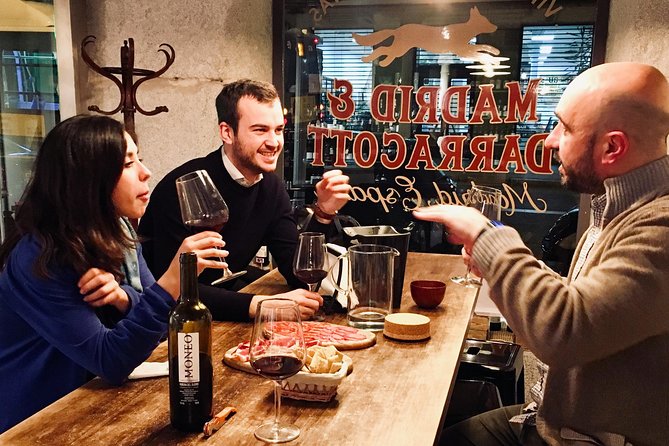
At $30.25 per person, the value depends on what you want from a tasting. You receive three glasses of Spanish wine, a professional guide, a lesson about Spanish regions and wine culture, and a small-group setting. In central Madrid, that is a reasonable price for an organized introduction, especially if you value explanation and conversation as much as the wine itself.
You are not paying for a long winery visit, a meal, or a large flight of wines. The experience is compact and urban. Its value comes from the guide’s interpretation and the chance to taste several Spanish styles in one sitting.
The generous pours also help the price feel fair, though you should pace yourself. Three generous glasses can be more alcohol than the number suggests, particularly if the session continues past an hour. Eat beforehand or pair the tasting with a meal later rather than treating it as a substitute for lunch or dinner.
The shop also has wines available for purchase. That gives the lesson a practical follow-up. If a style appeals to you, you may be able to buy a bottle, though you should ask the host for the exact name and details of anything you want to take home.
Who will enjoy this experience most?
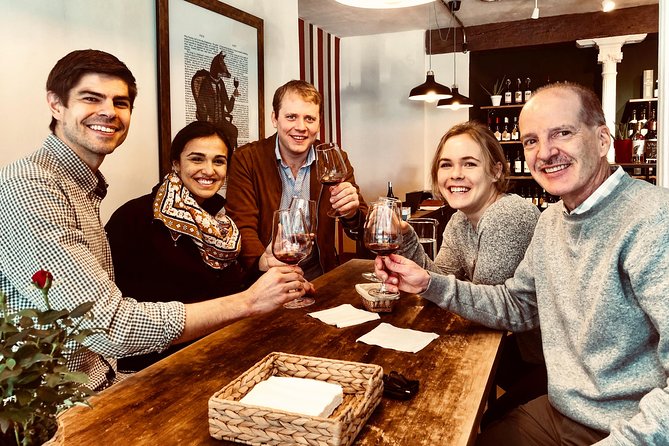
I would recommend it first to people who are new to Spanish wine, casual wine drinkers, and anyone who prefers a friendly lesson over a formal tasting. It is also a good fit if you are traveling alone and want a small social activity in a central part of Madrid.
You will get the most from it if you are curious about regional differences but do not yet know how Spanish wine is organized. The map of Spain and its DO regions gives you a useful starting point for ordering wine during the rest of your trip.
It suits couples and friends, too, especially if one person knows little about wine and the other does not want an overly technical event. The humor keeps the experience accessible.
I would look elsewhere if you want a deep producer-by-producer study, a fixed lineup of five or more wines, or a detailed record of each bottle. One participant specifically preferred smaller pours of more wines, and that is a fair criticism for people who want breadth. Here, the emphasis is on three generous glasses and a broad lesson.
Practical details before you go
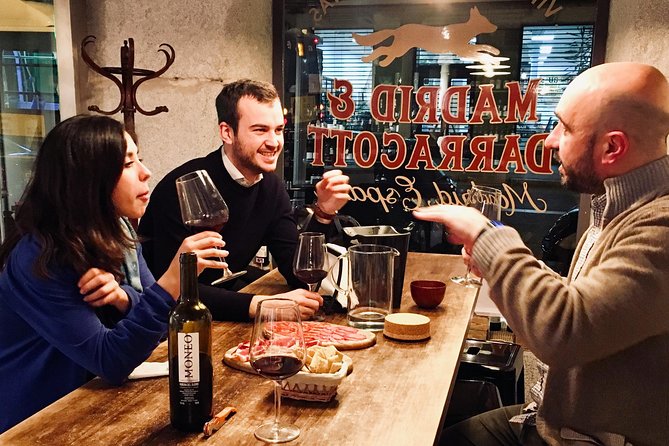
Your confirmation is issued at booking, and the activity is offered in English. A mobile ticket is accepted, so you do not need to print a paper voucher.
The shop is near public transportation, and service animals are allowed. The group limit is 10 people. The experience begins and ends at Madrid & Darracott, rather than taking you onward to another neighborhood or winery.
The activity has free cancellation up to 24 hours before the local start time. Cancellations or changes made inside that window are not refunded or accepted. The experience also requires a minimum number of people, so if the provider cancels because that number is not reached, you are offered another date or experience, or a full refund.
Because the start point is a shop address rather than simply Plaza Mayor, allow a little time to locate Calle del Conde de Romanones, 2. Arriving at the correct street address is more important than waiting at the middle of the square.
Should you book this Madrid wine tasting?
Book it if you want three Spanish wines, a clear regional introduction, and a host who keeps the mood light. The central location, small group, English presentation, and flexible timing make it easy to add to a Madrid itinerary.
I would book this as a first step into Spanish wine, not as a specialist tasting. Expect a white and two reds, generous pours, broad information about Spanish regions, and plenty of jokes. Leave about 90 minutes in your schedule, even though the advertised duration is one hour.
For the right person, the best part is the balance: you learn enough to make later wine choices with more confidence, but you do not need to arrive with technical knowledge. If you take wine very seriously or want detailed facts about every bottle, choose a more focused tasting. If you want an enjoyable central-Madrid stop that combines wine, conversation, and a practical introduction, this is a good-value choice.
FAQ
Where does the wine tasting begin?
It begins at Madrid & Darracott, Vinos y experiencias, Calle del Conde de Romanones, 2, Centro, 28012 Madrid, Spain.
Does the experience take place near Plaza Mayor?
Yes. Plaza Mayor is the listed stop, and the meeting point is at a nearby shop in central Madrid.
How many wines are included?
Three glasses are included: one white wine and two red wines.
How long does the tasting last?
The advertised duration is approximately one hour. It can last around 90 minutes, so leave extra time if you have another booking afterward.
Is the tasting offered in English?
Yes. The experience is offered in English.
How many people can join the group?
The activity has a maximum of 10 participants.
Can I cancel for a full refund?
Yes, if you cancel at least 24 hours before the local start time. Cancellations or changes made less than 24 hours in advance are not refunded or accepted.
Recently listed in Madrid
- From Madrid: Ribera del Duero Tour of 3 Wineries w/ Tastings★ 4.9 · 150 reviews
- Madrid: Royal Palace VIP Tour with Skip-the-Line Ticket★ 4.3 · 645 reviews
- Madrid: Las Ventas Bullring VIP Private Guided Tour★ 5.0 · 151 reviews
- Photographic tour of Madrid with a professional photographer★ 5.0 · 104 reviews
- Zarzuela Opera and Dinner at La Castafiore Restaurant in Madrid★ 5.0 · 143 reviews
- Madrid Local’s Wine and Tapas Lunch Tour with a side of History★ 5.0 · 101 reviews
- Tapas and history tour ending with churros with chocolate★ 5.0 · 119 reviews
- Atletico de Madrid Stadium & Interactive Museum Admission Ticket★ 4.5 · 183 reviews
Wine Tours, compared.

Montserrat & Cogwheel Train, Gourmet Wine Tasting & Tapas/Lunch
Read our review →
Montserrat with Black Madonna & Medieval Winery with Tapas/Lunch
Read our review →
Montserrat and Winery Tour with Tapas or Lunch
Read our review →
Ronda+Setenil de las Bodegas with Little Train
Read our review →

Toledo Tour & Vineyard Walk with Wine Tasting from Madrid
Read our review →
Málaga & Costa del Sol: Ronda and Setenil de las Bodegas
Read our review →
Browse the lists this tour appears in