
Reviewed · SPAIN
Costa Brava: Via Ferrata Cala del Molí
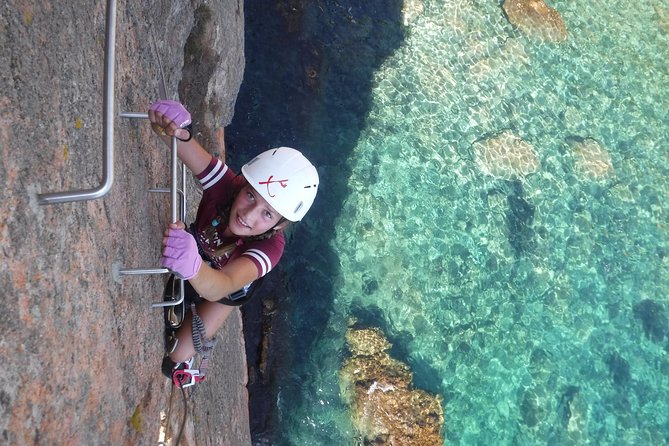
Sea cliffs make a fine climbing wall. The Via Ferrata Cala del Molí gives you a rare chance to move along Costa Brava cliffs above the Mediterranean using fixed cables, metal steps, bridges, and safety equipment. I like the spectacular coastal setting and the clever two-part route, which lets you begin gently before deciding if you want more. I also like that the price includes a guide, equipment, insurance, photographs, and a small picnic. The main caution is simple: the second section demands real upper-body strength, and the quality of your day can depend heavily on the guide and group pace.
This is not a traditional rock-climbing outing. Much of the route uses metal footholds, chains, rings, and a fixed safety cable, so you are following a prepared line rather than searching for natural handholds. That makes it approachable for beginners, but it can still feel strenuous, especially in hot weather. Some participants finished in about two hours, while the advertised time is three to four hours.
In This Review
- Key points to know before booking
- The setting: Sant Feliu de Guíxols, not Figueres
- Getting started on the fixed route
- Part one: the friendly introduction
- Part two: harder, higher, and more rewarding
- Bridges, cliffs, and the Mediterranean view
- Guides can shape the whole experience
- Photographs, picnic, and what the price covers
- Timing, group size, and the practical risks
- Who should book Cala del Molí?
- Should you book it?
- FAQ
- Where does the Via Ferrata Cala del Molí take place?
- How long does the activity last?
- Is this suitable for beginners?
- What is included in the price?
- Is the activity offered in English?
- What happens if the weather is bad?
Key points to know before booking
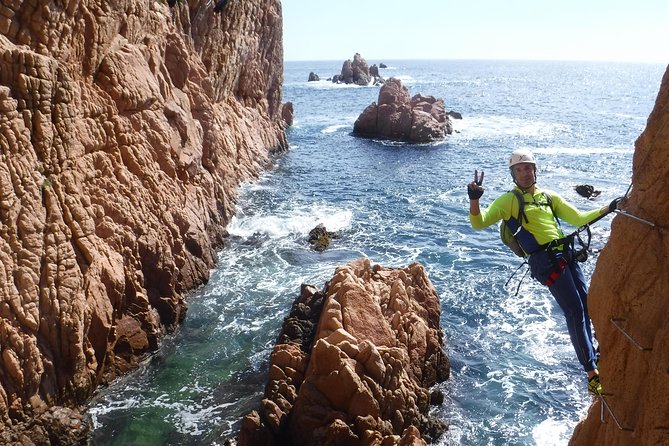
- The route runs beside the Mediterranean at Sant Feliu de Guíxols, not in Figueres itself, despite Figueres being used as the general location in the booking information.
- Two sections create a useful built-in choice: an easier opening section and a harder continuation with an exit point in between.
- The views are the star of the show, with coastal cliffs, sea air, and a rare combination of mountain movement and open water.
- A qualified guide, technical equipment, accident insurance, photographs, and a mini picnic are included in the $48.31 price.
- The advertised group limit is six people, which should allow closer guidance, though one account described a group of seven.
- You need moderate fitness, comfort with heights, and enough arm strength to manage the cable, steps, and pauses.
The setting: Sant Feliu de Guíxols, not Figueres
The activity takes place at Cala del Molí in Sant Feliu de Guíxols, in Baix Empordà. The meeting point is Carretera de Sant Pol, 200, 17220 Sant Feliu de Guíxols, Girona, Spain. The activity ends at the same place.
This matters when planning your day. Figueres is listed as the general location, but the actual meeting point is on the Costa Brava coast. If you are staying in or near Barcelona, the drive can be a practical day trip. One couple reported a drive of a little less than an hour and a half from Barcelona by rental car, using easy roads and enjoying the scenery along the way.
You should not treat this as an activity you can casually walk to from central Figueres. Check the route to Sant Feliu de Guíxols carefully, allow time to find the meeting point, and confirm parking details with the operator before setting out. Public transportation is nearby, but the supplied information does not specify the exact bus or train connection.
The approach to the route takes about two minutes. That is good news if you dislike long uphill walks before the main activity. You get fitted with your harness and technical gear, receive instructions, and reach the climbing section quickly.
More things to book in Spain:
- Barcelona: Sagrada Familia Entry Ticket with Audio Guide
★ 4.6 · 105,312 reviews - Barcelona: Park Güell Admission Ticket
★ 4.4 · 76,534 reviews - Seville: Royal Alcázar Entry Ticket
★ 4.6 · 28,378 reviews
Getting started on the fixed route
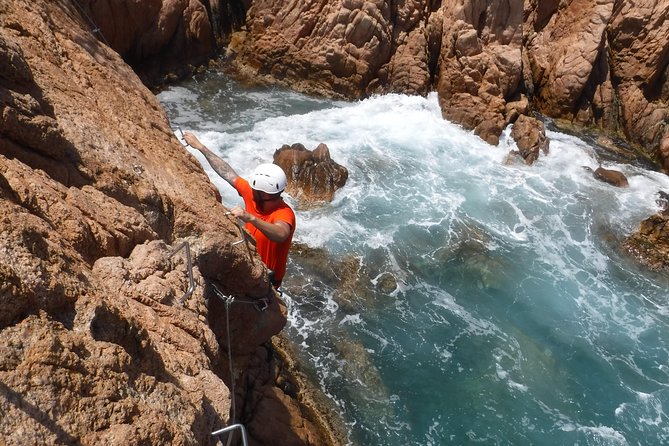
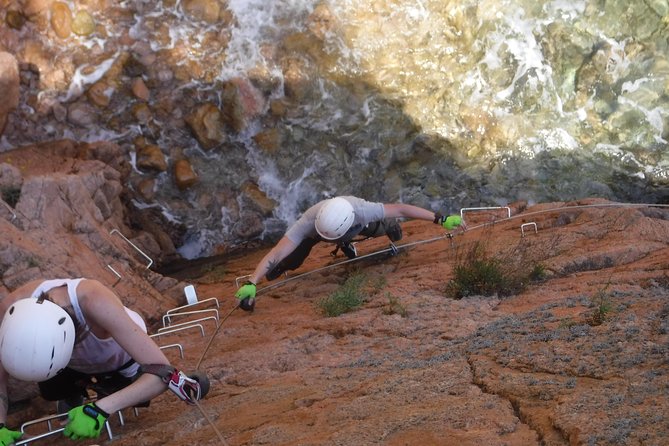
A via ferrata is a protected climbing path. You move along a steel cable while connected with safety equipment, switching your attachments from one section of cable to the next. Metal steps and other fixed aids provide footholds, and bridges add variety.
The guide should explain how to clip and move the equipment before you start. That instruction is especially important for first-timers. Several people praised Miguel for patiently demonstrating the clipping process and checking that everyone understood how to use the harness. One first-time participant with a fear of heights felt secure enough to enjoy the route, which says a great deal about how much clear instruction can change the experience.
The opening section is designed as the introduction. It is generally described as easy to moderate and offers views without immediately throwing you into the hardest physical work. You may encounter metal steps, D-rings, chain sections, and stretches where the cable supports your movement.
Do not confuse easy with effortless. You still need to climb, balance, pause, and manage your body close to the rock. The route includes vertical and horizontal movement, so your legs and arms both work. If you are new to this, the first section gives you time to learn the rhythm without committing to the entire route.
Part one: the friendly introduction
The first part is the best fit for beginners, families with reasonable fitness, and anyone unsure about heights. You can learn the basic movement pattern, get used to the exposure, and see how your body responds before making a decision about the harder continuation.
A useful feature is the chance to stop at the midpoint. You may leave the route there if you are tired or decide the next section is beyond your comfort level. There are also exit options at other points according to the information provided. This makes the activity more flexible than a route where everyone must complete the same demanding circuit.
I would still avoid booking this casually if you have no recent physical activity. The operator asks for moderate fitness, and the route requires more than a sightseeing walk. You should be comfortable stepping up repeatedly, holding yourself steady, and remaining attached to the cable while moving through exposed sections.
The first section also gives the guide a chance to assess your progress. This is useful when done well. A guide may recommend that you stop if your grip, balance, or energy is not holding up. That can be frustrating if you feel eager to continue, but safety decisions need to account for the whole group and the route ahead.
The less welcome side is that guide judgment can feel too quick or too blunt. One family felt that their guide made unfair assumptions about who could manage the second section. Another participant said the guide provided too little help for inexperienced climbers. These accounts are not the dominant pattern, but they are worth keeping in mind. If you are unsure, ask what the harder section involves and explain your experience clearly before the decision is made.
Part two: harder, higher, and more rewarding
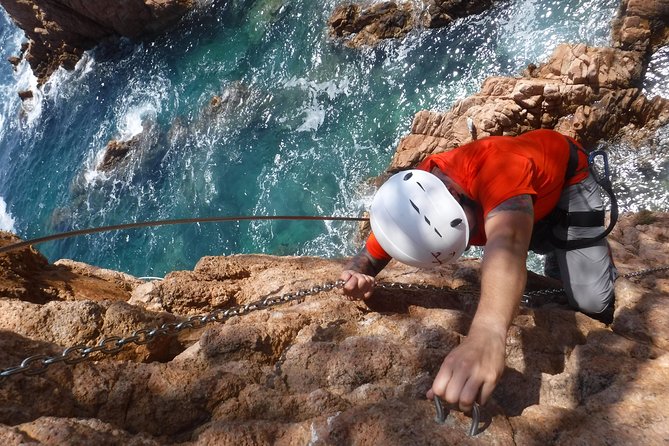
The second section is where the outing becomes a serious physical challenge. It is described as more demanding than the opening section, with a need for greater arm strength and stamina. One experienced climber, familiar with via ferratas in Colorado, considered Cala del Molí slightly harder than those routes.
That comparison should not frighten a fit beginner, but it should stop you from thinking this is merely a coastal walk with a harness. People with decent fitness often completed the second part successfully, including first-timers. Still, you may find the effort substantial on a hot day.
The challenge comes less from technical rock climbing than from sustained movement on fixed aids. You are not usually hunting for natural handholds in the rock, as you might on a more traditional via ferrata. Instead, you follow the installed steps, rings, chains, and cable. That makes route-finding easier, but it does not remove the need for strength.
You may use a rest attachment when pausing, and the supplied accounts show that this detail can become a source of confusion. Using a rest point is not proof that you lack ability. It is a normal part of managing fatigue on a protected route. If you need to pause, do so safely and ask the guide for clear instructions rather than trying to prove anything.
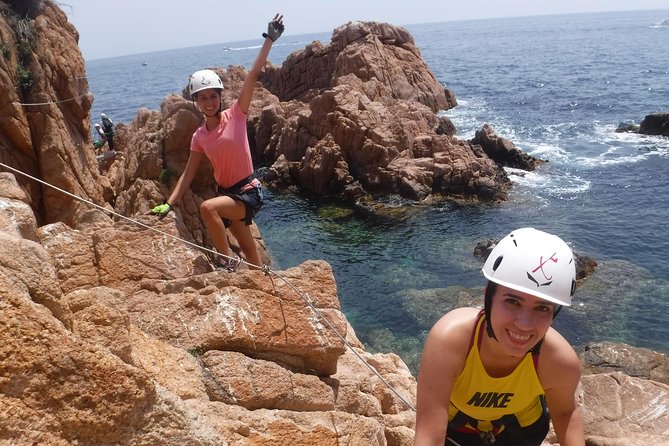
The reward is the position above the sea. You get a changing view as the route moves along the cliffs, with the Mediterranean below and the Costa Brava around you. I would expect the scenery to do more than fill the background. It gives you a reason to stop, breathe, and notice where you are, even while your arms are working.
Same base, a different kind of afternoon:
- Barcelona: Casa Batlló Entry with Self-Audioguide Tour
★ 4.7 · 25,359 reviews - Seville: Cathedral and La Giralda Entry Ticket
★ 4.5 · 24,592 reviews - Madrid: Tour Bernabéu Entry Ticket
★ 4.5 · 21,573 reviews - Barcelona: 24 or 48-Hour Hop-On Hop-Off Bus Tour
★ 4.4 · 20,872 reviews
Bridges, cliffs, and the Mediterranean view
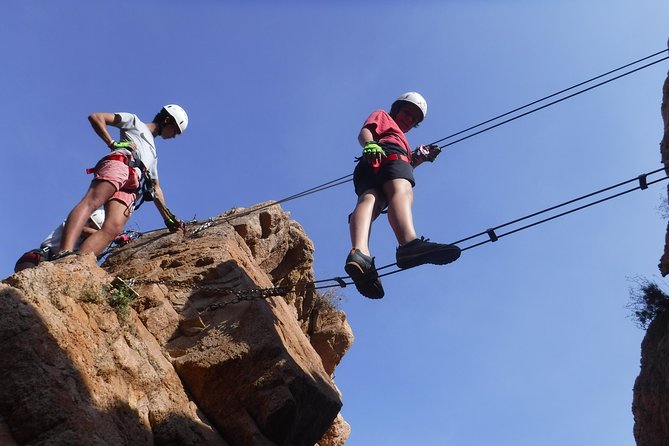
The route includes Tibetan bridges and other fixed features. These add a touch of adventure without requiring you to find a natural climbing line. The bridges may be the most memorable moments for anyone who enjoys a little exposure, while the metal steps make the route possible for people without advanced climbing skills.
The coastal position is what sets this outing apart from an inland via ferrata. You are combining a mountain-style activity with open sea views. That is a strong choice for someone who wants more than a standard hike but does not have time for a full climbing course.
You should also consider weather. The activity requires good conditions and can be canceled if the weather is poor. On the other hand, hot sunshine may make the harder section tiring. Bring suitable outdoor clothing, water, and footwear, and follow the operator’s instructions about what to bring. The supplied information confirms the equipment provided, but it does not give a complete packing list.
Guides can shape the whole experience
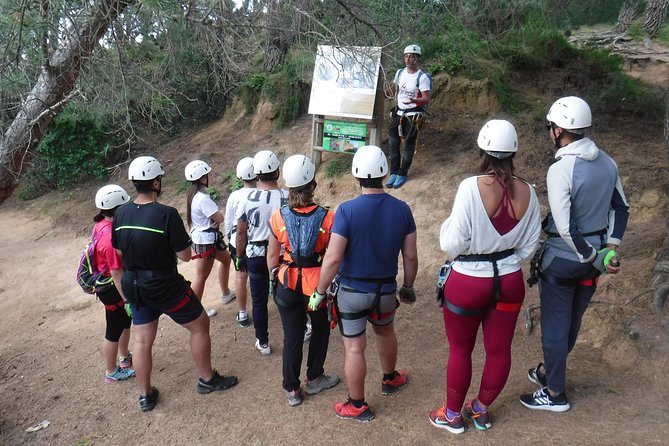
The guide is not just there to lead the way. A good guide controls the pace, explains each equipment change, watches for fatigue, and helps you make sensible decisions without making you feel small.
Miguel receives particularly strong praise for his calm instruction, safety checks, encouragement, and photography. Several people appreciated that he helped beginners clip correctly and stayed attentive while they moved. His habit of scrambling up and down the route to find safe positions for photographs was also noted.
Matías was praised for being fun and informed, while Lorenzo received both warm praise and serious criticism. One family described Lorenzo as supportive and encouraging, especially after a participant slipped and was caught securely by the equipment. Another family felt he was dismissive and too quick to judge ability. That mixed response suggests a practical point: guide style may vary, and you should speak up if you need a slower explanation or want a clear reason for a recommendation.
The activity is offered in English. One person who had requested a French guide did not receive one, but still managed with the guide’s help. If language is important for your safety and comfort, confirm it before booking rather than assuming a particular guide will be assigned.
Photographs, picnic, and what the price covers
At $48.31 per person, the price is reasonable for an organized three to four-hour activity if you use the included services. The package covers a qualified guide, technical equipment, photographic coverage, a mini picnic, and civil liability and accident insurance.
The photographs are a real benefit. Taking your own pictures while managing a harness and cable is awkward, and stopping to handle a phone can distract you from the route. Several people were pleased to receive photos later the same day, allowing them to concentrate on moving safely.
The mini picnic is a pleasant extra, though it should not be treated as a full meal. Plan your food and water around the activity, especially if you are booking this as part of a long day on the coast.
The price is strongest for first-timers who would otherwise need to rent equipment, arrange instruction, and manage safety alone. You are paying for the setup and supervision as much as for the route itself. Experienced climbers may find the technical side familiar, but the coastal position and included photographs can still make the outing worthwhile.
Timing, group size, and the practical risks
The stated duration is three to four hours, including the activity and related preparation. Actual timing can vary with group speed, fitness, guide decisions, and conditions. One account described finishing in about two hours, while other accounts described a longer, more complete outing. If you have a fixed lunch, bus, or evening booking, leave a generous gap.
The advertised maximum is six participants. That is a good size for a route requiring close attention. Smaller groups usually make it easier to ask questions and keep moving without long pauses. One account described seven people, so I would confirm the expected group size before paying if that detail matters to you.
There have been reports of last-minute changes. One booking was canceled four hours before the meeting time, and another person described confusion after a time slot was found to be unavailable. The operator disputed the second account and said alternatives were offered. The sensible response is not to assume a problem, but to keep written confirmation of the time and any changes made through WhatsApp or the booking platform.
Free cancellation is available up to 24 hours before the start time. Changes or cancellations inside that window are normally not refunded. If bad weather or a failure to reach the minimum number of participants causes cancellation, you should be offered another date or a full refund.
Who should book Cala del Molí?
I would recommend this for:
- Fit beginners who want a guided introduction to via ferrata
- Couples looking for an active Costa Brava day
- Families with older children or adults who can handle moderate exertion
- Climbers seeking a coastal route with a different setting
- People who like photographs but do not want to manage a camera on the cable
- Anyone who enjoys heights and wants a structured challenge
I would think twice if you dislike heights, have limited arm strength, or want a relaxed coastal walk. The first section may suit you, but the second can be tiring and exposed. Also consider your group’s range of ability. A wide gap between the strongest and least confident participant may lead to stops, route decisions, or an early finish.
Should you book it?
Yes, if you want a memorable Costa Brava activity and have moderate fitness. The sea cliffs, two-stage design, short approach, small advertised groups, safety equipment, and included photographs make this a strong value at $48.31.
Book with realistic expectations. This is a fixed-aid climbing route, not a gentle hike, and the second section can test your arms. Confirm the meeting point in Sant Feliu de Guíxols, check the language and group size, allow extra time, and ask for clear guidance before committing to the harder part. If you do that, Cala del Molí offers one of the most unusual ways to see the Costa Brava, with the sea below your feet and a proper sense of achievement at the finish.
FAQ
Where does the Via Ferrata Cala del Molí take place?
It takes place in Sant Feliu de Guíxols, in Baix Empordà on the Costa Brava. The meeting point is Carretera de Sant Pol, 200, 17220 Sant Feliu de Guíxols, Girona, Spain.
How long does the activity last?
The stated duration is approximately three to four hours. The actual time can vary based on the group, conditions, and pace.
Is this suitable for beginners?
Yes. The route has an introductory first section, and the operator states that moderate physical fitness is required. A decision point allows you to stop before the harder second section if needed.
What is included in the price?
The price includes a qualified guide, technical equipment, a photographic report, a mini picnic, civil liability insurance, and accident insurance.
Is the activity offered in English?
Yes. English is listed as an available language. If you need another language, confirm availability before booking.
What happens if the weather is bad?
The activity may be canceled in poor weather. You should then be offered another date or a full refund. Free cancellation by you is available up to 24 hours before the start time.
Recently listed in Spain
- Jávea: Cala Portixol Kayak Tour with Snorkel & Cliff Jumping★ 4.6 · 271 reviews
- Cala Granadella: Cala en Caló Sea Cave Snorkel & Kayak Tour★ 4.7 · 172 reviews
- From Madrid: Ribera del Duero Tour of 3 Wineries w/ Tastings★ 4.9 · 150 reviews
- Barcelona: Wine Tasting and Tapas 5-Course Pairing Dinner★ 4.8 · 300 reviews
- Ronda: Guided Walking Tour with English or Spanish Guide★ 4.5 · 423 reviews
- White Villages and Ronda: Day trip from Seville.★ 4.7 · 171 reviews
- Alicante: Bullring and Bullfighting Museum Entry Ticket★ 4.6 · 326 reviews
- Lanzarote: Puerto del Carmen & Puerto Calero Boat Transfer★ 4.6 · 148 reviews