
Reviewed · EVENING EXPERIENCES
guided night tour
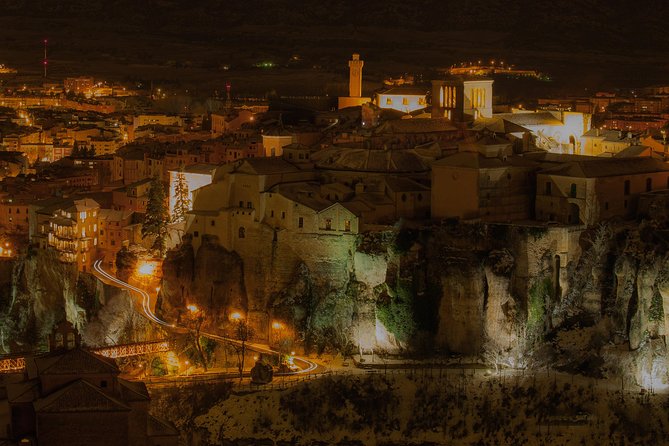
Cuenca looks sharper after sunset. This two-hour walk gives you a useful introduction to the old city, with illuminated monuments, dramatic ravine views, and stories about the streets and buildings that are easy to miss in daylight. I especially like the cooler evening timing and the way the route links the main sights instead of treating them as separate photo stops.
I also like the price: about $9.88 per person for roughly two hours is strong value if you want an introduction before exploring on your own. Guides such as Carlos, Guillermo, and Hugo have been praised for clear explanations, humor, and local details. The main drawback is that this is a group tour, with as many as 50 people, so you may not get a quiet, personal walk through the narrow lanes.
In This Review
- Key points to know before you book
- Why night is a smart time to see Cuenca
- Starting in the Plaza Mayor
- San Pedro and the limestone setting
- The former convent and Covarrubias connection
- Castle ruins at the narrowest part of the old center
- The old Inquisition court and prison
- The Hanging Houses, Cuenca’s famous symbol
- The iron bridge and the old stone crossing
- The Parador above the ravine
- Guide style and what makes the walk work
- Price, group size, and practical value
- Who should book this night walk?
- Final verdict: a low-cost way to meet Cuenca at night
- FAQ
- How long does the Cuenca night tour last?
- What time does the tour start?
- Where does the tour begin?
- Where does the tour finish?
- How much does the tour cost?
- What sights are included on the route?
- How large can the group be?
- Can I cancel for a full refund?
Key points to know before you book
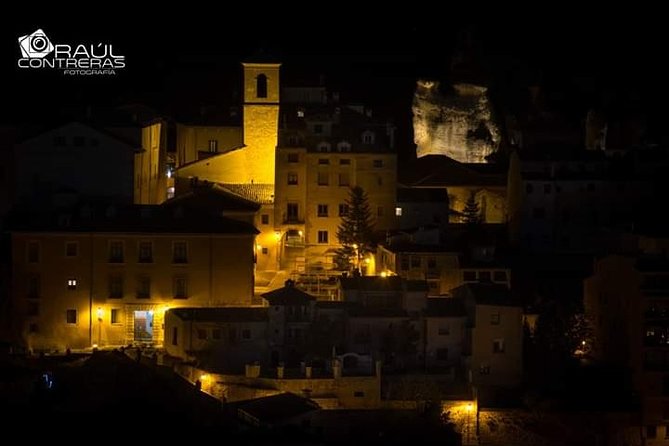
- Cuenca by evening light: The Cathedral, City Hall, Hanging Houses, and Parador take on a different character once illuminated.
- A useful first orientation: The route covers the Plaza Mayor, churches, castle remains, ravines, bridges, and cliffside buildings in about two hours.
- Strong guide-led storytelling: Carlos, Guillermo, and Hugo have received praise for making architecture and local history easy to follow.
- Good value at $9.88: You pay little for a guided overview that can save time during the rest of your stay.
- A walk through old lanes and slopes: The route is not described as strenuous, but Cuenca’s historic center includes uneven streets, steps, and steep drops.
- Simple meeting plan: Meet at C. Alfonso VIII, 1, at 8:00 pm, and finish near the Spanish Abstract Art Museum and Casas Colgadas.
Why night is a smart time to see Cuenca
Cuenca is a city of height, stone, and sudden views. Its old center sits between the Huécar and Júcar gorges, with buildings pressed against cliffs and lanes that twist through the medieval core. In the daytime, that setting can come with heat and crowded viewpoints. At night, the city becomes easier to read as a place rather than just a collection of famous sights.
The 8:00 pm start is the main selling point. Depending on the season, you may begin in daylight or twilight and finish under full evening lighting. That gradual change gives the route a natural rhythm. You see the streets first, then watch the facades sharpen as lamps come on.
I would choose this tour early in a Cuenca visit. It helps you understand where the Plaza Mayor sits, how to reach the Hanging Houses, and which side streets lead toward the castle and ravines. Afterward, you can return to the places that caught your eye, this time at your own pace.
The tour is advertised at about two hours. That is long enough to cover the old center without turning the evening into an exhausting march. It is also short enough to fit before dinner or after an afternoon outing beyond the city.
A few more Spain ideas to compare
- Barcelona: Sagrada Familia Entry Ticket with Audio Guide
★ 4.6 · 105,312 reviews - Barcelona: Park Guell Guided Tour with Skip The Line Entry
★ 4.7 · 17,563 reviews - Málaga: Caminito del Rey Guided Tour with Transportation
★ 4.8 · 12,183 reviews
Starting in the Plaza Mayor
The meeting point is C. Alfonso VIII, 1, in the center of Cuenca. The walk then moves toward the Plaza Mayor, the natural starting point for understanding the historic center.
The square is framed by colorful leaning houses and the illuminated facades of the Cathedral and City Hall. It is one of the best places to see how Cuenca combines civic buildings, religious architecture, and tightly packed homes in a small space.
This is also where a guide can give you a visual map of the city. Instead of hearing isolated facts about a church or bridge, you begin to see how the buildings relate to one another. The square works well as an introduction because the main sights are close, yet each points toward a different part of Cuenca’s past.
You should expect the group to pause here for an explanation and photographs. If you want clean pictures of the facades, arrive a little early and take a few before the group gathers. The tour does not appear to include interior visits, so think of this as an exterior sightseeing walk rather than an admission-based monument tour.
San Pedro and the limestone setting
One stop is the Church of San Pedro, an octagonal church raised on a limestone cornice. Its shape and position make it more than a standard church visit. The building seems tied to the rock beneath it, which is a recurring theme in Cuenca.
The evening setting should make the church especially striking. Artificial light picks out the stone and helps you notice the building’s position above the ravine. Your guide’s explanation matters here because the visual effect is easy to appreciate, while the reasons behind the design and location are less obvious.
This part of the walk also gives you a sense of the old center’s scale. Cuenca is not laid out as a broad, flat historic district. It is a compact high-city area where churches, houses, walls, and viewpoints appear in quick succession.
If you have mobility concerns, pay attention to the footing and ask the guide about the route at the meeting point. The published information says most people can participate, but it does not provide a detailed accessibility assessment for every street, slope, or step.
The former convent and Covarrubias connection
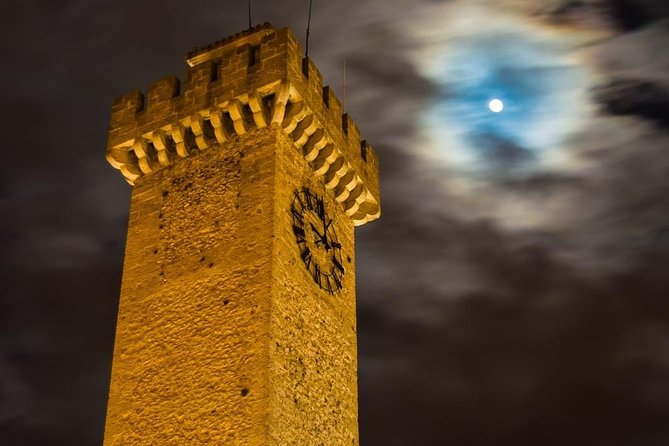
The route continues to a former seventeenth-century convent, also linked to the Palace of D. Sebastián de Covarrubias. This is the sort of stop that gives the walk more depth than a standard list of famous photo spots.
You may not recognize the name of the building at first, and that is precisely why a guide is useful. The palace connection adds a personal and architectural thread to the city’s story. It also shows how Cuenca’s old buildings have served different roles over time.
At night, the focus shifts from decorative detail to shape, placement, and atmosphere. You will not see every carved surface as clearly as you would in bright daylight, but the darker setting can make the narrow street and old stone feel more immediate.
The route appears designed to explain the city as you move through it. That matters in Cuenca, where the most interesting details are often overhead, around a corner, or attached to a building that looks ordinary until someone points out its former use.
Same base, a different kind of afternoon:
- Barcelona: Park Güell Admission Ticket
★ 4.4 · 76,534 reviews - Seville: Royal Alcázar Entry Ticket
★ 4.6 · 28,378 reviews - Barcelona: Casa Batlló Entry with Self-Audioguide Tour
★ 4.7 · 25,359 reviews - Seville: Cathedral and La Giralda Entry Ticket
★ 4.5 · 24,592 reviews
Castle ruins at the narrowest part of the old center
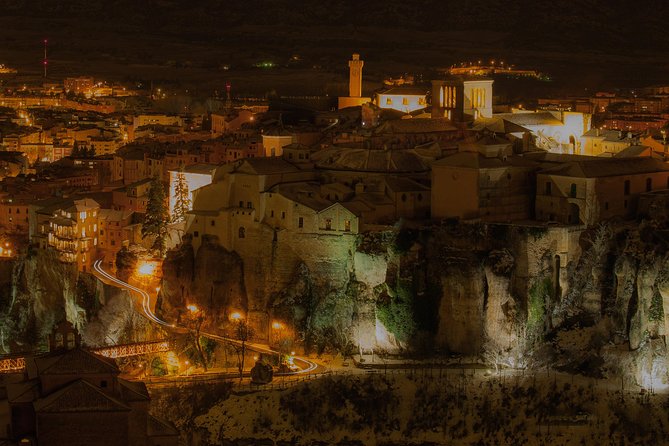
The remains of Cuenca Castle date from the thirteenth century and sit in the narrowest part of the historic center, between the two gorges. The ruins mark the defensive and strategic side of the city.
There may not be a complete castle to explore here. Instead, you get fragments and a powerful position. The setting helps explain why Cuenca developed where it did. A city placed between ravines did not need to rely only on thick walls for protection.
This is one of the more rewarding stops for anyone interested in city planning or medieval defenses. From the castle area, the old center feels less like a postcard and more like a settlement shaped by rock, height, and limited access.
The guide’s storytelling is important at a ruin. Without context, a few remaining stones can be easy to overlook. The best comments here will connect the remains with the surrounding cliffs, streets, and former entrances to the city.
The old Inquisition court and prison
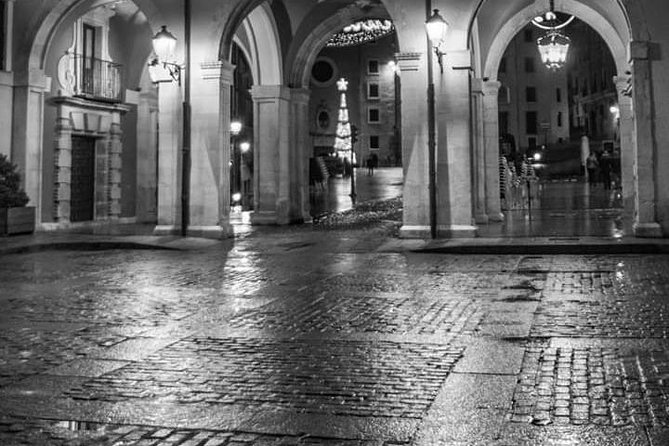
Another stop is a former court of the Inquisition that was used as a prison until relatively recently. It dominates the historic area on the edge of the Hoz del Huécar.
This is a darker part of the route, and it gives the tour a useful change of tone. Cuenca is often presented through colorful houses and romantic views, but buildings like this remind you that the old city also had institutions of control, punishment, and confinement.
The position above the ravine adds drama. You can see why the building commanded attention, both as a symbol of authority and as a structure difficult to approach. A guide can help separate fact from spooky storytelling, which is valuable on a night walk where every old wall can start to look mysterious.
This stop may appeal especially to you if you enjoy social history rather than architecture alone. It is not just about how a building looks. It is about how people once lived under systems that shaped the city’s daily life.
The Hanging Houses, Cuenca’s famous symbol
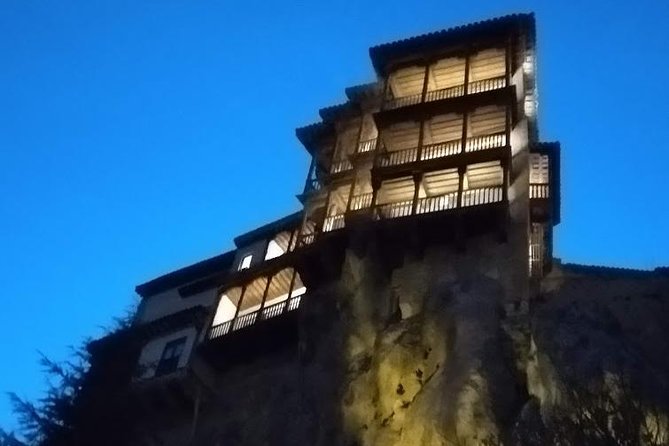
The route ends near the Hanging Houses, the city’s best-known sight. These houses have more than 600 years of history and project out over the abyss, supported above the gorge.
Seeing them at night is the emotional high point of the walk. Special lighting emphasizes their position over the drop, and the dark space beneath them makes the buildings seem even more daring. This is the moment when the value of an evening route becomes clear. The same houses are impressive by day, but the illuminated facades against the darkness create a stronger sense of height.
The tour finishes near the Spanish Abstract Art Museum, Juan March Foundation, at Casas Colgadas, C. Canónigos, 3. That is a practical ending because you can continue looking at the houses, walk across the nearby bridge, or make your way toward dinner.
Allow yourself a few minutes for photographs here. The group may move on once the guide has finished, and the best view can depend on where you are standing. If you want more time, note the location and return later.
The iron bridge and the old stone crossing
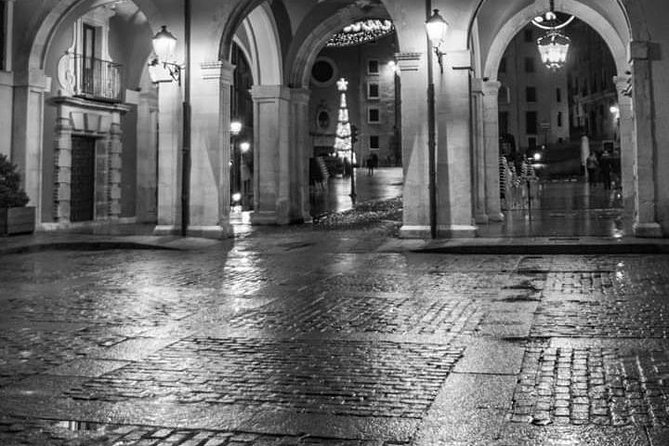
The walk also explains what happened to Cuenca’s former stone bridge and why it was replaced by the present iron bridge from 1903. This is a small detail, but it is exactly the kind of detail that turns a pretty crossing into a meaningful part of the city.
Bridges in Cuenca are not only ways to get from one side to another. They connect the high historic center with the ravines and the buildings below. Their construction reflects the practical problems created by the city’s cliffs and deep gaps.
The iron structure offers another strong nighttime view. The lighting, the ravine, and the old buildings around it create a scene that is easy to remember. You will also gain a better sense of the physical effort required to move through Cuenca before modern roads and bridges made access simpler.
Because the tour includes both the bridge and the Hanging Houses, you see the city from different angles. One stop shows the houses clinging to the cliff. The other helps you understand how people cross the space beneath and around them.
The Parador above the ravine
The final major landmark is the Parador, now housed in a former religious building in a dramatic position on a rock at the edge of the ravine. It has careful lighting and one of the most striking settings in Cuenca.
Even if you do not go inside, the exterior and location are worth seeing. The Parador helps complete the visual story of the old city: stone buildings on one side, a deep gorge below, and bridges joining the high center to the opposite bank.
This is a good place to pause and take in Cuenca as a whole. The tour is not only a street-by-street history lesson. It also gives you repeated chances to see how the city’s buildings respond to the terrain.
You should not expect a long stop at every location. A two-hour walk covering this many sights requires a steady pace. That is helpful if you want orientation, but less ideal if your main goal is extended photography or detailed architectural study.
Guide style and what makes the walk work
The strongest part of this experience appears to be the guiding. Carlos is praised for being professional, funny, attentive, and good at explaining the hidden logic of the medieval city. Guillermo is described as a guide who can turn facts about construction and architecture into clear, entertaining stories. Hugo is also praised for his friendly manner and interesting explanations.
That consistency matters more than a memorized list of dates. Cuenca’s old center can feel like a maze, and a good guide helps you notice why the streets, homes, and bridges were built as they were.
The tour also includes anecdotes and local curiosities. One piece of feedback points out that the guide helped connect the visit with other local experiences, including the food specialty called zarajos. That does not mean food is part of this night walk, but it suggests the guides may offer useful ideas for the rest of your stay.
The experience has a 4.9 rating from 176 reviews, with 98 percent recommending it. Those figures point to a very dependable tour, though you should still remember that a highly rated group experience may not suit someone who prefers silence, slow photography, or private guiding.
Price, group size, and practical value
At $9.88 per person, this is inexpensive for a two-hour guided walk through Cuenca’s historic center. I see the value in three places: you get a route through several major sights, you receive context that is hard to pick up alone, and you see the city at a time when heat and daytime crowds are less of a problem.
The group can include up to 50 people. That is the main compromise at this price. A large group can make it harder to hear in a narrow lane or gather close to a viewpoint, so stay near the guide when possible.
The meeting time is 8:00 pm, and confirmation is received when you book. Service animals are allowed, the meeting area is near public transportation, and most people can take part. The walk ends at the Spanish Abstract Art Museum and Casas Colgadas, not back at the starting point, so plan your evening around that one-way route.
Free cancellation is available if you cancel at least 24 hours before the start time. Inside that window, the cost is not refunded, and late changes are not accepted.
Who should book this night walk?
I would recommend it to a first-time visitor who wants a clear introduction to Cuenca without spending a full day on a guided program. It is also a good choice if you arrive during hot weather, prefer evening sightseeing, or want to see the Hanging Houses under special lighting.
Architecture fans should enjoy the mix of churches, convent buildings, ruins, bridges, and cliffside homes. People who like stories about former prisons, city defenses, and local customs will get more from it than someone interested only in taking photographs.
Families and older visitors may appreciate the two-hour length, although the old center’s slopes and uneven surfaces still require sensible footwear. The published information says most people can participate, but the route should not be treated as completely flat or effortless.
I would skip it if you already know Cuenca very well and want a private, slow-paced walk. In that case, you may prefer to revisit the sights independently. Still, even repeat visitors can gain something from a guide who points out construction details or explains why the old bridge was replaced.
Final verdict: a low-cost way to meet Cuenca at night
This is an easy tour to recommend for its price, route, and evening atmosphere. The highlights are not limited to the famous Hanging Houses. The real benefit is seeing how the churches, castle ruins, old institutions, ravines, bridges, and Parador fit together.
Book it if you want orientation, stories, and night views in one compact outing. Arrive ready to walk, stay close enough to hear the guide, and save time after the tour for the Hanging Houses and bridge. With a strong record for clear and entertaining guides, this is one of the better-value ways to get your bearings in Cuenca.
FAQ
How long does the Cuenca night tour last?
The tour lasts approximately two hours.
What time does the tour start?
The stated start time is 8:00 pm.
Where does the tour begin?
The meeting point is C. Alfonso VIII, 1, 16001 Cuenca, Spain.
Where does the tour finish?
The tour ends at the Spanish Abstract Art Museum, Juan March Foundation, near the Casas Colgadas at C. Canónigos, 3.
How much does the tour cost?
The listed price is $9.88 per person.
What sights are included on the route?
The route includes the Plaza Mayor, Church of San Pedro, a former seventeenth-century convent and the Palace of D. Sebastián de Covarrubias, Cuenca Castle ruins, a former Inquisition court and prison, the Hanging Houses, the 1903 iron bridge, and the Parador.
How large can the group be?
The activity can have a maximum of 50 participants.
Can I cancel for a full refund?
Yes. You can receive a full refund if you cancel at least 24 hours before the experience begins. Cancellations or changes made less than 24 hours in advance are not refunded.
Recently listed in Spain
- Jávea: Cala Portixol Kayak Tour with Snorkel & Cliff Jumping★ 4.6 · 271 reviews
- From Madrid: Ribera del Duero Tour of 3 Wineries w/ Tastings★ 4.9 · 150 reviews
- Barcelona: Wine Tasting and Tapas 5-Course Pairing Dinner★ 4.8 · 300 reviews
- Cala Granadella: Cala en Caló Sea Cave Snorkel & Kayak Tour★ 4.7 · 172 reviews
- Ronda: Guided Walking Tour with English or Spanish Guide★ 4.5 · 423 reviews
- White Villages and Ronda: Day trip from Seville.★ 4.7 · 171 reviews
- Alicante: Bullring and Bullfighting Museum Entry Ticket★ 4.6 · 326 reviews
- Lanzarote: Puerto del Carmen & Puerto Calero Boat Transfer★ 4.6 · 148 reviews
Evening Experiences, compared.
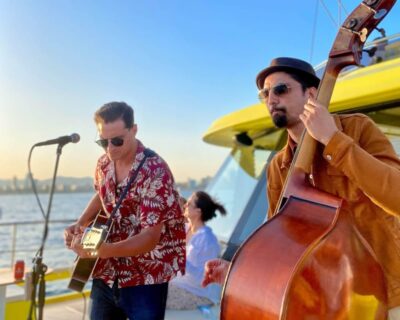
Daytime or Sunset Catamaran Cruise with Music
Read our review →



Albaicín and Sacromonte Guided Sunset Walking Tour
Read our review →
Sunset or Day Catamaran Cruise with Tapa & Drink
Read our review →
Browse the lists this tour appears in