
Reviewed · MUSEUMS
Málaga: Carmen Thyssen Museum Ticket
Málaga’s art story deserves more than Picasso. The Carmen Thyssen Museum brings you into the 16th-century Palacio de Villalón, then guides you through Spanish and Andalusian painting from the 19th century, with older works and temporary displays adding variety. I especially like the palace setting and the strong focus on artists beyond the usual names. The main drawback is that some picture captions are very small, which can make close reading awkward.
I also like the freedom of a self-guided visit. You can use the included audio guide in Spanish, English, French, German, or Italian, and choose the permanent collection, the temporary exhibition, or both, depending on the ticket you select. At $14 per person, it is a fair price for an art stop in central Málaga, though the visit may feel less rewarding if you are not interested in painting.
In This Review
- Key points to know before visiting
- Entering the Palacio de Villalón in central Málaga
- The permanent collection and its Andalusian focus
- Romantic views, Naturalist detail, and précieux painting
- Older paintings in the palace rooms
- What the audio guide adds
- Temporary exhibitions can change the value
- How long to allow and how to pace the visit
- What the $14 ticket is worth
- Rules that can affect your visit
- Who will enjoy the Carmen Thyssen Museum most?
- Should you book this museum ticket?
- FAQ
- Where is the Carmen Thyssen Museum located?
- How long is the ticket valid?
- Is an audio guide included?
- Can I visit the museum independently?
- What does the museum ticket include?
- Are children under 18 charged admission?
- Are cameras and phones allowed inside?
- Is the museum wheelchair accessible?
Key points to know before visiting
- The palace is part of the attraction: The restored Palacio de Villalón gives the museum a graceful Renaissance setting, with arcaded galleries, carved wood ceilings, and decorative fretwork.
- Andalusian art leads the story: The collection focuses strongly on 19th-century Andalusian painting, including Romantic, Naturalist, and précieux works.
- You set the pace: Your ticket is valid for one day, and the visit can be taken independently with an audio guide or with additional guidance if available.
- The collection reaches beyond the 19th century: Seventeenth-century Spanish paintings and religious works from the 15th and 16th centuries add historical depth.
- Read the entry rules carefully: Cameras, phones, video recording, food, drinks, and large bags are not allowed in the galleries.
- Under-18 admission may be free: A visitor note says not to buy tickets for people under 18, so check the current conditions before paying for children.
Entering the Palacio de Villalón in central Málaga
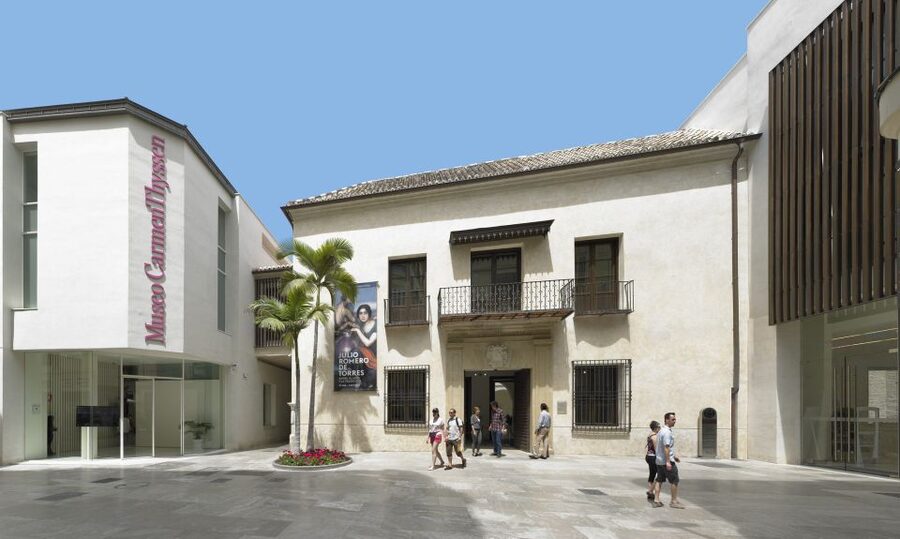
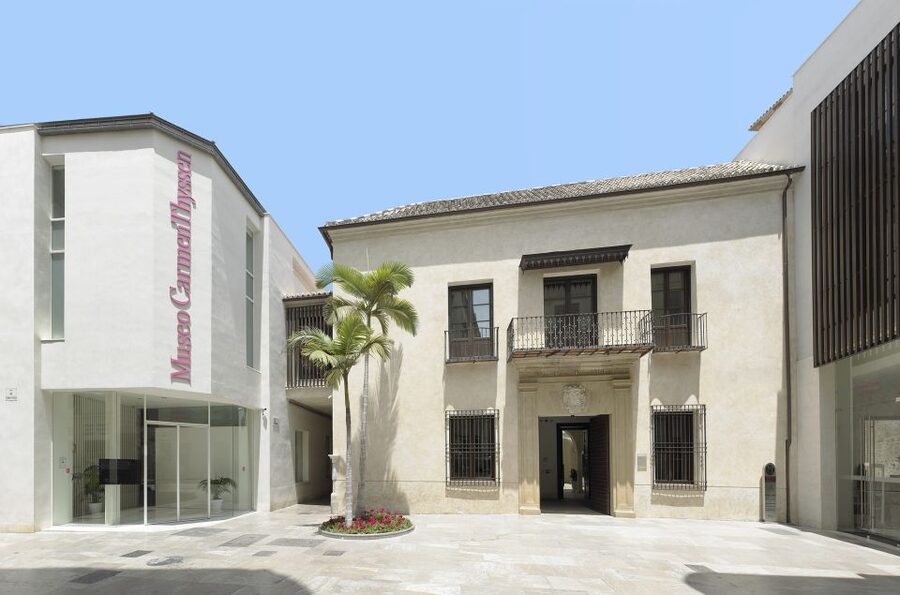
Your visit begins at the Museo Carmen Thyssen, Fundación Palacio de Villalón, at Calle Compañía 10 in Málaga’s old center. There is no hotel pickup or transport included, so you make your own way to the museum and return there when finished.
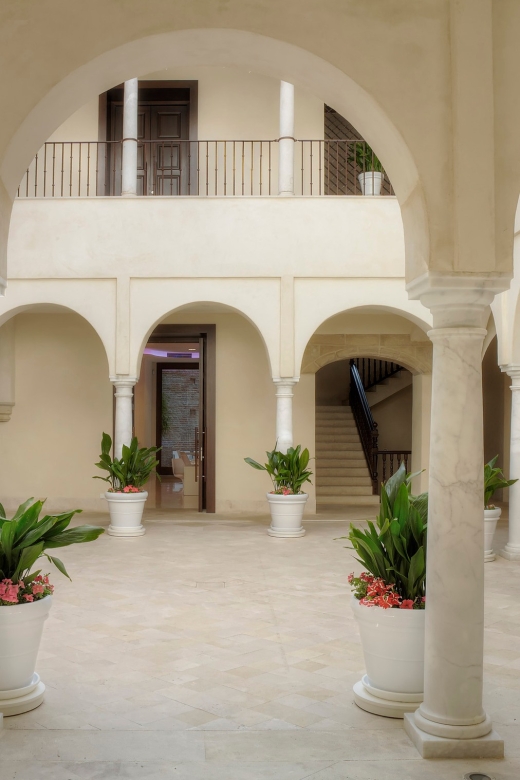
The first part of the experience is architectural. The palace was built in the 16th century over the remains of the Roman city, inside Málaga’s old Moorish quarter. That combination gives the museum a useful sense of place before you even reach the paintings. You are not entering a plain modern gallery. You are walking into a restored historic building that reflects several layers of Málaga’s past.
The restoration aimed to recover the original palace layout while adding new exhibition areas in a restrained modern style. The old and new sections are designed to sit beside one another without making the newer buildings compete with the palace.
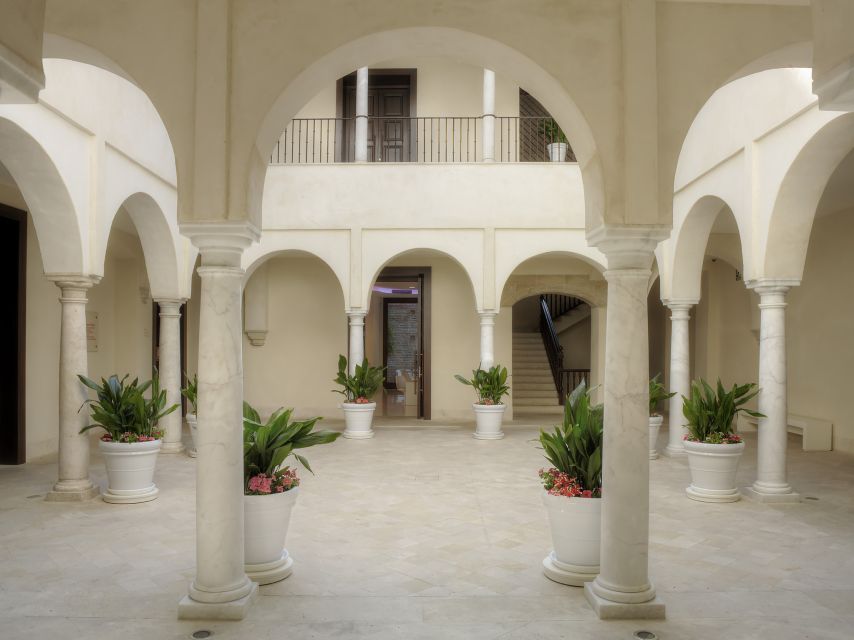
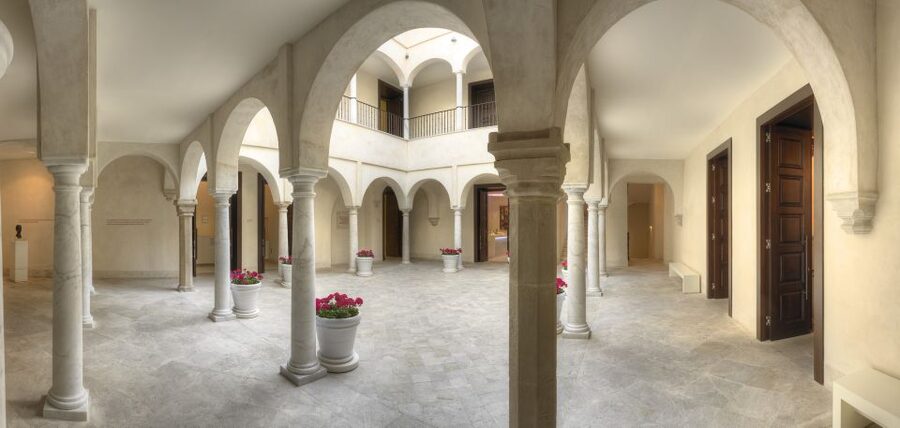
The historic core is arranged over two floors around a central courtyard. Arcaded galleries frame the courtyard, and the principal rooms contain carved wooden ceilings and supporting fretwork. These details are easy to rush past if you are focused only on the collection, but I would give them proper attention. The building helps explain why this museum feels different from a standard white-walled art space.
More Museum Tours in Malaga
- Malaga: Picasso’s Birthplace Museum Entrance Ticket
★ 4.3 · 813 reviews - Malaga: Picasso Museum Guided Tour with Skip-the-Line Ticket
★ 4.8 · 485 reviews - Skip the Line: Malaga Automobile and Fashion Museum Entrance Ticket
★ 4.5 · 379 reviews
The permanent collection and its Andalusian focus
The Carmen Thyssen-Bornemisza collection is built around 19th-century Spanish painting, with particular attention to Andalusia. That focus gives the visit a clear identity. You are not simply moving through a random selection of famous European art. You are following how Spanish artists pictured their country, its towns, its people, and its countryside.
The collection includes several kinds of painting. Romantic works present idealized scenery and dramatic views. Naturalist paintings look more closely at everyday life and the visible world. The précieux style brings careful decoration, polished surfaces, and close attention to small details.
I find this range especially helpful if your knowledge of Spanish art begins and ends with Velázquez, Goya, Zurbarán, and Picasso. Those names are important, but they can make Spanish painting seem narrower than it really is. Here, you get a wider picture of the artists and styles that developed between the Old Masters and modern art.
The collection’s Andalusian emphasis also makes it a sensible choice during a Málaga visit. You see how artists represented the region, rather than treating Málaga as only a place to pass through on the way to better-known museums in Madrid or Seville.
Romantic views, Naturalist detail, and précieux painting
The Romantic works are likely to appeal most if you enjoy dramatic scenery and atmospheric painting. Artists such as Sánchez-Perrier and Ortega are highlighted for their Romantic views, giving you a chance to see how 19th-century painters turned real places into carefully shaped scenes.
Naturalist works offer a different mood. Instead of relying mainly on drama, they pay attention to ordinary subjects, light, texture, and the details of daily life. This change in approach is one of the most useful things to watch for as you move through the galleries. You can see painting shift from idealized presentation toward closer observation.
The précieux style may be unfamiliar to many visitors. It rewards patience. Small details, refined surfaces, and careful decorative touches can be easy to miss when you are walking quickly, so take time with the paintings that catch your eye. One visitor particularly valued these works, along with the Naturalist and Romantic examples, and found that they encouraged further interest in Spanish artists.
That is a good measure of the museum’s success. It does not depend only on a few famous masterpieces. It can make you curious about artists you did not know before.
Older paintings in the palace rooms
Although the main focus is 19th-century Spanish and Andalusian art, the museum also displays older works. Seventeenth-century Spanish paintings appear in some of the palace’s principal rooms, while religious paintings from the 15th and 16th centuries can be found on the upper floor.
These older works give the visit a broader time frame. You can compare the solemn religious art of earlier centuries with the more varied subjects and styles of the 19th century. The contrast helps you see painting as a changing practice, not a fixed tradition.
If you have limited time, you may be tempted to concentrate only on the collection named in the ticket description. I would not skip the older works. They are part of what makes the Palacio de Villalón more than a container for modern galleries.
The collection is not presented as a single straight line from old to new in the way a textbook might be. Instead, the historic palace and newer buildings create different settings for the art. That arrangement can make the visit feel more like a series of discoveries, although it also means you should pay attention to the museum layout.
Same base, a different kind of afternoon:
- Málaga: Caminito del Rey Guided Tour with Transportation
★ 4.8 · 12,183 reviews - Caminito del Rey: Guided Tour and Entry Ticket
★ 4.6 · 11,286 reviews - Málaga: Museo Picasso Málaga Entry Ticket
★ 4.4 · 11,138 reviews - El Chorro: Caminito del Rey Guided Tour with Shuttle Bus
★ 4.7 · 7,091 reviews
What the audio guide adds
An audio guide is included with the ticket, with Spanish, English, French, German, and Italian options. This is useful because the collection includes artists and styles that may not be familiar to you.
A self-guided visit lets you stop when you want and spend more time with a painting that holds your attention. You do not have to keep pace with a group, and you can make the museum a short cultural pause or a longer art visit.
The supplied information also allows for a guided option, but the included feature specifically listed is the audio guide. If you want detailed personal commentary, confirm what kind of guidance is available when booking. Otherwise, plan on using the audio guide as your main source of interpretation.
One practical point matters here: phones are not allowed in the galleries. Since the audio guide may be provided through museum equipment or handled according to local museum procedures, follow the instructions at the entrance rather than assuming you can use your own mobile. Mobile phones, cameras, and video recording are prohibited in the exhibition spaces.
Temporary exhibitions can change the value
Your ticket may cover the permanent collection, a temporary exhibition, or both. The exact choice matters because the temporary display can add a strong second half to the visit.
A Sorolla exhibition was one particularly worthwhile addition for some visitors. If a temporary show of that quality is running during your visit, the combined ticket becomes more attractive, especially for anyone who already knows or wants to see the work of Joaquín Sorolla.
Because temporary exhibitions change, you should check what is on display before booking. A ticket that includes both sections may be the best value if the temporary show matches your interests. If you mainly want the palace and the permanent collection, the basic entrance may be enough.
This flexibility also helps with time. The ticket is valid for one day, with starting times based on availability. You can plan the museum around other Málaga sights instead of committing to a long fixed tour.
How long to allow and how to pace the visit
The ticket information does not state a fixed visit length. That is actually helpful. You can decide how deeply to explore the galleries rather than being pushed through on a timetable.
For a quick look, focus on the palace, the main Andalusian paintings, and the temporary exhibition if included. For a more serious visit, use the audio guide and compare the Romantic, Naturalist, and précieux styles as you go.
I would allow enough time to look upward and outward as well as straight at the walls. The courtyard, arcaded galleries, carved ceilings, and fretwork are central parts of the experience. If you race through the palace rooms, you lose one of the museum’s strongest features.
The small captions are a real practical weakness. Some are positioned behind the security line and printed too small, so reading them may require bending forward and then stepping back carefully. If artist names, dates, and short explanations matter to you, the small guide to the collection may be worth purchasing as a keepsake and reference.
What the $14 ticket is worth
At $14, this is a moderate-priced museum visit rather than an expensive full-day attraction. The value comes from three parts: the palace, the permanent collection, and the possibility of a temporary exhibition.
I think the price is reasonable if you already plan to spend time in central Málaga and enjoy art. The audio guide adds useful context at no separate charge, and the freedom to visit at your own pace keeps the experience flexible.
The calculation changes if you are buying tickets for a family. A visitor note specifically says that admission is free for people under 18, so do not automatically purchase adult tickets for children. Check the current age policy before payment, since the supplied information does not state whether proof of age is required.
If you are unsure about Spanish art, the museum is still a reasonable choice, but you should expect a quieter, reflective visit rather than a major blockbuster attraction. The collection’s greatest strength is its range and regional focus, not a long list of universally famous names.
Rules that can affect your visit
The museum has strict gallery rules. Cameras, video recording, phones, food, drinks, smoking, and large bags are not allowed. Bags over 80 by 50 centimeters cannot enter, and objects that might damage the art are also prohibited.
Animals are not allowed except guide dogs. You should wear suitable museum clothing, and you must not touch the works.
These restrictions are easy to manage if you arrive with only a small personal bag and keep your phone put away. Do not plan to use the museum as a place to recharge your phone or sort through luggage. Large bags and luggage are specifically excluded, so pack accordingly before setting out.
The museum is wheelchair accessible, which makes the visit suitable for people who need step-free access. The provided information does not give detailed information about seating, restrooms, or the exact route through each gallery, so contact the museum directly if you need those specifics.
Who will enjoy the Carmen Thyssen Museum most?
I would recommend this museum to you if you want a focused look at Spanish painting, especially art connected to Andalusia. It also suits anyone who enjoys historic buildings as much as the objects inside them.
The visit is a good match for:
- Art lovers who want to move beyond the best-known Spanish painters.
- Visitors interested in Romantic, Naturalist, and précieux styles.
- People who prefer self-guided sightseeing.
- Museumgoers who appreciate a historic setting with a modern extension.
- Anyone looking for a flexible cultural stop in Málaga.
- Visitors who may benefit from an audio guide in one of five languages.
You may want to choose another activity if you strongly prefer modern art, interactive exhibits, or a highly social guided tour. The museum is about looking carefully and moving at your own pace. It will not suit every mood, especially if you have little interest in painting.
Should you book this museum ticket?
Book it if the combination of a Renaissance palace and 19th-century Andalusian art appeals to you. The strongest reasons are the beautiful Palacio de Villalón, the collection’s attention to less familiar Spanish artists, and the chance to add a temporary exhibition such as Sorolla when available.
I would also book if you want an easy cultural stop with no fixed tour length. The included audio guide and one-day validity make the visit simple to fit around Málaga’s other sights.
Think twice if you need large bags, want to take photographs, or expect every gallery to be filled with famous masterpieces. The captions can be frustratingly small, and the museum rewards patience more than speed.
For most visitors who enjoy art, the $14 ticket offers solid value. Check the current temporary exhibition and age policy before paying, then arrive with a small bag, no camera, and enough time to appreciate both the paintings and the palace itself.
FAQ
Where is the Carmen Thyssen Museum located?
The museum is at Fundación Palacio de Villalón, Calle Compañía 10, 29008 Málaga, Spain.
How long is the ticket valid?
The ticket is valid for one day. Available starting times depend on the date you select.
Is an audio guide included?
Yes. An audio guide is included in Spanish, English, French, German, and Italian.
Can I visit the museum independently?
Yes. You can tour on your own with the included audio guide. The experience also offers the possibility of visiting with a guide, depending on the option available.
What does the museum ticket include?
It includes entrance to the Carmen Thyssen Museum and an audio guide. Depending on the ticket option, you may visit the permanent collection, the temporary exhibition, or both.
Are children under 18 charged admission?
A visitor note says admission is free for people under 18. Check the current conditions before booking so you do not purchase unnecessary tickets.
Are cameras and phones allowed inside?
No. Cameras, mobile phones, video recording, food, drinks, and smoking are not allowed in the galleries.
Is the museum wheelchair accessible?
Yes. The activity is listed as wheelchair accessible. Contact the museum directly if you need details about specific facilities or routes.
Recently listed in Malaga
- Tour to Gibralfaro★ 4.7 · 182 reviews
- Málaga: Picasso Birthplace Museum Ticket & City Audio Guide★ 4.1 · 158 reviews
- From Costa del Sol: Mijas, Marbella and Puerto Banús Tour★ 4.3 · 234 reviews
- Malaga: Tuk tuk tour★ 4.8 · 402 reviews
- Malaga: Wine and Tapas Tour with Tastings and Drinks★ 4.8 · 217 reviews
- Malaga: The Ultimate Tapas Workshop with Market Visit★ 4.9 · 108 reviews
- Malaga: Organic Vineyard Tour with 6 Wines, Tapas & Transfer★ 4.8 · 334 reviews
- Málaga: Traditional Andalusian Tapas and Wine Tour★ 4.7 · 167 reviews
Museums, compared.

FC Barcelona Museum “Barça Immersive Tour” Ticket
Read our review →
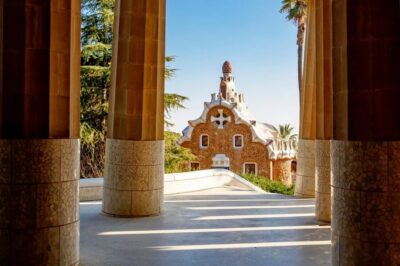
Park Güell and Gaudí House Museum Entry Ticket
Read our review →
Puro Flamenco Show with Optional Museum Ticket
Read our review →
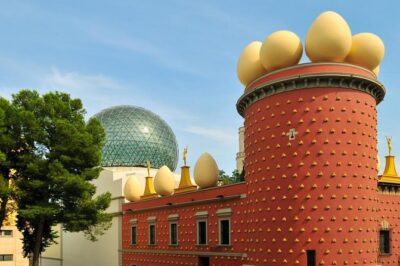
Girona & Dali Museum Small Group Tour with Pick-up from Barcelona
Read our review →
Oceanogràfic, Hemisfèric & Science Museum Combo
Read our review →Browse the lists this tour appears in