
Reviewed · SEGOVIA TOURS
Skip the Line Admission Ticket to Cathedral of Segovia
Look up, and Segovia gets grand fast. This low-cost admission ticket gives you a simple way to explore Spain’s last Gothic cathedral, with its pale interior, 20-plus chapels, late-Gothic cloister, and small museum of religious art. I like the freedom to move at my own pace, and I especially like that the ticket also includes free entry to Segovia’s Episcopal Palace.
The main drawback is that skip the line does not always mean walking straight inside. You may still need to stop at the ticket booth to validate the QR code, and the posted 7 p.m. closing time may not guarantee entry at 6 p.m. Plan this visit earlier in the day.
In This Review
- Key details before you go
- Why Segovia Cathedral deserves your time
- Entering through the north transept
- Twenty chapels, with several worth seeking out
- The central choir and Sabatini’s high altar
- A late-Gothic cloister moved from the old cathedral
- The museum and its Mudéjar ceiling
- Free access to the Episcopal Palace
- Does the skip-the-line promise work?
- Timing, transport, and visit style
- Should you add the bell tower?
- Who should book this ticket?
- Final verdict: a small price for a major Segovia sight
- FAQ
- How much does admission to Segovia Cathedral cost?
- How long does the cathedral visit take?
- What are the cathedral’s opening hours?
- Does the mobile ticket guarantee entry without waiting?
- Is transportation included?
- Can I cancel the ticket for a refund?
Key details before you go

- Price: About $5.15 per person, a modest fee for the cathedral, cloister, museum, and Episcopal Palace.
- Visit length: Allow 1 to 2 hours if you want more than a quick look at the nave.
- Opening hours: Daily from 9:30 a.m. to 7 p.m. for the stated operating period, September 15, 2025 through September 14, 2026.
- Entrance: Enter through the north transept, then explore independently.
- What you see: Gothic choir, 16th-century Flemish windows, chapels, high altar, cloister, museum, paintings, jewelry, and manuscripts.
- Important catch: A mobile ticket may still require QR validation at the ticket counter.
Why Segovia Cathedral deserves your time
Segovia is famous for its Roman aqueduct and hilltop Alcázar, but the cathedral is not a leftover stop between the two. It is one of the city’s major sights, and its scale surprises you. The building is vast, yet the interior feels light and relatively uncluttered rather than dark and crowded with decoration.
This is the last Gothic cathedral built in Spain. That label gives the building a useful place in the country’s architectural story, but you do not need to be an architecture expert to enjoy it. The soaring structure, pale stone, colored windows, chapels, and quiet side spaces make the visit easy to appreciate.
The $5.15 price is strong value. You are not paying only to enter the main church. Your ticket covers the cathedral, its cloister, and the museum, plus free access to the Episcopal Palace of Segovia. If you give the complex a full hour or two, the admission cost feels almost symbolic.
The cathedral has an average rating of 4.4 from 155 ratings, which fits the experience well. The building itself earns the strongest praise. The main caution concerns ticket handling and entry time, not the cathedral’s art or architecture.
A few more Spain ideas to compare
- Hot-Air Balloon Ride over Segovia with Optional Transport from Madrid
★ 5.0 · 582 reviews - Hot Air Balloon Flight Over Segovia or Toledo
★ 5.0 · 507 reviews - Hot Air Balloon over Segovia with Optional Transfers from Madrid
★ 5.0 · 388 reviews
Entering through the north transept
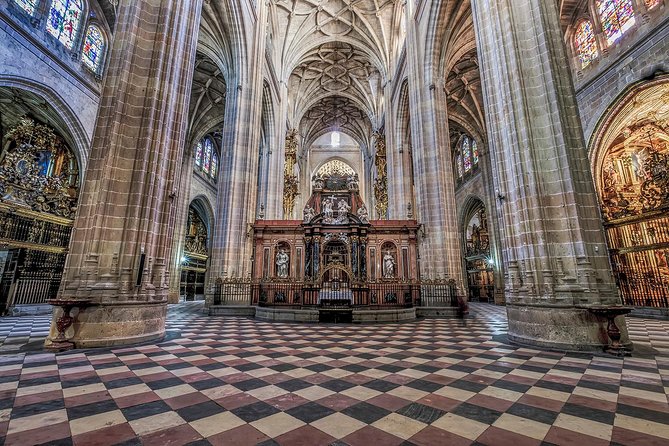
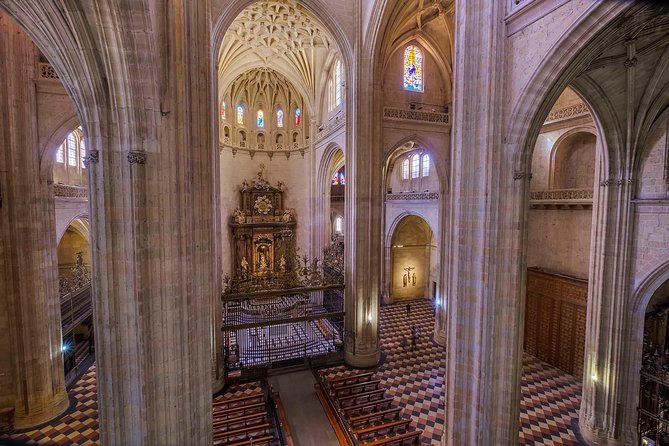
Your visit begins at the north transept. Once inside, take a moment before moving toward the chapels. The first impression is one of space: a broad Gothic interior, a large choir in the center, and rows of chapels running along the walls and apse.
The choir is especially interesting because it is older than the cathedral itself. This 15th-century choir predates the building and sits in the middle of the church, creating a strong visual divide between the entrance and the high altar at the east end.
The interior is illuminated by 16th-century Flemish windows. They bring color into a space otherwise described as light, bare, and uncluttered. I like this balance. The cathedral does not bury its architecture under decoration, so you can see the height and shape of the building clearly.
Across from the choir, the high altar has an 18th-century altarpiece by Sabatini. It gives the eastern end a clear focal point. You will not need a guided tour to understand the basic layout, but a self-guided map can help you make sense of the individual chapels and objects.
Twenty chapels, with several worth seeking out
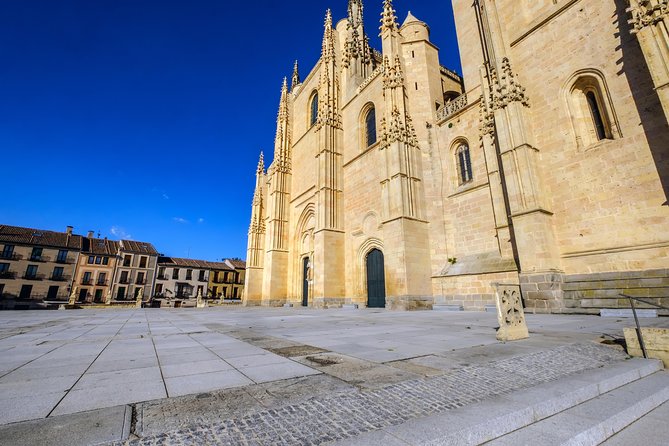
More than 20 chapels line the walls and apse. You can wander through them in a casual order, but a little planning makes the visit better. The third chapel on the right from the entrance is the Capilla de San Cosme y San Damian.
This chapel contains a wooden Lamentation group by the 17th-century Baroque sculptor Gregorio Fernández. The work is more emotionally charged than the clean, open nave. Look for it if you want a memorable piece of sculpture rather than another general view of the building.
The Blessed Sacrament Chapel is another major stop. It was created by Churriguera, whose style is known for lively, elaborate decoration. Here you will find stained-glass windows, carved choir stalls, and paintings from the 16th and 17th centuries.
The chapel’s most notable piece is a reredos depicting the deposition of Christ from the cross by Juan de Juni. The combination of carved wood, paintings, glass, and architectural detail makes this chapel feel more enclosed and ornate than the main interior.
I suggest giving the chapels at least 20 minutes. A fast visitor can see the cathedral in an hour, but that pace means you will mainly remember the size of the nave. If art interests you, allow closer to two hours.
The central choir and Sabatini’s high altar
The central choir deserves more than a passing glance. Its position is unusual for modern eyes, since it occupies the middle of the church rather than sitting out of the way at the rear. It is a 15th-century survivor placed inside a later Gothic building.
The choir also helps you read the church as a working religious space, not just a grand monument. The carved stalls, the separation between the choir and altar, and the procession of chapels around the walls all give the interior a practical structure.
At the far end, Sabatini’s 18th-century high altarpiece shifts the mood again. It is later than the Gothic shell around it, so the cathedral presents several periods in one view. You can see Gothic architecture, Renaissance windows, Baroque sculpture, and later altar design without leaving the building.
This mix is one reason I would not rush straight to the museum. The cathedral’s interest comes from how the parts sit together. Some sections are restrained, while others are crowded with carved, painted, and gilded detail.
Same base, a different kind of afternoon:
- Barcelona: Sagrada Familia Entry Ticket with Audio Guide
★ 4.6 · 105,312 reviews - Barcelona: Park Güell Admission Ticket
★ 4.4 · 76,534 reviews - Seville: Royal Alcázar Entry Ticket
★ 4.6 · 28,378 reviews - Barcelona: Casa Batlló Entry with Self-Audioguide Tour
★ 4.7 · 25,359 reviews
A late-Gothic cloister moved from the old cathedral
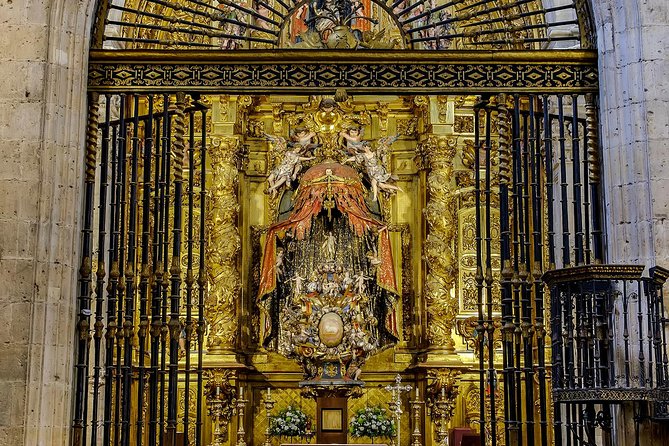
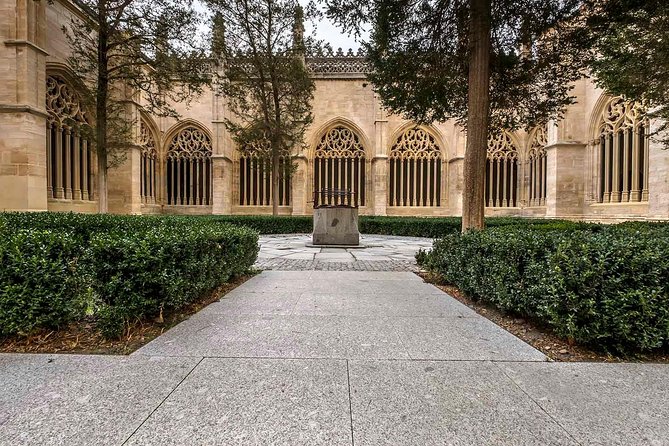
Across from the entrance, in the southern transept, a door leads to the cloister. This is one of the most rewarding parts of the visit because the cloister is older than the current cathedral.
The cloister and its elaborate doorway were transported from the old cathedral. Both are associated with Juan Guas, an important architect of the final Gothic period in Spain. The move gives you a direct link between the city’s earlier cathedral and the present one.
The space is calmer than the main church. The arcades frame a more enclosed walk, and the change in scale gives your eyes a break from the tall nave. This is a good place to slow down and notice stonework, door details, and the relationship between the church and its surrounding spaces.
Under the pavement just inside the cloisters are the tombs of Juan and Rodrigo Gil de Hontañón. Their burial location is fitting because they, together with Juan Guas, helped shape the final phase of Spanish Gothic architecture.
You do not need to memorize the names to appreciate the point. The cloister is not simply an extra hallway. It is part of the cathedral’s architectural story, and it preserves work connected to the earlier building.
The museum and its Mudéjar ceiling
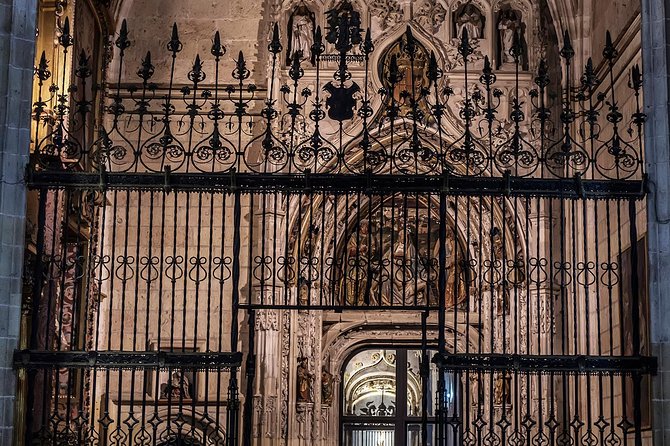
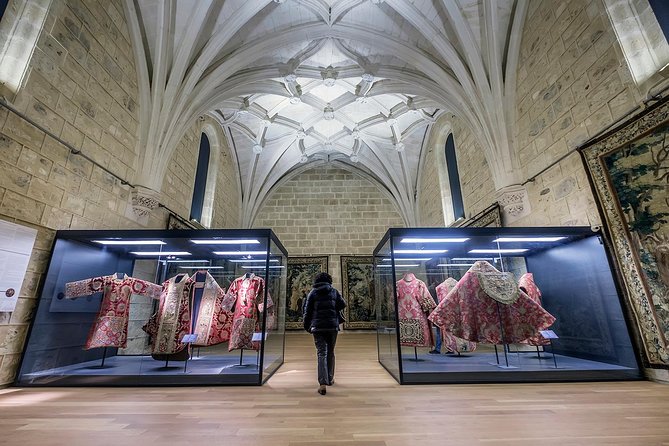
Off the cloister, a small museum of religious art occupies part of the first-floor chapter house. It is compact, so do not expect a large collection that takes half a day. Instead, think of it as a focused final stop after the main church.
The chapter house has a white-and-gold 17th-century ceiling. It is a late example of Mudéjar artesonado work, a style of decorative wooden ceiling associated with Spain’s long Christian, Jewish, and Islamic artistic exchange.
The museum collection includes jewelry, paintings, and rare antique manuscripts. The displays add detail to what you see in the cathedral. A painting or piece of jewelry can be easier to study in a small room than in a large church where your attention is pulled in several directions.
I would visit the museum after the cathedral and cloister. By then, you have a sense of the building, and the smaller objects become easier to place. If you are short on time, see the nave, the key chapels, and the cloister first, then decide how much time remains.
Free access to the Episcopal Palace
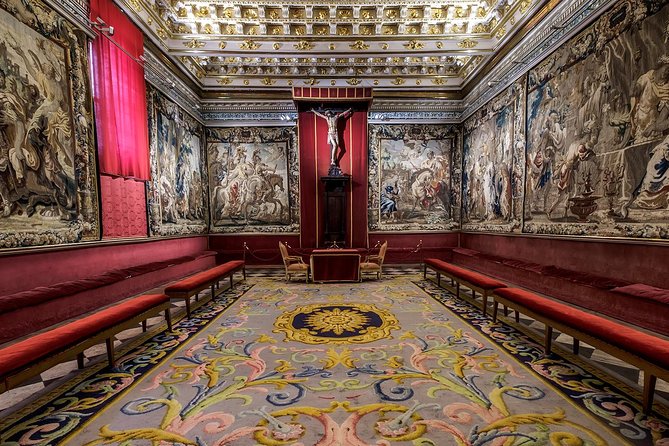
The ticket includes a free visit to Segovia’s Episcopal Palace. That inclusion improves the value, but the supplied details do not specify the palace’s exhibits, route, or opening schedule. Check the current arrangements when you arrive so you do not assume it follows the cathedral’s hours.
Treat it as a useful add-on rather than the main reason to buy this ticket. The cathedral itself is the substantial part of the visit, while the palace gives you another nearby cultural stop at no added admission cost.
Does the skip-the-line promise work?
This is the part that needs a clear explanation. Several visitors found the mobile ticket easy and useful, with one person saying it made the experience easier than standing in line to buy a ticket. Another person was able to go directly inside and felt the ticket saved time.
But the process is not always a pure walk-in with no queue. You may need to join the purchase-ticket line so staff can scan or validate your QR code. In a quiet month such as October, that wait may be short, but it still means the phrase skip the line needs a little caution.
The ticket is most useful when the cathedral is busy or when you are planning a tight day around the aqueduct and Alcázar. If the cathedral has no queue, buying in advance may not save much time, and you might pay a little more than buying on site. At $5.15, though, the possible premium is small.
The bigger practical issue is closing time. The listed hours are 9:30 a.m. to 7 p.m., Monday through Sunday, but entry doors were reportedly closed before 6 p.m. on one visit. I would not arrive near closing and expect a guaranteed entrance. Go earlier, ideally with enough time for the ticket validation and a proper visit.
Timing, transport, and visit style
The experience lasts about 1 to 2 hours, and you visit independently. No transportation is included, so you must make your own way to the cathedral. The site is near public transportation, which helps if you are not staying in central Segovia.
The booking information lists a maximum of one traveler. That appears to describe the booking setup rather than a guided group experience, so read the final confirmation carefully if you are booking for more than one person.
Children must be accompanied by an adult. Most people can participate, according to the supplied information, but no detailed accessibility notes are provided. If stairs, narrow areas, or mobility needs matter to your plans, ask the cathedral directly before booking.
A mobile ticket is convenient. Keep the QR code ready on your phone, and allow time for it to be checked at the entrance. You can then explore without being tied to a guide or fixed walking order.
There is also an automated audio guide option associated with the visit. One person found the self-guided map useful because its QR code opened descriptions and photographs of rooms and objects. Another was disappointed that an English-speaking tour was not available and noted that the audio guide could not be carried around while walking.
That means you should treat this as a self-guided admission visit, not an English-language guided tour. If you want interpretation, use the map and QR material where available, or read about the cathedral before arriving.
Should you add the bell tower?
A bell tower visit is not part of the basic admission details, but it may be available as an additional experience. The climb involves 190 steps, described as narrow, and one account praised the guide and the views from above.
I would consider the tower only if you are comfortable with a steep, confined climb and have enough time. Do not assume it is included in the $5.15 cathedral ticket. Ask at the cathedral about availability, price, timing, and whether a separate reservation is needed.
The tower can add a strong view over Segovia, but the main ticket remains worthwhile without it. The cathedral’s interior, chapels, cloister, and museum provide plenty for a one-hour visit.
Who should book this ticket?
I recommend it for independent sightseers who want to set their own pace and keep the cost low. It works well for a first visit to Segovia, especially if you are fitting the cathedral between the Roman aqueduct and the Alcázar.
It is also a good choice for art lovers who want to see Gregorio Fernández, Juan de Juni, Sabatini, Flemish windows, old manuscripts, and Mudéjar ceiling work in one stop. Families can use the flexible timing, provided children remain with an adult.
I would hesitate only if you expect a fully guided English tour or a guaranteed walk straight past every queue. The experience is admission with self-guided exploration. The ticket may save time, but QR validation can still take a few minutes.
Cancellation is free if you cancel at least 24 hours before the local start time. Cancellations or changes made less than 24 hours before the start time are not refunded or accepted.
Final verdict: a small price for a major Segovia sight
Yes, I would book this ticket if I wanted a simple, inexpensive visit and planned to arrive well before closing. The cathedral is impressive inside and out, but the best parts are not limited to its grand size. The central older choir, the emotional sculpture in the San Cosme y San Damian Chapel, the ornate Blessed Sacrament Chapel, and the relocated cloister give the visit real variety.
Book it for the freedom, the $5.15 price, and the included Episcopal Palace. Just keep expectations realistic about the skip-the-line process, validate your QR code promptly, and do not leave entry until the final hour. If you have 1 to 2 hours in Segovia, this is a worthwhile stop.
FAQ
How much does admission to Segovia Cathedral cost?
The ticket costs about $5.15 per person. It includes admission to Segovia Cathedral, the cloister, and the museum, plus a free visit to the Episcopal Palace of Segovia.
How long does the cathedral visit take?
The estimated visit lasts 1 to 2 hours. You can see the main interior more quickly, but extra time helps if you want to visit the chapels, cloister, and museum at a relaxed pace.
What are the cathedral’s opening hours?
For the stated period from September 15, 2025 through September 14, 2026, the hours are Monday through Sunday, 9:30 a.m. to 7 p.m. Entry may close earlier, so arriving well before 7 p.m. is wise.
Does the mobile ticket guarantee entry without waiting?
No. The mobile ticket may still need to be scanned or validated at the ticket booth. Some people enter quickly, while others still wait briefly in the ticketing line.
Is transportation included?
No. Transportation to and from the cathedral is not included. The cathedral is near public transportation.
Can I cancel the ticket for a refund?
Yes. You can cancel for a full refund at least 24 hours before the experience start time. Cancellations and changes made less than 24 hours before the start time are not accepted.
Recently listed in Spain
- Jávea: Cala Portixol Kayak Tour with Snorkel & Cliff Jumping★ 4.6 · 271 reviews
- From Madrid: Ribera del Duero Tour of 3 Wineries w/ Tastings★ 4.9 · 150 reviews
- Barcelona: Wine Tasting and Tapas 5-Course Pairing Dinner★ 4.8 · 300 reviews
- Cala Granadella: Cala en Caló Sea Cave Snorkel & Kayak Tour★ 4.7 · 172 reviews
- Ronda: Guided Walking Tour with English or Spanish Guide★ 4.5 · 423 reviews
- White Villages and Ronda: Day trip from Seville.★ 4.7 · 171 reviews
- Alicante: Bullring and Bullfighting Museum Entry Ticket★ 4.6 · 326 reviews
- Lanzarote: Puerto del Carmen & Puerto Calero Boat Transfer★ 4.6 · 148 reviews
Segovia Tours, compared.

Hot-Air Balloon Ride over Segovia with Optional Transport from Madrid
Read our review →

Hot Air Balloon over Segovia with Optional Transfers from Madrid
Read our review →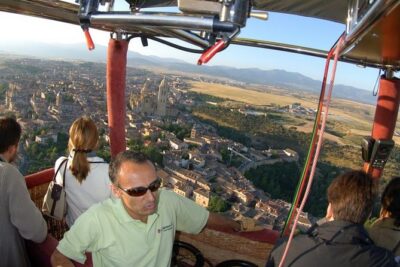
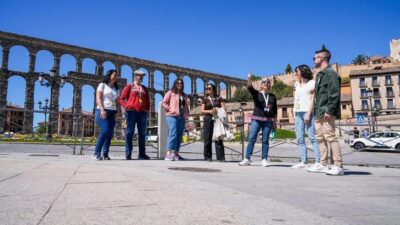
Guided Walking Tour with Cathedral & Alcázar Entry
Read our review →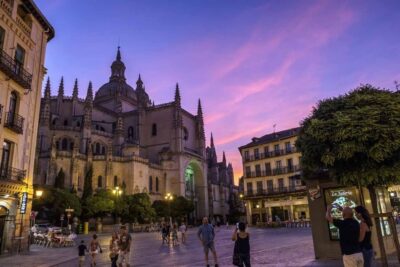

Browse the lists this tour appears in