
Reviewed · SPAIN
Visit Trujillo Medieval Scene and Route of the Discoverers
Trujillo rewards slow looking. This guided walk turns its castle, churches, palaces, and stone lanes into a connected story, moving from the grand Plaza Mayor into the old walled town and the world of Spain’s discoverers. I especially like the included castle and cisterns and the chance to enter Santa María la Mayor, two places that are easy to miss on a quick self-guided stroll. I also like that guides such as Alicia, Ana, José, and Esmeralda bring different personal touches, from conquistador families to women’s roles and Extremaduran biodiversity. The main consideration is pace: the route includes hills, cobblestones, and a lot of history, and tours may run longer than the advertised two and a half hours.
At $18.54 per person, this is a strong-value introduction to Trujillo if you want context rather than a quick photo stop. The group can reach up to 35 people, so the quality of your visit may depend on the day’s guide and group size. The 10:30 a.m. start is useful for making the tour your main morning activity, but you should wear practical shoes and leave room afterward to revisit the corners that catch your eye.
In This Review
- Five reasons this Trujillo walk earns a place in your plans
- Starting in Plaza Mayor, Trujillo’s grand stage
- Walking into the medieval town
- The Alcazaba and cisterns, where defense became daily life
- Santa María la Mayor, Trujillo’s major church stop
- The palaces around Plaza Mayor
- San Martín and the layered historic centre
- Discoverers, royal figures, and stories beyond the usual statue
- Timing, group size, and the real value at $18.54
- Who should book this guided route?
- Should you book the Trujillo Medieval Scene and Route of the Discoverers?
- FAQ
- Where does the tour begin?
- What time does the tour start?
- Where does the tour end?
- How long does the tour last?
- How much does the tour cost?
- Is the castle admission included?
- Is Santa María la Mayor included?
- Is admission to San Martín included?
- How large can the group be?
- Can I cancel for a full refund?
Five reasons this Trujillo walk earns a place in your plans
- The route links three eras: You move from medieval defenses to Renaissance palaces and then to the Atlantic world shaped by Trujillo’s discoverers.
- The castle includes its cisterns: The Alcazaba is not treated as a quick outside photo stop, and the underground water system adds a practical glimpse of medieval life.
- Santa María la Mayor is part of the daytime visit: This National Interest Monument gives the tour an important interior stop, not just exterior architecture.
- The guides make the city feel personal: Alicia is praised for detailed explanations, Ana for warmth and clarity, José for energy, and Esmeralda for matching the setting with an enjoyable presentation.
- Photography is built into the walk: The guide points out useful viewpoints and corners, especially valuable in a town where the best details can hide behind a palace doorway or along a narrow lane.
Starting in Plaza Mayor, Trujillo’s grand stage
The tour begins at Plaza Mayor, also called Plaza de la Hispanidad. This is the right starting point because Trujillo’s story gathers here in stone: Renaissance palaces, the Church of San Martín, and the monuments linked to families who gained wealth and status through Spain’s expansion overseas.
Give yourself a moment to look around before the explanation begins. The square is not simply a meeting place. It shows how a medieval town changed as powerful families built larger homes and public faces. The guide helps you read coats of arms, balconies, façades, and the relationships between the buildings.
I like this opening because it gives you a visual key for the rest of the route. Instead of seeing a palace as an attractive old building, you begin to understand why it is there and what its decoration says about the people who commissioned it.
The square is also one of the easiest places to photograph. The guide points out useful angles, which can save you from spending the whole visit taking the same front-facing picture. At the same time, the plaza can feel like a grand introduction that delays the quieter parts of the old town. If you prefer narrow lanes and medieval walls, be patient. The tour soon moves inside the historic centre.
More things to book in Spain:
- Barcelona: Sagrada Familia Entry Ticket with Audio Guide
★ 4.6 · 105,312 reviews - Barcelona: Park Güell Admission Ticket
★ 4.4 · 76,534 reviews - Seville: Royal Alcázar Entry Ticket
★ 4.6 · 28,378 reviews
Walking into the medieval town
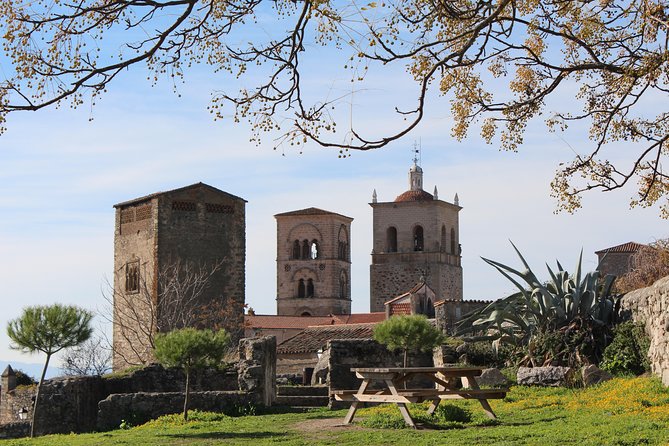
From the plaza, the route continues through Trujillo’s intramural quarter, an open-air mix of medieval and Renaissance architecture. Expect a walking visit rather than a sequence of museum rooms. The pleasure comes from moving through the town and noticing how defensive structures, religious buildings, manor houses, towers, and aristocratic residences fit together.
This is where a guide adds real value. Trujillo can look compact on a map, yet its details are easy to pass without explanation. A shield above a doorway, an unusual balcony, or an image on a façade may point to a family connection or a period of construction. Alicia, one of the named guides, is praised for explaining why these features appear where they do. Her style is described as detailed but enjoyable rather than dry.
The route also uses several themes. You may hear about Isabel la Católica, Carlos V, the town’s discoverers, and its use as a setting for cinema. These threads broaden the story beyond a simple parade of old buildings. They show Trujillo as a place shaped by royal connections, military ambition, family power, and later fascination with Spain’s past.
The trade-off is physical. The old centre includes cobblestones and walking between different levels. One direct assessment of the tour puts it plainly: you need to walk, but the views make the effort worthwhile. If your mobility is limited, service animals are allowed and most people can participate, but the route is not presented as a fully step-free visit.
The Alcazaba and cisterns, where defense became daily life
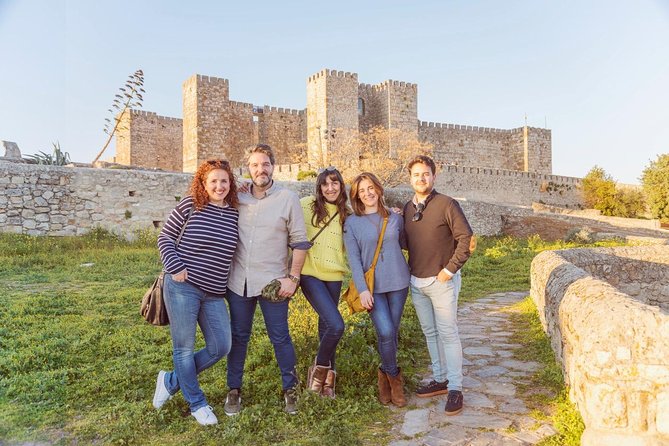
The Castillo de Trujillo is one of the major stops, and admission to the castle and its cisterns is included during daytime tours. The visit is listed as about 15 minutes, though the guide may spend more or less time depending on the group and the flow of the day.
The Alcazaba gives you the strongest sense of Trujillo as a fortified settlement. Its walls and elevated position explain why the town mattered long before its association with overseas conquest. From here, the city’s defensive role becomes easier to picture, and the route’s medieval theme feels more than decorative.
The cisterns are an especially useful inclusion. They connect grand military architecture with an ordinary need: storing water. That small detail makes the castle more understandable. A strong guided visit does not treat the cisterns as a side note, and this route gives them a place in the story.
You should know that the itinerary describes the castle and cistern admission as included for daytime visits, while tickets are not included in visits beginning at 8 p.m. Since this tour starts at 10:30 a.m., that evening exception should not affect your booking, but it is worth checking if you are comparing departure times.
Santa María la Mayor, Trujillo’s major church stop
The Church of Santa María la Mayor is another important inclusion. It is identified as a National Interest Monument and as one of the most significant churches in Cáceres province. The scheduled stop is about 15 minutes.
That is enough time to get an introduction, see the principal features, and hear why the church matters, but it is not a long church study. If religious art or architecture is a major interest, you may want to return independently after the guided walk, assuming opening hours allow.
This stop also gives the tour a useful change of tone. The castle explains defense and power in practical terms. Santa María brings the focus to religion, ceremony, and the civic importance of a major medieval church. Together, the two buildings show more of Trujillo’s past than either one could alone.
Ana is praised for explaining places in a warm, clear way, and that sort of guide is particularly helpful inside a historic church. A short stop can otherwise become a list of dates and styles. The best version of this visit connects the building to the town’s wider story.
Same base, a different kind of afternoon:
- Barcelona: Casa Batlló Entry with Self-Audioguide Tour
★ 4.7 · 25,359 reviews - Seville: Cathedral and La Giralda Entry Ticket
★ 4.5 · 24,592 reviews - Madrid: Tour Bernabéu Entry Ticket
★ 4.5 · 21,573 reviews - Barcelona: 24 or 48-Hour Hop-On Hop-Off Bus Tour
★ 4.4 · 20,872 reviews
The palaces around Plaza Mayor
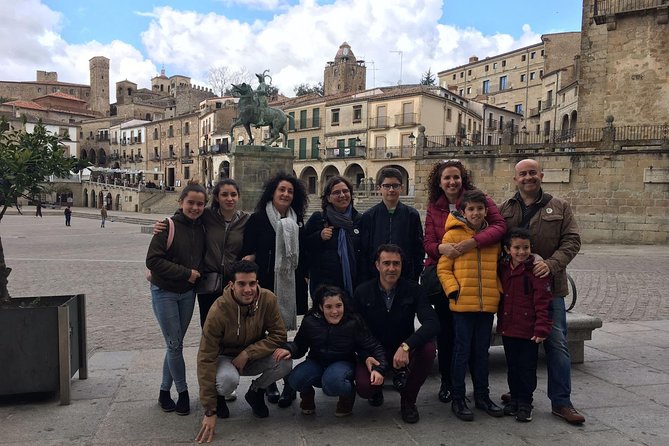
The tour returns to Plaza Mayor and spends time with several palaces. This is one of the strongest parts for anyone who enjoys architecture, family stories, and small details.
The Palacio del Marqués de la Conquista is a Plateresque palace located on the square. Its style reflects the decorative ambition of the period, when façades could act as public statements of wealth and rank. The stop is listed at about 10 minutes, enough for an explanation and a closer look.
The Palacio de San Carlos represents a later phase, with classicist elements from the 16th and 17th centuries. Seeing it alongside a Plateresque palace helps you notice that Trujillo is not frozen in one medieval moment. Its architecture changed as tastes, fortunes, and political circumstances changed.
The Palacio de Orellanas-Pizarro is described as the Plateresque residence of the first corregidor of Cuzco. That connection places Trujillo’s local architecture within a much larger Atlantic story. The route of the Discoverers is not only about heroic names. It also raises questions about how offices, wealth, and influence moved between Spain and the Americas.
At the Pizarro House Museum, a recreated late 15th-century Hidalgo manor offers a more domestic counterpoint to the grand palaces. The scheduled stop is about 15 minutes. Rather than seeing only public façades, you get a sense of how an upper-status home might have been arranged and presented.
This sequence works well because each building has a distinct role. The drawback is that a short stop can feel rushed if you want to study architectural details or take many photographs. I would note the places you want to revisit instead of trying to see everything perfectly during the group walk.
San Martín and the layered historic centre
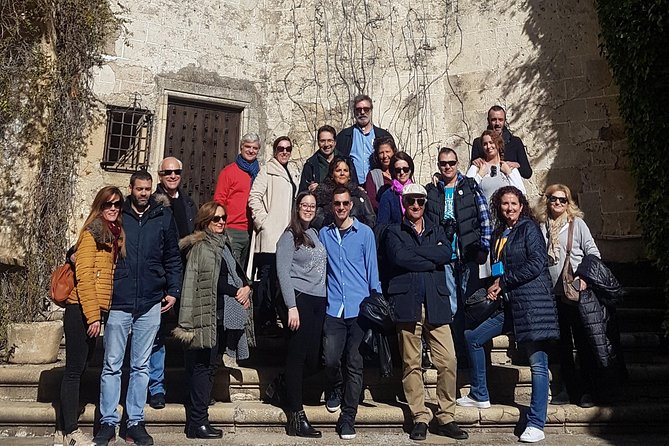
The Church of San Martín sits in Plaza Mayor and dates from the 14th to the 16th centuries. The scheduled stop is about 10 minutes, and admission is not included. That distinction matters: you can see the church as part of the route, but you should not assume the guided visit includes an interior ticket here.
The church adds another layer to the square’s architectural story. Santa María represents one of the town’s major religious landmarks, while San Martín helps show how the plaza developed around more than one important church and a group of powerful residences.
The broader historic-centre portion is listed as about two hours, although the overall tour is advertised at approximately two and a half hours. The timing is not perfectly consistent on paper. Several named guides, including Alicia and Ana, are praised for allowing the visit to run beyond the contracted time when the explanation calls for it. That can be a bonus if you enjoy detail, but it may affect plans for lunch, transport, or another timed attraction.
Discoverers, royal figures, and stories beyond the usual statue
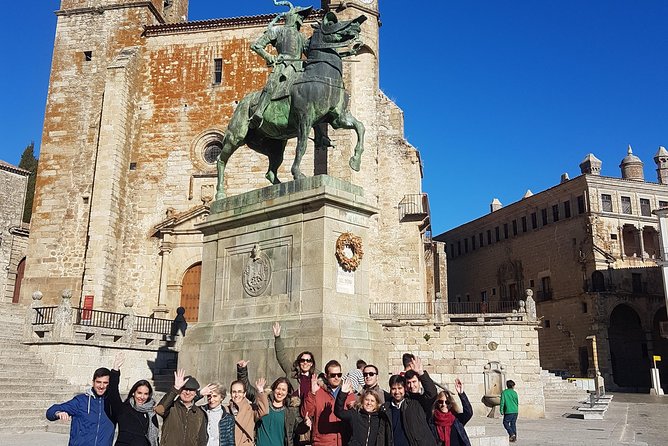
Trujillo is closely tied to Spain’s discoverers, and the tour naturally gives that subject plenty of attention. The Isabel la Católica and Carlos V themes add royal context, while the Pizarro-related sites connect local families with events on the other side of the Atlantic.
What I like here is the chance to receive a broader account than a simple list of conquistador names. The guide Alicia is praised for discussing Trujillo’s artistic and architectural influence, economic development, and the role of women in the town’s story. Another guide is noted for adding details about local biodiversity and the wider character of Extremadura.
Those additions matter because they keep Trujillo from becoming a one-subject stop. The discoverers are central, but they are not the whole town. You also get religious history, social structure, building styles, family networks, and the physical environment around the city.
The balance still depends on your guide. With a group of up to 35 people, questions may be harder to fit in than on a small private walk. Still, the repeated praise for guides who answer questions, speak with energy, and explain small details suggests that the human side of the tour is one of its main strengths.
Timing, group size, and the real value at $18.54
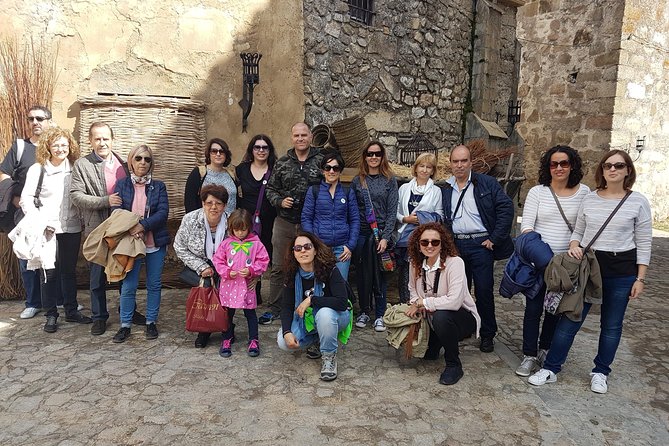
At $18.54 per person, the tour is priced reasonably for a guided walk that includes entry to the castle, cisterns, and Santa María la Mayor during daytime visits. You are paying not just to be shown buildings, but to have their connections explained in one continuous route.
The value is strongest if you are visiting Trujillo for the first time. You can cover the Plaza Mayor, historic centre, castle, church, and major palaces without spending your first hours sorting out what matters. The guide also identifies photo corners, which is useful in a compact town with many competing details.
The group limit of 35 is neither intimate nor enormous. It is large enough for a lively public tour and small enough to remain manageable, though it is not the format I would choose if you want long private conversations at every stop.
The 10:30 a.m. departure suits a morning visit. The activity ends back at the meeting point, so you can continue with lunch, independent sightseeing, or a second look at the castle area. Confirmation arrives at booking, and the tour offers free cancellation up to 24 hours before the start time. A minimum number of participants is required, so if the activity is canceled for that reason, you are offered another date or experience, or a full refund.
Who should book this guided route?
I would choose this tour if you want a clear first orientation to Trujillo, especially if architecture and local history matter to you. It also suits anyone making a short stop in Extremadura who wants to cover the essential monuments without turning the morning into a research project.
Families and mixed-age groups may appreciate the lively explanations, though the walking and uneven historic streets still require sensible footwear. Service animals are allowed, and most people can participate. If you need a fully accessible route, ask before booking because the supplied details do not promise step-free access.
History fans should enjoy the variety, but you should expect interpretation rather than long periods of quiet museum viewing. Photography lovers will get useful pointers, yet the group schedule means you may want to return later for unhurried pictures.
Should you book the Trujillo Medieval Scene and Route of the Discoverers?
Yes, if you want value, context, and a strong introduction to the town. The included castle and cisterns, Santa María la Mayor, and the cluster of palaces make the $18.54 fee easy to justify. The most praised guides, especially Alicia, Ana, José, and Esmeralda, seem to bring warmth and detail to what could otherwise be a standard monument walk.
Book with two expectations: you will walk, and the tour may last longer than the stated two and a half hours. If you can allow extra time afterward, wear sturdy shoes, and remain open to stories beyond the usual discoverer narrative, this is a practical way to meet Trujillo properly.
FAQ
Where does the tour begin?
It begins in Trujillo, Cáceres, Spain, at Plaza Mayor.
What time does the tour start?
The listed start time is 10:30 a.m.
Where does the tour end?
The activity ends back at the meeting point.
How long does the tour last?
The advertised duration is approximately two hours and 30 minutes. Some descriptions list longer route timings, and the visit may run beyond the contracted time.
How much does the tour cost?
The listed price is $18.54 per person.
Is the castle admission included?
Yes. Daytime visits include admission to the Castillo de Trujillo, including the Alcazaba and cisterns.
Is Santa María la Mayor included?
Yes. Admission to the Church of Santa María la Mayor is included during the daytime visit.
Is admission to San Martín included?
No. The Church of San Martín is part of the route, but its admission ticket is not included.
How large can the group be?
The activity has a maximum group size of 35 people.
Can I cancel for a full refund?
Yes, if you cancel at least 24 hours before the experience start time. Changes or cancellations made less than 24 hours before the start are not accepted for a refund.
Recently listed in Spain
- Jávea: Cala Portixol Kayak Tour with Snorkel & Cliff Jumping★ 4.6 · 271 reviews
- From Madrid: Ribera del Duero Tour of 3 Wineries w/ Tastings★ 4.9 · 150 reviews
- Barcelona: Wine Tasting and Tapas 5-Course Pairing Dinner★ 4.8 · 300 reviews
- Cala Granadella: Cala en Caló Sea Cave Snorkel & Kayak Tour★ 4.7 · 172 reviews
- Ronda: Guided Walking Tour with English or Spanish Guide★ 4.5 · 423 reviews
- White Villages and Ronda: Day trip from Seville.★ 4.7 · 171 reviews
- Alicante: Bullring and Bullfighting Museum Entry Ticket★ 4.6 · 326 reviews
- Lanzarote: Puerto del Carmen & Puerto Calero Boat Transfer★ 4.6 · 148 reviews