
Reviewed · HISTORICAL TOURS
Guided Tour of Historic and Monumental Trujillo
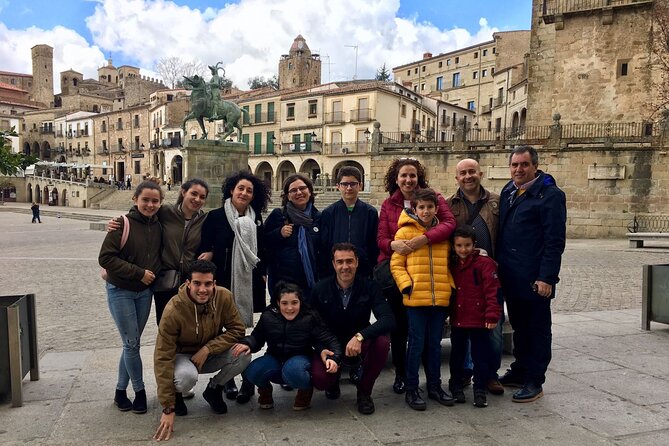
Trujillo opens its medieval story in one grand square. This two-hour walking tour begins in Plaza Mayor and leads through the walled old town, linking Muslim fortifications, Gothic churches, noble homes, convents, towers, and the monuments tied to Spain’s age of exploration. I especially like the clear historical route, which makes a complex town easier to understand, and the guide’s attention to good photo spots and themed routes connected with Isabel la Católica, Carlos V, the Discoverers, and film locations.
The price is low for a guided look at so many major sights, with a listed cost of $13.90 per person. The main point to consider is pace: two hours is enough for an excellent introduction, but not enough for a long visit inside every monument. The tour is best viewed as a strong orientation to Trujillo, followed by independent visits if you want more time at the castle, churches, or museums.
In This Review
- Key points before you book
- Why Plaza Mayor gives you Trujillo in miniature
- The palaces around the square
- Entering the walled medieval town
- Luis de Chaves and the royal connection
- The Palacio Viejo and the Military Order of Santiago
- Trujillo Castle and the Muslim alcazaba
- Pizarro House Museum and the town’s overseas story
- Santa María la Mayor and Torre Julia
- The Escobar house and María de Escobar
- Triumph Gate, Bejarano Redoubt, and San Andrés Gate
- What the guide adds to the walk
- Is $13.90 good value?
- Who should book this Trujillo walk?
- Should you book it?
- FAQ
- Where does the tour start?
- Where does the tour end?
- How long does the tour last?
- How much does the tour cost?
- Is the tour available with a mobile ticket?
- What are the main places included?
- Is admission included at the stops?
- How many people can join the tour?
- Are service animals allowed?
- Can I cancel for a full refund?
Key points before you book
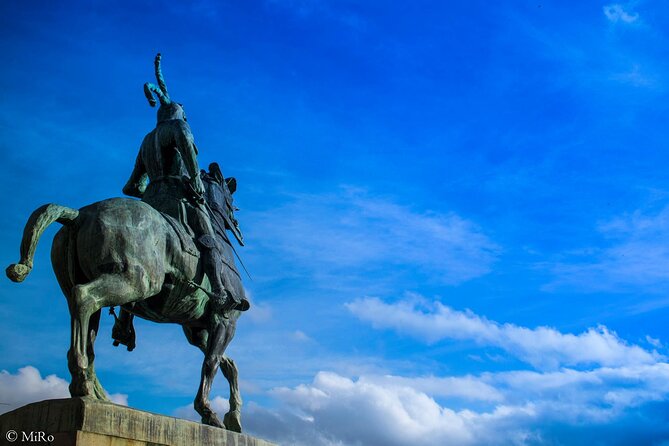
- Plaza Mayor is the perfect starting point: Renaissance palaces and the equestrian statue of Francisco Pizarro give you an immediate sense of Trujillo’s importance.
- The route covers both Christian and Muslim Trujillo: You see the medieval walls, the Muslim alcazaba, the castle, churches, fortified houses, and noble palaces.
- The Pizarro connection is woven through the town: The tour includes the Pizarro monument, Pizarro House Museum, and Casa Fuerte de los Escobar.
- The guide adds practical sightseeing help: The tour points out notable corners and suggested places for photographs.
- You get several historical themes in one walk: These include the Catholic Monarchs, Carlos V, Isabel la Católica, Spanish exploration, and film locations.
- The format is simple and flexible: It lasts about two hours, uses a mobile ticket, returns to the meeting point, and allows free cancellation up to 24 hours before the start.
Why Plaza Mayor gives you Trujillo in miniature
The tour starts at TurismoTrujillo.es Actividades Turísticas, at Plaza Mayor, 20. That location matters. Trujillo’s main square gathers the town’s grandest public face in one place, with Renaissance palaces arranged around the famous equestrian monument to Francisco Pizarro.
You can expect the opening part of the walk to explain how the square developed and why it became such an important setting. One section dates the construction to the 16th century, with work beginning in 1562 under the order of Hernando Pizarro. That detail helps connect the architecture to the family and power networks that shaped the town.
The square is also one of the easiest places to get your bearings. From here, the tour moves into the older, more enclosed streets. I like this progression because you first see Trujillo’s polished Renaissance façade, then move toward its medieval defenses and older religious buildings.
The equestrian statue deserves a close look, even though the scheduled stop is brief. Francisco Pizarro is one of the town’s most visible historical figures, and his presence raises difficult questions as well as historical interest. The tour’s wider route helps place him within a town of noble families, military orders, royal visits, and overseas expansion rather than treating the statue as an isolated landmark.
More History Tours in Spain:
- Madrid Essential: Historic Center, Plaza Mayor & Royal Palace
★ 5.0 · 6,416 reviews - Barcelona: Tapas Walking Tour with Food, Wine, and History
★ 4.8 · 4,261 reviews - Sevilla Food Tour: Tapas, Wine, History & Traditions
★ 5.0 · 3,468 reviews
The palaces around the square
The Palacio de San Carlos, also known as the Palacio de los Vargas-Carvajal, adds another layer to the square. It is a Spanish Plateresque building, and the original Plateresque façade remains one of its defining features. A second façade faces Domingo Street.
You may only spend a few minutes here, but that is enough to identify the decorative style and understand how the town’s leading families displayed status. The short stop is useful for architecture lovers, though you should not expect a full palace tour as part of the two-hour route.
This is one reason a guided walk helps. In a town filled with old stone walls and ornate façades, it is easy to photograph a building without understanding its place in the story. A guide can point out the difference between a fortified residence, a ceremonial palace, and a religious foundation.
Entering the walled medieval town
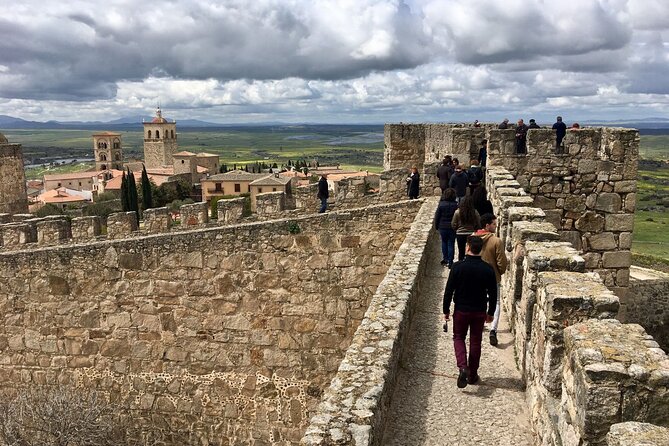
Once the route leaves the open space of Plaza Mayor, the character of Trujillo changes. The historic center brings together the Muslim alcazaba and walls, strong houses, manor houses, palaces, convents, churches, and towers.
The town’s defenses are not just background scenery. They explain why Trujillo developed around fortified heights and controlled entrances. The walk gives you a practical sense of how the old town was organized, with buildings that served domestic, religious, political, and military purposes close together.
I would wear comfortable shoes for this section. The supplied information does not specify the exact street surface or steepness of every part of the route, but a medieval hill town with a castle and walls naturally calls for sensible footwear. If you have limited mobility, ask the provider about the route before booking. The activity is described as suitable for most people, and service animals are allowed.
The group can include up to 30 people. That is still a manageable size for a town walk, though you may find that a larger group feels less intimate in narrow streets. The guide’s ability to keep the group together will matter more here than it would in a wide museum gallery.
Luis de Chaves and the royal connection
Casa-Fuerte de Luis de Chaves El Viejo is a strong house from the 13th and 14th centuries. Its importance comes not only from the military character of the building but also from its connection with the Catholic Monarchs, who stayed there during the Wars of Succession.
This stop gives you one of the clearest examples of Trujillo’s fortified domestic architecture. A palace might display wealth, but a casa-fuerte tells you that family power also depended on defense, walls, and strategic position.
The royal connection makes the building especially useful for understanding the town’s role in national events. Trujillo was not simply a quiet provincial settlement. Its buildings place it within the political struggles of medieval and early modern Spain.
The visit is scheduled for about ten minutes, which should allow a good explanation and time to look carefully. Still, the tour focuses on the outside story and overall setting rather than a long interior visit.
A few more Spain ideas to compare
- Barcelona: Sagrada Familia Entry Ticket with Audio Guide
★ 4.6 · 105,312 reviews - Barcelona: Park Guell Guided Tour with Skip The Line Entry
★ 4.7 · 17,563 reviews - Málaga: Caminito del Rey Guided Tour with Transportation
★ 4.8 · 12,183 reviews - Caminito del Rey: Guided Tour and Entry Ticket
★ 4.6 · 11,286 reviews
The Palacio Viejo and the Military Order of Santiago
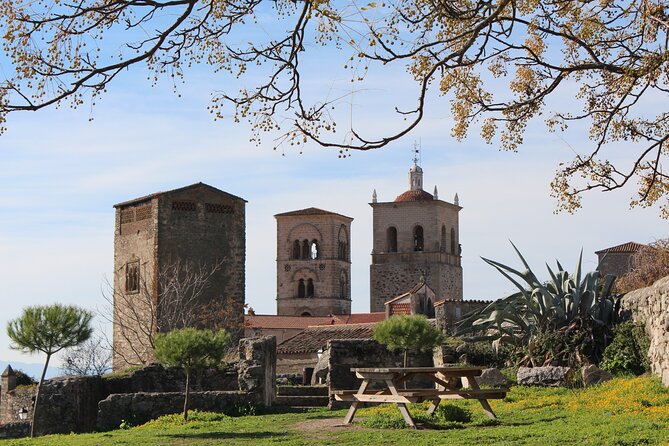
The Palacio Viejo, or Palacio de la Cadena, is linked with a 13th-century church founded by the Military Order of Santiago. This is a small but meaningful stop because military orders played a major role in the Christian reconquest and in the organization of medieval territory.
Here, religious and military history meet. The building is not simply a church, and the nearby palatial context is not merely residential. Together, they show how faith, defense, landholding, and political authority overlapped in medieval Spain.
You may find this stop more rewarding if you already know a little about the military orders. If not, the guide’s explanation is important. A few dates and names can otherwise pass quickly, especially during a route with so many monuments.
Trujillo Castle and the Muslim alcazaba
Castillo de Trujillo is one of the major reasons to choose this tour. The site includes a Muslim alcazaba and a cistern, or aljibe, dating from the 10th to the 12th centuries.
That date range takes you well before the Renaissance buildings of Plaza Mayor. The castle section shows the earlier Islamic foundations of the town and makes clear that Trujillo’s story did not begin with the Catholic Monarchs or the Pizarro family.
The aljibe is especially valuable because water systems reveal how a fortified settlement worked. Walls may look impressive, but a stronghold also needed reliable water. Even a short explanation here can make the defensive site easier to read.
The castle stop is listed at about ten minutes. That is enough for orientation, key facts, and views, but not necessarily enough for a relaxed exploration of every part of the complex. If the castle is high on your list, plan a return visit or allow extra time after the tour. The activity ends back at the meeting point, so you can use the walk to decide which places deserve a second look.
Pizarro House Museum and the town’s overseas story
The Pizarro House Museum occupies a 15th-century hidalgo manor house. Its inclusion gives the tour a more personal link to Francisco Pizarro and the wider story of Spanish expansion.
A manor house of this type helps you picture the social setting behind the public monument in Plaza Mayor. The tour can connect the family name to the architecture, the town’s elite, and the voyages that carried Trujillo’s influence far beyond Extremadura.
The name Pizarro attracts plenty of attention, but this part of the route also benefits from balance. Trujillo is more than the birthplace or home of one famous conquistador. The route places the Pizarro story beside Muslim architecture, royal history, Gothic art, military orders, and local families.
The museum stop is listed at around ten minutes. That is a useful introduction, not a substitute for a detailed museum visit. If you want objects, rooms, and exhibits in depth, check whether you can return independently.
Santa María la Mayor and Torre Julia
I would pay close attention at Iglesia de Santa Maria la Mayor. The church is recognized as a Gothic National Monument and includes earlier Romanesque remains, including Torre Julia.
It also contains a Spanish-Flemish altarpiece by Fernando Gallego. That gives the stop genuine artistic weight. The church is not included only because it is old or photogenic. Its architectural layers and altarpiece show how Trujillo’s religious buildings changed over time and gathered works of lasting importance.
The listed information does not provide an interior visit schedule or guarantee how long the church will be open during the walk. Treat this stop as part of the guided route, then ask locally if you want to return for a slower look. The admission is listed as free for the itinerary stops, but opening arrangements can still affect what you see on a particular day.
The Escobar house and María de Escobar
Casa Fuerte de los Escobar is a 15th-century military construction. It is associated with María de Escobar, identified here as the first woman to bring wheat and barley seeds to Peru.
That detail adds a welcome human angle to the exploration story. The town’s links with the Americas were not only about famous men or military conquest. Agricultural exchange, food, and the movement of plants also formed part of the connection between Extremadura and the New World.
The building itself reinforces the pattern you will see throughout the walk: private homes could also be defensive structures. A fortified house tells you about the insecurity and competition of medieval society in a way that a grand palace may not.
The stop is listed at about ten minutes. It is one of the places where listening matters as much as looking. The story of María de Escobar may be easy to miss if you are focused only on façades and photographs.
Triumph Gate, Bejarano Redoubt, and San Andrés Gate
The later section brings you to the Triumph Gate, the Bejarano Redoubt, and Puerta de San Andres. These stops make the walls easier to understand as a working defensive system.
The Triumph Gate is one of the old entrances into Trujillo. Nearby, the Bejarano Redoubt is a strong house from the 13th century that defended the gate. This pairing is useful because it links an opening in the wall with the building responsible for protecting it.
Puerta de San Andres is one of seven gates in the town wall and sits beside the Church of San Andrés. The number seven gives you a sense of how many controlled entrances once shaped movement through the town.
These stops may appeal most to visitors who enjoy military architecture and old urban planning. They are also strong photography points, which is why the guide’s suggestions can help. A good angle often depends on seeing how the gate, wall, adjacent church, and surrounding street fit together.
What the guide adds to the walk
The experience is designed as more than a list of dates. The route brings together several suggested themes: the Discoverers, Isabel la Católica, Carlos V, and film locations. That range lets you choose the parts that interest you most.
I like the emphasis on photographic corners because Trujillo can be visually overwhelming. Palaces, towers, stone streets, and defensive walls compete for attention. A guide who points out where to pause can save you time and help you return later for photographs without wandering at random.
One published rating describes the visit as very complete and praises guide Ana for making the route lively while offering many comments about the historic center. That is the kind of guidance this town needs. The value is not just in walking from one building to another, but in getting a narrative that connects them.
The overall rating is 5 out of 5 from 933 ratings, with 100 percent recommending the experience. That is unusually strong feedback, and it supports the idea that the tour delivers a satisfying introduction. Still, the short duration means expectations matter. You are buying structure, context, and an efficient first look, not a private architectural seminar.
Is $13.90 good value?
At $13.90 per person, I consider this good value if you want a guided introduction to Trujillo. The route includes the town’s principal square, castle area, fortified residences, major gates, a museum, and Santa Maria la Mayor, while admission is listed as free at the stops.
The real value comes from the number of stories covered in two hours. Without a guide, you could easily notice the walls and palaces but miss the links between the Catholic Monarchs, the Military Order of Santiago, the Pizarro family, María de Escobar, and the Muslim alcazaba.
The limitation is depth. If you want to enter every building or spend long periods with the altarpiece, castle, or museum, this tour will not replace independent sightseeing. I would use it at the beginning of a Trujillo visit, then revisit the places that caught your attention.
Confirmation arrives at booking, and the mobile ticket keeps the arrangement simple. The activity begins and ends at Plaza Mayor, 20. It runs with a maximum of 30 people, and free cancellation is available if you cancel at least 24 hours before the start time. Changes or cancellations made later are not accepted for a refund.
Who should book this Trujillo walk?
I would recommend it to first-time visitors who want a clear introduction without spending half a day planning their own route. It suits anyone interested in medieval defenses, Spanish royal history, religious art, the age of exploration, or historic town photography.
It is also a good choice if you have limited time in Extremadura. Two hours gives you a broad look at Trujillo’s core sights and helps you decide where to spend the rest of your day.
You may prefer independent touring if you dislike group walks, need long stops inside monuments, or want to set your own pace. A group of up to 30 people can also feel less personal than a very small tour, especially in narrow medieval streets.
Should you book it?
Book this tour if you want a well-priced, story-led introduction to Trujillo’s square, walls, castle, churches, palaces, and fortified homes. The route is broad, the historical themes are varied, and guide Ana’s praised style suggests a lively explanation rather than a dry march through dates.
Think of it as your foundation for the town. Take the walk, note the places that catch your eye, then return to the castle, Pizarro House Museum, or Santa Maria la Mayor if you want more time. At $13.90, that combination gives you both a useful overview and room for your own discoveries.
FAQ
Where does the tour start?
It starts at TurismoTrujillo.es Actividades Turísticas, Plaza Mayor, 20, 10200 Trujillo, Cáceres, Spain.
Where does the tour end?
The activity ends back at the meeting point in Plaza Mayor.
How long does the tour last?
The tour lasts approximately two hours.
How much does the tour cost?
The listed price is $13.90 per person.
Is the tour available with a mobile ticket?
Yes. The experience includes a mobile ticket.
What are the main places included?
The route includes Plaza Mayor, Palacio de San Carlos, the historic center, Casa-Fuerte de Luis de Chaves, Palacio Viejo or Palacio de la Cadena, Castillo de Trujillo, Pizarro House Museum, Santa Maria la Mayor, Casa Fuerte de los Escobar, the Triumph Gate, Bejarano Redoubt, and Puerta de San Andres.
Is admission included at the stops?
Admission is listed as free for the itinerary stops.
How many people can join the tour?
The activity has a maximum group size of 30 people.
Are service animals allowed?
Yes. Service animals are allowed.
Can I cancel for a full refund?
Yes, if you cancel at least 24 hours before the experience start time. Cancellations or changes made less than 24 hours before the start time are not accepted for a refund.
Recently listed in Spain
- Jávea: Cala Portixol Kayak Tour with Snorkel & Cliff Jumping★ 4.6 · 271 reviews
- From Madrid: Ribera del Duero Tour of 3 Wineries w/ Tastings★ 4.9 · 150 reviews
- Barcelona: Wine Tasting and Tapas 5-Course Pairing Dinner★ 4.8 · 300 reviews
- Cala Granadella: Cala en Caló Sea Cave Snorkel & Kayak Tour★ 4.7 · 172 reviews
- Ronda: Guided Walking Tour with English or Spanish Guide★ 4.5 · 423 reviews
- White Villages and Ronda: Day trip from Seville.★ 4.7 · 171 reviews
- Alicante: Bullring and Bullfighting Museum Entry Ticket★ 4.6 · 326 reviews
- Lanzarote: Puerto del Carmen & Puerto Calero Boat Transfer★ 4.6 · 148 reviews
Historical Tours, compared.
Madrid Essential: Historic Center, Plaza Mayor & Royal Palace
Read our review →
Tapas Walking Tour with Food, Wine, and History
Read our review →
Sevilla Food Tour: Tapas, Wine, History & Traditions
Read our review →
Valencia Old Town Tour with Wine & Tapas in 11th Century Historic Monument
Read our review →
Barcelona Tapas Walking Tour: Food, Wine & History
Read our review →
Ultimate Seville Tapas, Wine & History Small Group Tour
Read our review →
Skip-the-Line Great Mosque-Cathedral History Tour
Read our review →
Browse the lists this tour appears in