
Reviewed · ALCAZAR TOURS
Jerez: City Guided Tour and the Alcazar
Jerez reveals its best stories on foot. This two-hour tour pairs the Alcázar of Jerez with a thoughtful walk through the old center, giving you both the city’s major fortress and the streets that grew around it. I like the way the route blends architecture, local legends, battles, religion, and everyday life. I also like the useful city orientation: guides such as Rose and Victoria have helped visitors plan the rest of their time in Jerez.
The main consideration is pace. You cover several historic areas in two hours, and comfortable shoes matter. The tour is also strict about punctuality, so arriving late could mean losing the experience. On hot days, the walking can feel demanding, especially during the warmer months.
In This Review
- Key points to know before booking
- Why this Jerez tour works well for a first visit
- Starting at Plaza del Arenal
- Entering the Almohad Alcázar
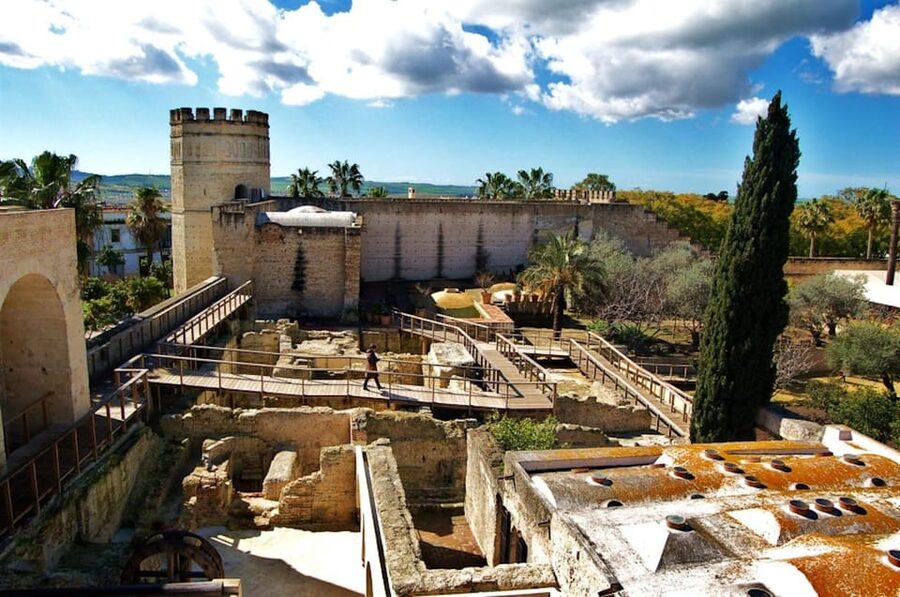
- The mosque and Arab baths
- Palace of Villavicencio and tower views
- Islamic gardens and the quieter side of the fortress
- From the Cathedral Redoubt to Plaza del Arroyo
- Plaza de la Asunción and San Dionisio
- Finishing at the Consistorio de Jerez
- Guide quality and the human side of the tour
- Is $29 good value?
- Timing, comfort, and who should book
- Should you book the Jerez Alcázar tour?
- FAQ
- How long does the Jerez guided tour last?
- What is included in the price?
- How much does the tour cost?
- Where does the tour meet?
- Which languages are available?
- Is the tour wheelchair accessible?
- Are children allowed to join?
- Can I cancel or pay later?
Key points to know before booking
- The Alcázar is the centerpiece: Visit the mosque, Arab baths, Palace of Villavicencio, tower views, walls, and Islamic-style gardens.
- You get more than a monument visit: The route links the fortress with Plaza del Arenal, the Cathedral Redoubt, Plaza del Arroyo, Plaza de la Asunción, and the Consistorio.
- Guides receive the strongest praise: Rose, Victoria, Rosalba, Celeste, and others are described as friendly, clear, enthusiastic, and helpful.
- It is a compact walking introduction: Two hours gives you a useful first look at Jerez without taking up an entire day.
- The price is reasonable for the access included: At $29 per person, the fee covers the guide and Alcázar entrance, with ticket-line skipping included.
- Plan around the practical details: Meet in front of the equestrian monument, wear good shoes, and arrive on time.
Why this Jerez tour works well for a first visit
Jerez can be easy to underestimate. Many people associate it with sherry, horses, and flamenco, but the old city also carries layers of Islamic, medieval Christian, Renaissance, Baroque, and neoclassical design. This tour gives you a useful framework for seeing those layers in the right order.
The route starts in Plaza del Arenal, a central meeting place with a long civic past. Beginning here makes sense because you are not dropped straight into a monument with no context. Instead, the guide sets up Jerez as a city shaped by power, trade, religion, and conflict before leading you toward the Alcázar.
I especially like this arrangement for a first morning or first afternoon in town. You get a sense of where the important squares and historic buildings are, then you can decide what deserves a longer return visit. One visitor even used the guide’s recommendation to visit the cathedral on the following day. That is the kind of practical help that can make a short tour more useful than a simple list of dates and architectural labels.
The tour is offered in English or Spanish, though on some occasions it may be conducted in two languages. If you want the most focused experience possible, a private group is available. The standard group format is not described in detail, so I would not book this expecting a guaranteed small group unless you select the private option.
More Alcazar tickets:
- Seville: Royal Alcázar Entry Ticket
★ 4.6 · 28,378 reviews - Seville: Cathedral, Giralda, and Royal Alcázar Guided Tour
★ 4.7 · 9,165 reviews - Seville: Cathedral, Giralda & Alcazar Entry With Guided Tour
★ 4.6 · 8,560 reviews
Starting at Plaza del Arenal
Your meeting point is in front of the equestrian monument in Plaza del Arenal. This is an important detail because the square is large and a precise meeting spot matters. Allow time to find the monument and identify the guide before the scheduled start.
Plaza del Arenal has served as a meeting point since medieval times. The tour uses that setting to introduce Jerez as a place where public life has long unfolded in open squares. The guide then turns the city’s past into a connected story rather than treating each building as an isolated stop.
This is where the quality of the guide matters most. Rose received repeated praise for making the city and its culture feel approachable, while Victoria was described as punctual, easy to identify, helpful, and open to questions. Celeste was also praised for sharing plenty of detail without losing enthusiasm.
You should expect a walking tour rather than a vehicle-based city circuit. Transport is not included, and there is no hotel pickup. That keeps the price down, but it means you need to reach the meeting point yourself.
Entering the Almohad Alcázar
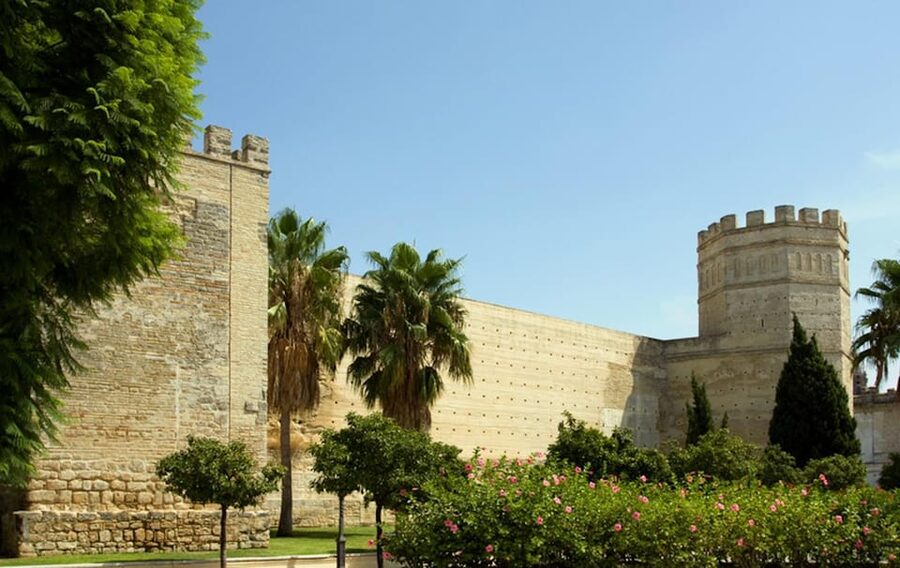
The Alcázar is the tour’s main reason to book. This fortress is presented as a major example of 12th-century Almohad architecture, with sturdy walls and a strong entrance gate that hint at Jerez’s strategic importance.
Your guide explains the battles, alliances, and legends tied to the fortress. That story-focused approach is useful because bare military facts can become dry very quickly. Here, the walls provide a physical backdrop for the changing fortunes of the city.
The Alcázar also shows how a fortified Islamic complex changed as Jerez passed through different periods. You are not simply looking at one untouched building. The visit traces the fortress through its later adaptations, helping you see how power and religion altered the site over time.
The included entrance is an important part of the $29 price. You do not have to arrange a separate ticket, and skip-the-ticket-line access is listed as part of the activity. Since the tour lasts only two hours, avoiding a ticket queue protects a meaningful part of your limited time.
The mosque and Arab baths
Inside the Alcázar, the former mosque provides one of the clearest links to the fortress’s Islamic period. The guide uses the space to explain how religious buildings fit into the life of the Andalusian city.
The Arab baths offer a different kind of insight. They point toward daily routines rather than grand ceremonies or military events. This is one reason a guided visit adds value: the baths can look simple at first, but their purpose becomes more understandable when someone explains how the fortress functioned as a lived-in center.
I would pay attention to the contrast between these spaces. The mosque and baths tell you about faith, hygiene, community, and routine. The walls and gate tell you about defense. Together, they make the Alcázar feel less like a single historic object and more like a working complex.
The supplied information does not give a detailed sequence for every room or state how long the group spends inside each one. Expect the guide to balance several interior stops within the wider two-hour route rather than offering an extended specialist visit to one building.
A few more Jerez De La Frontera ideas to compare
- Jerez de la Frontera: How the Andalusian Horses Dance
★ 4.6 · 6,168 reviews - Jerez de la Frontera: Andalusian Horse Dance and Museums
★ 4.7 · 1,289 reviews - Jerez: Yeguada de la Cartuja Carthusian Horses Tour
★ 4.8 · 970 reviews - Jerez: Royal Andalusian School of Equestrian Art Admission
★ 4.6 · 882 reviews
Palace of Villavicencio and tower views
The Palace of Villavicencio adds a later layer to the Alcázar. Its tower is highlighted for the views, giving you a chance to look across Jerez from above.
A tower stop can be especially useful after walking through the fortress because it helps you understand the city’s layout. From that higher position, you can connect the Alcázar with the surrounding squares and old streets that appear later in the tour.
The views are part of the appeal, but the route is not sold as a dedicated viewpoint experience. Your time here will be limited by the rest of the itinerary. If you want to examine the palace in great detail or linger over the view, you may need to return independently.
Still, this stop adds welcome variety. You move from thick defensive walls and enclosed rooms to a wider outlook over the city. The change keeps the tour from feeling like a single long history lecture.
Islamic gardens and the quieter side of the fortress
The Islamic-inspired gardens provide a pause from the fortress’s heavier architecture. Their design evokes calm and order, offering a different picture of life in the Alcázar.
I like the inclusion of the gardens because they help correct a common mistake in how fortresses are presented. A fortress was not only walls, weapons, and rulers. It also contained spaces designed for rest and beauty. The gardens give the tour a softer note before it returns to Jerez’s religious and civic monuments.
Do not expect a long garden visit. The tour has several stops still to cover, and the exact amount of free time is not stated. The value comes from seeing the gardens as part of the whole complex, not from treating them as a separate botanical attraction.
From the Cathedral Redoubt to Plaza del Arroyo
After the Alcázar, the route continues to the Cathedral Redoubt, described as a Baroque landmark with Renaissance and neoclassical influences. This is a useful architectural counterpoint to the fortress.
The change in style helps you read Jerez as a city that kept rebuilding and reshaping itself. The Almohad Alcázar is not the only story. Later religious and civic powers left their own mark, and the Cathedral Redoubt makes that evolution visible.
The walk then reaches Plaza del Arroyo. This square is surrounded by stately palaces and has a quieter atmosphere than the main central meeting areas. It gives you a chance to notice the scale and character of the old town without rushing from one famous building to the next.
This section may appeal most to you if you enjoy urban detail. The tour is not limited to ticketed sights. It also shows how palaces, squares, churches, and public buildings relate to one another. That connection is often what turns a pleasant old-town walk into a useful introduction to a city.
Plaza de la Asunción and San Dionisio
Plaza de la Asunción brings together two important pieces of Jerez’s medieval civic story. The church of San Dionisio is presented as a Gothic-Mudejar building, while the historic Cabildo Viejo offers a look at the city’s older government.
The pairing is effective. San Dionisio reflects religious architecture shaped by more than one tradition, while the Cabildo Viejo points to municipal authority and public administration. You see how spiritual and civic power occupied the same urban center.
This stop also gives the guide a chance to connect architecture with the people who used it. The best explanations here are not just about dates or style names. They help you picture how worship, government, ceremony, and daily business once shared the same district.
The walk is likely to suit you if you prefer a city tour that includes smaller details between the major attractions. It is less suitable if you want to spend the full two hours inside the Alcázar. The itinerary deliberately divides attention between the fortress and the old town.
Finishing at the Consistorio de Jerez
The final stop is the Consistorio de Jerez, a Renaissance building associated with the city’s period of power and prosperity. Ending here gives the tour a clear civic finish.
The building’s role lets the guide bring the story back to Jerez as a functioning city, not just a collection of historic monuments. You begin in a public square, visit a fortified seat of power, pass religious and aristocratic buildings, and finish with a Renaissance symbol of government.
This ending also makes the tour practical. By the time you say goodbye, you have seen several parts of the historic center and gained a better sense of where to spend the rest of your day. The guides Rose and Victoria were both praised for helping with onward plans, and that sort of local orientation can be valuable after a short introduction.
Guide quality and the human side of the tour
The clearest strength is the guide service. Rose is repeatedly praised for enthusiasm, friendliness, clear English, and the ability to bring Jerez’s past to life. Victoria is described as punctual, approachable, thoughtful, and ready to answer questions. Rosalba also receives praise for warmth and strong explanations, while Celeste is noted for her enthusiasm and detailed commentary.
One useful detail is the guide’s use of contemporary language to explain past events. That can make battles, alliances, and political changes easier to picture. Instead of receiving a stream of dates, you get a more readable account of what was happening and why it mattered.
You should still keep expectations realistic. Guide quality can vary by date and language, and the tour may sometimes operate in two languages. The strong pattern of praise is encouraging, but no short walking tour can guarantee the same personality or pace every time.
The activity is also listed as wheelchair accessible. Since the route includes historic buildings, towers, streets, and several different sites, you may want to confirm the exact access arrangements when booking if you have specific mobility needs. The information confirms accessibility, but it does not describe every surface, entrance, or tower route.
Is $29 good value?
At $29 per person, the tour is fairly priced if you want the Alcázar explained rather than simply entered. The fee includes a live guide and admission to the fortress, plus skip-the-ticket-line access. It does not include transport, food, drinks, or hotel pickup.
The value improves if this is your first visit to Jerez. You receive a compact overview of the city, learn how its major periods fit together, and finish with ideas for what to see next. Several guides have also helped visitors plan the rest of their day, which adds practical value without extra cost.
The price may feel less attractive if you already know the old town well or prefer exploring at your own pace. Two hours is enough for an overview, but not enough for a slow architectural study or a long independent visit inside every Alcázar space.
For many people, the best comparison is not with a free stroll, but with the cost of losing time to unclear directions, missed context, or a ticket queue. If the guide’s explanations help you understand what you are seeing, $29 is a sensible way to get oriented.
Timing, comfort, and who should book
Arrive early. Punctuality is specifically required, and missing the scheduled start can mean the service is treated as completed. Meet in front of the equestrian monument, wear comfortable shoes, and bring what you need for a two-hour walk.
The tour suits first-time visitors, couples, families with older children, and anyone who wants a fast but meaningful introduction to Jerez. Children under 12 must be accompanied by an adult, and the minimum booking is two adults.
It is also a good fit for visitors who want history explained in plain language. The route covers Islamic, medieval, Renaissance, Baroque, neoclassical, and Gothic-Mudejar elements, but you do not need an architecture background to appreciate it.
You should think twice if you dislike fixed schedules, walking in warm weather, or moving through several sights in one visit. A private group is available if you want a more personal format, but the standard experience may sometimes include two languages.
Free cancellation is available up to 24 hours before the start for a full refund, and you can reserve now while paying later. Some locations may be replaced by a similar site if special circumstances or force majeure require a change.
Should you book the Jerez Alcázar tour?
I would book this tour if Jerez is new to you and you want the city to make sense quickly. The Alcázar is the clear prize, but the surrounding walk gives the fortress context and prevents your visit from becoming a single isolated monument stop.
The strongest reason to go is the guide service, especially if you are fortunate enough to have someone with the enthusiasm shown by Rose, Victoria, Rosalba, or Celeste. The main caution is the compact schedule. Arrive on time, wear good shoes, and accept that you are getting an overview rather than a slow, exhaustive examination.
At $29, it offers a solid introduction to Jerez’s architecture, stories, and public spaces. For a first day in town, it is a practical way to get your bearings fast and choose what deserves more of your time later.
FAQ
How long does the Jerez guided tour last?
The tour lasts two hours.
What is included in the price?
The price includes the guide service and entrance to the Alcázar of Jerez. Skip-the-ticket-line access is also included.
How much does the tour cost?
The listed price is $29 per person.
Where does the tour meet?
The meeting point is in front of the equestrian monument in Plaza del Arenal.
Which languages are available?
The tour is available in English and Spanish. On some occasions, it may be conducted in two languages.
Is the tour wheelchair accessible?
Yes, the activity is listed as wheelchair accessible.
Are children allowed to join?
Yes. Children under 12 must be accompanied by an adult, and the minimum booking is two adults.
Can I cancel or pay later?
You can cancel up to 24 hours in advance for a full refund. Reserve now and pay later is also available.
Recently listed in Jerez De La Frontera
- Jerez: Traditional Tapas Tour★ 4.6 · 138 reviews
- Jerez: Flamenco Show and Menú at Tablao Puro Arte 2025★ 4.5 · 213 reviews
- Jerez: Guided Winery Tour with Wine Tasting★ 4.4 · 636 reviews
- Jerez: Historic Center Guided Tour★ 4.5 · 272 reviews
- Jerez: Bodegas Álvaro Domecq Guided Tour with Wine Tasting★ 4.6 · 265 reviews
- Jerez de la Frontera: Palacio Domecq Entrance Ticket★ 4.2 · 123 reviews
- Jerez: Bodegas Fundador Guided Tour with Tasting Session★ 4.8 · 714 reviews
- Jerez de la Frontera: Sherry Winery Tour with Tasting★ 4.6 · 309 reviews
Alcazar Tours, compared.

Cathedral, Giralda, and Royal Alcázar Guided Tour
Read our review →
Cathedral, Giralda & Alcazar Entry With Guided Tour
Read our review →
Segovia and Toledo Tour, Alcazar, and Cathedral
Read our review →
Priority Access Cathedral, Giralda & Alcázar Tour
Read our review →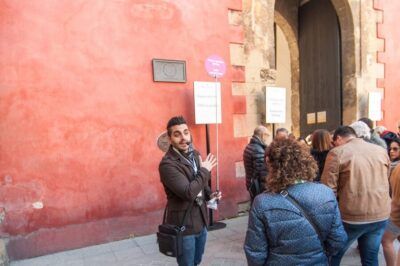
Alcázar and Cathedral Entry Ticket and Guided Tour
Read our review →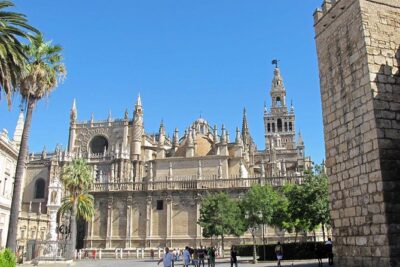
Alcazar and Cathedral of Seville Tour with Skip the Line Tickets
Read our review →
Toledo & Segovia Full Day Guided Tour with Alcázar
Read our review →Browse the lists this tour appears in