
Reviewed · MUSEUMS
Jerez de la Frontera: Andalusian Horse Dance and Museums
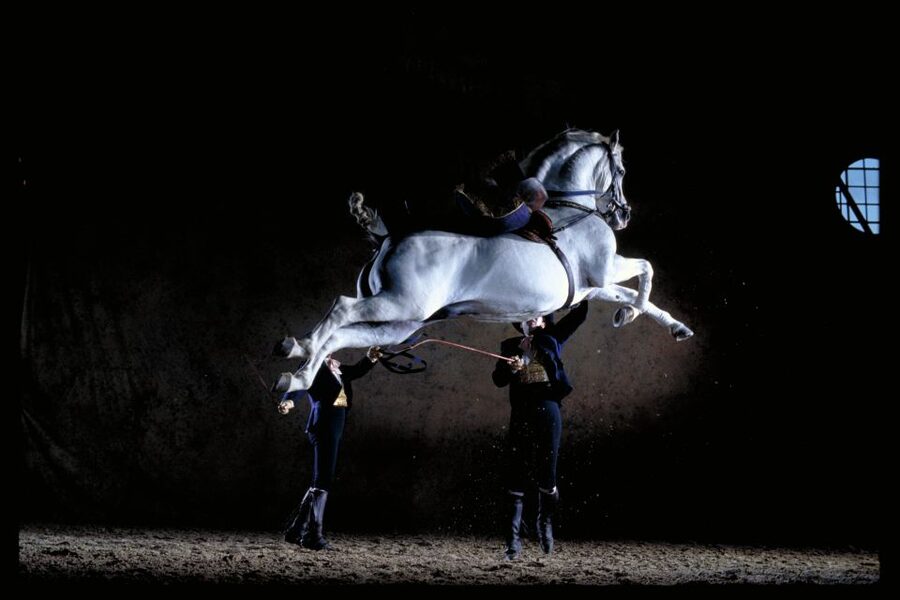
Andalusia’s finest horses know their steps. At the Royal Andalusian School of Equestrian Art in Jerez de la Frontera, you watch polished Andalusian horses perform a 90-minute ballet to Spanish music, then explore the school’s palace, training areas, saddlery, and museums. It is part cultural show, part working horse school, and part museum visit.
I especially like the close look at the horse-and-rider partnership and the chance to see horses training before the performance. The Carriage Museum and Art Equestrian Museum also give the show useful context. The main drawback is that the visit can involve a lot of walking and waiting, and the arena seats may feel uncomfortable during the full performance.
In This Review
- Key things to know before you go
- Arriving at the Royal Andalusian School
- The audiovisual introduction before 11:00 AM
- Palace gardens and 19th-century architecture
- The Art Equestrian Museum’s 11 rooms
- Saddlery, stables, and the work behind the show
- The 90-minute Andalusian horse ballet
- What makes the horses and riders special
- Carriage Museum and equestrian costume displays
- Seating, heat, and comfort
- Is $38 a good value?
- Who should book this experience?
- My verdict: book it for the full morning
- FAQ
- How long does the experience last?
- What time does the horse show begin?
- What is included in the ticket?
- When is the Art Equestrian Museum open?
- When is the Carriage Museum open?
- Are the palace and saddlery open every day?
- Where do I exchange my ticket?
- Is the site wheelchair accessible?
- What identification should I bring?
- Can I take photos or videos?
Key things to know before you go
- The main show runs from 12:00 to 1:30 PM, so plan your museum visits for the morning.
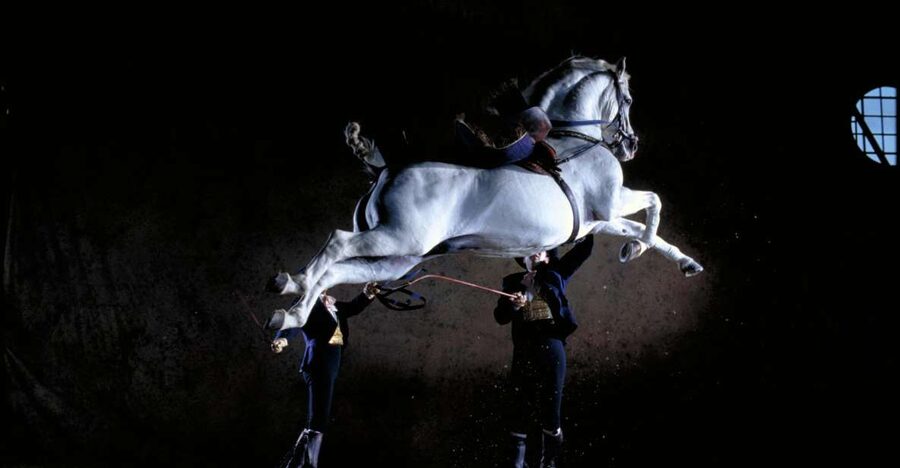
- Expect six to eight choreographies, including the Spanish walk, piaffe, passage, Pas de Deux, and airs above the ground.
- The morning is often the best part for horse lovers, since you may see grooming, schooling, and preparation in the training areas.
- The Art Equestrian Museum has 11 rooms, covering the horse and equestrian art in Andalusia.
- Photography rules need attention: cameras and video are listed as prohibited, though arena photography without flash has been allowed according to on-site reports.
- The $38 price is strong value if you use the full morning for the museums, grounds, and show rather than arriving only for the ballet.
Arriving at the Royal Andalusian School
Your first task is simple: go to the ticket office at the Royal Andalusian School and exchange your ticket. The entrance is through the Visitor Reception Centre, where you can get oriented before moving into the palace grounds.
The school is easy to reach from central Jerez by taxi, and one visitor described the ride from the train station as about 10 minutes. You can also walk from central Jerez, though the route may take roughly 25 minutes depending on where you begin. If you are coming from Seville by train, buy your return ticket ahead of time. Afternoon trains can sell out, leaving you with an unpleasant wait after the show.
The site is also practical for a day trip from Cádiz. A taxi from the port area can take about 30 minutes, although you should leave enough time for the return journey.
Arriving early makes sense. The audiovisual presentation is available until 11:00 AM, the Art Equestrian Museum runs from 10:00 AM to 2:00 PM, and the Carriage Museum is open from 10:00 AM to 3:00 PM. The performance begins at noon, so a morning arrival lets you see more without rushing.
A few more Jerez De La Frontera ideas to compare
- Jerez de la Frontera: How the Andalusian Horses Dance
★ 4.6 · 6,168 reviews - Jerez: Yeguada de la Cartuja Carthusian Horses Tour
★ 4.8 · 970 reviews - El Salobre: Horse Riding Adventure with Transfer Options
★ 4.5 · 1,609 reviews
The audiovisual introduction before 11:00 AM
The Visitor Reception Centre includes a digital cinema with an audiovisual presentation about equestrian art in Andalusia and the school’s history. It is a helpful first stop because the show itself is visually impressive but not heavily explained during every movement.
I would watch this film before visiting the museums. It gives you a basic sense of how Andalusian riding developed and why the school treats dressage as both sport and art. Film clips also show elements of the horses’ training and the school’s work.
The timing matters. This presentation is available only until 11:00 AM, so do not assume you can watch it after the performance. If you arrive close to noon, you may have to skip it.
Palace gardens and 19th-century architecture
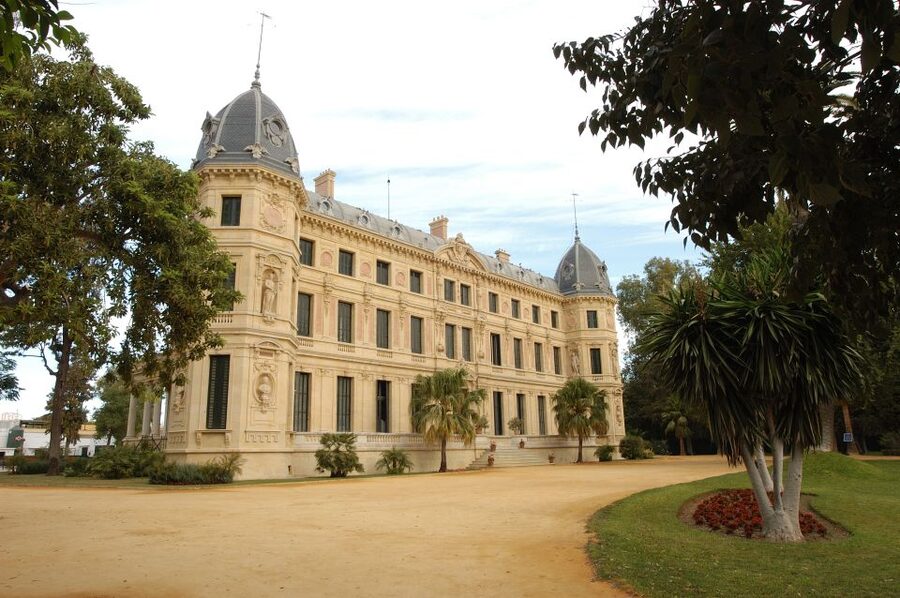
From the reception area, you enter gardens filled with exotic plants. The palace rises above them in elegant 19th-century style, giving the visit a more formal setting than a simple riding arena.
The grounds are worth allowing extra time for. You may see training areas and horses being prepared before the show, which gives you a better sense of the daily work behind the polished performance. Several people found watching the young riders school the horses almost as interesting as the formal ballet.
This is one reason I would not treat the attraction as a quick show ticket. The setting, training areas, museums, and working stables all help explain what you are seeing in the arena.
The Art Equestrian Museum’s 11 rooms
In the palace basement, the Museum of Equestrian Art traces the origins and development of equestrian art in Andalusia. Its 11 rooms cover the horse, riding traditions, equipment, and the relationship between horses and regional culture.
The displays are factual rather than flashy, but they add meaning to the performance. After seeing a rider guide a horse through a piaffe or Spanish walk, you will understand more about the discipline and training required.
The museum information is available in English as well as Spanish, which helps international visitors follow the material without needing a guide. You will also find film clips about the school and the history of the horse in the region.
The museum is open from 10:00 AM to 2:00 PM. Since the show ends at 1:30 PM, you can visit part of it afterward, but the morning is the safer choice. That is especially true if you want to see the Carriage Museum and the show without watching the clock.
More Museum Tours in Jerez De La Frontera:
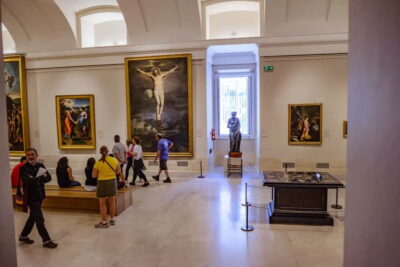
- Madrid: Prado Museum Entry Ticket
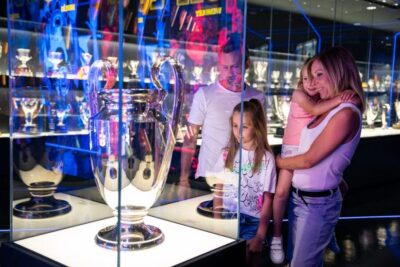
★ 4.6 · 17,509 reviews - Barcelona: FC Barcelona Museum “Barça Immersive Tour” Ticket
★ 4.4 · 10,944 reviews - Madrid: Reina Sofía Museum Entrance Ticket
★ 4.5 · 6,889 reviews - Barcelona: Park Güell and Gaudí House Museum Entry Ticket
★ 4.5 · 6,326 reviews
Saddlery, stables, and the work behind the show
The saddlery provides a look at how harnesses are made and repaired. It is a small but important stop because equestrian display depends on more than a well-trained horse and a smartly dressed rider.
The training areas and stables offer another useful window into the school. You might see horses grooming, warming up, walking on an exercise wheel, or being schooled before the performance. One of the most appealing details is the chance to see the calm care given by the grooms before the horses enter the arena.
Access and directions can be less clear here. After the formal museum visit, some people were told to leave the venue and walk along the main street to find another entrance, with little guidance. Ask staff to point out the stables, saddlery, or training areas before you leave one part of the complex.
The palace and saddlery are closed on Saturdays and public holidays. That does not necessarily cancel the entire experience, but it means you should check the operating schedule carefully if those parts matter to you.
The 90-minute Andalusian horse ballet
The central event begins at noon and lasts until 1:30 PM. The show combines classical dressage, Doma Vaquera, traditional riding work, carriage driving, Spanish music, and 18th-century style costumes.
The choreography changes from performance to performance, but the program includes six to eight sections. Possible numbers include The Colts, Airs on Horseback, Pas de Deux, Passage and Piaffe, Domino on Horseback, Airs Above the Ground, and Fantasy.
The most accessible parts are the group formations and the Pas de Deux, when horses and riders work in pairs. You can see the timing clearly as the horses move in unison, turning and advancing with remarkable control.
The classical dressage sections are more subtle. Look for the Spanish walk, piaffe, passage, and movements performed between pillars. The horse may appear to move only a few inches, but that restraint is the point. The rider is asking for precision, balance, and obedience rather than speed.
The more dramatic moments include levades, caprioles, and courbettes. These are advanced Haute École exercises in which the horse lifts the front of its body or makes controlled upward movements. The effect is theatrical, but the best part is the quiet communication between rider and horse before and after each movement.
The carriage segment changes the rhythm of the performance. Horses pull traditional carriages using classical harnesses, while coachmen demonstrate careful driving and control. These vehicles once served as transportation and are now used for sport and exhibition.
The final group performance brings several horses and riders together for a coordinated finish. Even if you are not an equestrian, the music, costumes, and careful formations make the show easy to enjoy. You do not need technical horse knowledge to appreciate it, though horse lovers will notice far more detail.
What makes the horses and riders special
The Andalusian is known here for grace, collection, and an elegant natural way of carrying itself. The show presents those qualities through formal riding rather than a loose rodeo-style display, though Doma Vaquera and some traditional Spanish riding elements give it a distinct local character.
The connection between horse and rider is the emotional centre of the performance. Riders make small adjustments rather than dramatic gestures, and the horses respond with movements that look almost effortless.
The riders are highly polished, and the horses appear carefully prepared. The training areas help balance the spectacle with a reminder that this precision comes from daily work. If you have ever wondered how a horse learns to piaffe or perform a Spanish walk, watching the preparation can be more revealing than the show itself.
One point some visitors may notice is that the performers are men. The supplied information does not explain the school’s current casting or rider policies, so I would not assume that the show represents every part of modern equestrian life. The performance itself is focused on the school’s established riding tradition.
Carriage Museum and equestrian costume displays
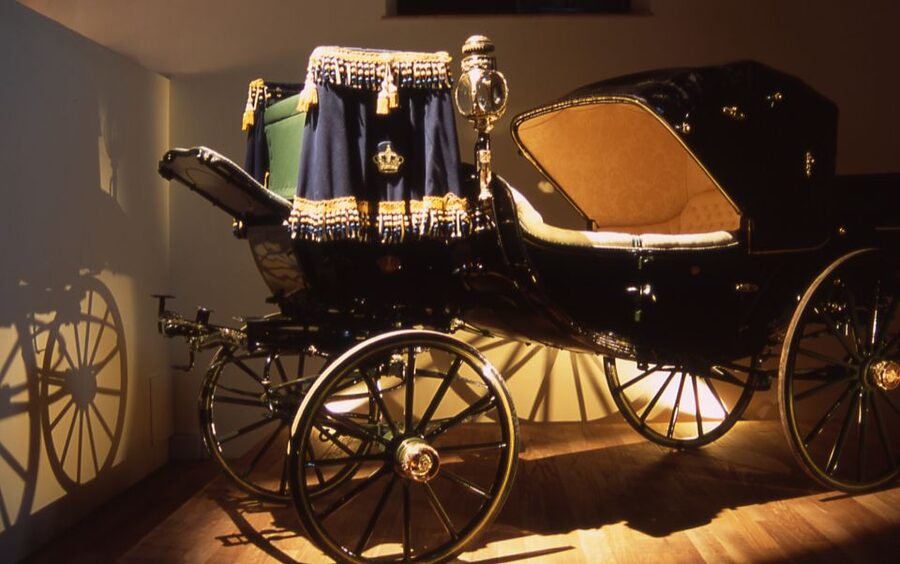
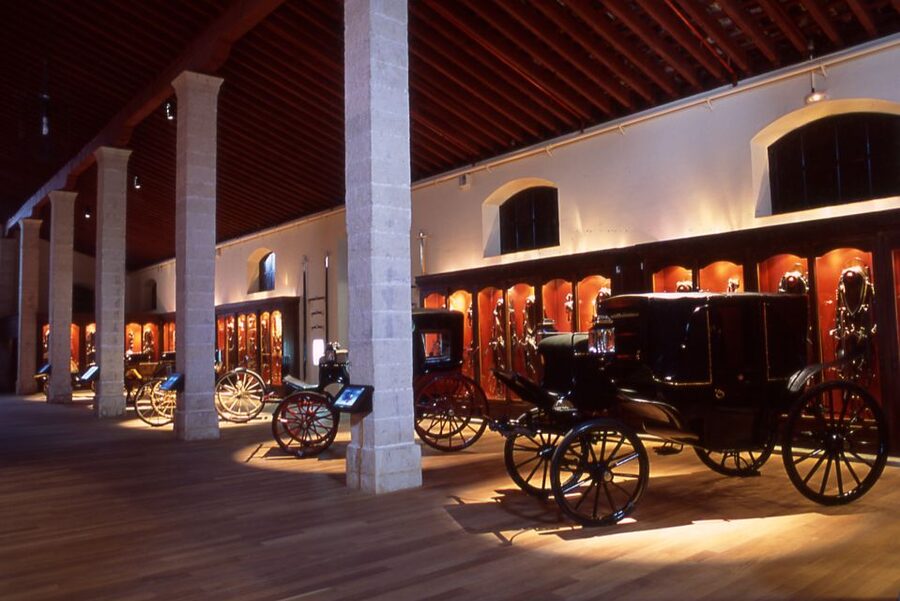
The Carriage Museum makes a good final stop, especially if you enjoy old transport, craftsmanship, or historical clothing. You will see a collection of carriages, harnesses, and equestrian costumes, with the vehicles showing how horses once moved people through daily life.
The display gives the carriage section of the show more context. Onstage, you see the coachmen handling the horses with speed and confidence. In the museum, you can study the equipment and construction at a slower pace.
The museum is open from 10:00 AM to 3:00 PM. It is possible to visit after the show, but remember that the wider complex may close in stages. One person who lingered until the end found that the site closed at 3:00 PM and taxis became harder to find once the crowd had gone.
Photography is another practical issue. The published rules list cameras and video recording among prohibited items, while one on-site account says non-flash photographs were allowed in the arena but not in the museum. Follow the current instructions from staff, and plan to enjoy the carriages without relying on photographs.
Seating, heat, and comfort
The performance lasts 90 minutes, so seating matters. Reports are mixed: some people found good legroom and clear views from every seat, while others found the seats very uncomfortable.
The arena is designed so the action can be seen from throughout the seating area, which reduces the need to pay for a particular view. Still, summer heat can affect the experience. One September performance took place in temperatures around 37C, and the horses and riders were working hard despite the heat.
Wear light clothing, bring water if permitted, and allow time to cool down afterward. There is a snack bar with reasonably priced drinks and food, though it is described as minimal rather than a place for a full meal.
The site is wheelchair accessible. Bring a passport or identity card, since identification is required. Pets, smoking, glass objects, weapons, and sharp objects are not allowed.
Is $38 a good value?
At $38 per person, this is a good-value half-day outing if you use the included access. The price covers the 90-minute show, the audiovisual presentation, the Art Equestrian Museum, the Carriage Museum, and access to the palace and saddlery when those areas are open.
The value is strongest for anyone who would otherwise pay separately for a major cultural attraction and a performance. You get both, plus gardens and the possibility of seeing training and stable work.
It is less compelling if you plan to arrive just before noon and leave as soon as the show ends. In that case, you are paying for a large portion of the site that you have not used.
Free cancellation up to 24 hours before the visit and the option to reserve now and pay later make the booking fairly flexible. Check the starting time and the date carefully, especially around Saturdays and public holidays when parts of the site are closed.
Who should book this experience?
I would recommend it most strongly to horse lovers, families, and anyone looking for a distinctly Spanish cultural event. Children can enjoy the music, costumes, movement, and carriages even if they know little about dressage. A three-year-old was reportedly captivated by the show, which says something about its visual appeal.
It also suits visitors who want a break from cathedrals, palaces, and food tours. The performance gives you a focused look at Andalusian tradition through animals, craft, music, and riding.
You may enjoy it less if you dislike formal demonstrations or have little patience for museums. The show is the clear star, but the experience works best when you treat the museums and training areas as part of the story rather than as filler.
My verdict: book it for the full morning
Yes, I would book this experience, especially if you can arrive early enough for the audiovisual presentation, museums, and training areas. The horses and riders receive the strongest praise for good reason: their control, timing, and quiet partnership make the 90-minute performance memorable.
The practical advice is simple. Confirm the opening schedule, arrive before 10:00 AM if possible, ask for clear directions to the stables, bring identification, and arrange your return train or taxi in advance. If you want only a quick show, the price is still fair, but the full visit gives you a much better understanding of what you are watching.
FAQ
How long does the experience last?
The listed duration is 3.5 hours. The main horse show runs from 12:00 PM to 1:30 PM, with time before or after for the museums, palace grounds, audiovisual presentation, and other areas.
What time does the horse show begin?
The performance begins at 12:00 PM and ends at 1:30 PM.
What is included in the ticket?
The ticket includes entrance to the horse show, the audiovisual presentation, the palace when open, the saddlery when open, the Art Equestrian Museum, and the Carriage Museum.
When is the Art Equestrian Museum open?
The Art Equestrian Museum is open from 10:00 AM to 2:00 PM.
When is the Carriage Museum open?
The Carriage Museum is open from 10:00 AM to 3:00 PM.
Are the palace and saddlery open every day?
No. The palace and saddlery are closed on Saturdays and public holidays.
Where do I exchange my ticket?
Go to the ticket office at the Royal Andalusian School of Equestrian Art when you arrive.
Is the site wheelchair accessible?
Yes, the activity is listed as wheelchair accessible.
What identification should I bring?
Bring your passport or identity card.
Can I take photos or videos?
The listed rules prohibit cameras and video recording. A separate on-site account says photos without flash were allowed in the arena but not in the museum, so check the current instructions from staff when you arrive.
Recently listed in Jerez De La Frontera
- Jerez: Traditional Tapas Tour★ 4.6 · 138 reviews
- Jerez: Flamenco Show and Menú at Tablao Puro Arte 2025★ 4.5 · 213 reviews
- Jerez: Guided Winery Tour with Wine Tasting★ 4.4 · 636 reviews
- Jerez: Historic Center Guided Tour★ 4.5 · 272 reviews
- Jerez: Bodegas Álvaro Domecq Guided Tour with Wine Tasting★ 4.6 · 265 reviews
- Jerez de la Frontera: Palacio Domecq Entrance Ticket★ 4.2 · 123 reviews
- Jerez: City Guided Tour and the Alcazar★ 4.6 · 101 reviews
- Jerez: Bodegas Fundador Guided Tour with Tasting Session★ 4.8 · 714 reviews
Museums, compared.
FC Barcelona Museum “Barça Immersive Tour” Ticket
Read our review →
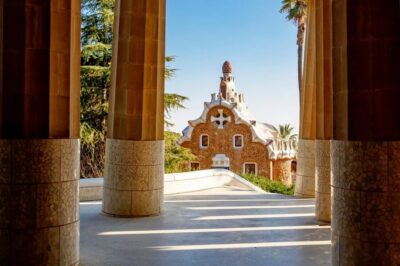
Park Güell and Gaudí House Museum Entry Ticket
Read our review →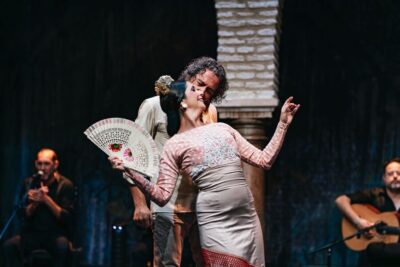
Puro Flamenco Show with Optional Museum Ticket
Read our review →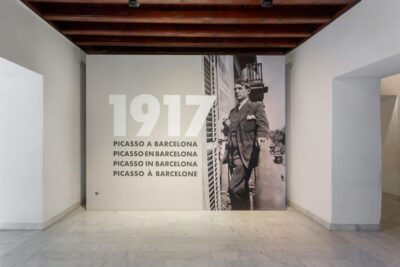
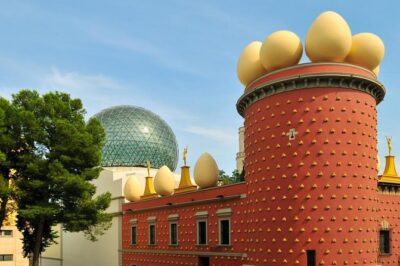
Girona & Dali Museum Small Group Tour with Pick-up from Barcelona
Read our review →
Oceanogràfic, Hemisfèric & Science Museum Combo
Read our review →Browse the lists this tour appears in