
Reviewed · JEREZ DE LA FRONTERA TOURS
Jerez: Yeguada de la Cartuja Carthusian Horses Tour
Beautiful horses, serious tradition, and a fine show. At Yeguada de la Cartuja near Jerez, you get a close look at Spain’s Carthusian horse, from free-running foals and mares to trained stallions in the arena. I especially like the hands-on feel of the farm visit and the way the guides connect breeding, care, and Spanish history. The one drawback is location: the farm sits in the countryside, and reaching it without a car can cost far more than the $22 admission.
The 2.5-hour visit works well for horse lovers, curious families, and anyone looking for a distinctly Andalusian experience beyond city streets and sherry cellars. I would allow extra time for the journey, arrive early at the ticket office, and wear shoes that can handle uneven farm paths. The facility is wheelchair accessible, and guides may lead tours in Spanish, English, or German.
In This Review
- Key points at a glance
- Why these horses matter in Jerez
- Arriving at Fuente del Suero
- The farm tour: mares, colts, and stallions
- What the Carthusian lineage tells you
- The arena show and Spanish dressage
- Is two and a half hours the right length?
- Guides, languages, and the human side
- The real cost: $22 plus getting there
- Practical tips for a smoother visit
- Who will enjoy this most?
- Should you book the Yeguada de la Cartuja tour?
- FAQ
- How long does the Yeguada de la Cartuja tour last?
- What does the ticket include?
- Where does the tour meet?
- Is the tour available in English?
- Can I bring a pet?
- Is the farm wheelchair accessible?
Key points at a glance
- See the Carthusian breed at several stages: Foals, mothers, young horses, and stallions help explain how the lineage is protected.
- Expect a guided farm visit before the show: The tour covers the breeding program, horse care, and the history of the Carthusian line.
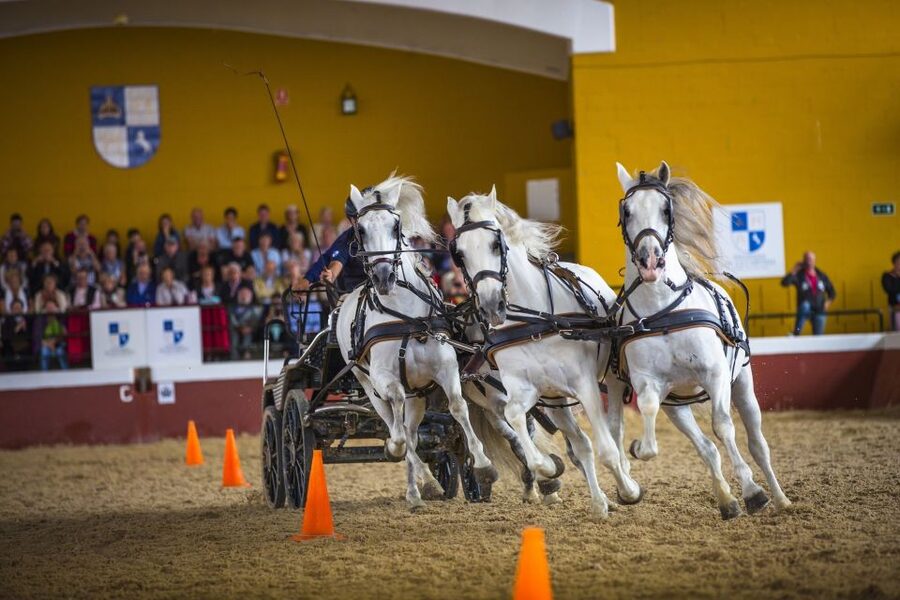
- The main arena exhibition is the grand finish: Dressage displays show the horses’ control, balance, and power.
- The farm is outside Jerez: Parking is plentiful, but taxis can be expensive, and sat-nav directions have caused trouble.
- Guides make a real difference: Caroline, Andre, Linda, and other praised guides are described as friendly, lively, and clear in English.
- The $22 price is strong value: Food, transport, and riding are extra, but the farm tour and show are included.
Why these horses matter in Jerez
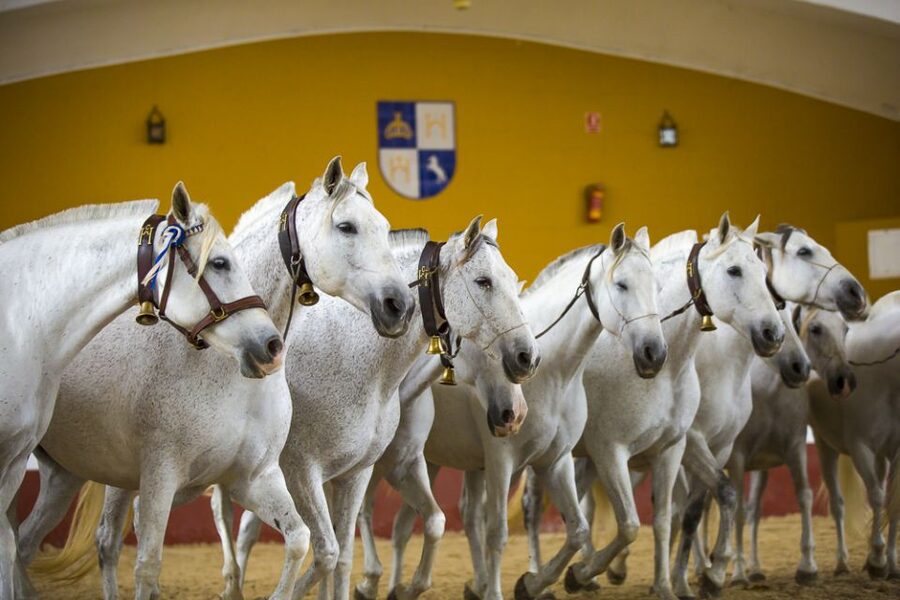
The Carthusian horse is not simply a handsome Andalusian horse for a tourist photograph. This is a carefully protected line with roots tied to the Carthusian monastery near Jerez. The monastery became a major center for breeding Jerezano horses in the 15th century, and the breeding tradition has continued at Fuente del Suero.
That setting matters. The farm sits beside the former monastery area, where fertile soil and Andalusia’s climate suit the work of raising horses. The program focuses on preserving and improving the Cartujano, or Carthusian, lineage rather than putting on a quick animal show and sending you home.
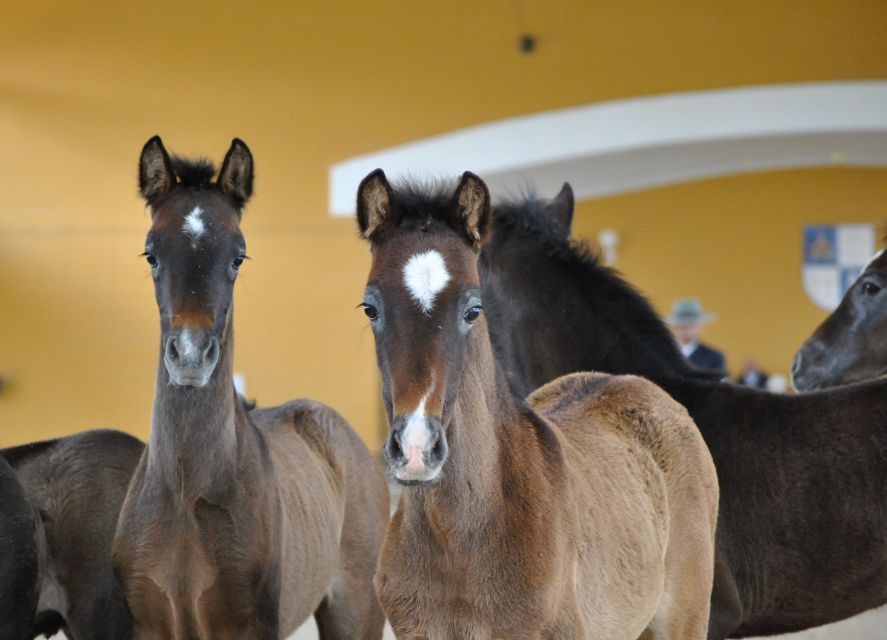
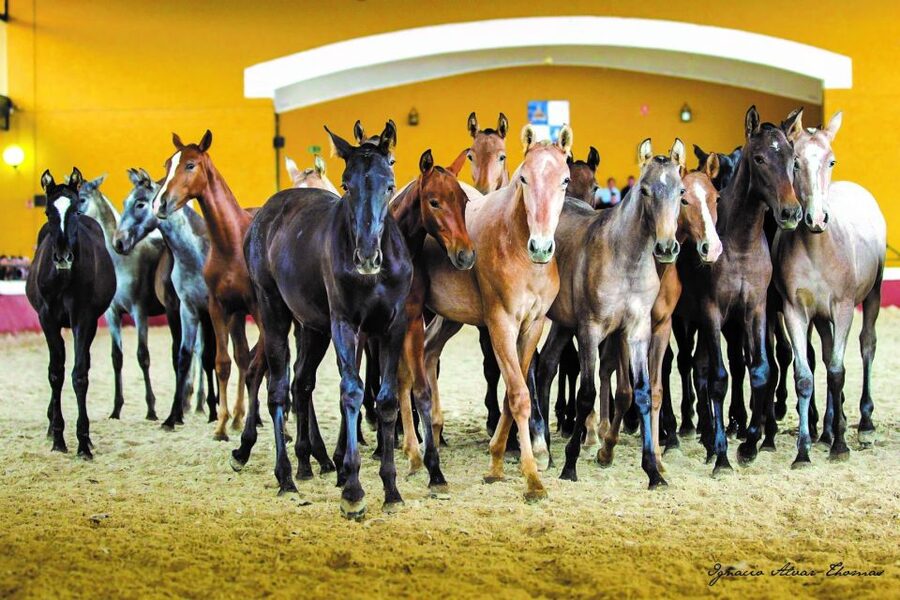
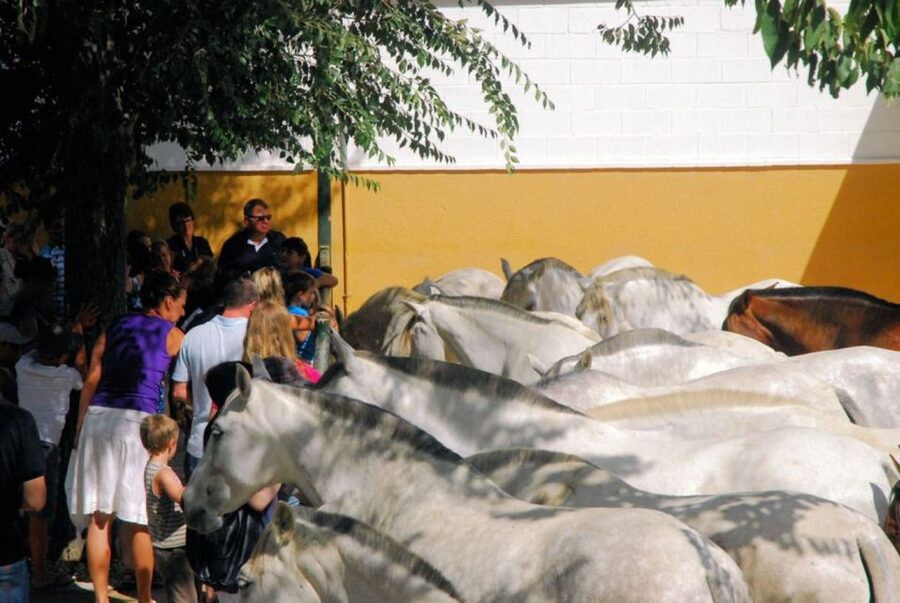
You will hear about the horses at different points in their lives. That makes the visit more useful than a simple arena performance. A foal beside its mother, a group of colts moving freely, and a trained stallion each show a different part of the breeding and training process.
The farm has more than 200 horses. You should not expect to see every one, of course, but the scale helps explain why this is a working stud farm rather than a small stable built only for visitors.
A few more Jerez De La Frontera ideas to compare
- Jerez de la Frontera: How the Andalusian Horses Dance
★ 4.6 · 6,168 reviews - Jerez de la Frontera: Andalusian Horse Dance and Museums
★ 4.7 · 1,289 reviews - El Salobre: Horse Riding Adventure with Transfer Options
★ 4.5 · 1,609 reviews
Arriving at Fuente del Suero
Your meeting point is the Yeguada Cartuja ticket office at Finca Fuente del Suero. There is plenty of parking, so driving is the easiest option. The main problem is finding the place.
Several people have had trouble with sat-nav directions. One set of directions sent a visitor toward a school in Jerez, while another reportedly directed a driver toward the motorway and suggested walking from there. I would check the farm’s exact location before setting out and avoid relying on a device without checking the route.
If you are coming from Jerez or Cádiz without a car, plan carefully. The farm is remote enough that a taxi can take around 40 minutes from Cádiz port, and one visitor paid about $50 for the return journey from Jerez. That can wipe out the bargain admission price. A taxi driver may agree to wait, but arrange the return before you begin rather than hoping to find a ride after the show.
Once you arrive, go to the ticket office to collect or confirm your tickets. Your ticket may show both a tour group and a seat section for the arena. Arriving early also gives you time to use the facilities, ask where your group gathers, and avoid missing the start.
The farm tour: mares, colts, and stallions
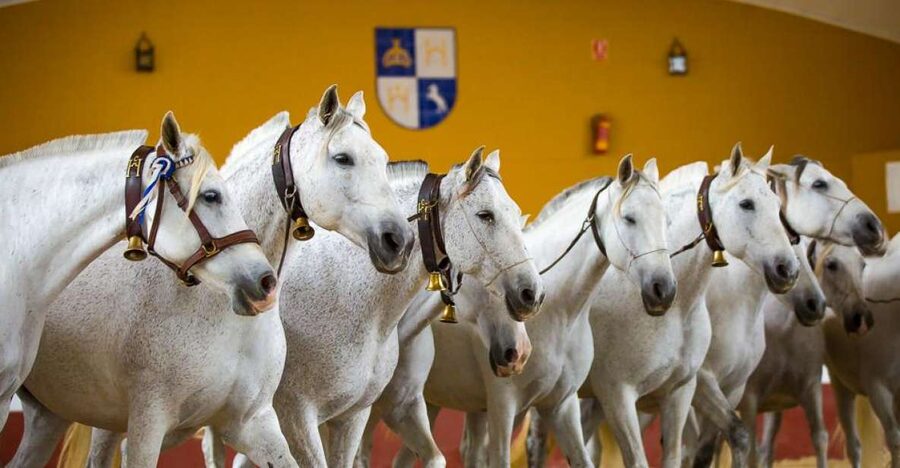
The first part of the experience is a guided walk around the stud farm. The exact order can vary, but the focus is on the horses and the work behind the breed. You may see colts and mares moving freely, followed by stallions in their own area. This is where the visit feels most like a working horse farm.
I like this portion because it gives you a chance to see the horses outside the polished arena setting. You can notice differences in age, build, movement, and behavior. The free-running groups also give you a better sense of the horses as animals, not just performers waiting for a cue.
The guide explains the breeding process and the relationship between mother and foal. That detail was especially useful to visitors who knew little about horse breeding. If you have questions, ask them. Guides such as Caroline have been praised for explaining the history, breeding choices, and care of the animals while keeping the group involved.
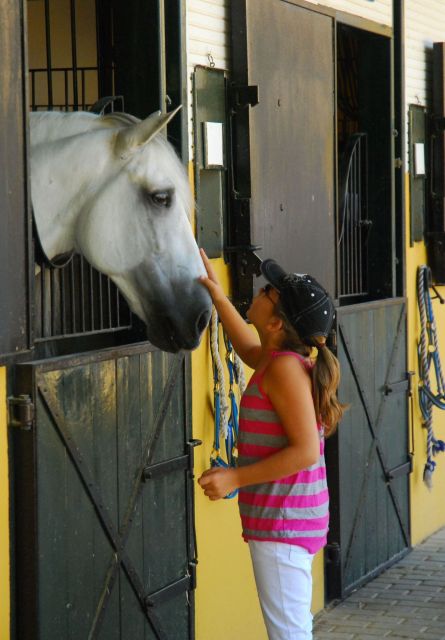
Some visits offer time to stroke or interact with the horses. Do not assume every moment will be a petting session, since the farm’s priority is the animals and the schedule. Still, the chance to be close to the horses is one reason this visit feels more personal than a standard stadium show.
You may also see the current year’s foals. This is often the most appealing part for families and photographers, although video recording is not allowed. Bring a camera for still photographs only if permitted by the staff, and follow instructions around the animals.
The tour can be especially valuable if you are not already an expert. One well-liked guide, Andre, was praised for making the information entertaining as well as clear. That balance matters. A long lecture about bloodlines would test anyone’s patience, but the guides generally connect facts to the horses in front of you.
What the Carthusian lineage tells you
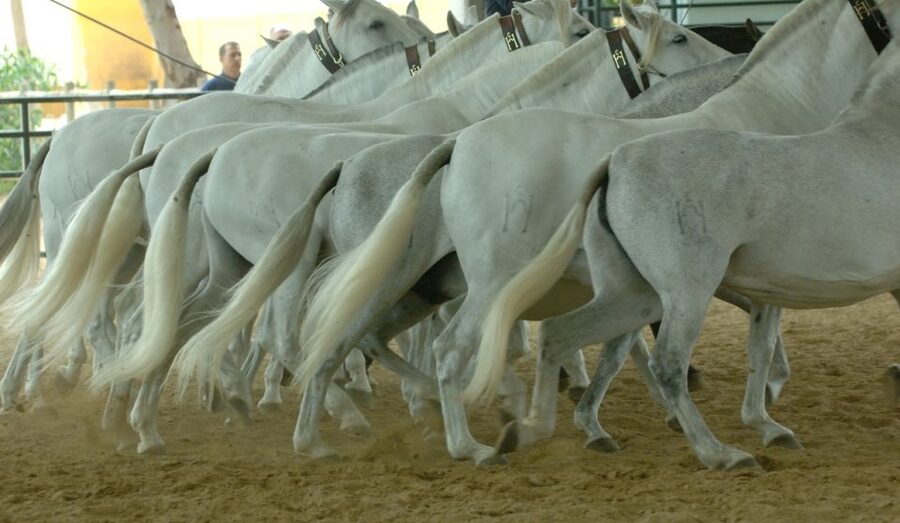
The farm’s purpose is preservation. The Cartujano is a particular Carthusian line within the Spanish horse tradition, and the tour shows why careful breeding takes time. You learn how the farm follows horses through different stages, from foal to mature animal.
That context changes the way you watch the show later. Instead of seeing only a white or gray horse moving beautifully across the arena, you have already seen the young animals, their mothers, and the farm environment. You understand that the performance is the final step in a much longer process.
The horses’ appearance gets much of the attention, and fairly so. They are striking animals. But I found the better lesson is the link between appearance, breeding, temperament, and training. The farm is presenting a national symbol, yet it is also explaining the daily work needed to protect that symbol.
The tour is not designed as a riding lesson. Horse riding is not included, and you should not book this expecting to mount a horse. The experience is about observation, breeding, care, and performance.
Same base, a different kind of afternoon:
- Jerez: Royal Andalusian School of Equestrian Art Admission
★ 4.6 · 882 reviews - Jerez: Bodegas Fundador Guided Tour with Tasting Session
★ 4.8 · 714 reviews - Jerez: Guided Winery Tour with Wine Tasting
★ 4.4 · 636 reviews - Jerez de la Frontera: Sherry Winery Tour with Tasting
★ 4.6 · 309 reviews
The arena show and Spanish dressage
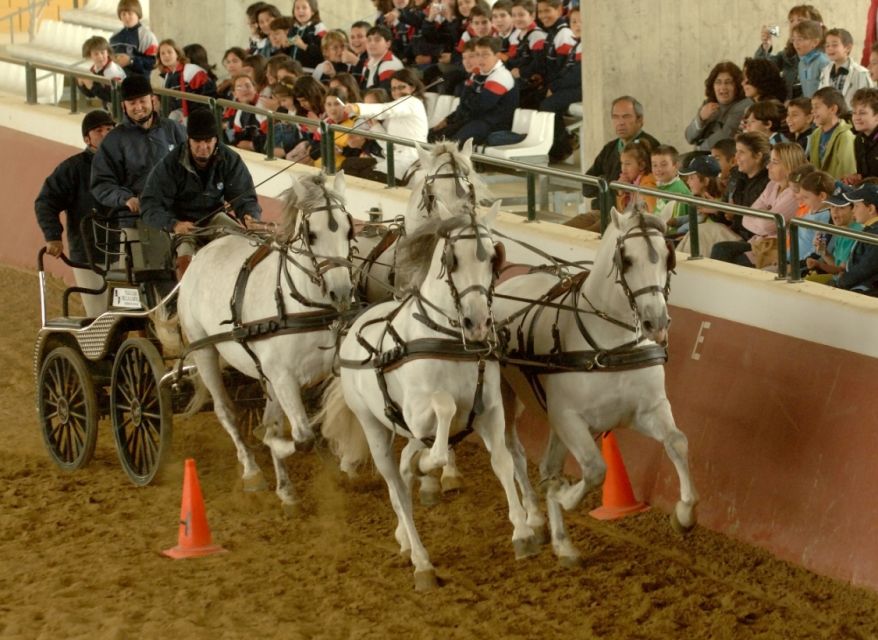
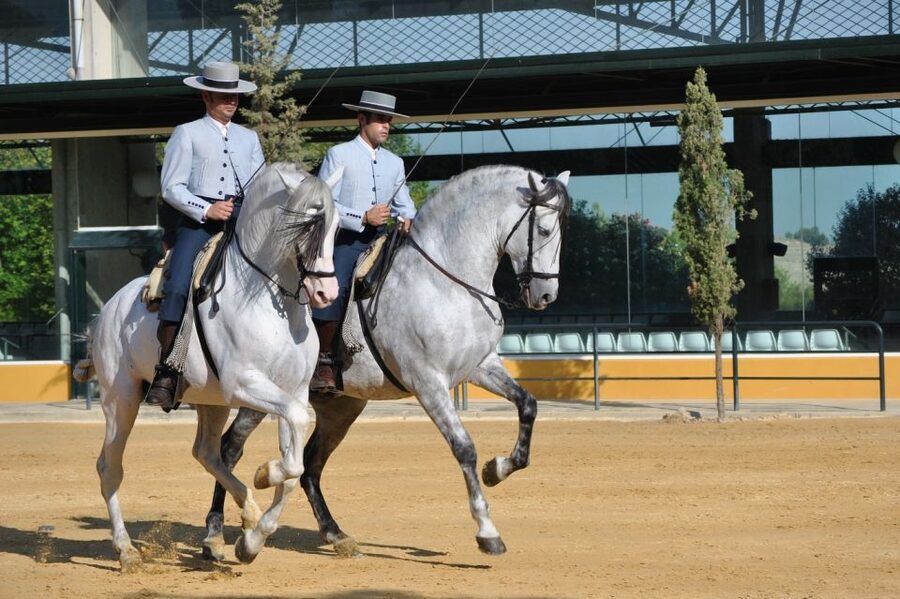
The main arena exhibition is the climax of the visit. Expect a dressage presentation featuring the horses’ balance, obedience, and controlled power. The show lasts about an hour according to several detailed descriptions, and it gives you a chance to sit down after the walking portion.
The presentation is polished without losing the character of the breed. Watching a horse move at a measured pace can sound less exciting than a gallop, but the skill lies in the precision. Small shifts in posture, rhythm, and direction show how much training sits behind the performance.
The most dramatic moment may be seeing horses enter the arena together. That larger movement gives the show energy, while the closer work shows the horses’ control. You will also see why dressage is such a good match for this breed: the display depends on grace, responsiveness, and strength rather than speed alone.
Seating deserves attention. Your ticket may assign you a section and a seat, and moving once the show begins may not be possible. One visitor found that the assigned section had a poor view even though more central seats were empty. I would arrive early, check the arena layout, and ask staff if there is any flexibility before the exhibition starts. Do not count on changing seats later.
The show is also a useful break from the Andalusian sun. Much of the farm visit takes place outdoors, while the arena gives you a more comfortable place to watch the final performance. Wear a hat and bring water, since food and drinks are not included.
Is two and a half hours the right length?
The advertised duration is 2.5 hours. A typical breakdown is roughly an hour for the farm tour and an hour for the show, with time between sections and movement around the property. That gives the visit enough space to explain the horses rather than rushing you from one viewing point to another.
Horse lovers will probably wish it lasted longer. The chance to see foals and mothers, ask questions, and watch the horses perform makes the time pass quickly. If you are only mildly interested in horses, the walking and explanations may feel a little long, especially with young children.
One detailed account praised the visit but suggested it could be shortened for families. Another family found it highly enjoyable and child-friendly. My advice is simple: older children who can listen and wait should do well, but very young children may lose interest before the show.
The schedule can vary, so check the available starting times when booking. Give yourself a generous buffer for the drive or taxi. Arriving 15 minutes late has caused problems for people who missed their language group and had to join another one.
Guides, languages, and the human side
The guide can make or break a history-focused visit, and this farm has received particularly warm praise for its staff. Caroline has been described as lively and thorough, continuing to answer questions after the exhibition. Andre was praised for being friendly and entertaining, while Linda was singled out for giving a strong English-language tour.
Tours are offered in Spanish, English, and German. Confirm your language and listen for your group at the start. One visitor missed the English group being called and joined the German tour instead. That worked only because the visitor spoke German, so it is better to stay near the meeting point and ask staff if you are unsure.
The best guides do more than recite dates. They explain why the farm breeds the horses, how foals stay connected to their mothers, and what you are seeing in the paddocks and arena. You should have opportunities to ask questions, and the guides have been praised for keeping groups engaged.
The staff also receive good marks for being welcoming and helpful, including with a visitor using a wheelchair. The site is listed as wheelchair accessible, though a farm may still include outdoor surfaces, so asking the ticket office for current route details is sensible.
The real cost: $22 plus getting there
At $22 per person, the admission is good value. You receive a guided farm tour and a substantial arena show, not just a short demonstration. The two parts complement each other, and the price compares well with many major attractions in Andalusia.
The catch is transportation. Food and drink are not included, and neither is transport to the farm. If you need a taxi from Jerez or Cádiz, the ride can cost more than the admission. For a couple or family, that changes the calculation quickly.
If you have a rental car, the value becomes much stronger. You can combine the visit with other sights around Jerez, provided you leave enough time for the fixed tour schedule. If you are staying in Cádiz for a cruise stop, calculate the full taxi cost before booking.
There is also a gift shop at the end. It carries horse-related items and clothing, but service can be slow when several groups finish at once. If you want to browse or buy something, do not schedule your return transfer too tightly. One visitor had to leave clothing behind because the line reached the door and a ride was waiting.
Practical tips for a smoother visit
- Wear comfortable shoes and clothing. You will spend part of the experience outdoors and walking around a farm.
- Bring water, since food and drink are not included.
- Check the route carefully. Do not blindly follow sat-nav instructions.
- Arrive early at the ticket office and confirm your tour group and language.
- If you need a taxi, arrange the return before the exhibition ends.
- Check your arena section before the show starts, since changing seats may not be possible.
- Do not bring pets. Assistance dogs are allowed.
- Video recording is not permitted.
- Face masks or protective coverings may be requested, so bring one.
Who will enjoy this most?
I would choose this tour if you love horses, want to understand Spanish riding culture, or need a countryside activity near Jerez. It also works for people who know little about breeding, since the guides explain the basics without making the visit feel like a classroom.
Families can have a good time, especially if children are interested in animals. The foals and free-running horses offer an immediate hook, while the show provides a clear finish. Very young children may struggle with the length and the need to stay seated during the exhibition.
You do not need to be an expert rider. The show is easy to appreciate on visual terms, and the farm tour gives you plenty to observe even if you cannot name a dressage movement. Still, if horses hold no interest for you, the remote setting and long explanations may make this a weaker choice than a shorter city attraction.
The tour also suits visitors seeking something strongly tied to Andalusia. This is not a generic animal encounter. It connects the horses to Jerez, the Carthusian monastery, Spanish identity, and a living breeding tradition.
Should you book the Yeguada de la Cartuja tour?
Yes, if the transport works for you. The $22 admission buys a well-paced visit, access to a working stud farm, close views of mares and foals, and a graceful dressage show. The guides are a major strength, and the horses appear carefully handled and well cared for.
I would hesitate only if you are short on time, traveling with toddlers, or relying on an expensive taxi without planning the return. For everyone else, this is one of the better-value ways to see the horse culture of Jerez. Book it for the animals, stay for the show, and treat the journey to the farm as part of the rural Andalusian setting.
FAQ
How long does the Yeguada de la Cartuja tour last?
The experience lasts 2.5 hours. It includes the guided farm tour and the exhibition in the main arena.
What does the ticket include?
The ticket includes a guided tour of the farm and the horse exhibition in the main arena. Food, drinks, transportation, and horse riding are not included.
Where does the tour meet?
The meeting point is the Yeguada Cartuja ticket office at Finca Fuente del Suero. The property has plenty of parking.
Is the tour available in English?
Yes. Live guides are available in Spanish, English, and German.
Can I bring a pet?
No. Pets are not allowed, although assistance dogs are permitted.
Is the farm wheelchair accessible?
Yes, the activity is listed as wheelchair accessible. Staff have also been described as welcoming and helpful to wheelchair users.
Recently listed in Jerez De La Frontera
- Jerez: Traditional Tapas Tour★ 4.6 · 138 reviews
- Jerez: Flamenco Show and Menú at Tablao Puro Arte 2025★ 4.5 · 213 reviews
- Jerez: Guided Winery Tour with Wine Tasting★ 4.4 · 636 reviews
- Jerez: Historic Center Guided Tour★ 4.5 · 272 reviews
- Jerez: Bodegas Álvaro Domecq Guided Tour with Wine Tasting★ 4.6 · 265 reviews
- Jerez de la Frontera: Palacio Domecq Entrance Ticket★ 4.2 · 123 reviews
- Jerez: City Guided Tour and the Alcazar★ 4.6 · 101 reviews
- Jerez: Bodegas Fundador Guided Tour with Tasting Session★ 4.8 · 714 reviews
Jerez de la Frontera Tours, compared.
Jerez de la Frontera: How the Andalusian Horses Dance
Read our review →
Jerez de la Frontera: Andalusian Horse Dance and Museums
Read our review →
Royal Andalusian School of Equestrian Art Admission
Read our review →
Bodegas Fundador Guided Tour with Tasting Session
Read our review →
Jerez de la Frontera: Sherry Winery Tour with Tasting
Read our review →
Bodegas Álvaro Domecq Guided Tour with Wine Tasting
Read our review →Browse the lists this tour appears in