
Reviewed · JEREZ DE LA FRONTERA TOURS
Jerez: Royal Andalusian School of Equestrian Art Admission
Horses are the real stars here. At Jerez’s Royal Andalusian School of Equestrian Art, you see more than a polished performance venue: stables, tack rooms, training rings, museums, and palace rooms explain how Andalusia’s famous horses are cared for and trained. I especially like the chance to watch daily practice and the excellent museum displays.
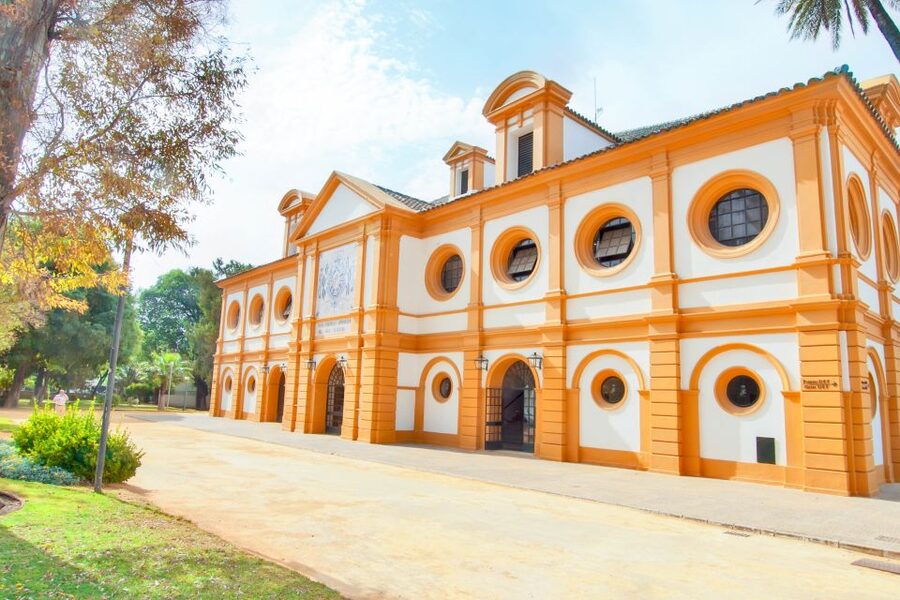
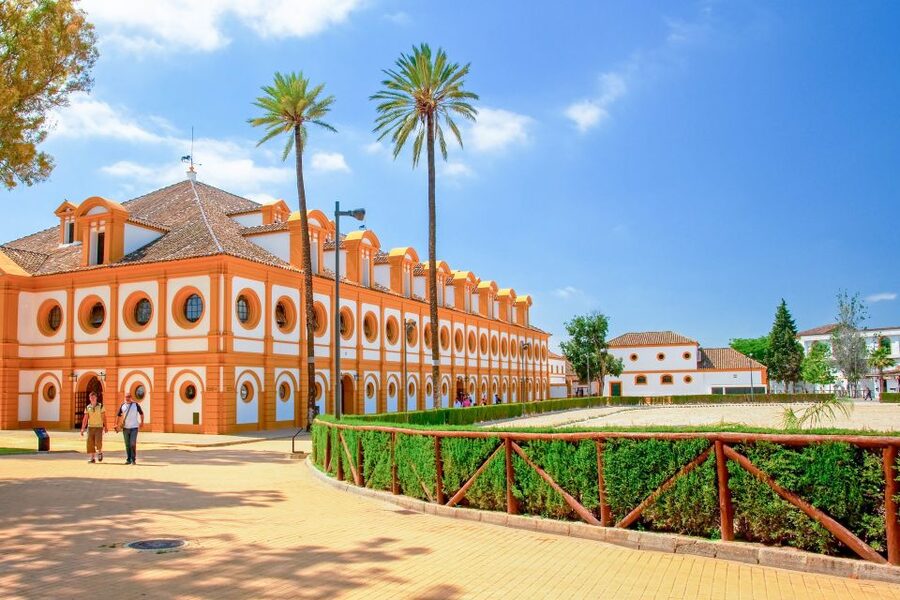
I also like the setting. Charles Garnier’s 19th-century palace, formal gardens, and octagonal stables give the visit a sense of place that a simple horse show cannot match. The main drawback is timing: training and saddlery visits are not available on Saturdays, and some schedules have caused confusion, especially for visitors expecting a full performance rather than a school tour.
In This Review
- Key points to know before you go
- Why Jerez’s horse school is worth your time
- Start at the reception center and audiovisual presentation
- Walk through Garnier’s palace and formal gardens
- Explore the 11-room Museum of Equestrian Art
- See the saddlery and humidity-controlled tack room
- Meet the horses in the octagonal stables
- Watch training in the outdoor rings and indoor arena
- Finish with the carriage museum
- Timing, language, access, and practical details
- Who should book the Royal Andalusian School?
- Should you book it?
- FAQ
- How long does the visit last?
- What is included in the admission?
- Can I watch the horses train?
- Is the formal horse show included?
- Is the tour offered in English?
- Is the school wheelchair accessible?
- What must I bring to the ticket office?
Key points to know before you go
- Watch real training: On operating days other than Saturday, you may see horses and riders working in the outdoor rings or indoor arena.
- See behind the scenes: A guided visit takes you into the stables, tack room, and saddlery, areas you cannot simply explore alone.
- Allow more than two hours: The advertised visit lasts two hours, but the grounds, museums, and training areas can keep you there for three or four hours.
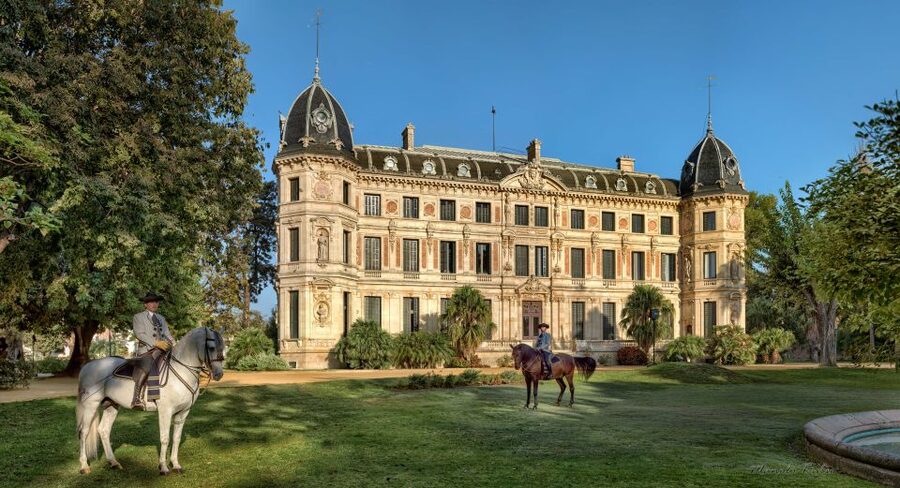
- The palace is part of the experience: Charles Garnier designed the building, whose ground-floor rooms retain their original decorative style.
- The $18 price is strong value: You get access to the school facilities, Museum of Equestrian Art, carriage museum, gardens, and training areas.
- Do not confuse the tour with the show: Admission to the school and training is not automatically a ticket for How the Andalusian Horses Dance.
Why Jerez’s horse school is worth your time
Jerez is known for sherry, flamenco, and horses. The Royal Andalusian School brings all three strands of local culture into one carefully maintained site, although the horses rightly receive most of your attention.
I would not treat this as a quick museum stop. The appeal comes from seeing the school as a working institution. You can look at the horses in their stalls, see where equipment is stored and repaired, watch riders practice, and then place it all in context through the museums and palace rooms.
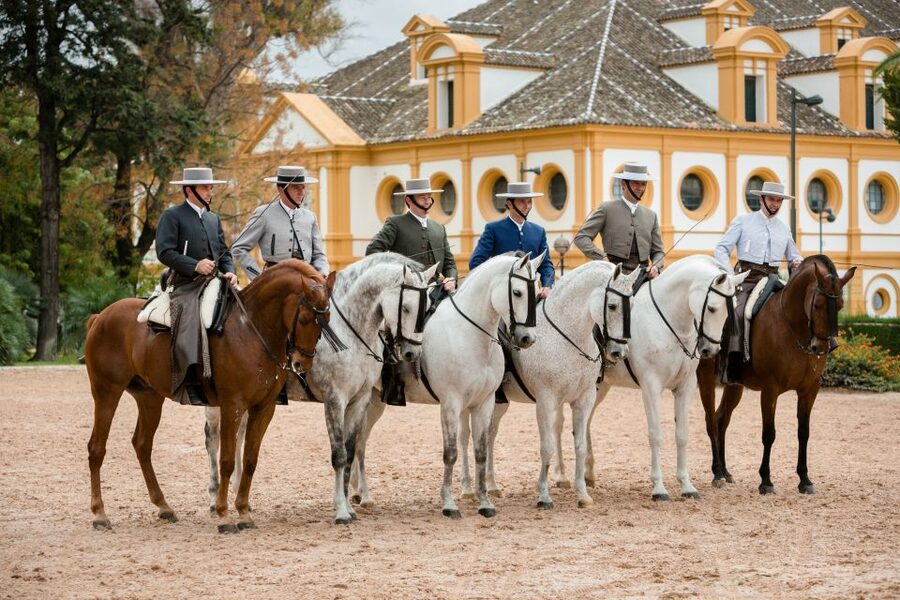
The horses are Andalusian breeds, famous for their bright coats, proud carriage, and controlled movements. You do not need to be an expert in dressage to appreciate the training. A horse stepping sideways with precision, responding to a tiny signal from its rider, makes the work easy to understand.
The admission price of $18 per person is reasonable for the amount included. A normal museum ticket might cover one building, but here the fee gives you access to a large complex with gardens, stables, a tack room, a riding arena, two museums, and guided interpretation in Spanish, English, French, or German.
The visit has earned a 4.6 rating from 882 bookings, and the strongest praise centers on three things: the beautiful horses, the well-kept facilities, and guides who clearly know the school from the inside. That combination gives the experience more substance than a display of attractive animals behind clean railings.
A few more Jerez De La Frontera ideas to compare
- Jerez de la Frontera: How the Andalusian Horses Dance
★ 4.6 · 6,168 reviews - Jerez de la Frontera: Andalusian Horse Dance and Museums
★ 4.7 · 1,289 reviews - Jerez: Yeguada de la Cartuja Carthusian Horses Tour
★ 4.8 · 970 reviews
Start at the reception center and audiovisual presentation
Your visit begins at the visitor reception center. If you arrive before 11:00 in the morning, an audiovisual presentation introduces the development of equestrian art in Andalusia and the role of the horse in the region.
This opening matters because it gives you a framework for the rest of the visit. Without it, the palace, costumes, carriages, and riding techniques can feel like separate exhibits. With it, you begin to see the school as part of a long Andalusian tradition of horsemanship.
The timing deserves care. The presentation is listed as available until 11:00 AM, while one English-language tour schedule has started at 11:15. Programs can change, and the management may alter the order or content of the visit. If the audiovisual introduction matters to you, check the day’s start time rather than assuming every tour follows the same pattern.
Printed or mobile proof of your booking must be shown at the ticket office. Even with an online ticket, you may need to collect or confirm admission there, so leave a little time before the planned start.
Walk through Garnier’s palace and formal gardens
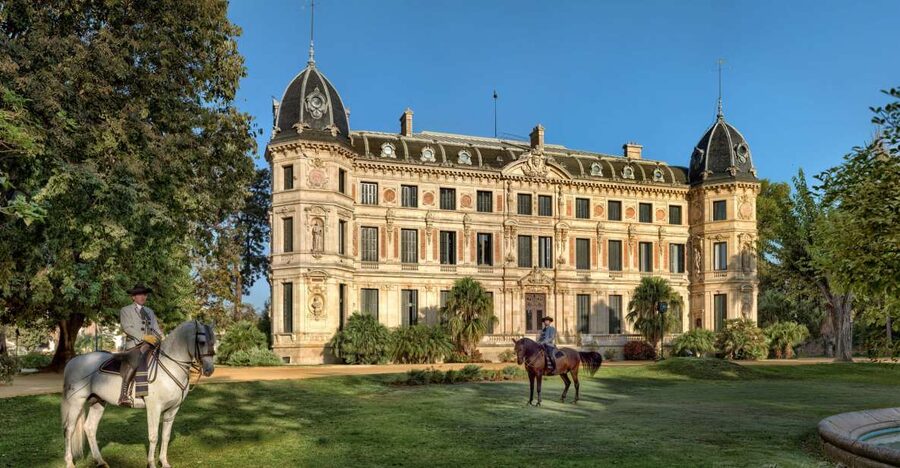
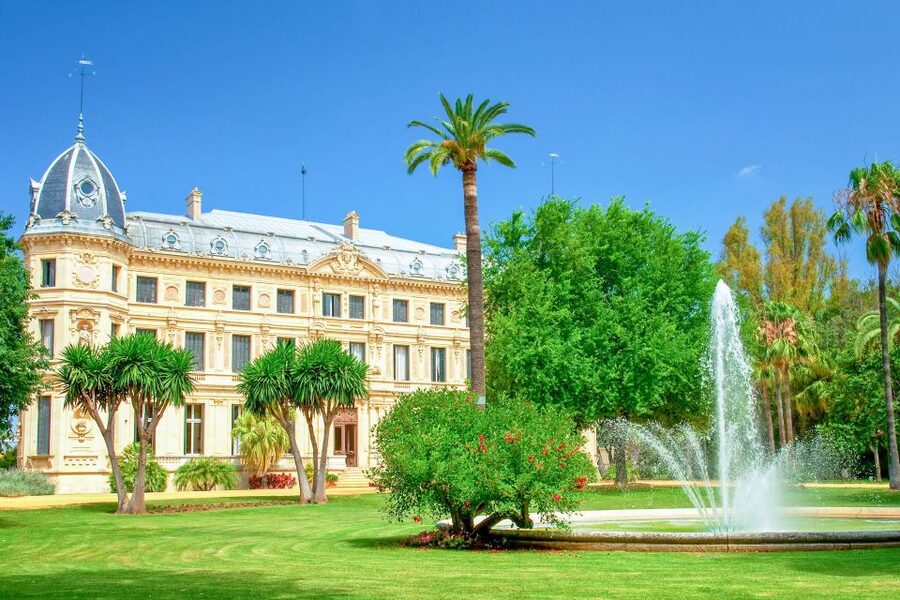
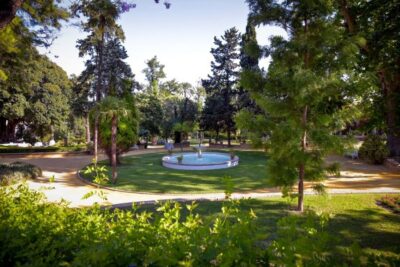
From reception, you enter the gardens. The grounds are not just a pleasant route between buildings. They give the school a grand opening, with exotic plants, clipped spaces, and a large central fountain whose water jets draw you farther into the property.
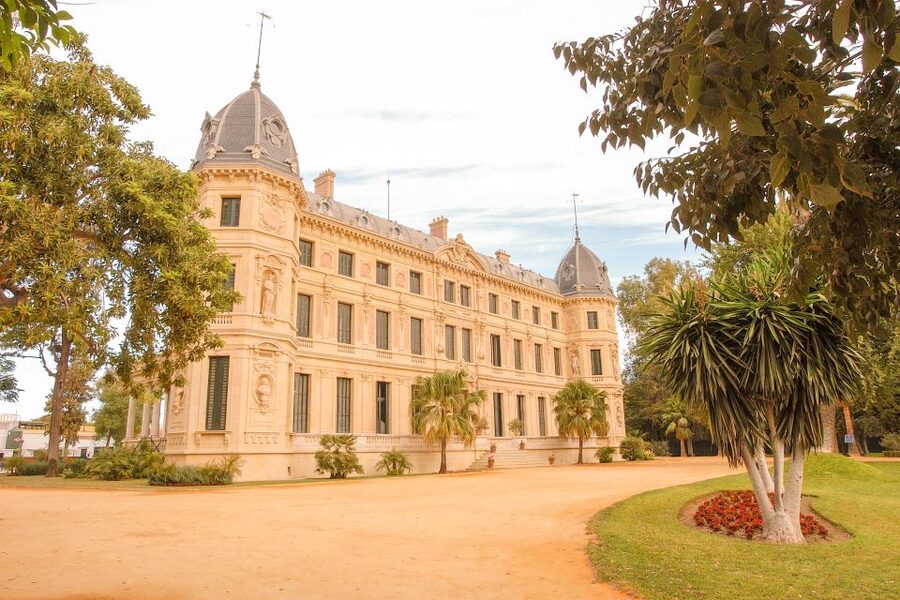
Across the fountain, the palace rises above the gardens. Charles Garnier, best known for the Paris Opera, designed this 19th-century building. Its architecture adds a refined setting to what could otherwise feel like a purely functional training center.
On the ground floor, you can enter rooms decorated in their original style. This part of the visit is smaller than the horse facilities, but it helps explain the institution’s public role. The palace was designed to present equestrian culture with ceremony and polish, not simply to house riders and animals.
I would take a few minutes here instead of hurrying straight to the stables. The contrast is useful: formal rooms and gardens on one side, daily training and working tack on the other. Together they show how the school balances tradition with practical horse care.
The grounds are especially pleasant in good weather, but sun and heat can affect your pace. One visit in hot conditions ended before the carriage museum because there was simply too much to cover comfortably. You can see a great deal here, but the site rewards a measured visit rather than a race from one stop to the next.
Explore the 11-room Museum of Equestrian Art
In the basement, the Museum of Equestrian Art has 11 rooms devoted to the origins and development of equestrian art in Andalusia. The displays cover the horse, the school, riding traditions, and the movements used in performance.
This museum is a key part of the experience for anyone who wants more than a quick look at handsome animals. It explains why Andalusian horses matter, how riding developed in the region, and how the school’s methods connect to older traditions.
The exhibits are interactive, which makes the material easier to absorb. Video and display sections show the horses’ training and the special movements they can perform. Some video screens have not always worked, so do not expect every interactive feature to be operating perfectly, but the museum still provides a useful account of the school and its setting.
I found this part most valuable before or after seeing the training. Beforehand, it gives you terms and context. Afterward, it helps you understand the control and repetition behind what you have just watched.
The museum also gives non-riders a reason to come. You can enjoy the visit through architecture, regional culture, design, and mechanical skill even if you cannot tell a piaffe from a pirouette.
Same base, a different kind of afternoon:
- Jerez: Bodegas Fundador Guided Tour with Tasting Session
★ 4.8 · 714 reviews - Jerez: Guided Winery Tour with Wine Tasting
★ 4.4 · 636 reviews - Jerez de la Frontera: Sherry Winery Tour with Tasting
★ 4.6 · 309 reviews - Jerez: Historic Center Guided Tour
★ 4.5 · 272 reviews
See the saddlery and humidity-controlled tack room
The guided section then moves into the working areas. In the saddlery, a master harness maker and apprentices make and repair the equipment used by the school. This is a slower, more practical part of the visit, and it reveals how much craft sits behind a polished riding display.
The tack room is another worthwhile stop. It is humidity controlled, and it stores the harnesses used for daily training and shows. The room offers a close look at the equipment without turning the visit into a shopping display. You see the tools of the trade and the care taken to keep them in working order.
Guides can explain how the tack is used and how the horses are prepared. Javi and Elena have both received particular praise for clear explanations and a willingness to answer questions, while another guide, Harry, was described as especially helpful with the historical side of the visit. The guide is usually a school employee, an important detail because you are hearing from someone connected directly to the institution.
The saddlery and tack room are not available for the full behind-the-scenes program on Saturdays. If these areas are high on your list, choose another day.
Meet the horses in the octagonal stables
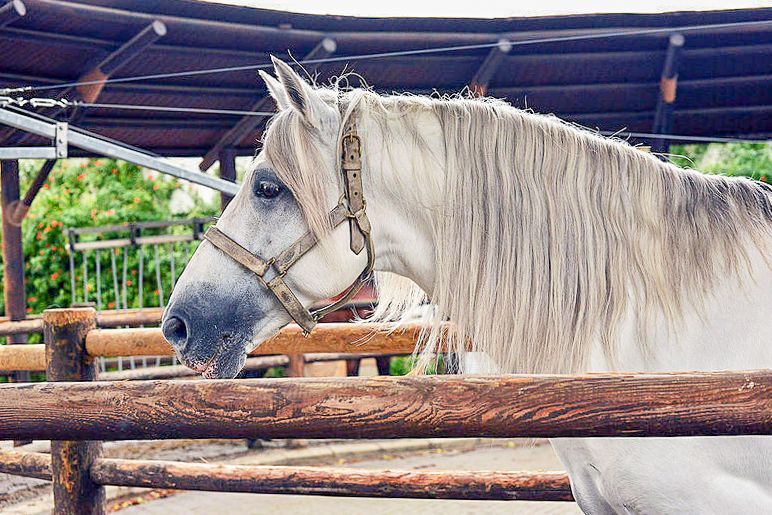
The octagonal stables are among the most memorable parts of the tour. The school’s most emblematic horses are kept here, and the central tack room forms the heart of the complex.
You see the animals at close range, although the exact amount of contact can vary. Some visitors have been able to pat horses, while others have mainly viewed them through the bars. Do not book this expecting a guaranteed hands-on encounter. The visit is about observation and care, not a petting session.
That distinction is sensible. The horses are working animals in a serious training program, and the school’s clean, calm facilities suggest that their welfare comes first. Their coats and condition are striking, but the experience is more rewarding when you watch their behavior, grooming, and interaction with the handlers rather than simply waiting to touch one.
The stables also make the school feel real. A performance in a theater can look effortless because the preparation is hidden. Here, you see the setting where the horses rest, the equipment they wear, and the people who maintain the program.
Photography rules can vary by area. One past visit did not allow pictures inside the arena, so ask before taking out your phone and follow staff instructions.
Watch training in the outdoor rings and indoor arena
For many people, training is the high point. On days other than Saturday, the outdoor exercise rings may be active, and the indoor arena offers another place to watch horses and riders work together.
The indoor arena is built in an Andalusian style and can hold 1,600 people. During a normal school visit, you are watching practice rather than the full staged production, but that can be a virtue. Training lets you see repetition, corrections, warm-ups, and the quiet concentration required to produce the famous movements.
You may see stallions being lunged, carriage driving, or riders working through dressage exercises. The precise routine depends on the day, and the program can change. Still, even a short session can show the discipline behind the school’s public performances.
The best viewing spot may depend on the schedule and staff directions. One past visitor enjoyed sitting in the front row with coffee while watching riders train, but cafeteria opening times are not reliable. Treat refreshments as a bonus rather than part of the plan.
You should also understand the difference between training admission and the formal show. The school’s performance, often known as How the Andalusian Horses Dance, features a choreographed presentation. This admission lets you tour the facilities and may let you watch practice, but it does not necessarily include the show. Check the exact ticket type before paying, since the distinction has confused some visitors.
Finish with the carriage museum
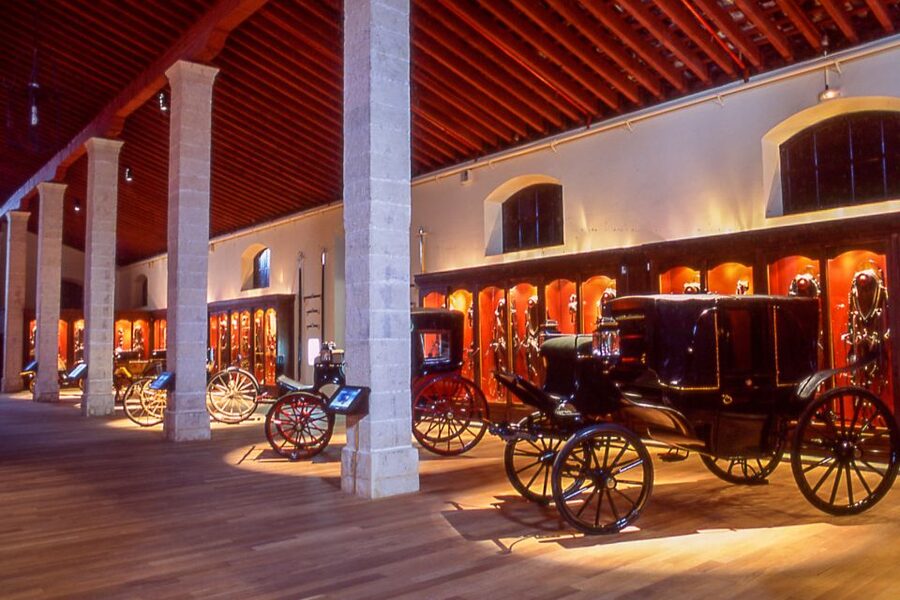
The carriage museum comes at the end of the visit. Its collection includes vehicles, harnesses, horses, and equestrian costumes.
This final stop broadens the story beyond dressage. Carriages show how horses once carried people, ceremony, and status, while the harnesses and clothing connect the practical work of the stable with the formal image presented in public events.
The carriage museum is included in the admission, but it is easy to skip if the day is hot or you are already tired. I would try to allow enough time for it, especially if you have an interest in transport, design, or traditional costume.
Because the site can take almost four hours at a relaxed pace, plan your energy. The stated duration is two hours, but several parts are self-guided or easy to extend. Older information also notes that some areas close around 2:00 PM, so a morning visit is the safest choice if you want to see everything.
Timing, language, access, and practical details
The visit lasts about two hours on paper, but I would allow at least half a morning. The school may be busiest when the ticket office opens, and arriving early helps you deal with ticket collection and changing tour times.
Guided interpretation is available in Spanish, English, French, and German. The quality of spoken delivery can vary by guide and group size, but a school employee can add useful detail that a recorded tour cannot. If English is important, confirm the starting time and listen for announcements at reception.
The complex is wheelchair accessible. Bottles, cans, animals, and objects that management considers unsuitable are not allowed inside the grounds. Discount-ticket holders must show proof of eligibility at the ticket office or pay the difference to the standard price if tickets remain available.
The ticket offers free cancellation up to 24 hours before the visit, and a reserve-now, pay-later option may help if your Jerez schedule is still shifting. Those features are useful, but the main value remains the amount you can see for $18.
Who should book the Royal Andalusian School?
I would recommend this to horse lovers first, especially anyone interested in dressage, carriage driving, animal care, or traditional riding. You get close to the working side of the school without needing to commit to a full performance ticket.
It also suits culture-minded visitors who like architecture and museums. The palace, gardens, equestrian displays, and carriage collection create a fuller picture of Jerez than a stand-alone show.
Families can find plenty to look at, although the guided sections require attention and the visit is not built around touching animals. You should also choose another activity if your main goal is a guaranteed performance, since the admission described here focuses on the school, training, and museums.
Should you book it?
Yes, if you want to understand how the famous Andalusian horse shows are made. The clean stables, skilled riders, working saddlery, handsome palace, and strong museums make this one of Jerez’s best-value cultural visits at $18.
Book a morning on a day other than Saturday if you want the best chance of seeing training and the behind-the-scenes areas. Choose the actual performance separately if you want choreography, music, and a complete theater-style spectacle.
FAQ
How long does the visit last?
The stated duration is two hours. You may spend closer to three or four hours if you watch training, explore both museums, and take your time in the palace and gardens.
What is included in the admission?
Full admission to the Royal Andalusian School facilities is included. This covers the gardens, palace rooms, Museum of Equestrian Art, guided access to the stables and tack room, training areas when available, and carriage museum.
Can I watch the horses train?
Training takes place on days other than Saturdays, subject to the school’s program. You may watch work in the outdoor exercise rings or indoor arena, but the management can alter the program.
Is the formal horse show included?
Not necessarily. This admission is for the school facilities and training visit. The formal production, known as How the Andalusian Horses Dance, is a separate experience unless your selected option specifically says otherwise.
Is the tour offered in English?
Yes. Guided interpretation is available in Spanish, English, French, and German. The English tour may begin at a different time from the initial audiovisual presentation, so check the schedule for your date.
Is the school wheelchair accessible?
Yes, the activity is listed as wheelchair accessible.
What must I bring to the ticket office?
You must show your printed receipt or mobile booking confirmation. If you bought a discounted ticket, bring proof of eligibility or you may need to pay the difference to the full standard price when tickets are available.
Recently listed in Jerez De La Frontera
- Jerez: Traditional Tapas Tour★ 4.6 · 138 reviews
- Jerez: Flamenco Show and Menú at Tablao Puro Arte 2025★ 4.5 · 213 reviews
- Jerez: Guided Winery Tour with Wine Tasting★ 4.4 · 636 reviews
- Jerez: Historic Center Guided Tour★ 4.5 · 272 reviews
- Jerez: Bodegas Álvaro Domecq Guided Tour with Wine Tasting★ 4.6 · 265 reviews
- Jerez de la Frontera: Palacio Domecq Entrance Ticket★ 4.2 · 123 reviews
- Jerez: City Guided Tour and the Alcazar★ 4.6 · 101 reviews
- Jerez: Bodegas Fundador Guided Tour with Tasting Session★ 4.8 · 714 reviews
Jerez de la Frontera Tours, compared.
Jerez de la Frontera: How the Andalusian Horses Dance
Read our review →
Jerez de la Frontera: Andalusian Horse Dance and Museums
Read our review →
Bodegas Fundador Guided Tour with Tasting Session
Read our review →
Jerez de la Frontera: Sherry Winery Tour with Tasting
Read our review →
Bodegas Álvaro Domecq Guided Tour with Wine Tasting
Read our review →Browse the lists this tour appears in